

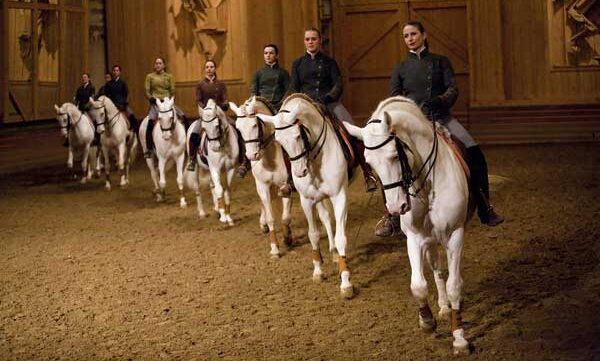
The Académie du Spectacle Équestre in Versailles — Where Horses Receive the Royal Treatment
After spending the morning on horseback galloping through the gardens of the Château of Versailles, my day in search of royal horse experiences would not have been complete without a visit to the Academy of Equestrian Arts, or the Académie du Spectacle Équestre, Manège de la Grande Écurie du Château de Versailles, as it’s known in French.
The Academy is located just across the main square from the Palace of Versailles and opened in 2003, under the teaching and artistic direction of Bartabas. A display of dressage set to baroque music, the Academy is a unique environment and form of equestrian theater. Bartabas is also known for Zingaro, his equestrian theater company founded in 1985.
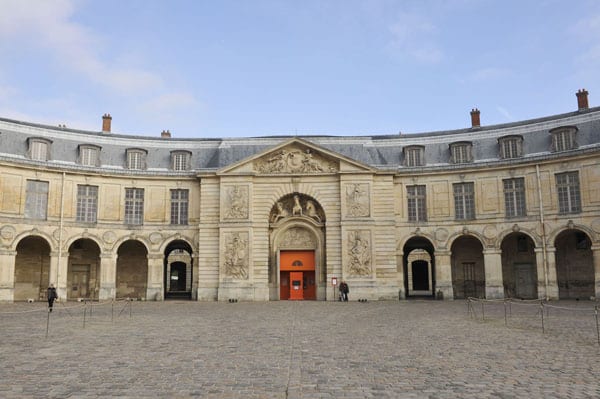
Jules Hardouin-Mansart, the architect behind the extensions and rebuilds at Versailles, also designed the two twin buildings shown above to shelter King Louis XIV’s 600 horses. Today, one is home to the Academy. The Academy rides Lusitano horses from Portugal, known for their beauty, presence, and trainability. “They are the same breed that was the glory of Versailles in the 18th century.” Other breeds, like the Argentine Criollo, are used for the horseback fencing.
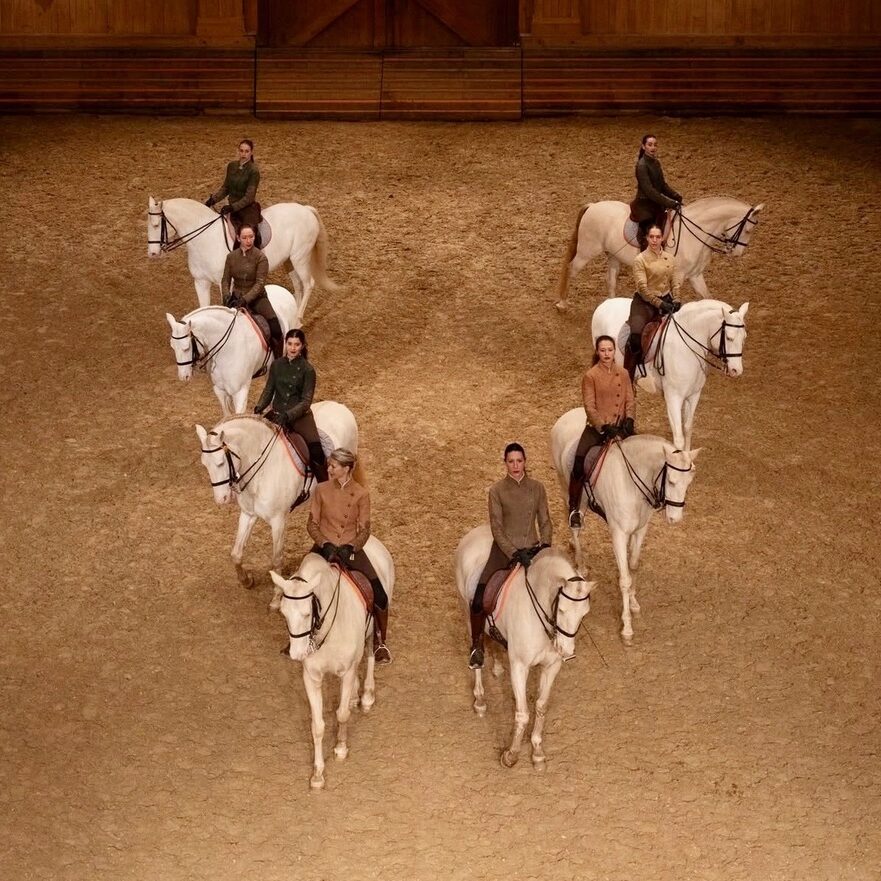
The Academy describes horsemanship as “the principal art linked with dance, music, and acrobatics,” and says it’s the first school where these other arts share the spotlight with horseback riding. Bartabas built the school around classical 18th-century riding, where skill and tradition were paired with grace and elegance — song, dance, artistic fencing, and visual arts are the core subjects, each tied closely to the training of horse and rider together.
“Singing brings self-assurance, dance helps you know your body and control your movement, artistic fencing trains your reflexes, and visual arts help you develop space, perception, and insight into the horse’s movement,” say the Academy and Bartabas.
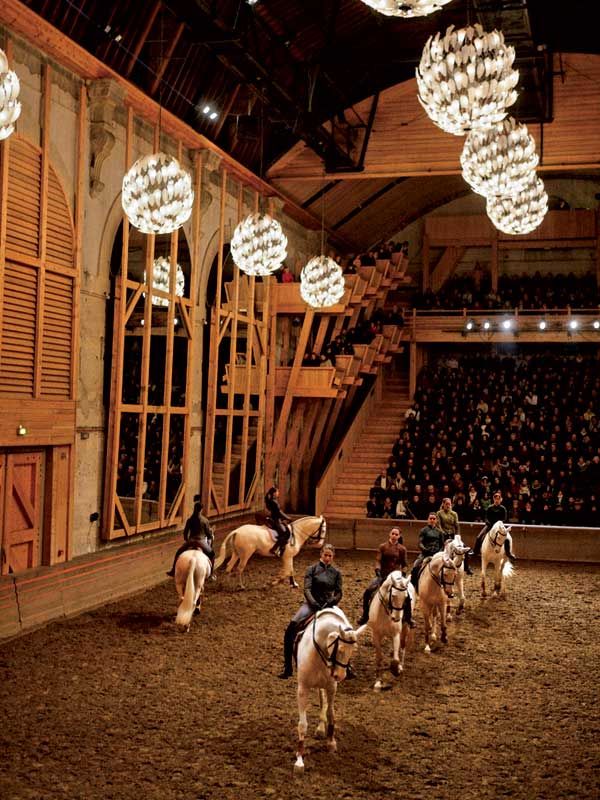
The Grand Arena was designed by Patrick Bouchain, who also designed the Academy’s stables. We were told the arena is available to rent for galas and dinners — certainly not suited for the average budget, but what an event to be invited to.
The Grand Arena, designed by Patrick Bouchain.
While touring the Great Stables, or Grandes Écuries, it was clear these horses received the royal treatment.
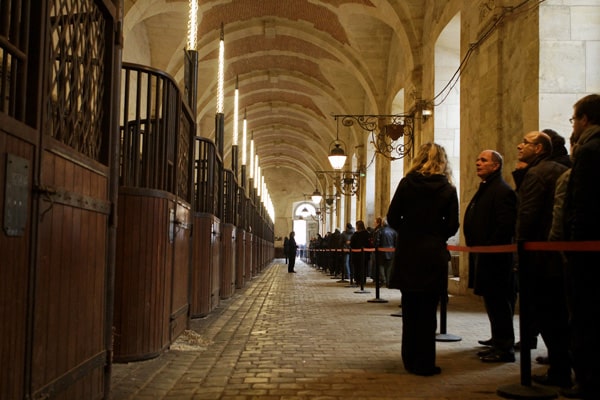
We all laughed when Marine Poncet, the Academy’s Director of Sales and our tour guide, said the stables were the equivalent of a five-star hotel for horses — currently housing thirty lucky residents.
The Great Stables are known for their scale and architecture. In the 18th century, they housed the King’s horses along with the royal riding academy, the École des Pages — an environment truly built for a king, or a king’s horses.
There are currently three permanent riders and eight students. Once selected, a student faces no time limit on how long they may stay with the school. Students are typically assigned five horses each and spend mornings training individually, afternoons in the classroom moving between fencing and singing coaches, then return in the early evening to train with the horses once more.
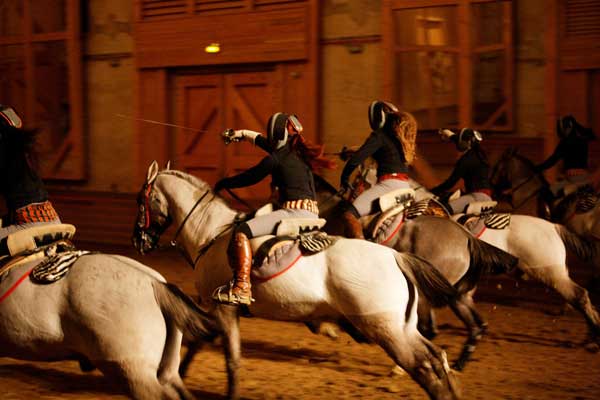
The Academy opens select morning training sessions and evening performances to the public, combining everything studied there — riding, fencing, dance, song, and, more recently, kyudo, Japanese archery on horseback — into a single show.
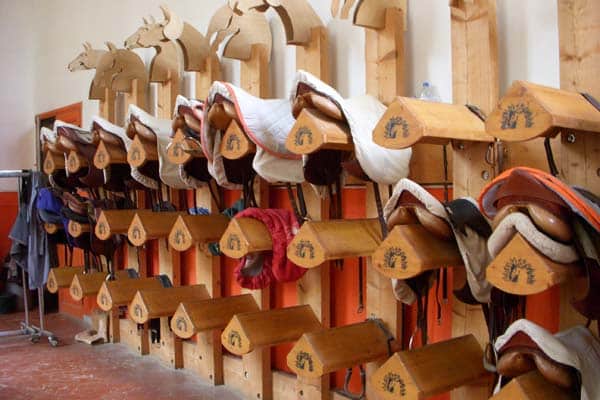
Before you wonder how a six-day training schedule results in such refinement, know that both horse and rider benefit from the relationship they build together — and from the Academy’s partnership with Hermès, which has outfitted the horses with a custom saddle designed in the baroque tradition.
Our tour took us into the tack room to see these saddles up close, alongside a display of a real horse skeleton. The Academy has its own orthopedic specialist, who provides riders with lessons on equine anatomy and gives the horses care as needed.
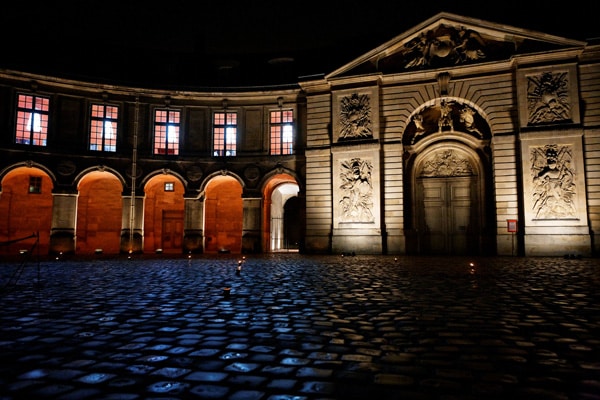
As we stepped into the courtyard, we watched students training and were surprised with a rare sighting of Bartabas himself, discreetly standing at the center of the circle formed by horses and riders. I wasn’t allowed to photograph that moment, but snapped the empty courtyard just after the session ended.
Photos courtesy of the Academy, taken by © Agathe Poupeney and © Antoine Poupel & Equestrian Destinations
How You Can Go
The Academy’s current production, La Voie de l’Écuyère, OPUS 2026, runs Saturdays at 6pm and Sundays at 3pm, with additional Wednesday performances during school holidays, in the wooden riding hall of the Grande Écurie.
You can also visit the stables directly: a 1h15 guided tour lets you see the show horses up close, tour the working spaces, and view the Manège (not recommended for children under 8), or take a self-guided visit Saturdays from 1:30–4pm (Wednesdays too, starting in April).
Académie du Spectacle Équestre Manège de la Grande Écurie du Château de Versailles Avenue Rockefeller 78000 Versailles Contact: info@acadequestre.fr
See a show: La Voie de l’Écuyère, OPUS 2026 runs Saturdays at 6pm and Sundays at 3pm, plus select Wednesdays during school holidays. Tickets €16–25.
Pair it with: a morning ride through the gardens of Versailles before your Academy visit, as we did.
A special thanks to Marine Poncet for her time, and for the chance to go behind the scenes at the Academy of Equestrian Arts.