

What Is Eco-Sustainable Travel?
Sustainable tourism, at its heart, is the commitment to see the world without diminishing it. It means making conscious choices at every step of your journey — how you get there, where you sleep, what you eat, and how you move through the landscapes you’ve come to experience. Environmentally responsible travel prioritizes low-impact transportation, green accommodations, waste reduction, and the genuine support of local economies and cultures. It’s not about sacrificing comfort or adventure. It’s about ensuring that the places you fall in love with remain intact for the generations who will fall in love with them after you.
Here’s something worth considering:
one of the most naturally sustainable ways to travel the world is on horseback.
Why Horseback Riding Is Inherently Sustainable
Long before there were carbon footprints to calculate, horses were simply how humans moved through the world. That relationship hasn’t lost its relevance — if anything, it’s never been more meaningful.
Choosing a horse-riding holiday is one of the most low-impact travel decisions you can make. Horses don’t emit greenhouse gases, don’t require paved roads, and don’t disturb the ecosystems they pass through. They carry you quietly through landscapes that no car or coach could ever reach — across open savannahs at dawn, through misty mountain valleys, along the edge of the sea. Going off the beaten path on horseback isn’t just a more beautiful way to travel; it actively reduces the environmental strain on over-visited destinations by drawing visitors gently away from crowded corridors and into the pristine, uncrowded wilderness beyond them. Imagine riding through a 287,000-acre backcountry wilderness in Wyoming, or cantering across the rolling grasslands of the Masai Mara as the sun breaks the horizon — these are experiences that leave the land exactly as they found it.
Equestrian travel also supports conservation in a direct and tangible way. Visiting national parks, private conservancies, and protected reserves on horseback contributes to the funding mechanisms that keep those lands protected. Our destinations take you to some of the most significant natural spaces on earth, and in doing so, help sustain them.
Highlighted Destinations
Al Maha, A Luxury Collection Desert Resort & Spa — Dubai Desert Conservation Reserve, UAE
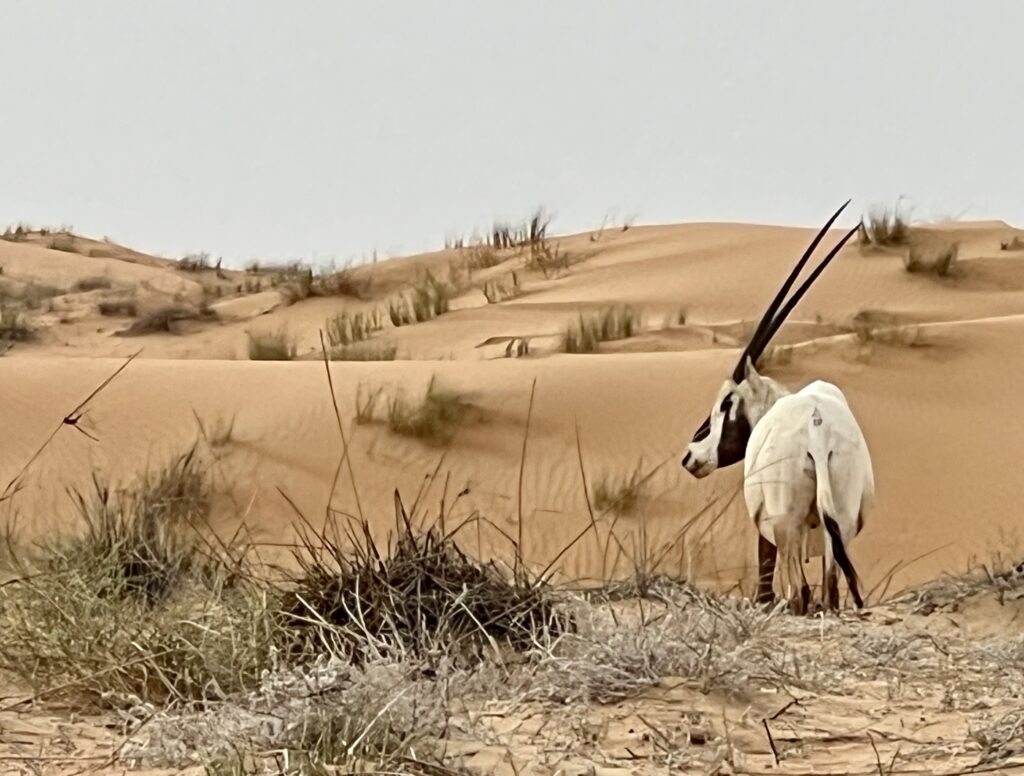
Set within the Dubai Desert Conservation Reserve, Al Maha is one of the world’s most compelling examples of luxury and conservation coexisting without compromise. The reserve was established in 1997 to reintroduce indigenous fauna to the desert and to preserve local wildlife — most notably the Arabian Oryx, which was once on the brink of extinction. Today, more than 700 Arabian Oryx roam the reserve, a direct result of the protection that surrounds Al Maha.
The initiative led to the establishment of the Dubai Desert Conservation Reserve (DDCR), covering roughly 5% of Dubai’s total land area. The resort operates a water recycling plant using reverse osmosis, irrigates through a drip system that minimizes water use in one of the driest environments on earth, and has planted over 6,000 native acacia, sidr, and ghaf trees across its grounds. Solar panels supplement energy needs, used cooking oil is converted to biodiesel, and a comprehensive waste management programme governs the property. Sunrise and sunset horseback rides through the dunes offer an encounter with this fragile and extraordinary landscape that is, in every sense, earned. Photo credit: Equestrian Destinations
C Lazy U Ranch — Granby, Colorado, USA
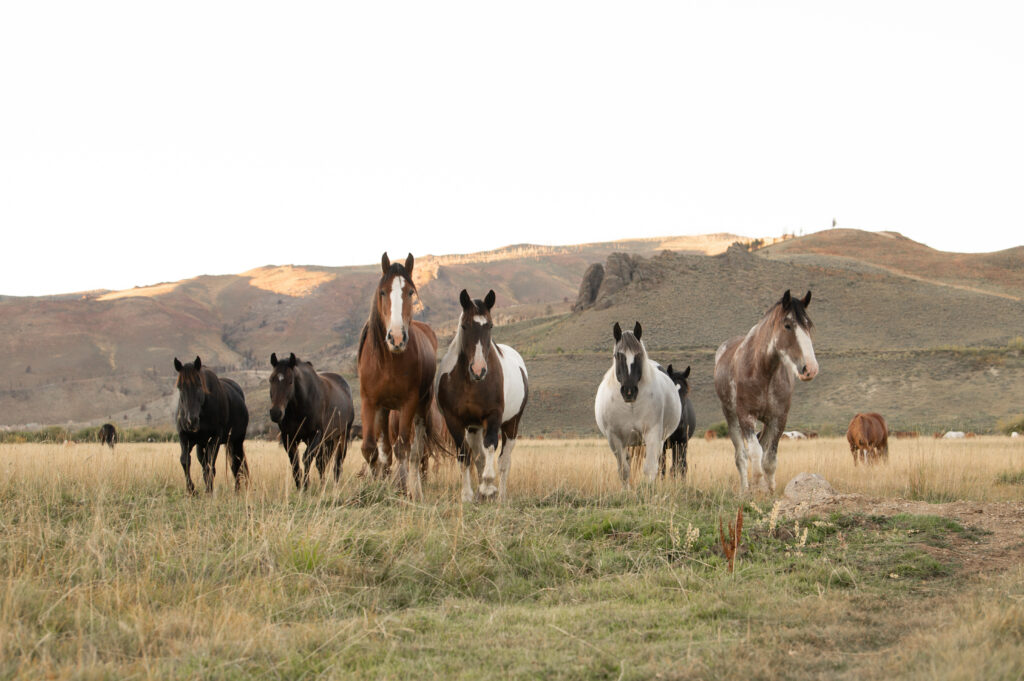
C Lazy U Ranch in the Colorado Rockies has been welcoming guests since 1919, and its conservation story is as deep as its history. Of its 8,500 acres, 2,600 are permanently protected under conservation easements in partnership with The Nature Conservancy, preserving critical wetlands and wildlife habitat in perpetuity. After the devastating East Troublesome Fire of 2020, the ranch partnered with OneCanopy and Ecoculture to plant 1,600 trees and help restore the forest.
Water comes from two natural springs and is conserved through a state-of-the-art treatment facility. The kitchen operates on farm-to-table principles with hydroponically grown ingredients from an on-site FarmBox. With over 100 horses and trails that wind through some of the most spectacular mountain terrain in the American West, this is sustainable ranching at its most immersive. Photo Credit: C Lazy U Ranch
Equiberia — Gredos & Segovia, Spain
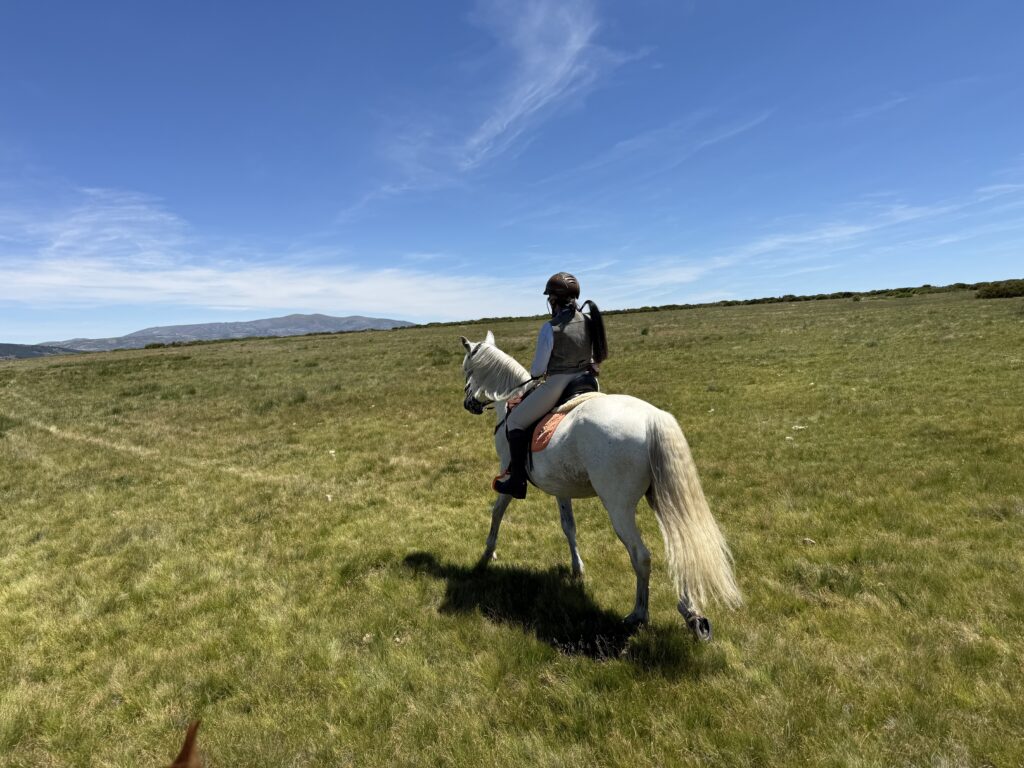
Equiberia’s home base in the Sierra de Gredos carries Regional Park status, placing the entire riding territory under a protected-landscape designation before you ever set foot in the stirrup. The area’s second distinction is rarer still: certification as a Starlight Reserve by the UNESCO-affiliated Starlight Foundation, the first such designation anywhere in Castile and León, recognizing and actively protecting the region’s night sky from light pollution.
For riders, that means Gredos after dark is as much a part of the landscape as the trails by day — genuinely dark skies in a part of Europe where they’re increasingly hard to find. Equiberia backs this up with its own dedicated Responsible Tourism page, formalizing the ranch’s environmental commitments rather than leaving them implicit — a level of accountability that sets it apart even among conservation-minded operators. Photo credit: Equestrian Destinations
Half Moon Resort & Equestrian Centre — Montego Bay, Jamaica
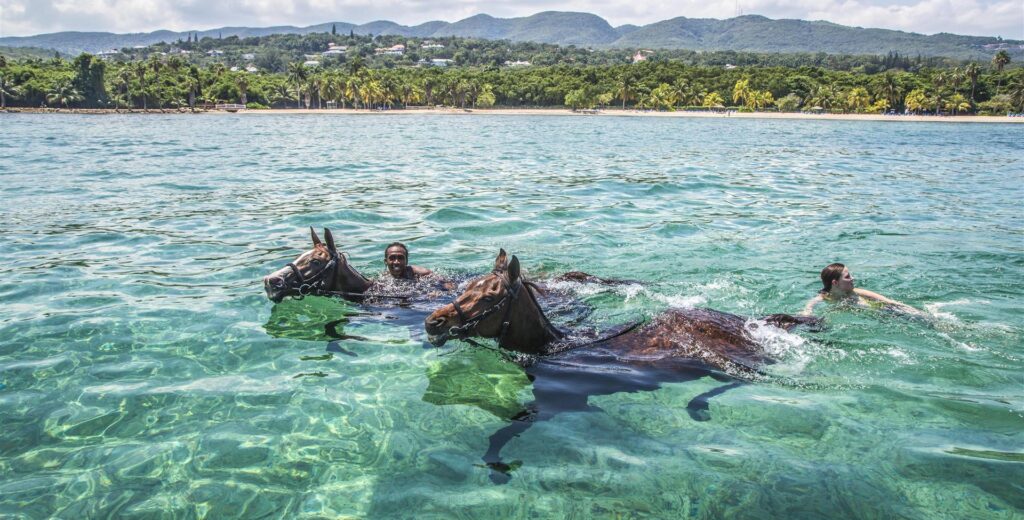
Half Moon in Montego Bay is one of Jamaica’s highest-rated resorts, and one of the few in the Caribbean to offer a complete, dedicated equestrian centre. For nearly 40 years, the Half Moon Equestrian Centre has offered beach rides, lessons and horsemanship programmes, and the extraordinary experience of swimming with horses in the warm Caribbean sea.
The resort has held external eco-certification continuously since 2005 and participates in Green Globe, one of the world’s most recognized sustainable tourism programmes, measuring its impact on the environment, local community, cultural heritage, and the broader economy. Water conservation, solar energy, and active recycling programmes are embedded in day-to-day operations. Through its sea turtle conservation efforts and partnership with the Oracabessa Marine Trust, Half Moon trains staff as licensed wardens through the National Environment and Planning Agency (NEPA), helping protect one of the most endangered sea turtle populations in the world. Photo credit: Half Moon Resort
Jakotango Riding Safaris — Northern Patagonia
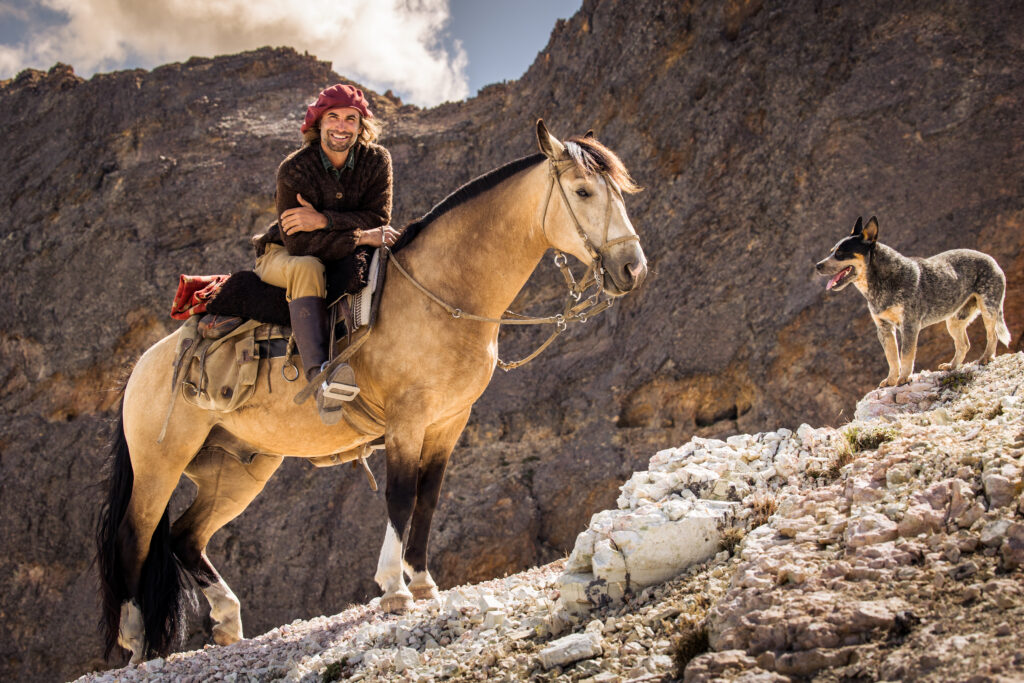
Jakotango’s Base Camp and riding routes sit on private land bordering both Nahuel Huapi and Lanín National Parks in Argentine Patagonia, with several days of the standard itinerary crossing directly into these protected areas — putting the ride at the edge of, and often inside, some of Patagonia’s most carefully guarded wilderness.
Riding across that boundary isn’t incidental; it places the programme’s conservation footing on the same terms as the parks themselves, where access is a privilege tied to the land’s protected status rather than a given. For you in the saddle, it means days spent moving through landscape shaped by national park management rather than private development — a rarer and more consequential kind of access than a scenic backdrop alone would suggest. Photo credit: Anya Campbell
Offbeat Riding Safaris — Masai Mara, Kenya
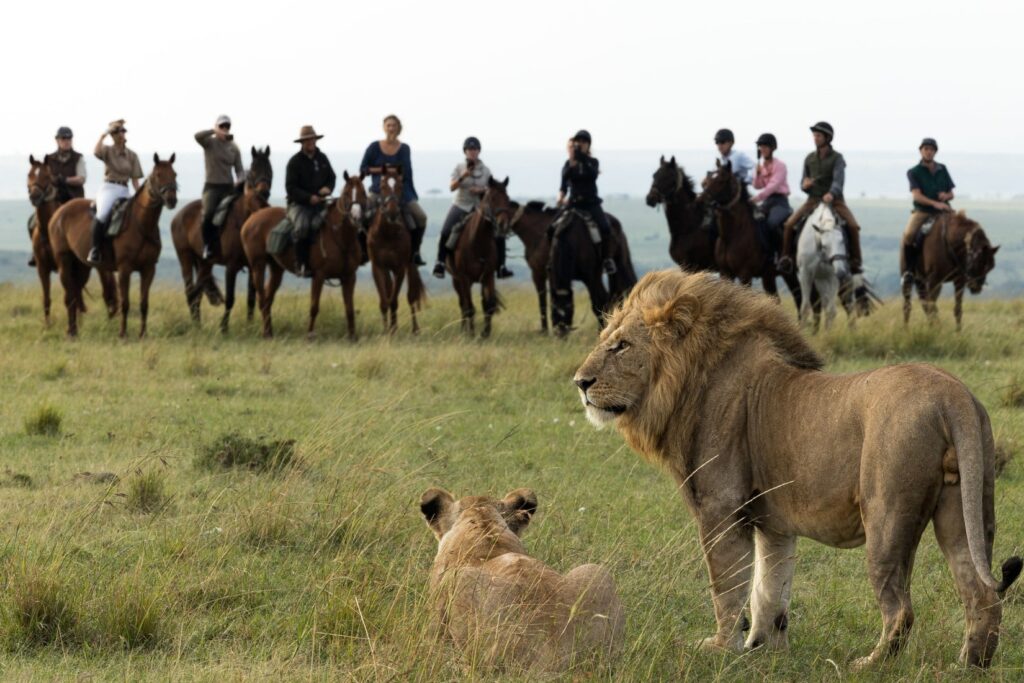
Offbeat Riding Safaris has operated in Kenya since 1990, and their approach to mobile safari is a masterclass in leaving no trace. Camps are temporary by design — erected, enjoyed, and dismantled without a permanent footprint left behind. All waste is packed out for recycling, solar lighting powers the camps after dark, and only biodegradable products are used throughout.
Safari fees fund anti-poaching patrols in the Mara ecosystem and scholarships for Maasai children, and every ride purchases carbon offsets through a Kenya-based reforestation programme. Their community model runs deep: camp land is leased directly from Maasai families, and local staff share their culture — beadwork, warrior songs, centuries of knowledge — with every group that passes through. Photo credit: Offbeat Safaris
Rancho Las Cascadas — Central Mexico
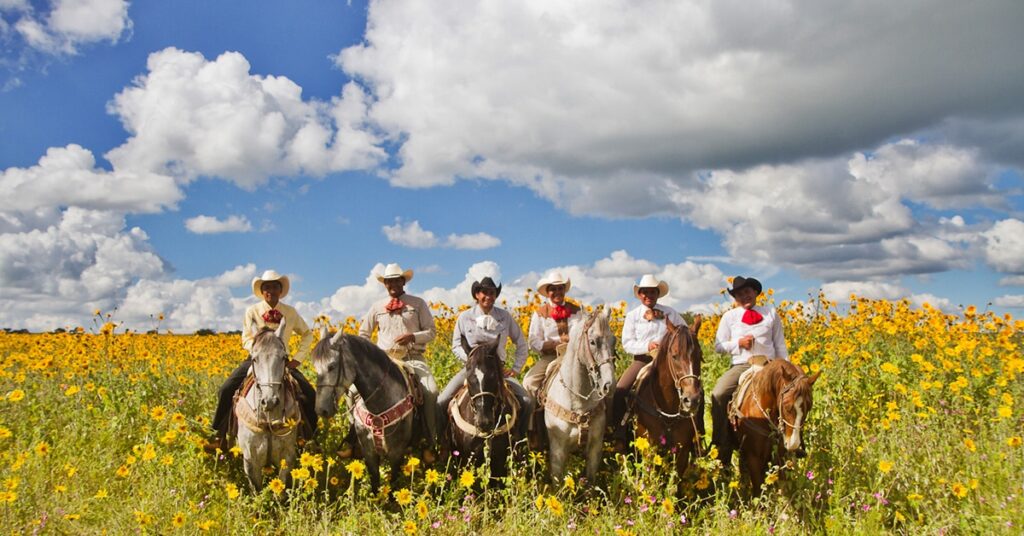
Rancho Las Cascadas in the highlands of Central Mexico is a study in regenerative land stewardship. Much of the land the ranch now occupies was formerly used for intensive animal agriculture — depleted, compacted, and carbon-heavy.
The ranch has committed to converting it into biodiverse food forests, botanical gardens, and a working nature preserve using permaculture principles: studying how nature replenishes its own soil, conserves water, and adapts to climate, then mirroring those processes in every aspect of daily operations. Fresh, locally sourced ingredients shape every meal, and the landscape guests ride through is actively being restored beneath them — a rare and quietly powerful thing. Photo Credit: Rancho Las Cascadas
Safaris Unlimited — Masai Mara, Kenya
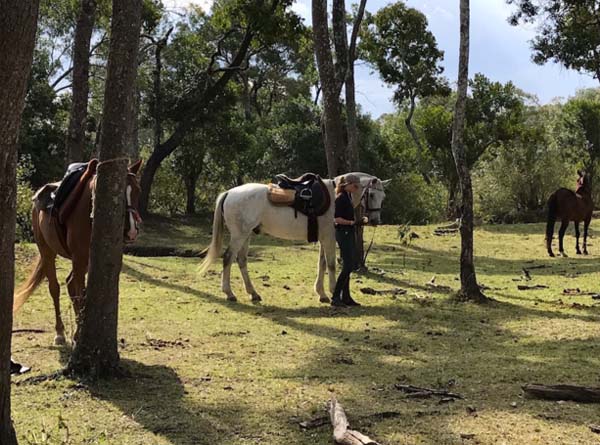
Safaris Unlimited is one of the founding voices of responsible horseback safari in Africa. Operating in Kenya’s Masai Mara — one of the great wildlife ecosystems of the world — their commitment to leaving the land undisturbed is embedded in everything they do. When breaking camp, the only trace left behind is the ash from the fire pit. Nothing else.
To every trip, they add a conservation fee that is passed directly to the Masai Mara Conservation on behalf of each guest — a contribution that helps protect the Mara’s extraordinary biodiversity, supports anti-poaching efforts, and funds community-based conservation programmes in partnership with local Maasai families whose land underpins the ecosystem. The Masai Mara’s private conservancies represent some of the most innovative conservation models in the world. More than 500 Maasai land-owning families have set aside their land for wildlife movement and sustainable tourism, receiving monthly conservation payments in return. Vehicle limits are strictly enforced — sometimes as few as one vehicle per 700 acres — keeping the experience intimate and the wildlife undisturbed. On horseback, you move through this world even more quietly than that. Photo Credit: Equestrian Destinations
The Hideout Lodge & Guest Ranch— Wyoming, USA
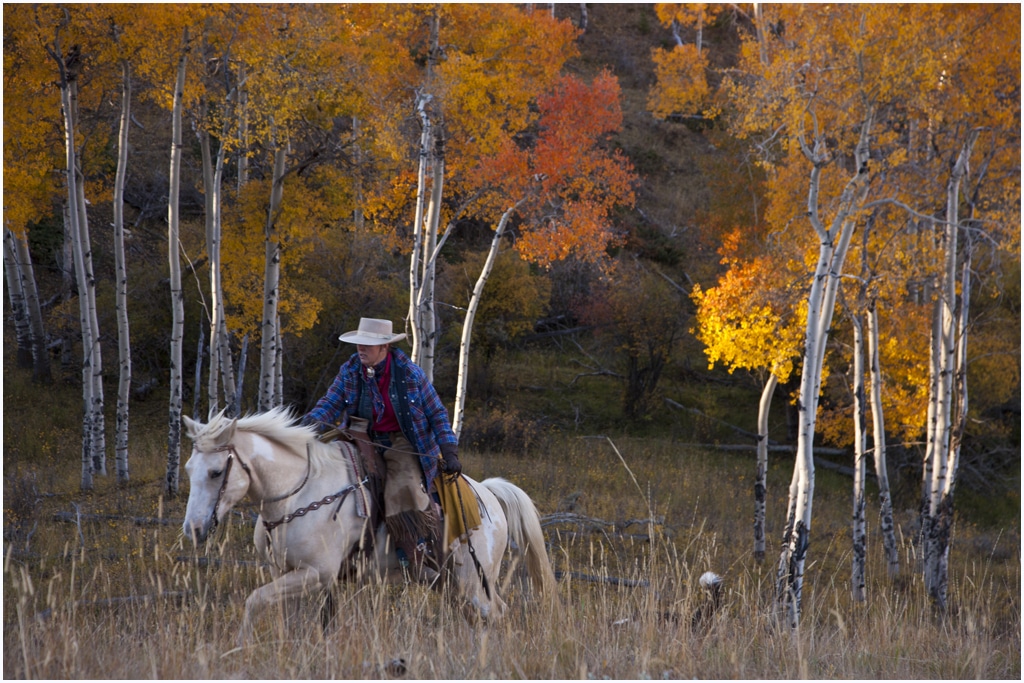
The Hideout’s riding programme reflects the same stewardship ethic that shapes every corner of the operation. Its horsemanship is built around low-stress handling — reading pressure and release, body language, and herd behavior rather than force or quick correction — so the horses you ride are calmer, more responsive, and asked to carry less strain with every mile.
That mile itself is significant: nearly 650,000 acres of combined riding access across Bureau of Land Management and Forest Service permits, layered onto the ranch’s own deeded land, means you’re moving through working, publicly managed terrain rather than a fenced-in loop. The scale of the land and the care in the horsemanship aren’t separate selling points — they’re one philosophy, applied to an animal and an ecosystem alike. Photo Credit: The Hideout Lodge & Guest Ranch
Hotels Making a Difference
Three British properties are standouts — not only for their exceptional equestrian access, but for their genuine commitment to sustainable hospitality.
Coworth Park, A Dorchester Collection — Ascot, UK
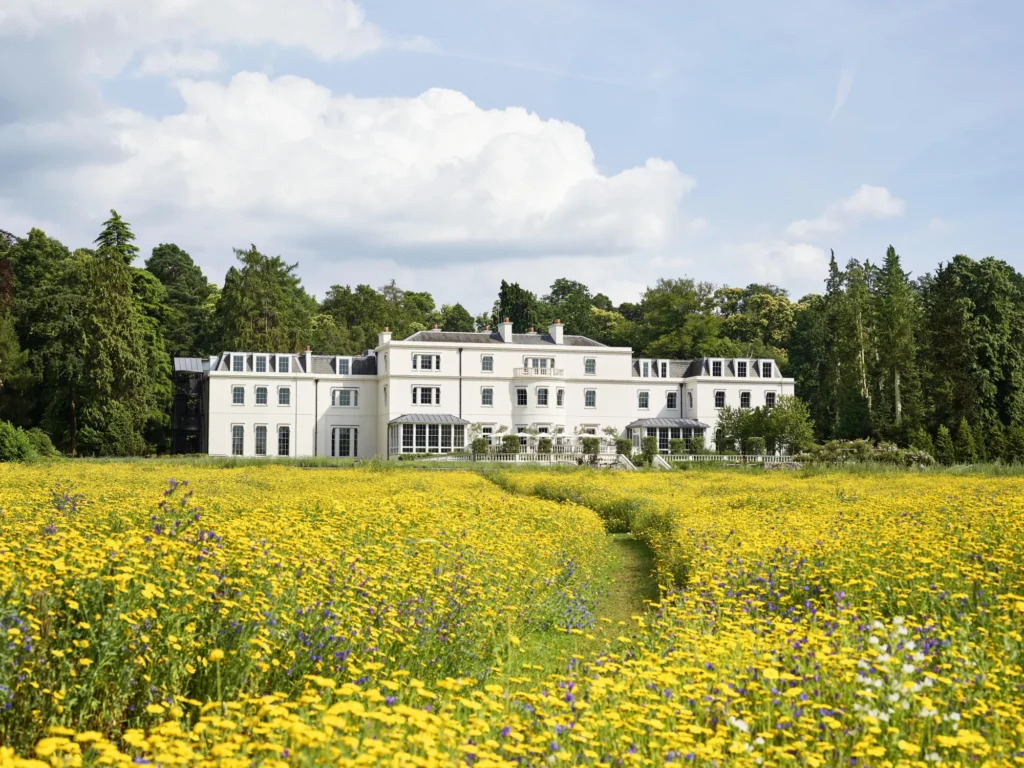
Set on 240 acres in Ascot, Berkshire, was among the first UK hotels of its kind to incorporate large-scale sustainable infrastructure — including a biomass boiler housed in an underground energy centre fuelled by burning willow. The estate’s working polo fields and riding experiences are available to guests amid genuinely beautiful English countryside. Photo Credit: Coworth Park
Mandarin Oriental Hyde Park — London, UK

Named Sustainable Hotel of the Year at the Country and Town House Luxury Awards — a recognition earned through genuine innovation. It became the first luxury hotel in the UK to install Naked Energy’s solar thermal technology on its rooftop, reducing both carbon emissions and energy consumption. The Grade II listed building is being progressively retrofitted with renewable energy systems, single-use plastics have been eliminated, and the property holds both Global Sustainable Tourism Council (GSTC) certification and the Responsible Hospitality VERIFIED™ badge. Hyde Park’s riding trails are moments away. Photo Credit: Equestrian Destinations
Fairmont Windsor Park — Windsor, UK
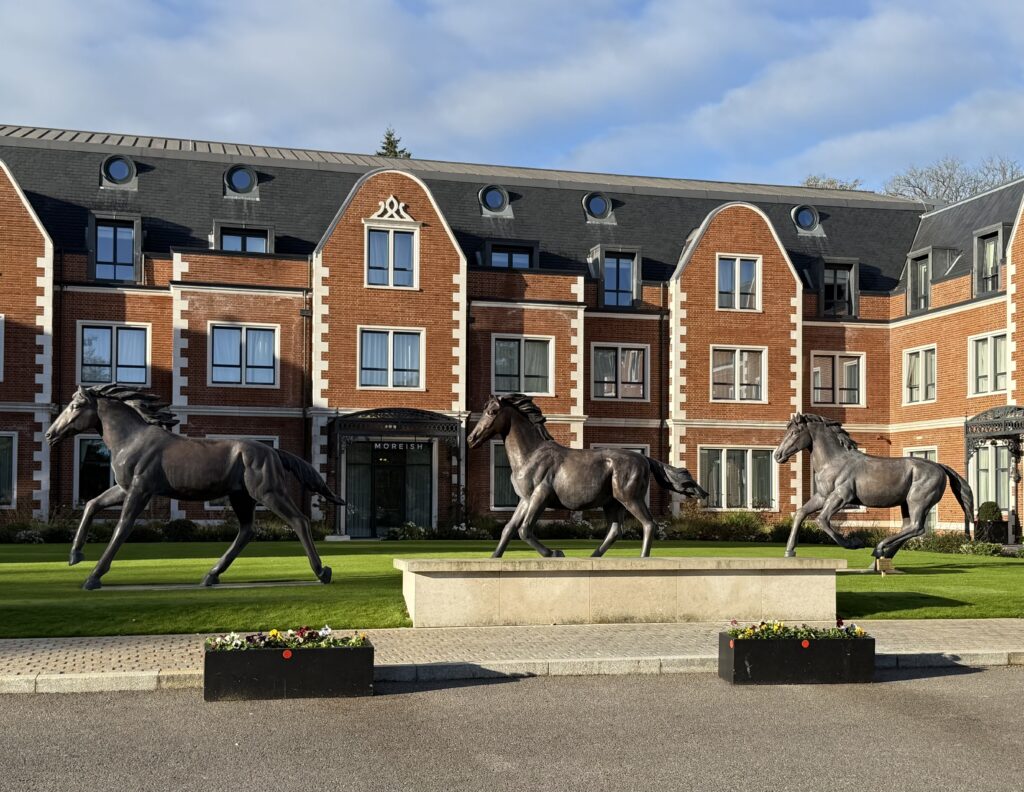
Set just minutes from the Long Walk and the grounds of Windsor Castle, is a five-star property that has woven sustainability into its fabric from the ground up. During construction, the hotel worked with arboriculture and ecology consultants to minimize impact on local flora and fauna, installing bat boxes within the brickwork and tree-mounted boxes throughout the estate to ensure wildlife was protected rather than displaced.
The hotel holds Green Key certification — a programme linked directly to the United Nations Sustainable Development Goals — and has eliminated single-use plastics throughout. For riders, Wayside Stables offers access to Windsor Great Park — 4,800 acres of sweeping parkland, wide carriage roads, and winding woodland trails that are, as Wayside themselves put it, best seen from the back of a horse. Photo Credit: Equestrian Destinations
Our Destinations Make a Difference
- Al Maha, A Luxury Collection Desert Resort and Spa – Set within a protected desert reserve
- Bar W Guest Ranch – Rides across adjoining state and public land
- C Lazy U Ranch – Dedicated conservation program with land trust partnerships
- CM Ranch – Land bordered by National Forest and Wilderness
- Coworth Park, A Dorchester Collection – Carbon-neutral biomass energy, plus group-wide ESG commitments
- Eaton’s Ranch – Operates under a National Forest special use permit
- Equiberia – Rides through a UNESCO-recognised dark sky reserve
- Fairmont Windsor Park & Wayside Stables – Green Key certified with its own beehives and kitchen garden
- FreeRein Riding Holidays – Founder personally involved in native pony conservation
- Geronimo Trail Guest Ranch – A private inholding within National Forest
- Half Moon Resort & Equestrian Centre – Horse rescue programme and Hawksbill sea turtle conservation
- Hyde Park Riders Experience at the Mandarin Oriental – First UK luxury hotel with rooftop solar thermal technology
- Íslandshestar – Farmer-owned model built around native breed preservation
- Jakotango Riding Safaris – Rides directly bordering two national parks
- Killarney Riding Stables – Rides inside Killarney National Park
- Marble Mountain Ranch – Operates under Forest Service and Fish and Wildlife permits
- Mountain Top Resort – Trails run through Green Mountain National Forest
- Offbeat Riding Safaris – Co-founder helped establish a major conservancy
- Rainbow Trout Dude Ranch – Backcountry access borders designated Wilderness
- Rancho Las Cascadas – Eco-tourism and local community commitment
- Ride Egypt – Active horse rescue and welfare programme
- Rocking Z Guest Ranch – Ranch land placed under a formal conservation easement
- Safaris Unlimited – Funds anti-poaching and community programmes
- Stagecoach Trails Guest Ranch – Bordered by 360,000 acres of BLM land
- Stone Horse Mongolia – Directly funds rangers and conservation infrastructure
- Sylvan Dale Guest Ranch – Runs an affiliated nonprofit for land-based education
- The Hideout Lodge & Guest Ranch – Riding access spans BLM and Forest Service permitted land
- Tk Outfitting – Rides through National Park and National Forest land
- Tsylos Park Lodge – Operates within an Indigenous co-managed provincial park
- Vista Verde Ranch – Borders National Forest and Wilderness, with a sustainability commitment
- Western Pleasure Guest Ranch – Documented sustainable land management practices
- Zephyr Horses – Herd includes rescued and rehabilitated wild brumbies
The choices you make before you leave home are as important as the ones you make when you arrive. You may already be making a positive impact without fully realizing it — and a few intentional shifts can make that impact considerably greater.
Choosing a horse-riding holiday is itself a meaningful act. It is low-impact by design. It takes you to national parks and protected conservancies and puts your visit directly in service of their preservation. It leads you off the roads, away from the crowds, and into landscapes where the value of protecting wild places becomes viscerally clear.
Beyond that, the most impactful things are often the simplest. Stay at certified green hotels — look for internationally recognized programmes such as Green Seal, LEED, EarthCheck, Green Globe, or Rainforest Alliance. Travel with reusable bottles and bags instead of single-use plastics. Dine locally, support local businesses, and take the time to learn something of the culture and traditions of the places you pass through. Reuse your towels and linens, turn off lights when you leave a room, and conserve water — small habits that, multiplied across thousands of guests, make a measurable difference.
When you observe wildlife — and on horseback, you will encounter wildlife at a closeness that no vehicle can offer — do so respectfully. Stay at a distance. Move quietly. Let them be.
Finally, for the emissions that remain unavoidable, consider offsetting. Many airlines now offer carbon offset programmes at the point of ticket purchase, with options to contribute directly to verified environmental projects. Offsets are also available when checking out of many hotels and when visiting national parks and conservancies — a simple addition to your stay that carries real weight.
World Equestrian Center in Ocala, Florida — named one of TIME Magazine’s World’s Greatest Places and the largest equestrian complex in the United States — is proof that the sport itself is stepping up. As the equestrian world gathers at the highest levels of competition, venues like WEC are raising the standard for how a world-class competition destination can help. WEC has opened its barns as free emergency shelter during hurricanes, housing 3,000 horses ahead of Hurricane Ian in 2022 and 1,200 during Hurricane Helene, with owners asked to cover only the cost of bedding. In Ian’s aftermath, the surrounding Ocala equestrian community raised more than $70,000 in supplies for Southwest Florida relief. WEC Ocala also hosts Discover Dressage, a 501(c)(3) nonprofit working to expand youth access to the sport, and counts Mars Equestrian as an Official Founding Partner supporting horse welfare and equine nutrition.
When we vet a destination, we look past the scenery to the equipment riders will depend on — and increasingly, guests ask whether that gear reflects the same values we bring to travel itself. The honest answer is layered, because our partners in this space each earn their place on our list for different reasons.
We gravitate toward gear built to outlast a single season. Charles Owen’s helmets and Helite’s airbag vests aren’t sustainable in the trendy, recycled-fabric sense — they’re sustainable in the older sense made in one dedicated workshop (North Wales, Dijon). It’s a quieter kind of stewardship, but it’s real.
Our Partners in Conservation
Every destination we recommend reflects a shared commitment to protecting the landscapes and communities that make these experiences possible. We are equally proud to partner with organizations working to amplify that mission through storytelling and science.

HELITE leads with reusability by design. Its airbag vests are built to be reset and worn again after most falls — swap the CO2 cartridge and ride on — and to be professionally repaired rather than replaced. Manufacturing stays rooted in a single facility in Dijon, France, keeping the supply chain short and the craftsmanship close to home.

SEVENSEAS Media, founded by conservation biologist Giacomo Abrusci, is an independent nonprofit platform dedicated to supporting the global conservation community through environmental journalism, scientific storytelling, and professional resources. With a twenty-year track record in conservation biology and partnerships with organizations including Conservation International and the International Union for Conservation of Nature, SEVENSEAS connects scientists, researchers, and ocean advocates worldwide. It is a privilege to align Equestrian Destinations with a voice so committed to the natural world we ride through. Donate to SEVENSEAS HERE. Featured: Equestrian Destinations in Where the Trail Meets the Tide (SEVENSEAS Media)
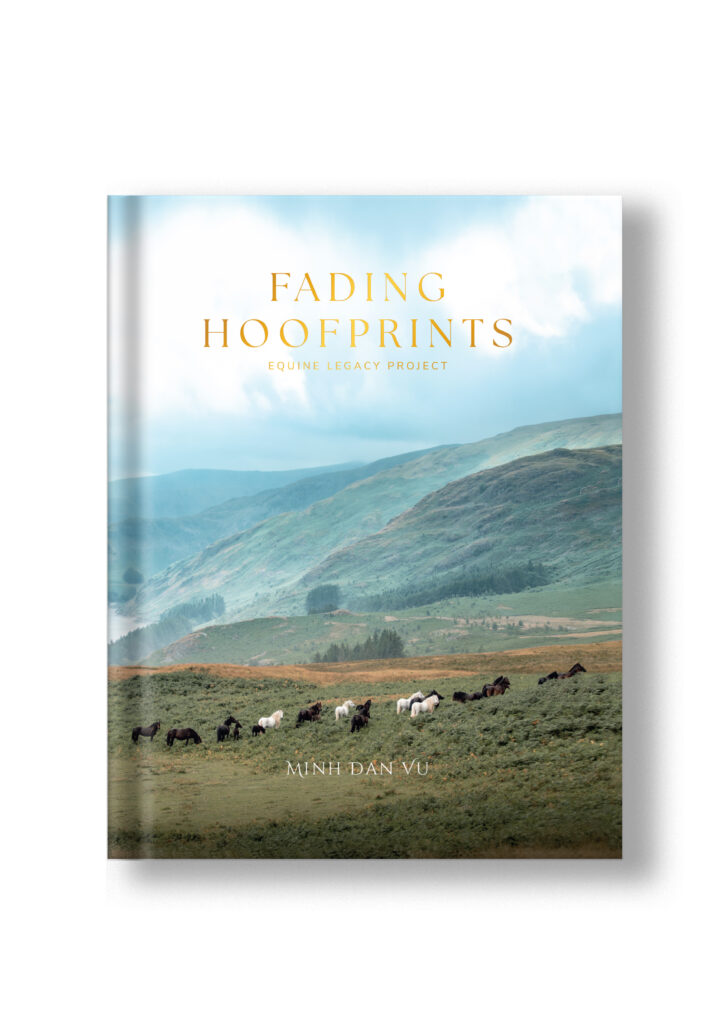
Around a third of the world’s 835 horse breeds are at risk of extinction, and 98 have already been lost — a loss the EQUINE LEGACY PROJECT is working to reverse through conservation and awareness. Each breed represents centuries of adaptation to a specific place and culture, so its disappearance erases both living heritage and genetic diversity. The project also frames horses as ecological assets — their grazing, seed dispersal, and manure improve soil and biodiversity, making rare breeds relevant to climate resilience, not just history. Through a coffee table book, documentary series, and podcast, the project aims to build public awareness before more breeds vanish. Equestrian Destinations is proud to partner with the Equine Legacy Project in support of this mission.
Sustainable Travel Options
Getting to your destination is part of the journey too. These airlines and hotel groups have real, verifiable sustainability programmes worth knowing about as you plan your travel.
Check back soon for details!