

A Traveler’s Guide to Horse Breeds
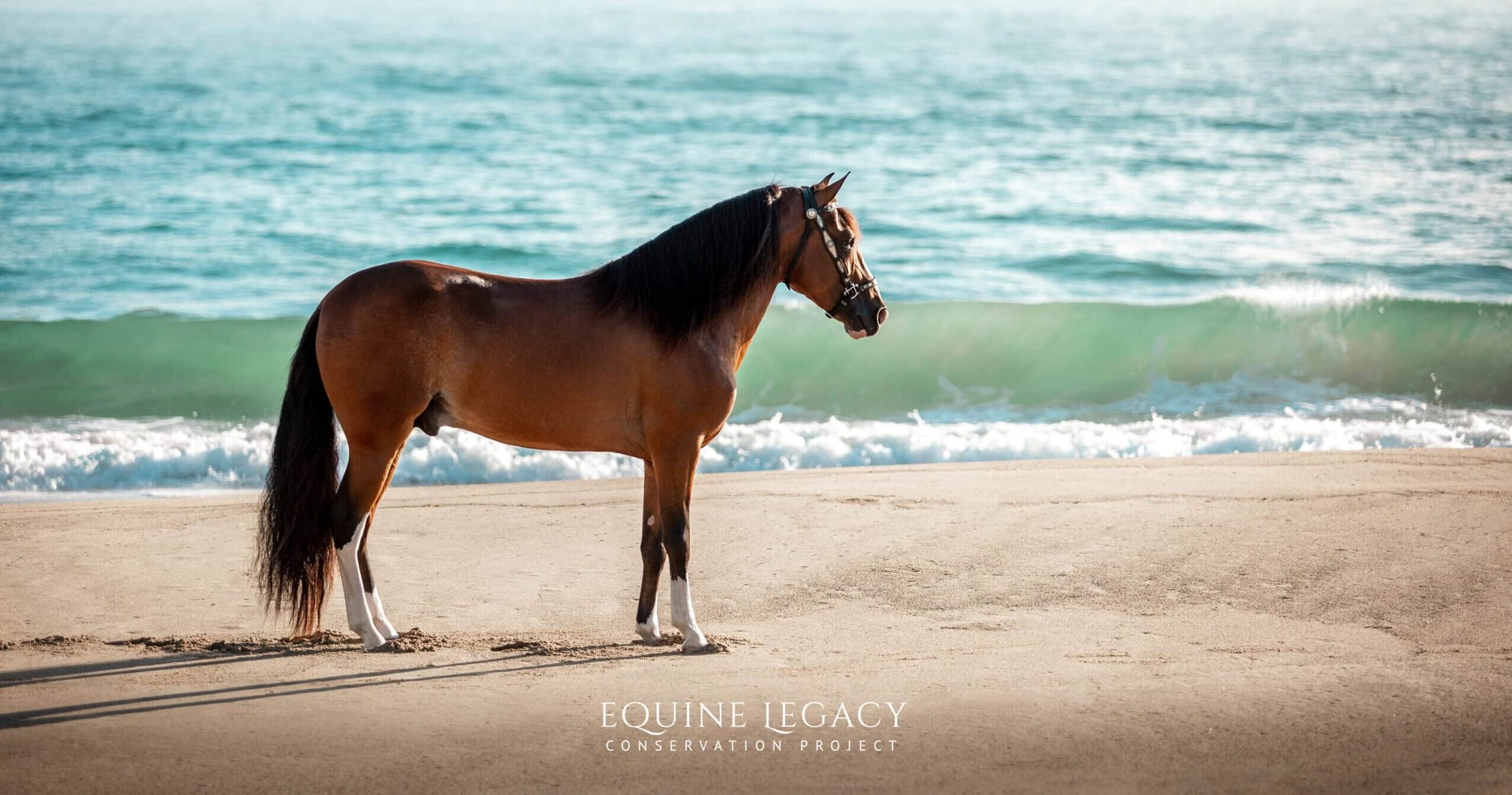
This is the Equestrian Destinations Traveler’s Guide to Horse Breeds: the breeds you may ride or encounter at our destinations, and the stories behind them. Every destination in our collection introduces you to breeds shaped by their landscape, their history, and the people who care for them.
We have formed a special partnership with the Equine Legacy Conservation Project, which is raising awareness of endangered or rare horse breeds. Learn about their conservation mission, or find more below the breed profiles. Discover their coffee-table book, Fading Hoofprints, as well as their documentaries and podcast series.
North America
-
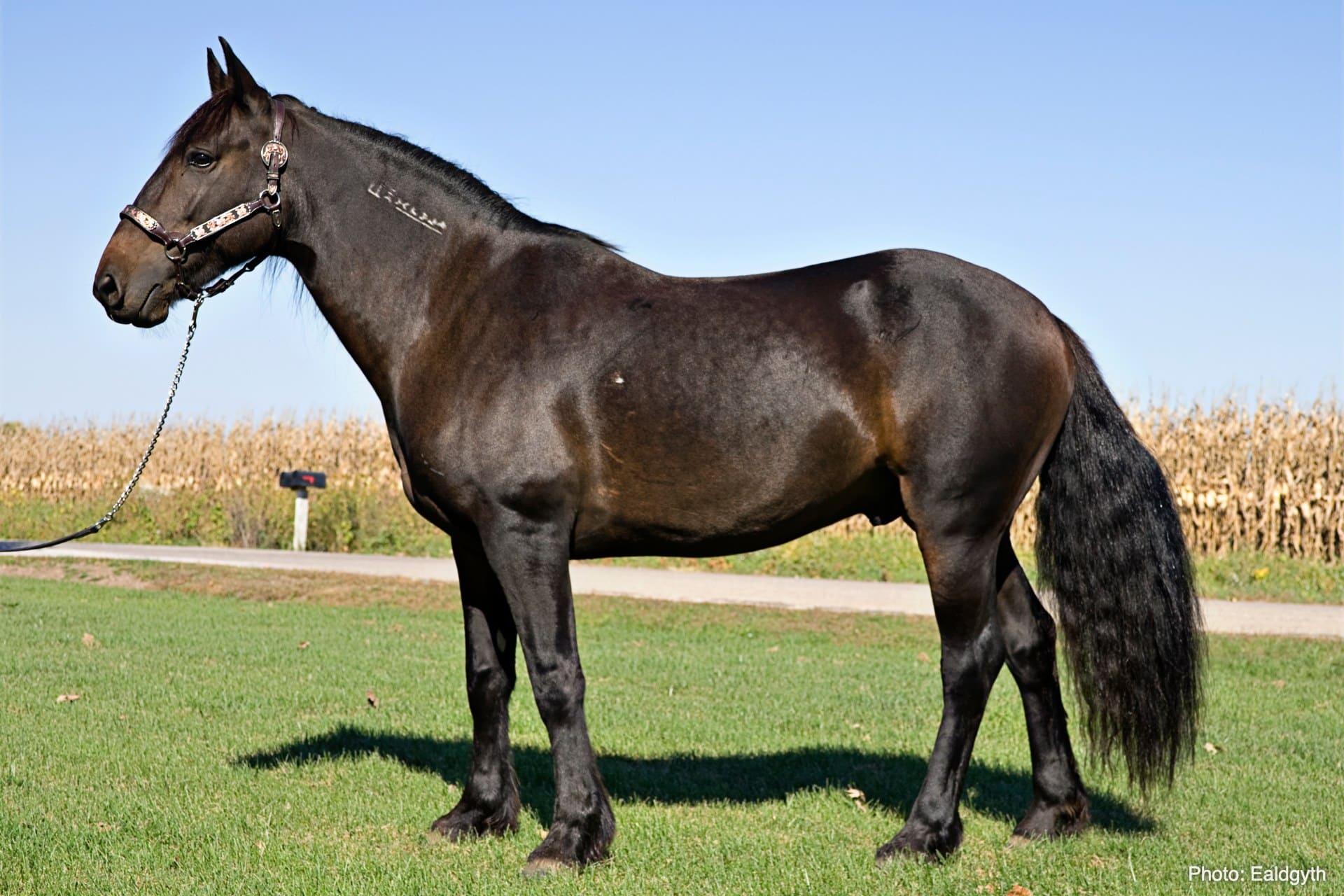
The American Mustang
The word itself carries weight. Mustang - from the Spanish mesteño, meaning “stray” or “ownerless” - conjures the American West the way few words can: open plains, red rock canyons, the thunder of hooves across land that stretches to the horizon. But the story of the Mustang is more complicated than its mythology suggests.
Horses were not native to North America in historical times.
Read more Read less
The prehistoric horse, Equus, evolved on this continent but migrated to Asia and Europe across the Bering land bridge thousands of years ago, eventually going extinct in the Americas. When Spanish conquistadors reintroduced horses in the 16th century, they were returning a creature to a landscape that had long forgotten it. The horses that escaped or were released from Spanish herds - the original Mustangs - were descended from Barbs, Andalusians, and other Iberian breeds, and they adapted to the Great Plains with remarkable speed.
By the 18th century, vast herds roamed the continent. Native nations - the Comanche, the Nez Perce, the Lakota - built entire civilizations around the horse, developing some of the finest horsemanship the world has ever seen. The Comanche, in particular, became mounted warriors of extraordinary skill within a single generation of encountering horses, transforming the balance of power across the Southern Plains.
The 19th century brought settlers and the systematic reduction of both wild herds and Indigenous peoples. By the mid-20th century, millions of Mustangs had been reduced to a few hundred thousand, slaughtered for pet food and fertilizer in organized roundups. In 1971, public outrage led Congress to pass the Wild Free-Roaming Horses and Burros Act, giving Mustangs federal protection for the first time. The law remains in force, though the tension between Mustang advocates and ranchers competing for grazing land continues unresolved.
The Mustang is not a single breed but a population of mixed heritage, varying widely in type, conformation, and size. Some herds - the Kiger Mustang of Oregon, descended from verifiably Spanish stock, or the Sulphur herd of Utah - carry bloodlines traceable directly to the original Spanish horses. Others reflect centuries of mixing with escaped domestic stock.
What the Mustang represents, more than any specific conformation, is wildness itself - the idea that a horse can survive, thrive, and belong to no one. Approximately 80,000 remain on public lands today. The debate over their management is one of the most contested in American conservation.
-
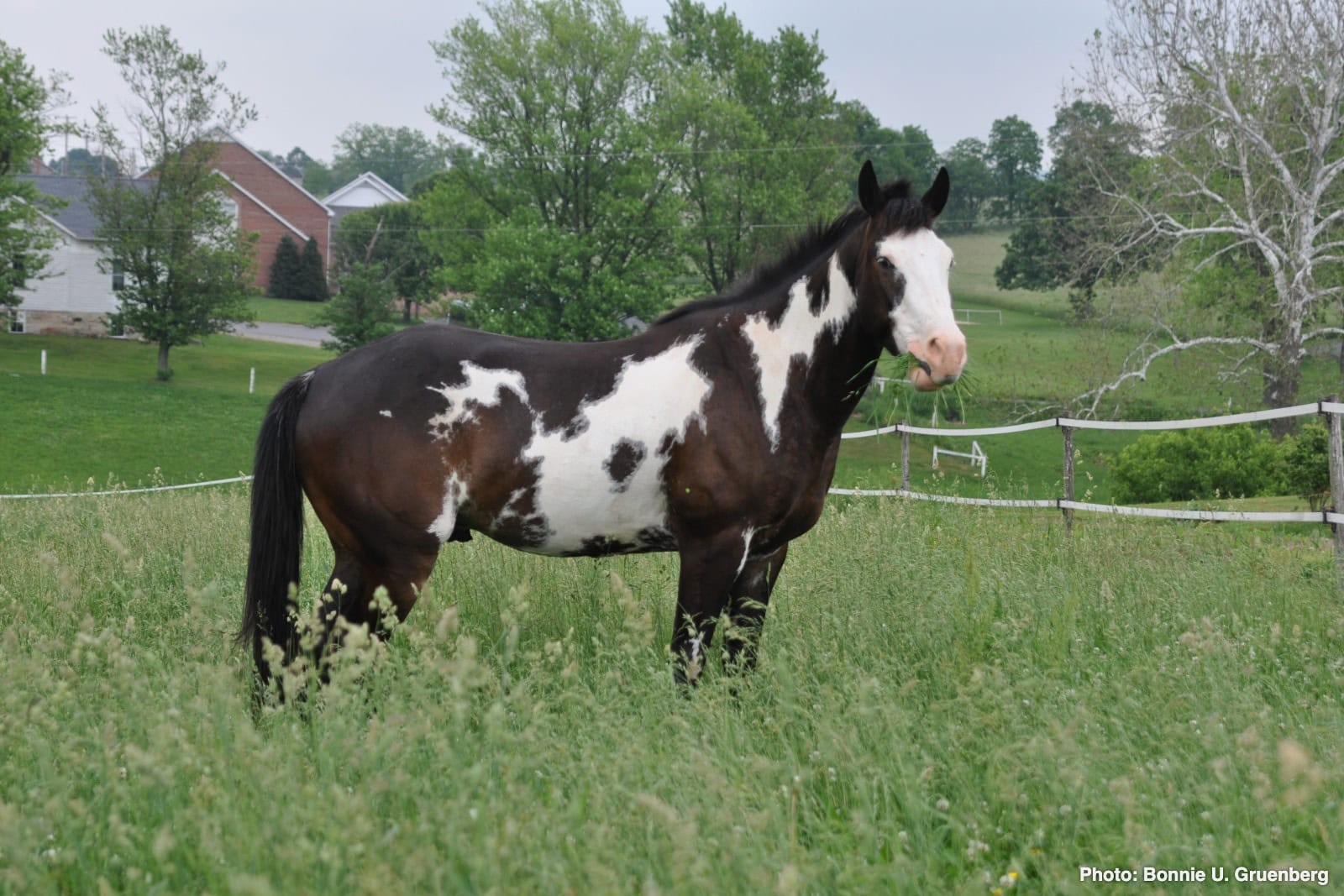
The American Paint Horse
The American Paint Horse combines the build and athleticism of the American Quarter Horse with a bold splash of color. Its spotted coat patterns recall the painted horses of the American West, prized by Comanche and other Plains nations, but the modern breed is defined by bloodlines as much as by color.
Read more Read less
When the American Quarter Horse Association began registering horses, it excluded animals with too much white. Breeders who loved those colorful stock horses formed their own registries, which merged in 1965 to create the American Paint Horse Association. To be registered, a Paint must have parents registered as Paints, Quarter Horses, or Thoroughbreds.
Paints are classified by their patterns: tobiano, with rounded white patches usually crossing the back; overo, with jagged white markings that rarely cross the back; tovero, a combination of the two; and solid, those horses that meet the bloodline requirements but lack the breed’s classic body markings. The breed has grown into one of the largest registries in the world.
The Paint is a classic stock horse, muscular and well balanced, usually 14.2 to 16 hands. It excels in Western disciplines such as reining, cutting, and barrel racing, and it is a favorite on ranches and trails, where its calm, willing temperament matters as much as its color.
-
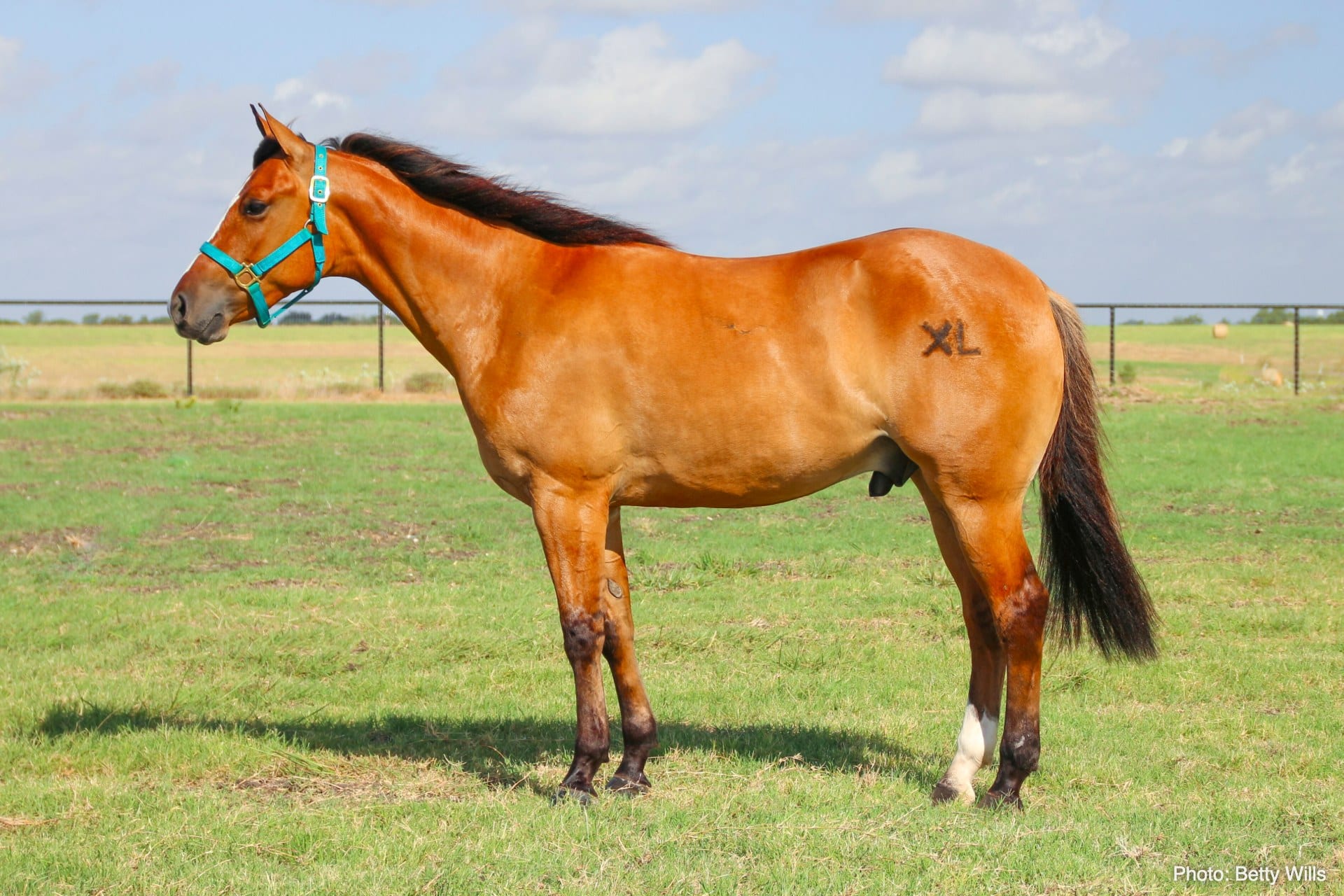
The American Quarter Horse
There is a reason the American Quarter Horse is the most registered breed in the world, with over three million horses on the books of the American Quarter Horse Association. It is because no breed has been more useful to more people in more situations across the history of a nation.
Read more Read less
The Quarter Horse takes its name from the quarter-mile match races that were a defining feature of colonial American culture, particularly in Virginia and the Carolinas from the 1600s onward. The narrow dirt streets and village commons of early settlements were not long enough for proper racing courses, so colonists ran their horses in short, explosive sprints. The horses that excelled at these races - descendants of Thoroughbred stallions imported from England crossed with native Chickasaw horses of Spanish breeding - developed a distinctive muscular powerplant, capable of breathtaking acceleration over short distances.
That same explosive power proved ideal for working cattle. When settlement pushed westward and the cattle industry expanded across Texas and the Great Plains in the 19th century, the Quarter Horse came with it. Its ability to “cut” a single animal from a herd - to read, anticipate, and mirror the movements of a cow with almost independent intelligence - became legendary. Cowboys said a good cutting horse could work cattle almost without a rider’s guidance, a quality referred to as “cow sense” that is as much instinct as training.
The American Quarter Horse Association was founded in 1940, and the breed was formalized around foundation sires including King, Leo, and Three Bars. The conformation is unmistakable: a broad, muscular chest and heavily muscled hindquarters, a short back, refined head with small ears, and legs built for power rather than length. Quarter Horses stand 14.3 to 16 hands and come in every solid color.
Today the Quarter Horse dominates Western disciplines - reining, cutting, barrel racing, and ranch work - but its versatility extends well beyond the Western arena. It is ridden English, used for trail riding, competed in hunter/jumper rings, and kept as a pleasure horse on six continents.
No breed tells the story of American expansion and agricultural ambition quite like the Quarter Horse. It is not the oldest American breed, but it may be the most American.
-
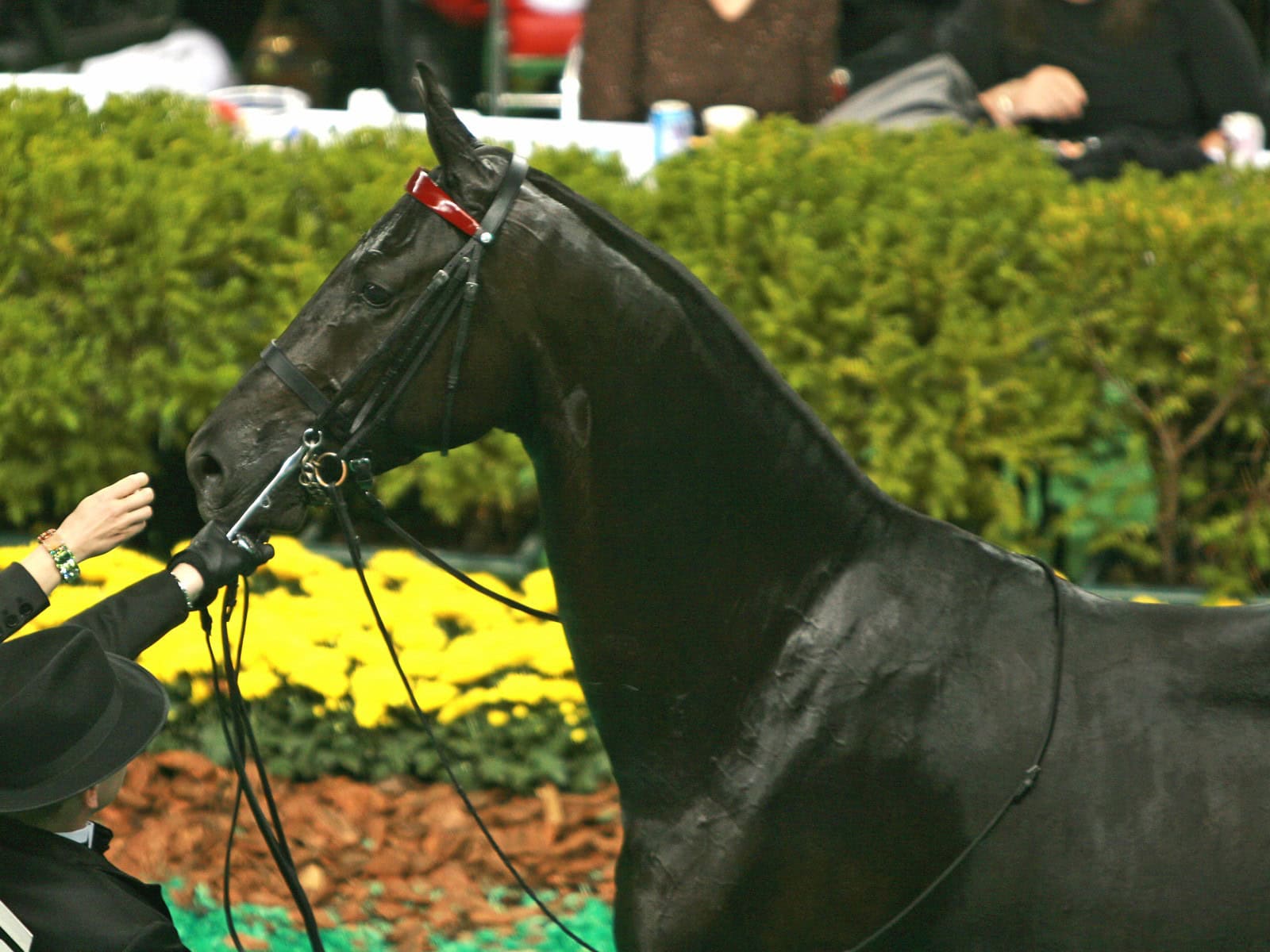
The American Saddlebred
The American Saddlebred is one of the oldest American breeds and, in the show ring, one of the most dazzling. Long-necked, high-headed, and brilliant in motion, it is sometimes called “the peacock of the horse world.”
Its roots reach back to colonial America, where the smooth-gaited Narragansett Pacer was crossed with the Thoroughbred to produce a comfortable, elegant riding horse known simply as the “American Horse.”
Read more Read less
Settlers carried it west into Kentucky, where it was refined into the Saddlebred. Generals on both sides of the Civil War rode Saddlebreds, and in 1891 the American Saddle Horse Breeders Association was founded, the first breed association established for an American breed.
In the show ring, Saddlebreds compete as three-gaited horses, at walk, trot, and canter, and as five-gaited horses, adding the slow gait and the fast, flashy rack. Kentucky remains the heart of the breed, and the World’s Championship Horse Show in Louisville is its greatest stage.
Away from the show ring, Saddlebreds are versatile riding horses used for pleasure, trail, driving, and dressage. They usually stand 15 to 16 hands and come in every color, with chestnut, bay, black, and grey most common. They are spirited, intelligent, and famously people-loving.
Photo credit: Heather Moreton / Wikimedia Commons (CC BY 2.0)
-
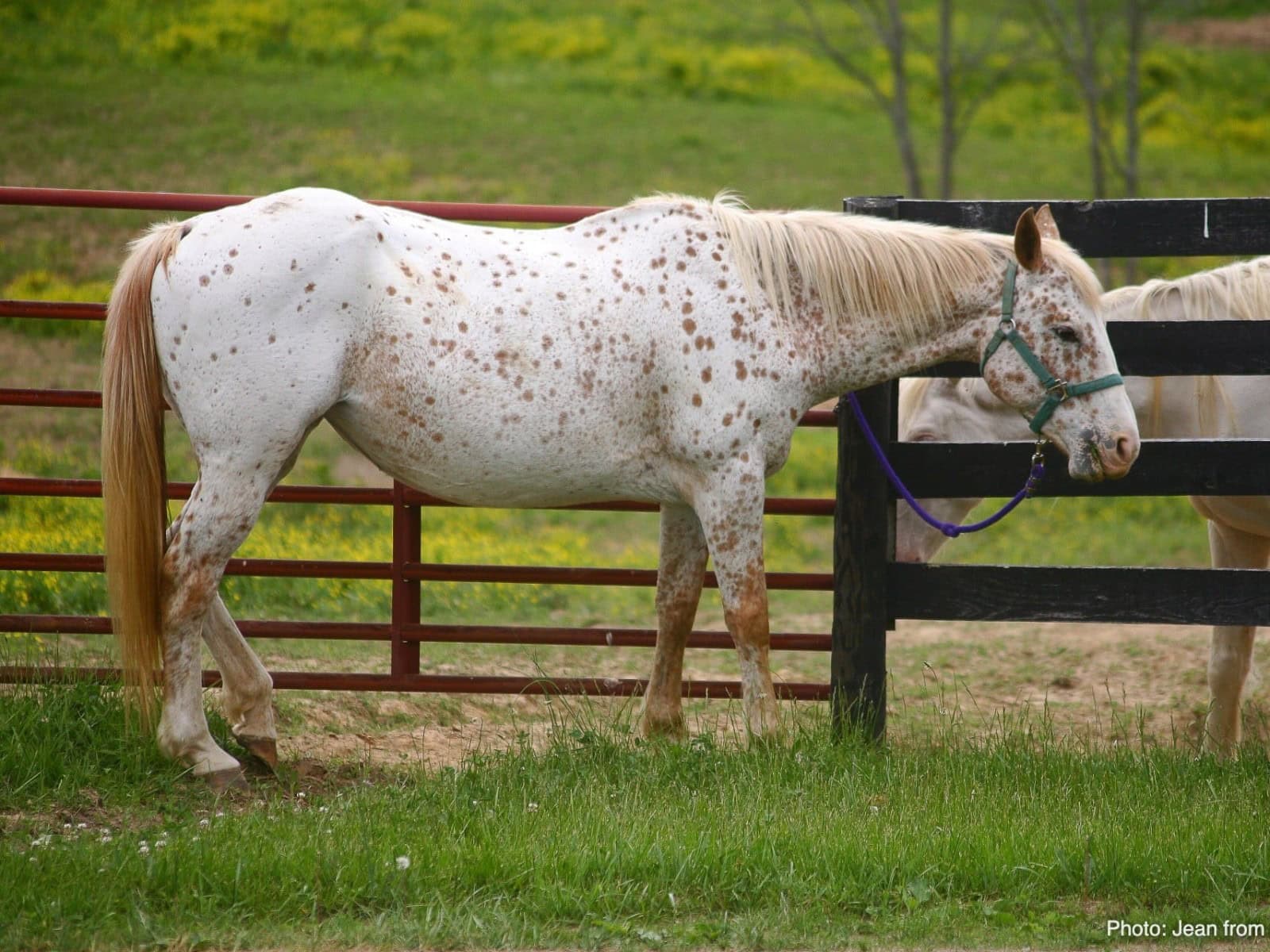
The Appaloosa
Spotted horses appear in cave paintings in southern France dated to 25,000 years ago. In ancient Persia and China, spotted horses were considered sacred. But the breed we know today as the Appaloosa carries a more specific and deeply American history - one inseparable from the Nez Perce Nation of the Pacific Northwest.
Read more Read less
The Nez Perce acquired horses through trade routes originating from Spanish colonial herds in the early 18th century. Unlike most Plains nations, the Nez Perce practiced deliberate selective breeding, culling inferior animals and trading for the best stock available. Over generations, they developed a horse renowned for its stamina, sure-footedness in mountain terrain, and striking coat patterns - the blanket of spots over the hindquarters, or the leopard complex of spots across the entire body, that made these horses unlike anything else on the continent.
The horses were associated with the Palouse River country of present-day Idaho and Washington, and became known as “Palouse horses” - eventually corrupted to “Appaloosa.”
The destruction of the Nez Perce horse culture came in 1877, during the catastrophic flight of Chief Joseph and his people from the U.S. Army across 1,400 miles of wilderness. When the Nez Perce finally surrendered, just 40 miles from the Canadian border, the Army confiscated and scattered the horses. Within a generation, the carefully cultivated Appaloosa herds had been dispersed or killed.
The breed survived through the horses that had already spread into the broader settler population. In 1938, Claude Thompson founded the Appaloosa Horse Club to preserve and promote the breed, and it has since become one of the most registered breeds in the United States. Today the Appaloosa Horse Club maintains records on more than 700,000 horses.
The Appaloosa stands 14.2 to 16 hands, athletic and compact with hard, striped hooves, mottled skin around the eyes and muzzle, and the characteristic sclera - the white of the eye visible around the iris. Coat patterns vary enormously: blanket, leopard, snowflake, frost, and marble are among the recognized configurations.
The Nez Perce Nation has spent decades attempting to restore their horses, crossing Appaloosas with Akhal-Tekes to recreate the original type. It is a work of cultural reclamation as much as breeding - an effort to recover something that was not simply lost but taken.
-
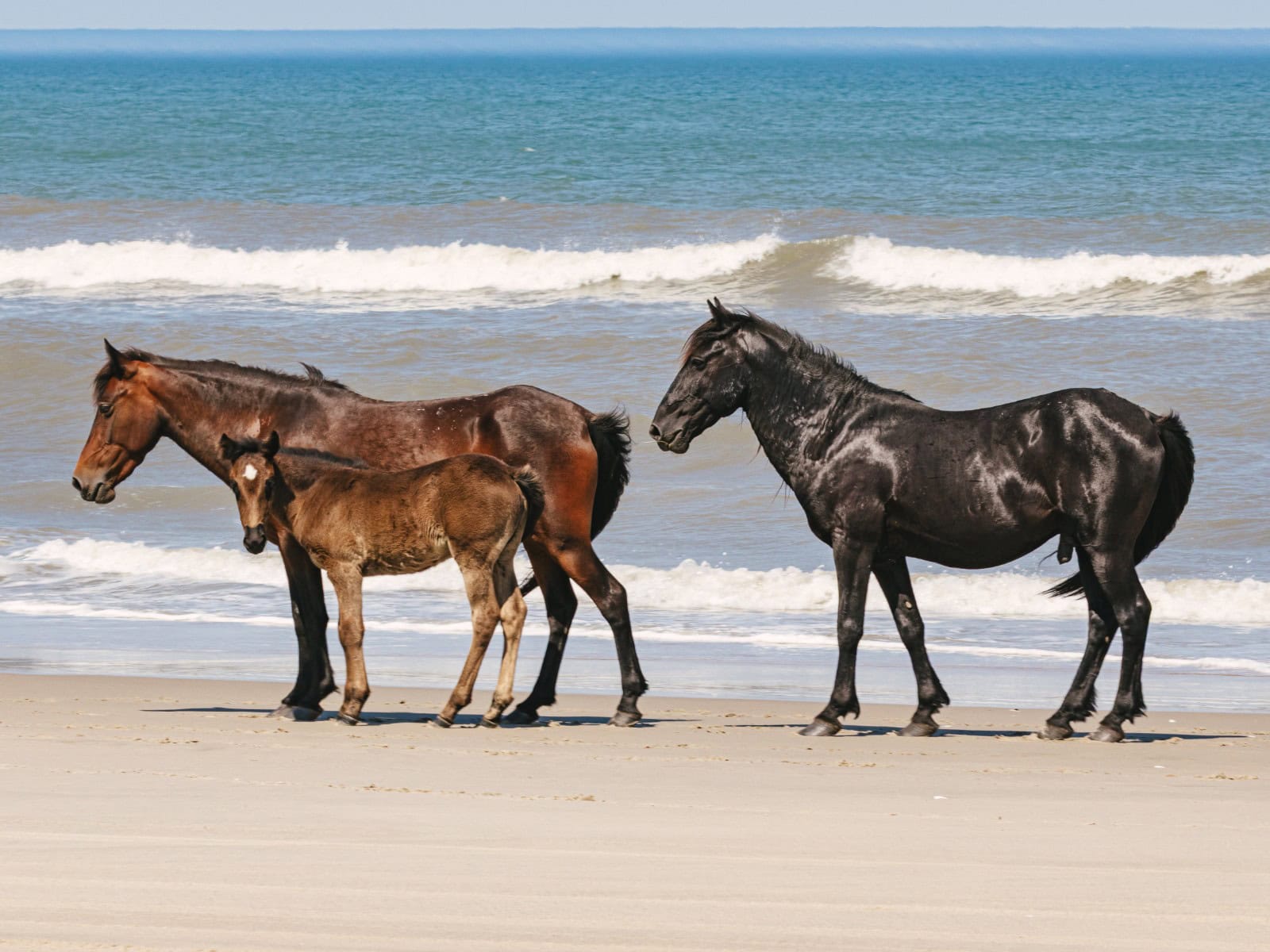
The Banker Horse
Critically endangered
On the narrow barrier islands of North Carolina’s Outer Banks, small, hardy horses have lived wild for centuries, grazing on marsh grass and digging for fresh water in the sand. These are the Banker horses, believed to descend from Spanish horses brought to the coast in the 16th century, possibly shipwrecked or left behind by early explorers.
Read more Read less
The Banker is part of the Colonial Spanish group of horses, related to the Carolina Marsh Tacky and the Florida Cracker Horse. Isolation preserved the old type: small, compact, with a short back and a low-set tail. For generations, islanders rounded up the horses for work, and Banker horses once served on lifesaving patrols along the coast.
Today wild herds live in several places, including Shackleford Banks, part of Cape Lookout National Seashore, and the northern beaches around Corolla, where the Corolla Wild Horse Fund protects them. A herd on Ocracoke Island is cared for by the National Park Service. On June 11, 2010, North Carolina named the Banker horse its official state horse, on the same day South Carolina honored the Marsh Tacky.
Banker horses stand about 13 to 14.3 hands and are usually bay, brown, chestnut, or dun. Hardy and self-reliant, they are among the most remarkable wild horses in North America, and their numbers remain small.
Photo credit: CWHF (Corolla Wild Horse Fund)
-
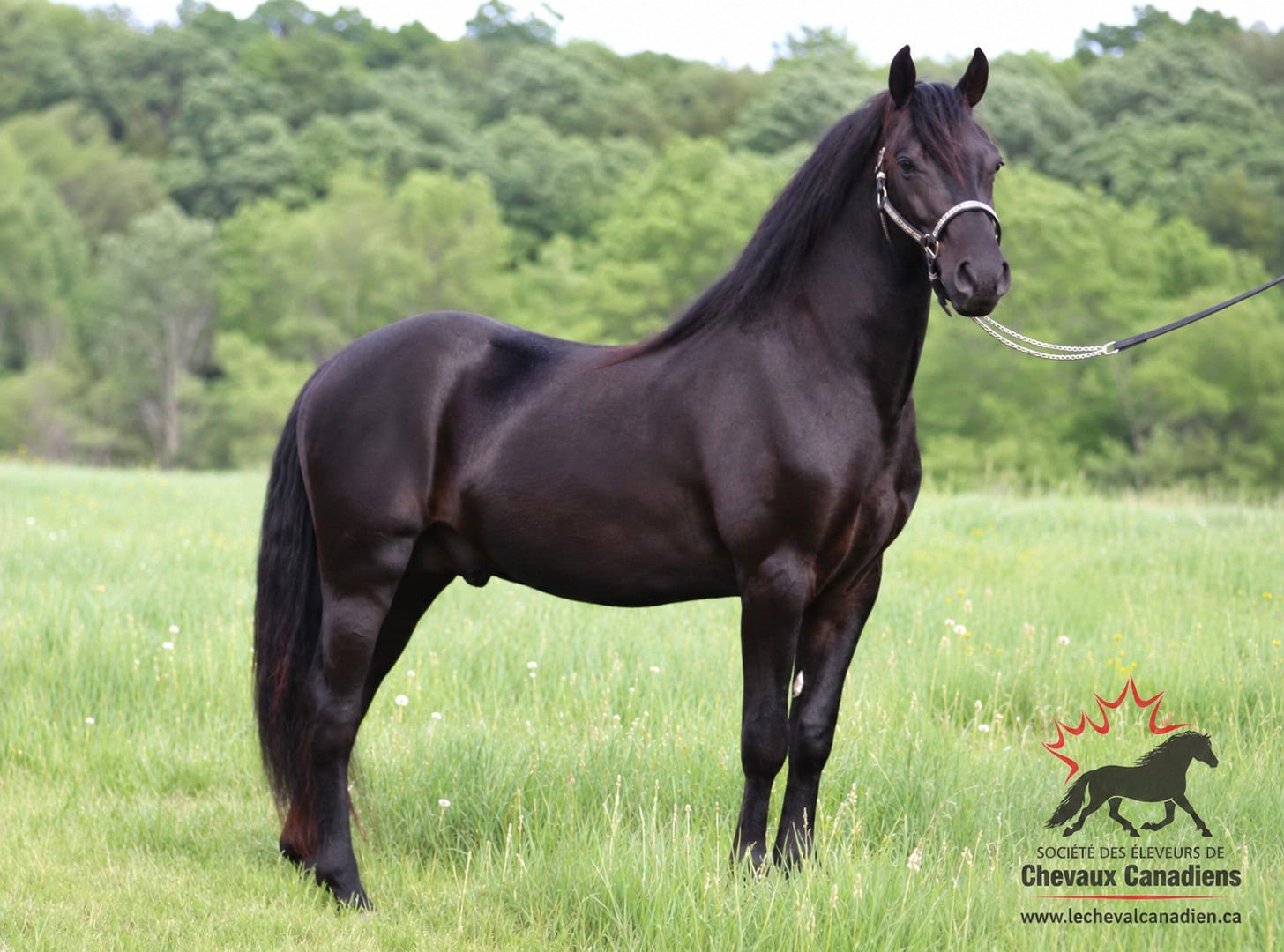
The Canadian Horse
Critically endangered
The Canadian Horse is known affectionately as the “little iron horse,” a tribute to its toughness through more than three centuries of hard work and Canadian winters. Its story begins in 1665, when King Louis XIV of France sent horses from the royal stables to the colony of New France.
Read more Read less
Those horses, believed to be largely of Breton and Norman origin, were bred in isolation along the St. Lawrence for generations. The result was a compact, strong, easy-keeping horse that farmed, pulled sleighs and carriages, and carried riders across Quebec. Canadian Horses were exported to the United States in large numbers and widely contributed to the Morgan, the Standardbred, and other American breeds.
Exports, wars, and mechanization brought the breed close to extinction. The Canadian Horse Breeders Association was founded in 1895, and by the 1970s only a few hundred horses remained. Determined breeders worked hard to rebuild the population. In 2002 the Canadian Horse was named the national horse of Canada. Despite all these efforts, the breed is still critically endangered: a 2026 census counted fewer than 4,000 living Canadian Horses.
The Canadian Horse usually stands 14 to 16 hands and is most often black, though bay, brown, and chestnut also occur. It is versatile, intelligent, and sound, and it is used for amateur sport, driving, trail riding, and ranch work.
Photo credit: Canadian Horse Breeders Association
-
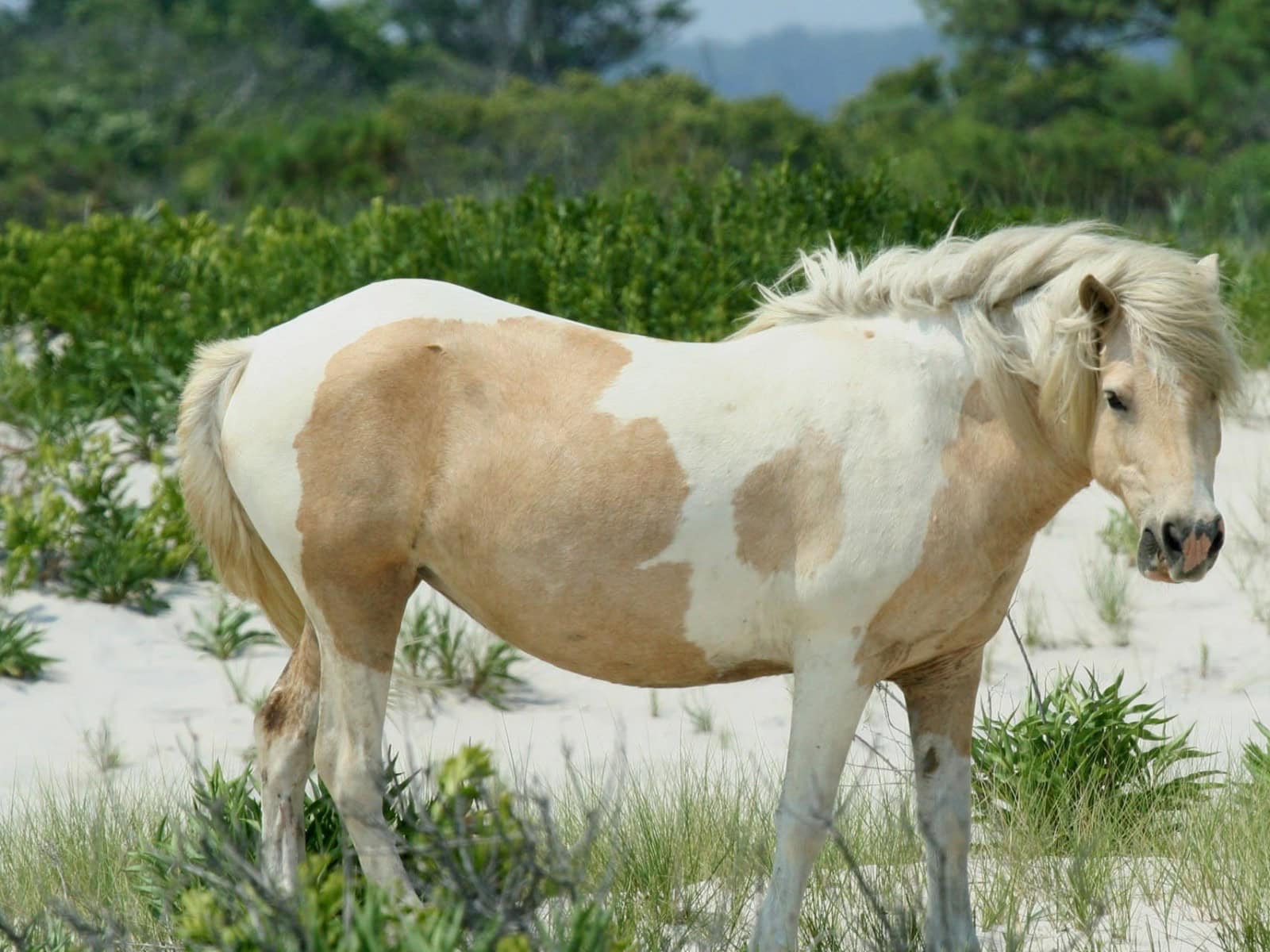
The Chincoteague Pony
Every summer, the wild ponies of Assateague Island swim across a channel to Chincoteague, Virginia. It has happened for decades - a tradition watched by thousands who line the shore. For many of them, the sight is their first encounter with something genuinely, quietly wild, and it stays with them for the rest of their lives.
Read more Read less
The ponies of Assateague have lived on the barrier island off the coasts of Virginia and Maryland for at least 400 years. How they arrived there is not entirely certain. The most romantic theory - and the one immortalized in Marguerite Henry’s beloved 1947 novel Misty of Chincoteague - is that they swam ashore from a Spanish shipwreck off the Virginia coast in the 1500s. Genetic studies have been inconclusive, though the ponies do carry some Spanish Colonial characteristics. A more prosaic explanation is that colonial settlers placed horses on the island in the 17th century to avoid mainland livestock taxes.
Whatever their origin, the ponies adapted to the island with remarkable thoroughness. They eat the coarse salt marsh cordgrass and drink water with a high salt content that would be toxic to most horses. Their bellies are rounded from the high-fibre diet; their manes tangle in the island wind. They move through the dunes and marsh in small bands with a self-possession that no domesticated animal quite replicates.
The famous annual Pony Penning takes place each July. The Chincoteague Volunteer Fire Company, which has managed the Virginia herd since 1947, drives the ponies into the channel on the last Wednesday of July. The swim takes only minutes. The foals are auctioned on the Virginia side to keep herd numbers sustainable, and the remaining ponies swim back to Assateague the following day. It is one of the oldest continuously running livestock auctions in America.
Chincoteague Ponies typically stand 13.2 to 14.2 hands. They are hardy and easy-keeping, with a pony’s resilience and a surprisingly gentle temperament for animals that have run wild. Many become excellent children’s mounts after the transition to domestic life.
The Maryland herd, managed by the National Park Service, is left entirely wild. The Virginia herd, managed by the Fire Company, is the one that swims. Together, they represent one of the most unusual human-animal relationships on the East Coast - a wild herd that funds a fire department, watched each year by a town that has built its identity around them.
-
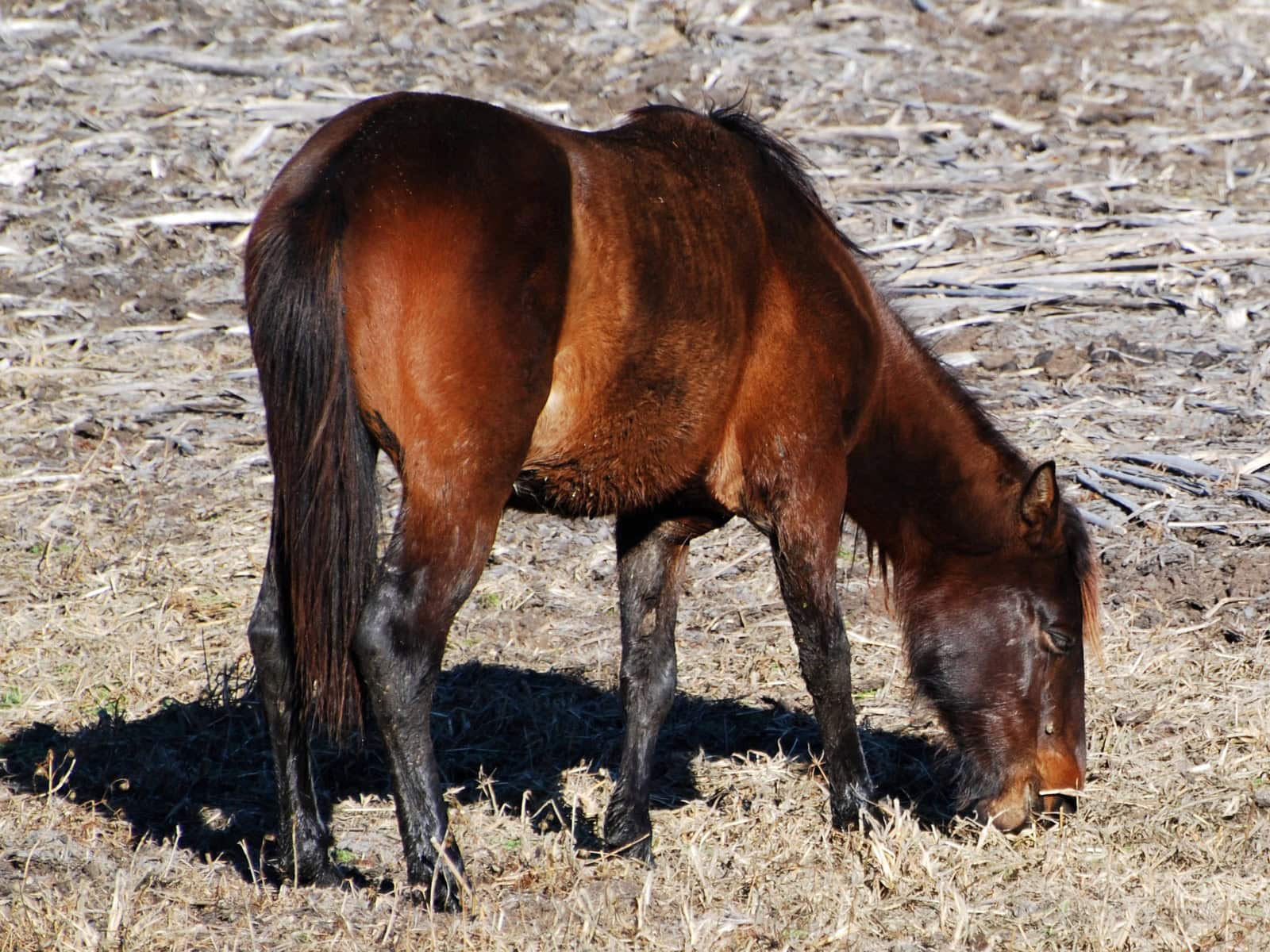
The Florida Cracker Horse
Critically endangered
Before there was a Florida, there were these horses. The Florida Cracker is one of North America’s oldest and most overlooked breeds, a living relic of the Spanish colonial era whose roots reach back to the very moment European civilization touched the continent.
Read more Read less
In 1521, Ponce de León landed on the southeast coast of what would become Florida and brought with him horses - Barbs, Andalusians, Spanish Jennets, and Sorraias - that would eventually run free through the subtropical landscape and shape themselves into something entirely new.
The horses that evolved from these early imports were small, quick, and impossibly sure-footed. For three centuries, Florida cattlemen - known as “Florida crackers” or “cowhunters” after the crack of their whips - relied on these horses to work the open range. The Florida Cracker became the workhorse of the American South long before the Quarter Horse arrived. It could navigate swamps and palmetto scrub that larger horses couldn’t stomach, moving through the heat and humidity with a natural efficiency that seemed bred into the bone - because it was.
The breed’s near-undoing came in the 1930s. The Dust Bowl drove large northern cattle breeds into Florida, and those heavier animals needed stronger horses to move them. The Quarter Horse, bigger and more powerful, displaced the Florida Cracker almost entirely. By mid-century, the breed had virtually disappeared, kept alive only by a handful of dedicated families - the Ayers, Matchetts, and Bronson families among them - who never stopped believing it was worth saving.
Their persistence paid off. The Florida Cracker Horse Association was chartered in 1989, and on July 1, 2008, the Florida House of Representatives declared the Florida Cracker the official state horse. A fitting recognition for a breed that had served Florida longer than Florida had been a state.
The Florida Cracker stands between 13.5 and 15.2 hands, light and compact with a refined head, short back, and sloping shoulder. It moves with a natural smoothness - many individuals exhibit a comfortable ambling gait - and carries the sharp intelligence and stamina of its Spanish Colonial ancestors. Related breeds include the Carolina Marsh Tacky, the Spanish Mustang, the Choctaw, and the Sulphur, all descended from the same Iberian bloodlines.
The Livestock Conservancy still lists the Florida Cracker as “critical” - fewer than 2,000 individuals exist in the world. The Equus Survival Trust estimates fewer than 300 active breeding mares. These horses outlasted Spanish colonialism, American frontier expansion, and the mechanization of farming. Whether they outlast indifference is still being decided.
Photo credit: Geoff Gallice / Wikimedia Commons (CC BY 2.0)
-
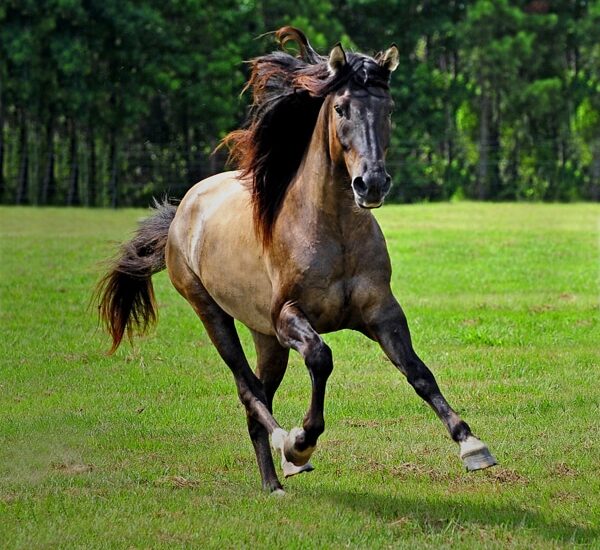
The Marsh Tacky
Critically endangered
In 1846, the naturalist John James Audubon described the Marsh Tacky as “tough as a Pine knot.” Few descriptions have aged better. For nearly 500 years, this small Colonial Spanish horse has lived among the marshes, swamps, and sea islands of the South Carolina Lowcountry, shaped by a landscape that defeats most horses.
Read more Read less
Its strength is not size or speed but judgment: where other horses panic, the Marsh Tacky stops, considers, and finds its way through.
The breed descends from the Spanish horses that reached the Southeast through the colonial settlement at St. Augustine. Those horses worked as pack animals on the trade routes of the Chickasaw, Creek, and Choctaw nations, carrying goods in the deerskin trade. Many were sold on reaching Charleston and spread into the lowlands and coastal islands of South Carolina and Georgia. Isolated there for generations, they adapted to the tidal marsh and dense swamp and became the Marsh Tacky.
Lowcountry riders call the breed’s defining quality “wood sense”: an instinct for self-preservation that lets the horse pick its way through boggy ground, deep water, and thick forest without losing its head. That quality made history during the American Revolution. Many of the men who rode with Francis Marion, the Swamp Fox, were mounted on Marsh Tackies. British cavalry on larger European horses could not follow them into the wild swamps where Marion’s men struck and disappeared.
The breed stayed woven into Lowcountry life for centuries after the war. When Frank Lloyd Wright designed Auldbrass Plantation in the Lowcountry, he built its stables small and low-roofed, sized specifically for Marsh Tackies.
Researchers once took the Tacky’s famously smooth ride for anecdote. A study by Mississippi State University’s Gaited Locomotive Research Program and The Livestock Conservancy confirmed that it is a gaited breed, and that its gait is unlike any other in the world, with only a slight resemblance to the Marchador of Brazil. The gait is expected to be formally named as unique to the Marsh Tacky.
The Marsh Tacky stands around 14 hands, sturdy, balanced, and muscular, with the strength and work ethic of a much larger horse. It is an easy keeper with a sharp mind, and it is most often roan, bay, or another solid color. At first glance it can look like an ordinary horse. Its abilities say otherwise.
By the early 2000s the breed had fallen close to extinction, with only about 200 horses remaining. The Livestock Conservancy built a studbook from DNA samples of nearly 100 Tackies. The results confirmed the breed as one of only eight or nine Colonial Spanish strains left in the United States, related to the Florida Cracker, the Spanish Mustang, the Choctaw, and the Sulphur. The Carolina Marsh Tacky Association works to preserve and promote the breed. In 2010, South Carolina named the Marsh Tacky its official State Heritage Horse. Today the documented population stands at roughly 400 to 500. It is still critically endangered, but it is genuinely recovering, and it is still carrying riders through the swamps as it has for five centuries.
-
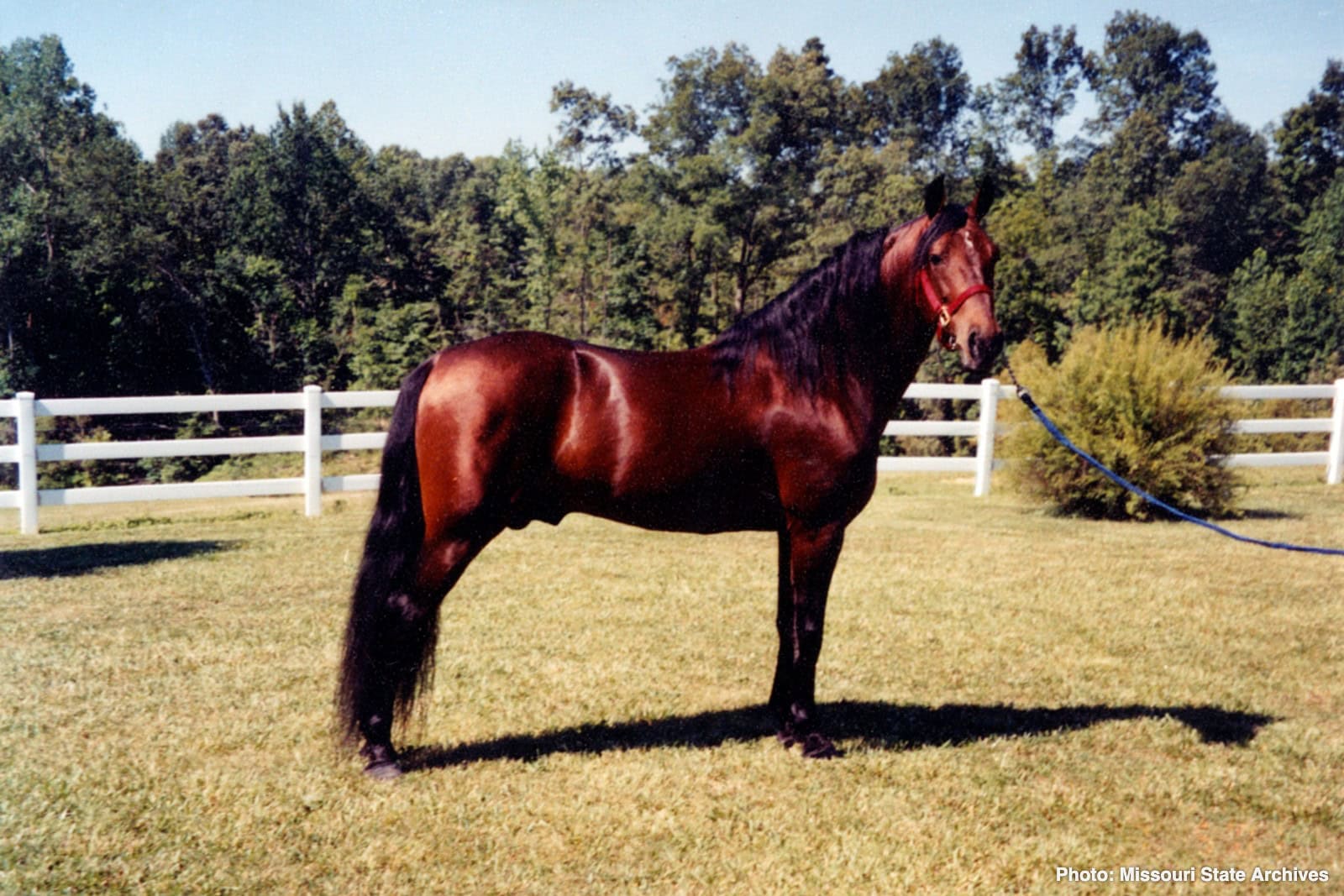
The Missouri Fox Trotter
In the rugged Ozark hills of southern Missouri, settlers needed a horse that could carry a rider all day over rocky, wooded country, and do it comfortably. Over the 19th century, they bred one: the Missouri Fox Trotter, named for the smooth, broken gait that is its signature.
Read more Read less
The settlers who arrived from Kentucky, Tennessee, and Virginia in the early 1800s brought horses of Morgan, Arabian, and Thoroughbred blood, later crossed with Tennessee Walking Horse and American Saddlebred lines. Ozark farmers, country doctors, sheriffs, and cattlemen selected for the horses that could cover ground with the least effort and the least jarring for the rider.
The fox trot itself is a four-beat diagonal gait in which the horse appears to walk with its front feet and trot with its hind, so smooth that the rider barely moves in the saddle. The Missouri Fox Trotting Horse Breed Association was founded in 1948, and in 2002 the breed became Missouri’s official state horse.
The Missouri Fox Trotter usually stands 14 to 16 hands and comes in every color, including spotted and palomino. Sure-footed, calm, and enduring, it is one of America’s favorite trail horses, and many guest ranches and outfitters rely on it for long days in the mountains.
-
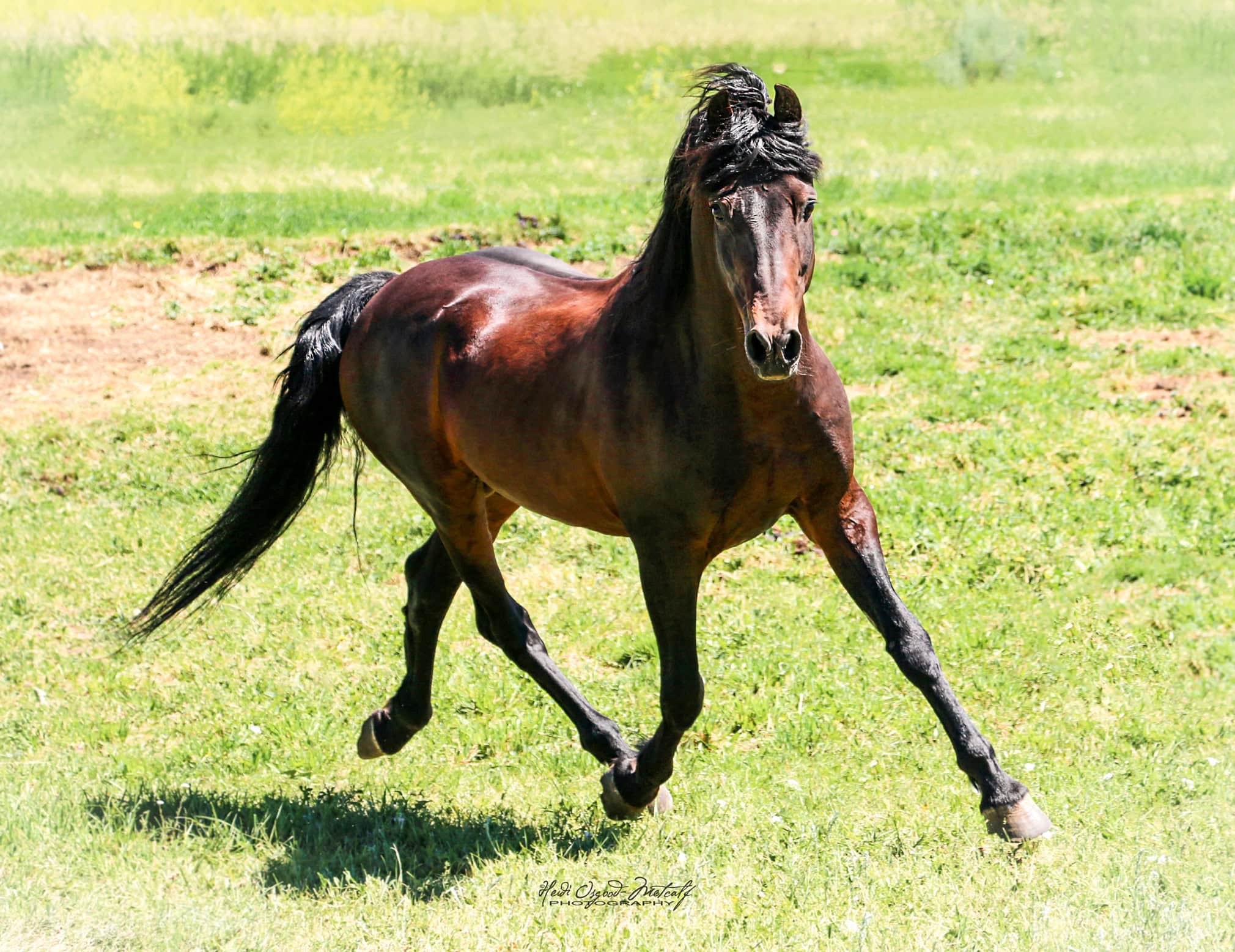
The Morgan
Every registered Morgan horse in the world traces to a single stallion. He stood about 14 hands, weighed perhaps 950 pounds, and was foaled in Vermont around 1789. His origins were unknown - possibly Welsh Cob, possibly Thoroughbred, possibly something no one can name with certainty. His owner was a schoolteacher named Justin Morgan.
Read more Read less
And the horse, eventually known by his owner’s name, could outpull, outrace, and outtrot every horse in New England that was put against him.
Figure - Justin Morgan’s original name - became famous throughout Vermont and New Hampshire for his extraordinary prepotency: his ability to consistently pass his traits to his offspring. No matter the mare he was bred to, the foals were recognizably his - compact, muscular, short-backed, with a crested neck, large eyes, and an expression of tremendous animation and intelligence. They had his endurance, his willingness, and his particular quality of never seeming to tire.
Three sons - Sherman, Woodbury, and Bulrush - carried the bloodline forward and became the foundation of the breed. By the mid-19th century, the Morgan had become the most important breed in America. Morgan horses served in the Civil War - and on both sides. They pulled the coaches and carriages of New England. They worked farms from Vermont to California. The U.S. Cavalry maintained a Morgan breeding program for decades.
Many of our nation’s indigenous breeds and registries-the American Quarter Horse, the American Saddlebred, and the American Standardbred racehorse-started with major infusions of Morgan horse blood. The U.S. government established a Morgan horse breeding farm in Vermont in 1907 - now the University of Vermont Morgan Horse Farm - to preserve the breed, and the Morgan Horse Club was founded in 1909.
The Morgan stands 14.1 to 15.2 hands, compact and powerful with a classic beauty that has changed remarkably little since Figure walked the roads of Vermont. The breed comes in bay, black, chestnut, and less commonly gray, roan, and palomino.
The Morgan is the first American breed - the only one that traces entirely to a single native-born foundation sire. That a horse of unknown origin, belonging to a schoolteacher in a small Vermont town, became the progenitor of an entire breed is one of the most remarkable accidents in equine history.
Photo credit: Heidi Osgood-Metcalf for the American Morgan Horse Association
-
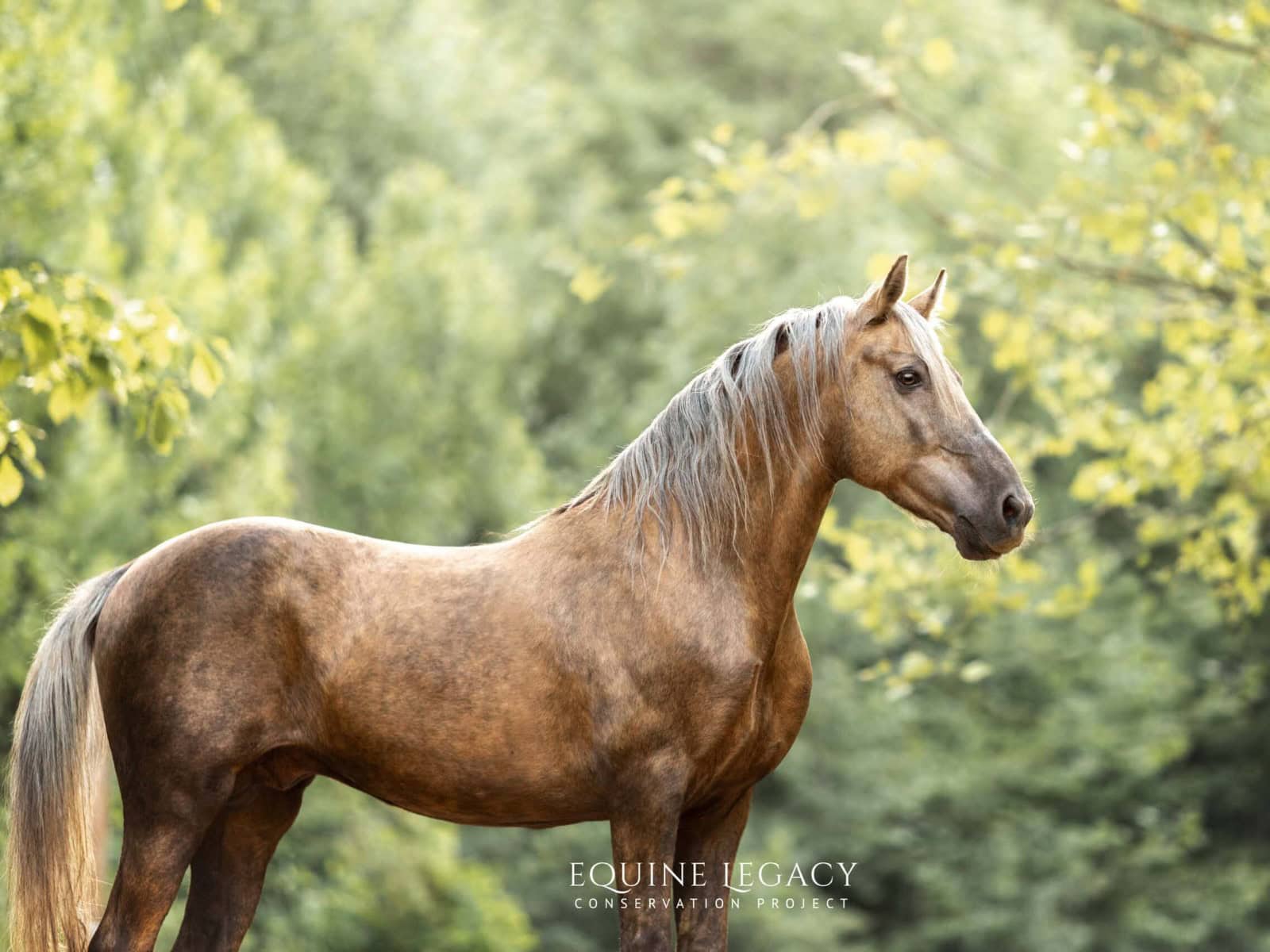
The Mountain Pleasure
Endangered
In the hollows and hill country of eastern Kentucky, long before there was a breed registry or a show ring to judge it, families kept a horse that could do everything. It plowed the garden, carried the farmer to market and the family to church, and moved along the mountain roads with a gait so smooth that a long day in the saddle felt like no distance at all.
Read more Read less
They called it the Old Kentucky Saddler. Today it is the Mountain Pleasure Horse, one of the rarest gaited breeds in America.
The Mountain Pleasure was shaped in the Appalachian region of eastern Kentucky over at least 160 years of careful, close breeding, often within the same families for generations. Isolation kept it largely unchanged. While the show breeds of the lowlands were refined for flash and speed, the mountain horse was selected for what hill families actually needed: sure feet, steady nerves, and a comfortable ride over rough ground.
That makes it a living record of the primitive Appalachian gaited horse. It is thought to have contributed to some of the best-known American breeds, including the Tennessee Walking Horse and the American Saddlebred. In 1994, Kentucky Governor Brereton Jones issued a proclamation recognizing the breed, citing University of Kentucky blood typing that pointed to it as parent stock of the Rocky Mountain Horse, the Walking Horse, and the Saddlebred.
The breed’s defining feature is its natural four-beat gait, an evenly spaced, intermediate-speed movement that keeps the same rhythm whether the horse is moving slowly or covering ground. It needs no training to appear and no artificial aids to perfect. The rider simply sits, and the horse goes.
The Mountain Pleasure Horse Association was founded in 1989 by Kentucky breeders who feared the old type would disappear. It was the first mountain horse registry to require blood typing, and now DNA testing, as proof of parentage. It remains a closed registry: only horses with registered parents may be registered. The breed is closely related to the Rocky Mountain Horse, but each has kept its own registry and history.
The Mountain Pleasure stands 14.2 to 16 hands and weighs 900 to 1,100 pounds. It comes in most solid colors, with a golden palomino as its most characteristic coat. Its temperament is famously calm and kind, which makes it a family horse and trail horse above all. The Livestock Conservancy now lists it as Critical.
-
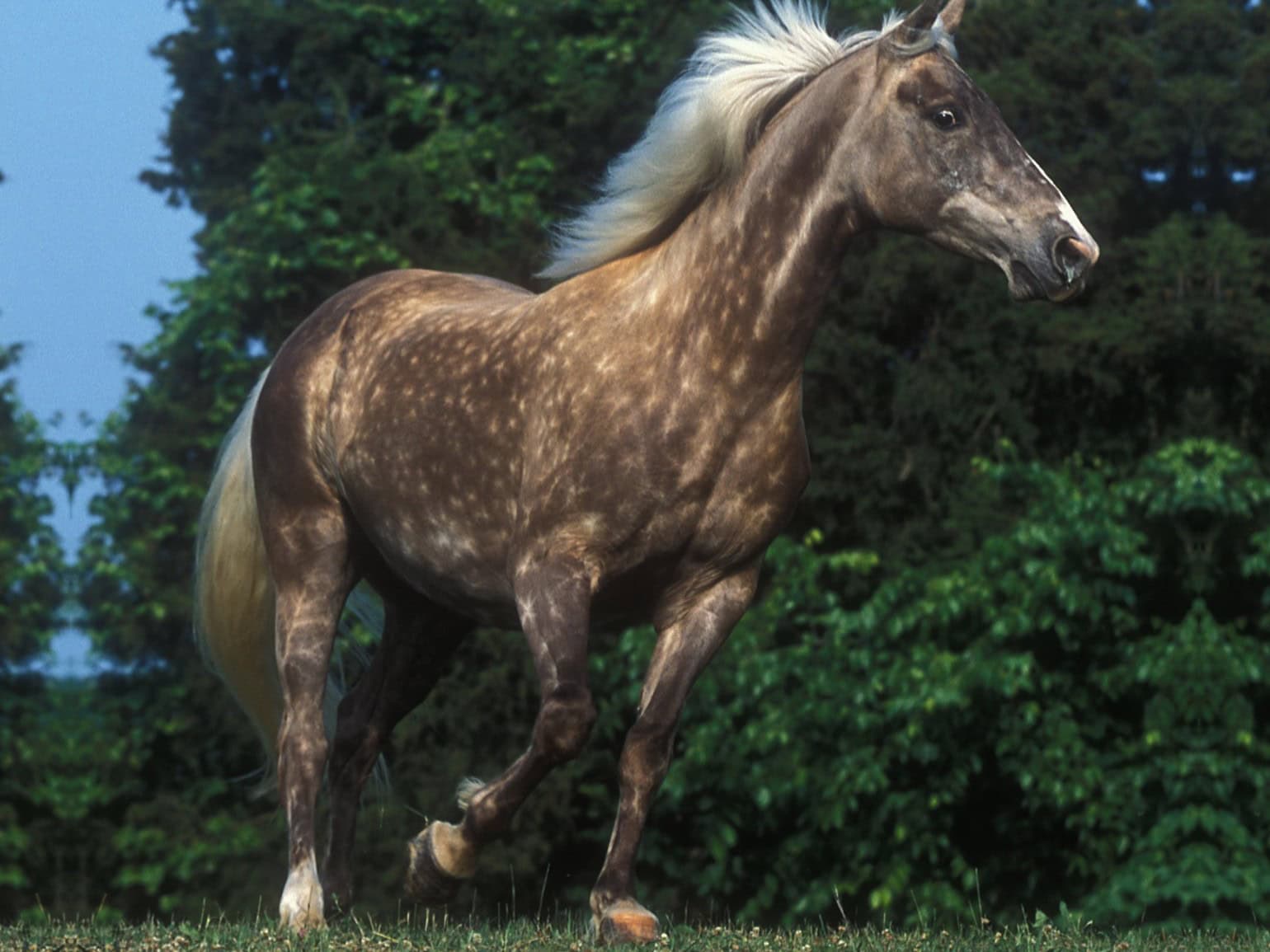
The Rocky Mountain Horse
Despite its name, the Rocky Mountain Horse comes from the Appalachian foothills of eastern Kentucky. According to local tradition, a gaited colt from the American West arrived in the region around 1890, and his descendants became the foundation of the breed.
The breed owes its survival largely to one man.
Read more Read less
Sam Tuttle of Spout Springs, Kentucky, kept a herd of these horses through the mid-20th century and used them for the trail rides he ran at Natural Bridge State Park. His stallion, Old Tobe, carried riders on those rides into his 30s and sired many of the horses at the heart of the breed. The Rocky Mountain Horse Association was formed in 1986 to preserve them.
Like its neighbor the Mountain Pleasure Horse, the Rocky Mountain Horse has a natural, smooth four-beat ambling gait that requires no special training. It is known for an exceptionally calm and gentle temperament and for its hardiness through Appalachian winters.
The breed’s most famous feature is its color: a rich chocolate coat with a flaxen mane and tail, though other solid colors occur. Rocky Mountain Horses usually stand 14.2 to 16 hands, and they are ridden on trails and ranches across North America.
Photo credit: Andersson LS et al. / Wikimedia Commons (CC BY 2.0)
-
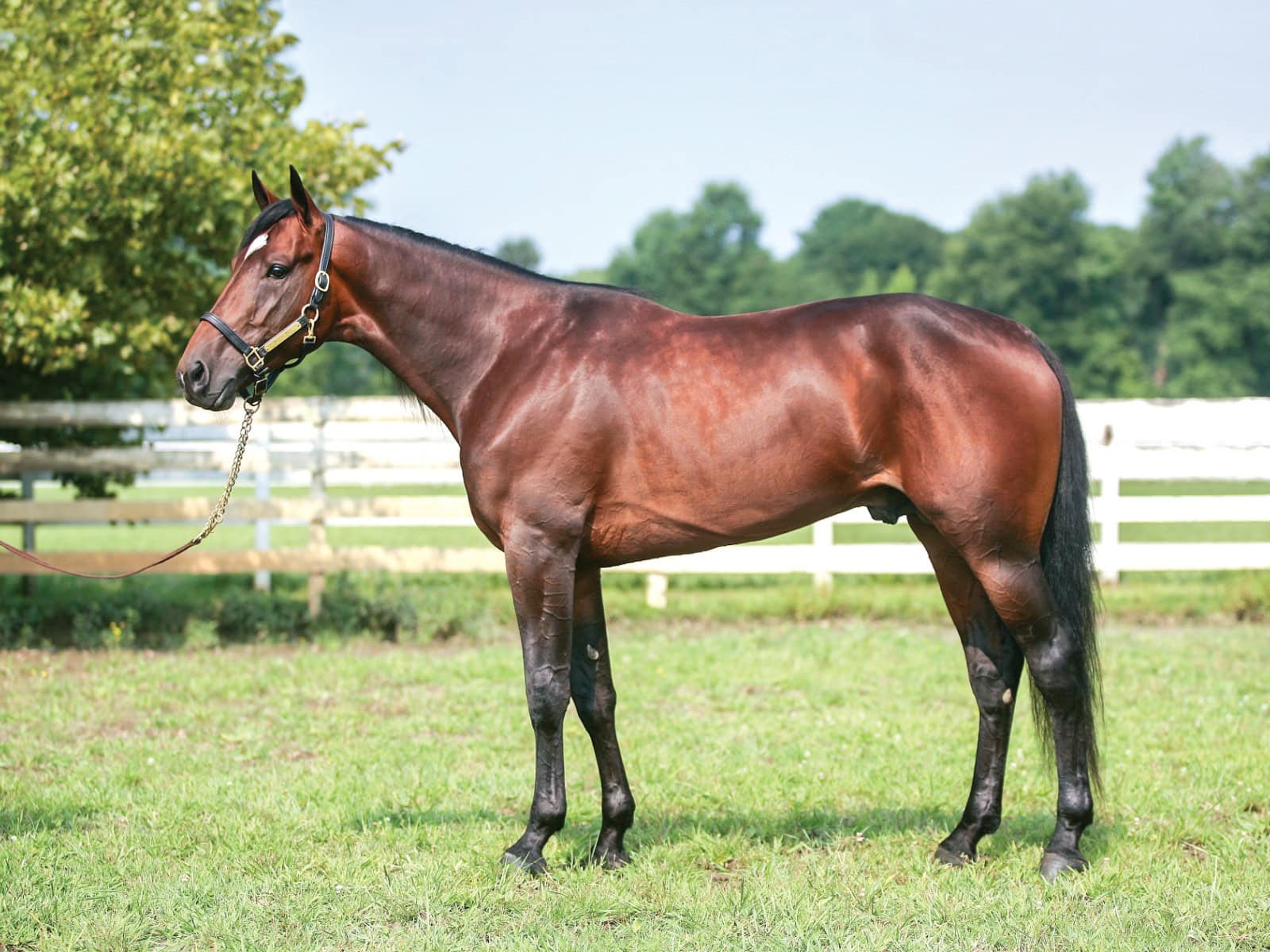
The Standardbred
The Standardbred is the horse of American harness racing, bred to trot or pace at speed while pulling a light sulky. Its name comes from the original standard for registration: a horse had to cover a mile within a set time.
Almost every Standardbred traces to one stallion, Hambletonian 10, foaled in New York in 1849.
Read more Read less
A descendant of the English Thoroughbred Messenger, he sired more than a thousand foals and founded the breed. Norfolk Trotter, Morgan, and Narragansett Pacer blood also contributed. Today, the United States Trotting Association, founded in 1939, maintains the breed’s registry. The Hambletonian Stakes, named for the foundation sire, is one of harness racing’s most prestigious events and its most celebrated race for 3-year-old trotters.
Standardbreds race at one of two gaits. Trotters move their legs in diagonal pairs, while pacers move the legs on the same side together.
The Standardbred usually stands 15 to 16 hands and is most often bay, brown, or black. It is longer-bodied and heavier than the Thoroughbred, with a calm, tractable temperament that makes it a forgiving and dependable horse.
Photo credit: U.S. Trotting Association
-
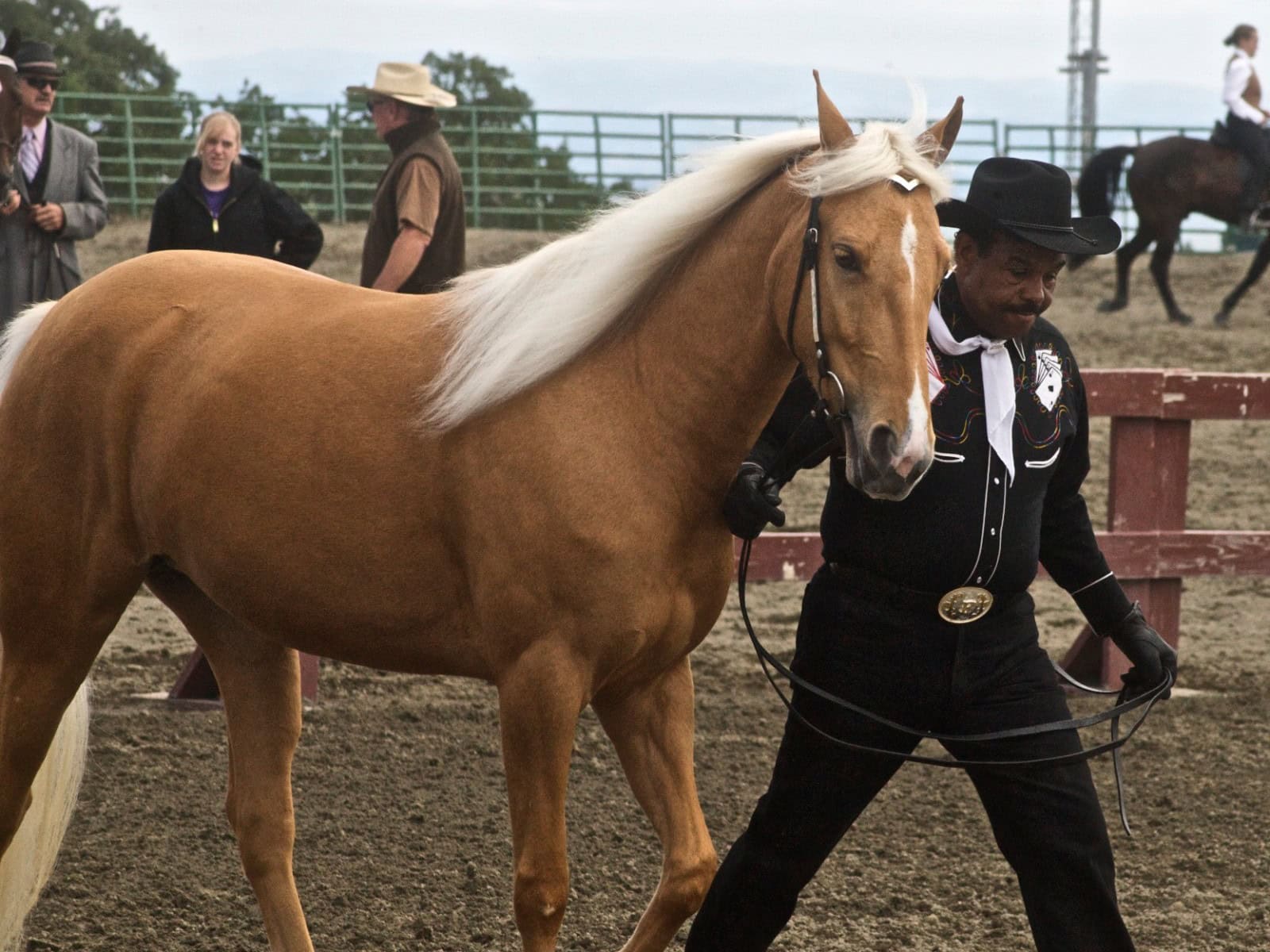
The Tennessee Walking Horse
To ride a Tennessee Walking Horse at its running walk is to understand, immediately, why people become devoted to this breed. The gait is unlike anything else in the horse world - a four-beat ambling movement so smooth it has been described as riding in a rocking chair, a flat-bottomed boat, a velvet cloud. The horse’s head nods in rhythm with each stride.
Read more Read less
The rider barely moves. And beneath them, the horse is covering ground at eight to ten miles per hour with what appears to be complete ease.
The Tennessee Walking Horse emerged in the Middle Tennessee basin in the 18th century from a mixture of Thoroughbred, Standardbred, Morgan, and Narragansett Pacer bloodlines, shaped by the specific demands of plantation culture. Plantation owners needed a horse they could ride for hours across uneven terrain while supervising their land - a horse that was comfortable, manageable, and capable of covering distances without exhausting its rider. The Walking Horse was bred to be exactly that.
The breed was formalized in 1935 with the founding of the Tennessee Walking Horse Breeders’ Association. The foundation sire, Allan F-1, was a black stallion foaled in 1886 whose influence remains visible in the breed today. Every registered Tennessee Walking Horse traces ancestry to Allan.
The horse’s conformation is built for the gait: a long, sloping shoulder, well-muscled hindquarters, and a relatively long neck that allows the characteristic nodding motion. In color, bays, blacks, and roans are common, though the breed comes in virtually every equine color including striking pintos. They stand 14.3 to 17 hands.
The history of the Tennessee Walking Horse cannot be told without acknowledging a dark chapter: the practice of “soring” - deliberately inflaming the horse’s front hooves and pasterns to exaggerate the high-stepping show gait. The Horse Protection Act of 1970 made soring illegal, and ongoing enforcement efforts continue, but the practice remains a persistent problem in the show ring.
Away from the show world, the Tennessee Walking Horse is one of the finest trail horses on earth. Its sure-footedness, stamina, willing temperament, and extraordinary comfort make it a first choice for distance riders and anyone who spends long days in the saddle.
Photo credit: Just chaos / Wikimedia Commons (CC BY 2.0)
South America
-
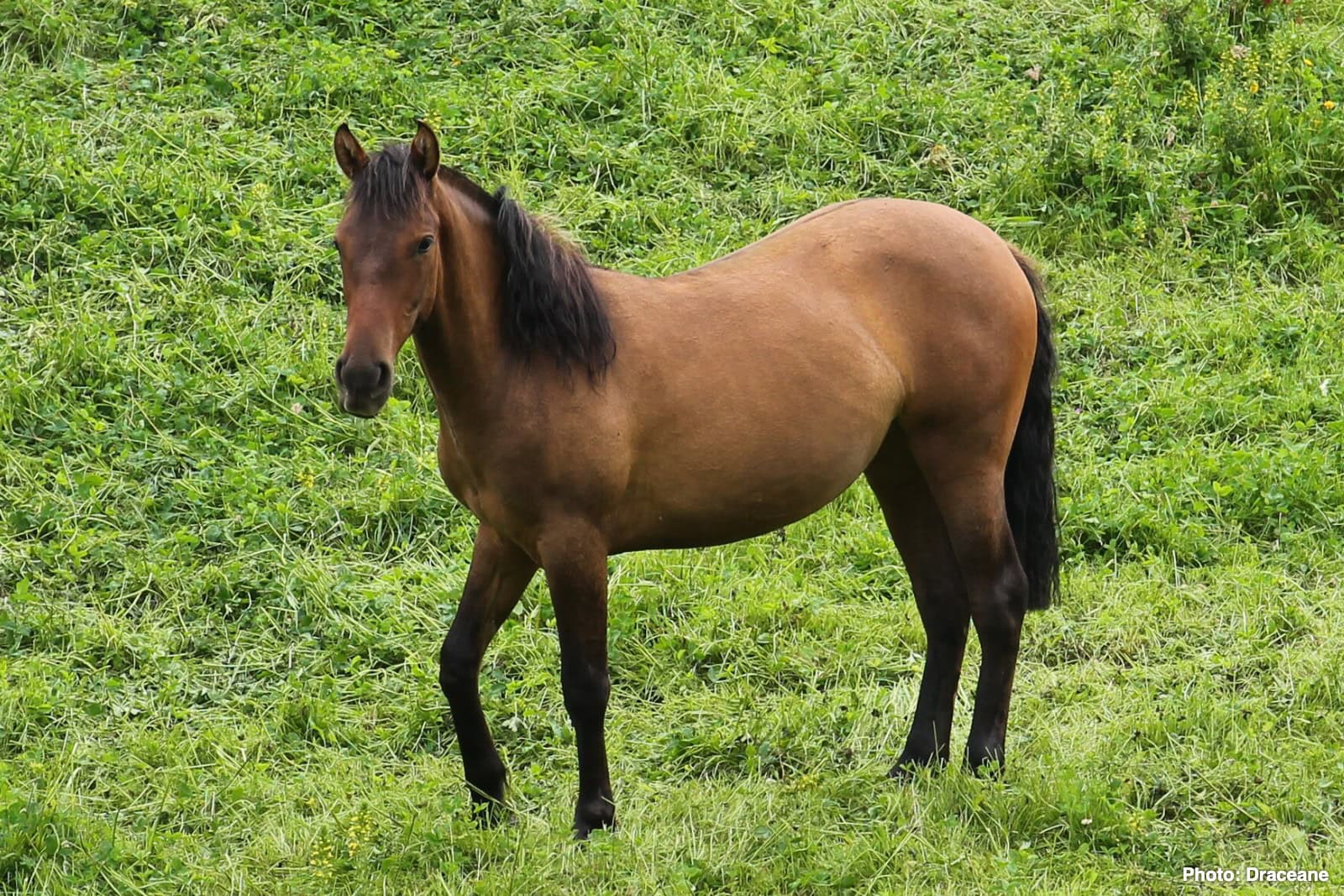
The Chilean Horse (Corralero)
The Chilean Horse, known at home as the Caballo Chileno or Corralero, is the horse of the huaso, Chile’s traditional horseman. It descends from the Spanish horses brought to Chile in the 16th century, and for nearly five hundred years it has been bred for one purpose above all: working cattle.
Read more Read less
Chilean breeders began recording pedigrees early, and the breed’s studbook, opened in 1893, is among the oldest in the Americas. Selection focused on courage, agility, and a remarkable ability to push cattle with the horse’s chest and shoulders, skills tested in the rodeo chileno, which was declared Chile’s national sport in 1962.
In the rodeo, two riders on a pair of horses work together to pin a steer against a padded wall in a crescent-shaped arena called a medialuna. Away from the arena, the Chilean Horse remains a working ranch horse and a sure-footed mount for treks through the Andes and Patagonia.
The Chilean Horse is compact and muscular, usually around 13.2 to 14.2 hands, and it comes in a wide range of colors. It is famous for its hardiness, intelligence, and steady temperament.
-
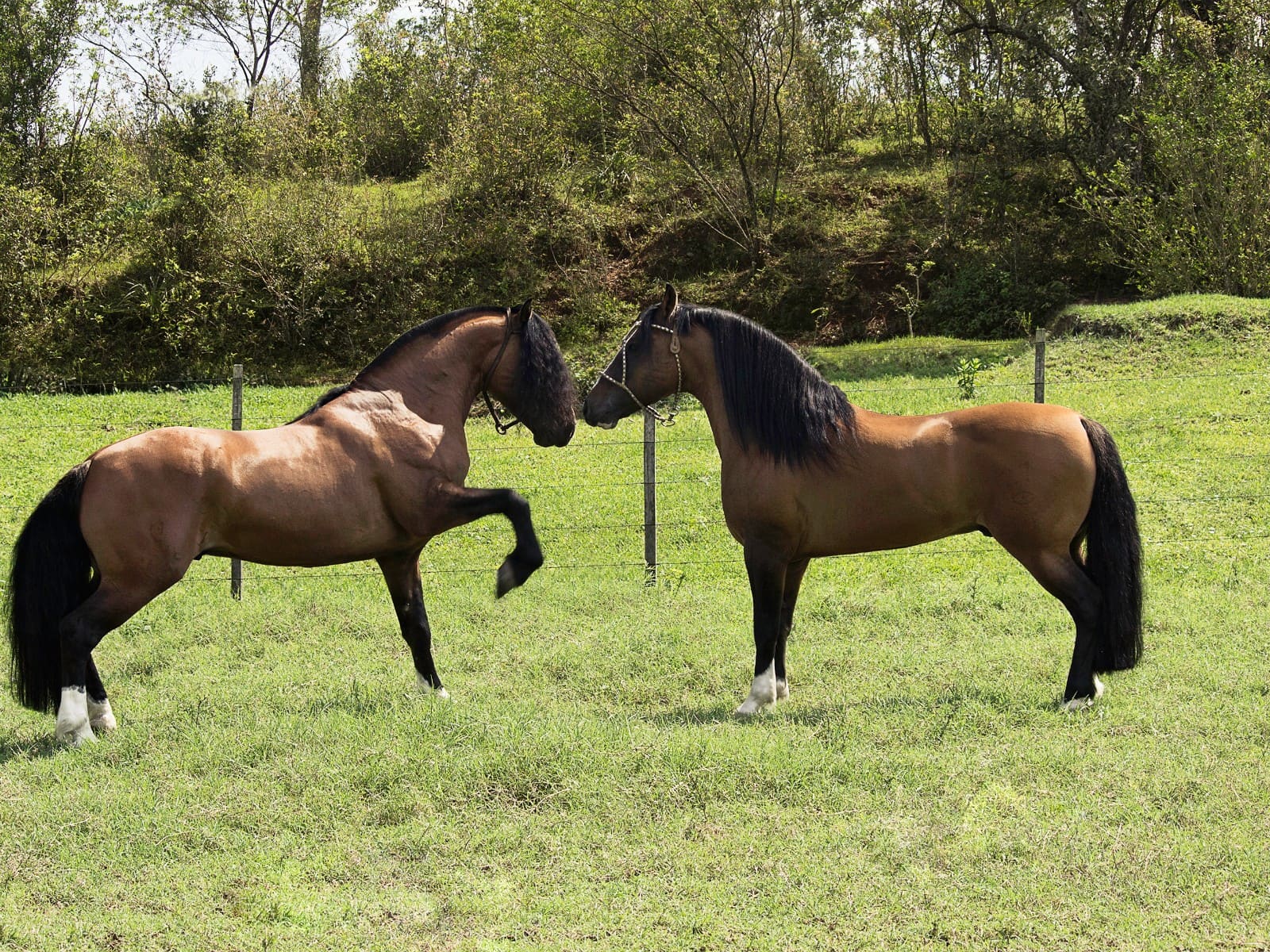
The Criollo
The Criollo is South America’s horse - a compact, hardy animal descended from the Iberian horses that the Spanish brought to the Americas in the 16th century, left to shape themselves against the demands of the pampas, the Andes, and the Patagonian steppe. It is one of the toughest breeds in the world, and in 1925, a Swiss schoolteacher set out to prove it.
Read more Read less
The Criollo’s ancestors arrived with the conquistadors - Andalusians, Barbs, Spanish Jennets - and some escaped or were released into the South American continent. Over the following centuries, in the vast grasslands of Argentina, Uruguay, Brazil, and Chile, natural selection did what breeders could not have planned: it produced a horse of exceptional constitution, capable of surviving extremes of heat and cold, covering great distances on sparse fodder, and maintaining condition under circumstances that would break most domesticated breeds.
In Argentina, the Criollo became the working horse of the gaucho - the South American counterpart of the cowboy - essential to the cattle ranches of the pampas. The gaucho’s relationship with his horse was total: the Criollo carried him through floods, heat, and the brutal southern winter with the reliability of an animal that seemed almost indifferent to hardship.
But it was a single journey that placed the Criollo in the global imagination. Aimé Tschiffely was a Swiss schoolteacher living in Buenos Aires when, in 1925, he set out to ride from the Argentine capital to New York City - approximately 10,000 miles through some of the most difficult terrain on earth. He did it on two Criollos: Mancha, an 18-year-old red and white piebald, and Gato, a 16-year-old buckskin dun, both previously unbroken and running free on the Patagonian pampas.
The ride took two and a half years. Tschiffely and his horses crossed the Andes at altitudes above 15,000 feet, navigated the jungle valleys of Central America, and rode the length of Mexico before entering Texas. They arrived in Washington in 1927 and rode into New York in 1928. President Coolidge received them. The National Geographic Society honored the journey. Tschiffely’s account, published as Tschiffely’s Ride, became one of the great travel books of the 20th century.
Mancha and Gato both lived long after the ride ended. Mancha died in 1947 at approximately 40 years of age; Gato in 1944. Both are preserved, mounted, in the Museo de Luján in Argentina.
The Criollo stands 14 to 15 hands, compact and deep-chested with dense bone and a broad, flat profile. Dun, grulla, and roan are the most typical colors, many carrying the dorsal stripe of their primitive ancestors. The Sociedad Rural Argentina conducts the Marcha - a rigorous endurance test requiring horses to cover 750 kilometers in 75 hours of riding across 14 days, carrying a minimum of 100 kilograms - designed specifically to measure the constitutional stamina that Tschiffely proved to the world one unforgettable mile at a time.
Photo credit: Kc.sminsights / Wikimedia Commons (CC BY-SA 4.0)
-
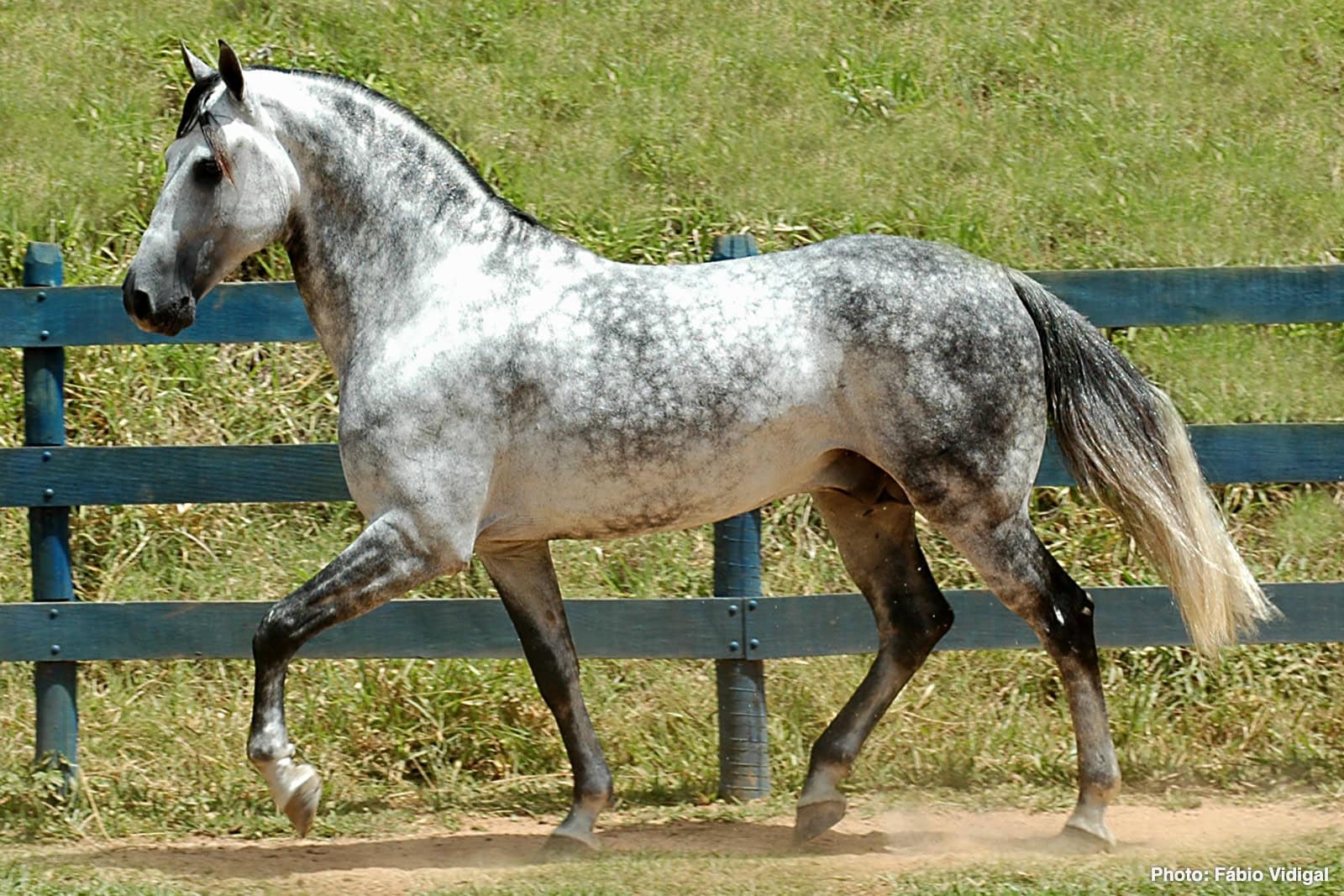
The Mangalarga Marchador
In the highlands of Minas Gerais, in southeastern Brazil, ranchers bred a horse that could carry them across vast estates in comfort. The Mangalarga Marchador is the result, a smooth-gaited horse that has become one of the most numerous breeds in South America.
Read more Read less
Its story begins in the early 19th century, when a stallion named Sublime, from the Portuguese royal stud at Alter do Chão, was crossed with local mares on the Campo Alegre ranch of Gabriel Francisco Junqueira in southern Minas Gerais. The horses became known as Mangalarga after the Hacienda Mangalarga, whose owners bought many of them. The breed association, the ABCCMM, was founded in 1949.
The breed’s defining feature is the marcha, a smooth, four-beat gait with a moment of triple support, when three hooves are on the ground at once. There are two forms: the marcha batida, with diagonal footfalls, and the marcha picada, which is more lateral and even smoother. Both allow a rider to travel long distances comfortably.
The Mangalarga Marchador stands about 14.2 to 15.2 hands and comes in many colors, with grey, bay, and chestnut common. It is used for endurance, cattle work, and trail riding, and it is the horse of many Brazilian riding holidays.
-
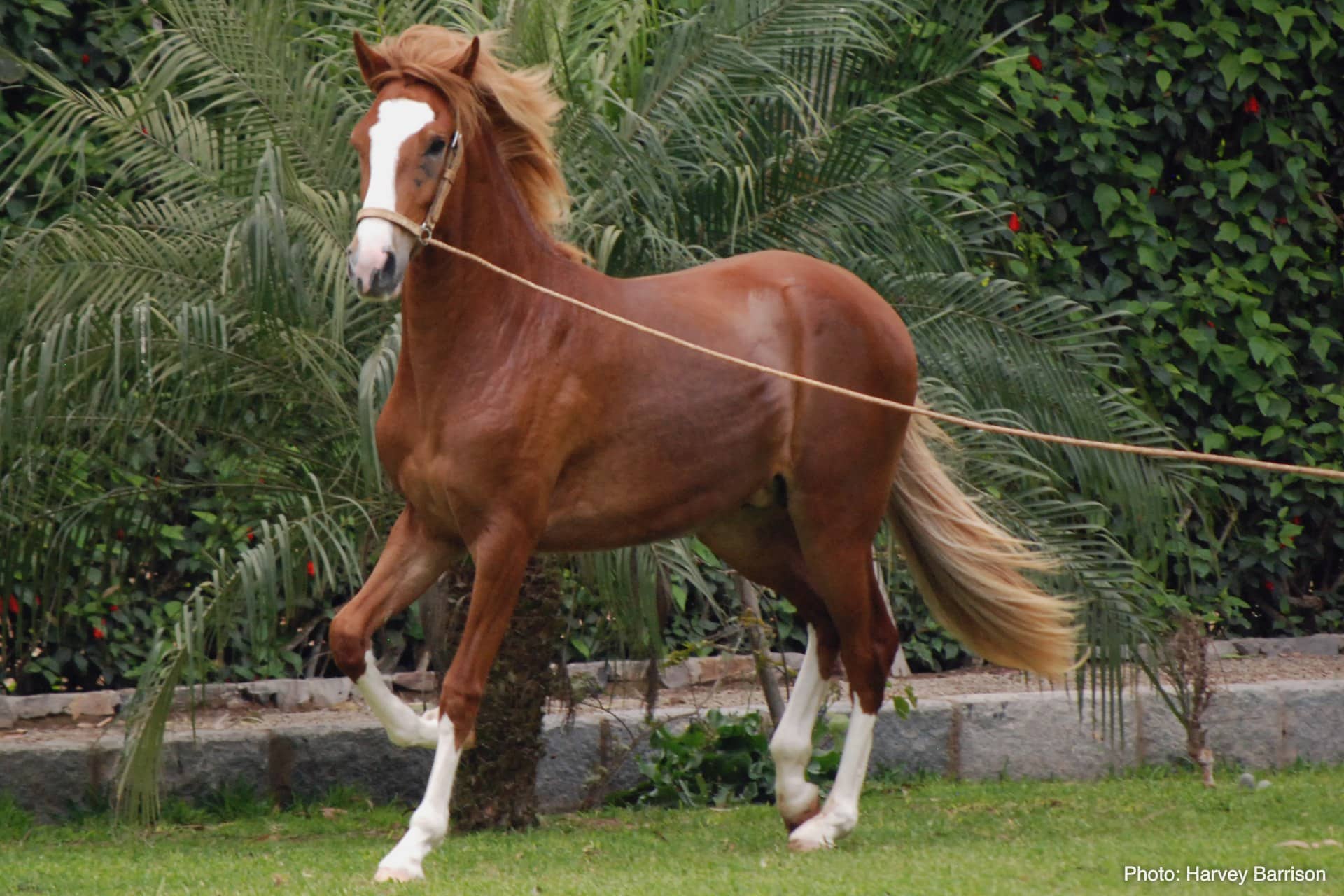
The Peruvian Paso
When the Spanish conquistadors arrived in the Americas, they brought horses whose gaits had been shaped by centuries of Iberian breeding. Among those gaits was the smooth, four-beat amble of the Spanish Jennet - a gait so comfortable that medieval Iberian nobles preferred it above all others for long-distance travel. The Jennet itself is now extinct.
Read more Read less
But in the isolation of colonial Peru, that gait survived. And in surviving, it became something extraordinary.
The Peruvian Paso developed over four centuries in the coastal haciendas and mountain valleys of Peru, selectively bred from Andalusian, Spanish Barb, and Jennet bloodlines. The terrain demanded a horse of endurance. The culture demanded one of elegance. The result is a breed that is arguably the smoothest-gaited horse on earth - with a gait so deeply genetic that Peruvian Paso foals will often demonstrate it within hours of birth, without any training.
The gait itself, called the paso llano, is a four-beat lateral ambling movement that absorbs concussion so completely that riders can carry a glass of water without spilling a drop - a demonstration still performed at breed shows in Peru and the United States. The horse’s front feet execute a distinctive termino, a rolling outward arc of the foreleg reminiscent of a swimmer’s stroke, that is unique to the breed and considered one of its most prized characteristics.
For the Spanish colonial elite of Peru, these horses were status symbols of the highest order. Ownership of a fine Peruvian Paso was a marker of nobility and wealth, and the breeding records of hacienda families represent some of the most meticulous horse pedigrees in the Americas. When Peru underwent its 19th-century wars of independence and subsequent social upheaval, the hacienda system that had sustained the breed was disrupted, and numbers declined sharply.
The breed was preserved by devoted breeders who recognized its singular value. In 1947, the Asociación Nacional de Criadores y Propietarios de Caballos Peruanos de Paso was founded to standardize and promote the breed. Peru has declared the Peruvian Paso a national cultural heritage - one of the few countries in the world to grant a horse breed that designation.
The Peruvian Paso stands 14.1 to 15.2 hands, fine-boned and elegant, with a proud carriage and an expression of alertness that seems to know its own history. It is, in the truest sense, a breed that survived because people could not imagine the world without it.
Central America & the Caribbean
-
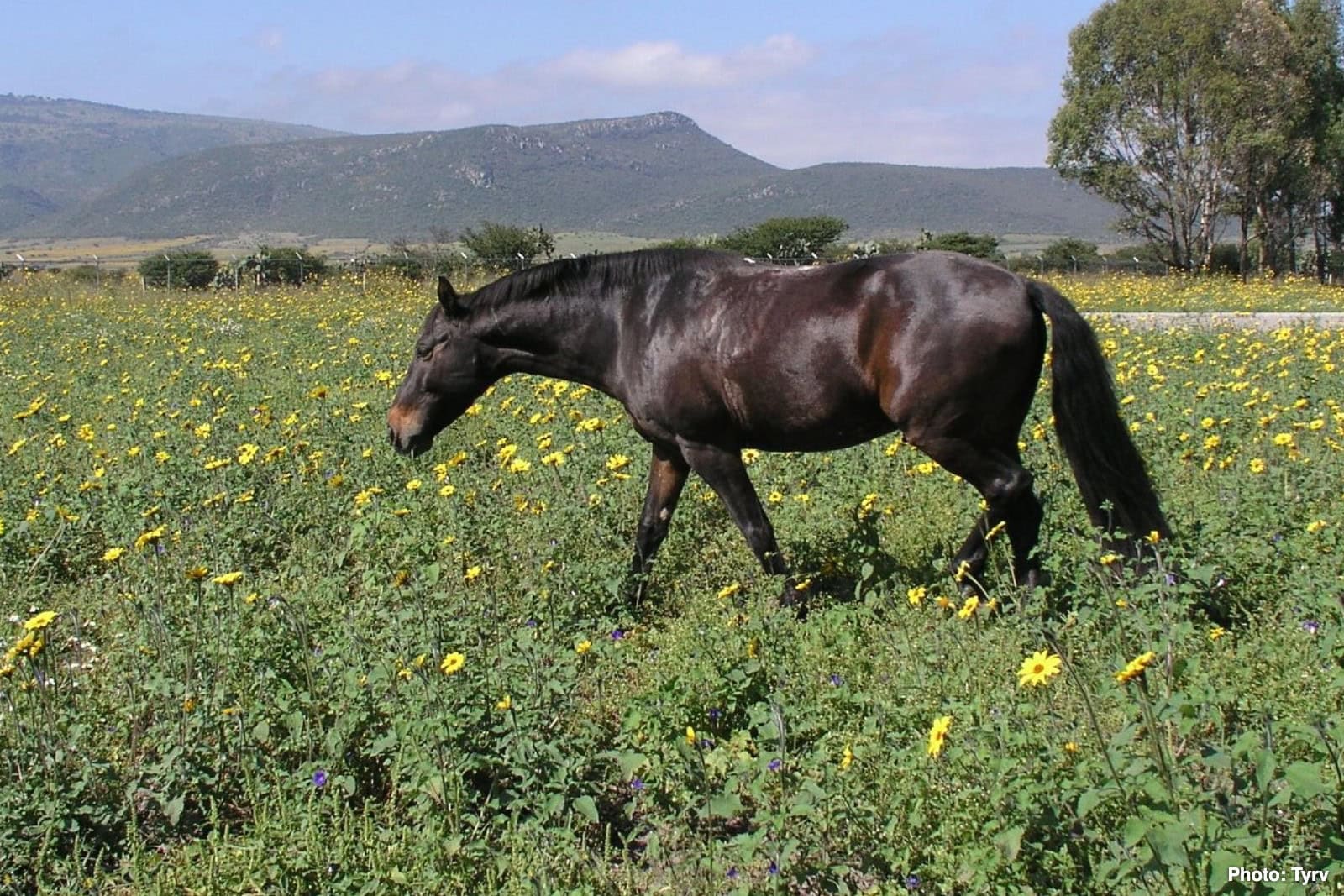
The Azteca
Mexico’s national horse is a modern creation with very old roots. The Azteca was developed in 1972 to recreate the kind of horse the Spanish brought to the Americas, crossing the Andalusian and Lusitano with the American Quarter Horse and the Mexican Criollo.
The goal was a horse with Iberian elegance and collection, combined with the speed, cow sense, and strength of the ranch horse.
Read more Read less
The breed association was founded in Mexico soon after, and in 1982 the Azteca was declared Mexico’s national breed. An American registry followed in 1989.
The Azteca is the horse of charrería, Mexico’s national equestrian sport, and of the escaramuza, the women’s precision riding teams in their flowing dresses. It is also used for ranch work, dressage, and pleasure riding, and it is a natural choice for riding holidays on Mexican haciendas.
Aztecas usually stand about 15 to 16 hands and come mainly in solid colors, with grey, bay, black, and chestnut common. They are known for their presence, agility, and calm, willing temperament.
-
The Paso Fino
Endangered
“Los Caballos de Paso Fino.” The horses with the fine walk. That is what the Spanish called them in the colonial Caribbean, and the name has endured - because no description is more accurate. The Paso Fino moves in a way that defies easy explanation until the moment you sit on one, and then it needs no explanation at all.
Read more Read less
The breed was shaped in the Caribbean and South America over five centuries of Spanish colonial breeding, descended from the Andalusian, the Spanish Barb, and above all the Spanish Jennet - the smooth-gaited horse of medieval Iberia that has since disappeared from the world. When Columbus brought horses to Hispaniola on his second voyage in 1493, he set in motion a process of selection and adaptation that would produce, across generations of isolated island breeding, one of the most distinctive horses on earth.
The Paso Fino’s defining characteristic is its gait - a four-beat lateral movement, fully natural and genetic, that produces almost no vertical motion for the rider. The footfall sequence is left rear, left fore, right rear, right fore, each foot striking independently with precise evenness. Within the gait, three speeds are recognized: the Classic Fino, a slow, collected movement of extraordinary precision; the Paso Corto, a moderate traveling gait; and the Paso Largo, an extended movement covering ground at surprising speed, still without the bouncing trot that riders of other breeds accept as inevitable.
In Puerto Rico, the Paso Fino became the horse of the jíbaro - the rural Puerto Rican farmer - a working horse that carried its rider comfortably through mountain coffee plantations for hours at a time. In Colombia, the Paso Fino became the centerpiece of a horse culture of exceptional sophistication, with competitive events that judge the purity and precision of the gait above all else.
American soldiers stationed in Puerto Rico during World War II encountered the breed and brought horses home, launching the Paso Fino’s presence in the continental United States. The Paso Fino Horse Association was founded in 1972, and today the breed has a devoted following across North America.
The Paso Fino stands 13 to 15.2 hands, fine-boned and elegant, with a spirit and energy that its admirers describe as brio - a Spanish word for vivacity that captures the breed’s particular quality of alertness and enthusiasm.
Europe
-
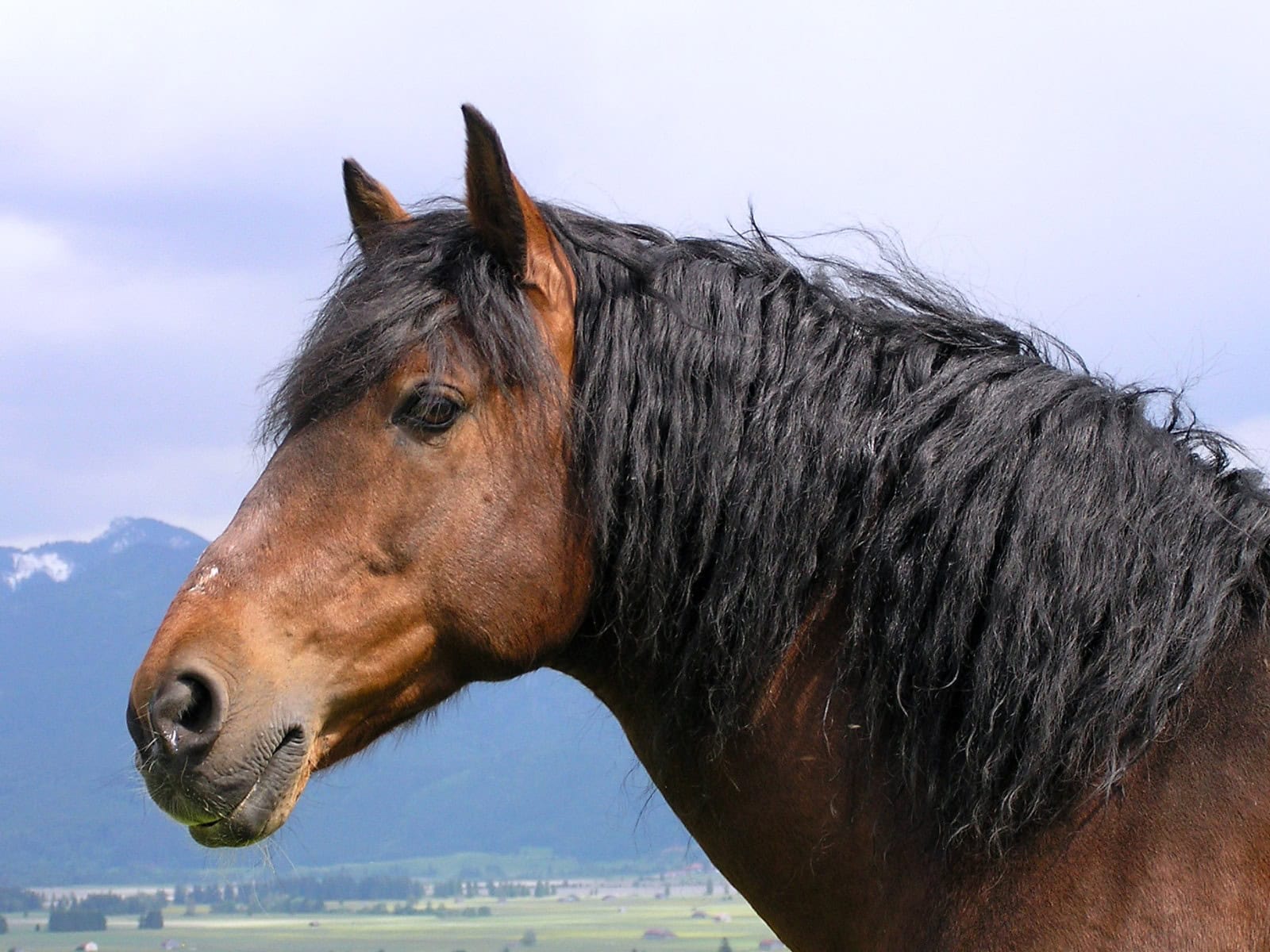
The Andalusian
There is a reason that when European artists, sculptors, and monarchs wanted to depict power, they reached for the Andalusian. This is the horse of Velázquez’s royal portraits, of the Hapsburg riding halls, of the airs above the ground. For more than three thousand years, the horse of the Iberian Peninsula has been considered among the finest in the world - and the Andalusian, the purest expression of that tradition, carries every century of that reputation in its bearing.
Read more Read less
The breed’s origins lie in the horses of prehistoric Iberia, shaped over millennia by the Phoenicians, Carthaginians, Romans, and above all the Moorish invaders who arrived in the 8th century and brought with them the North African Barb. The cross between native Iberian horses and the Barb produced the Andalusian’s distinctive qualities: a short, strong body; an arched, crested neck; high knee action; and a quality of collection - the ability to carry weight behind and elevate the forehand - that made them the ideal horses for the haute école, the classical riding tradition that would eventually become modern dressage.
The Carthusian monks of the Cartuja monastery near Jerez became the breed’s most important custodians in the 15th century, maintaining a pure studbook when outside breeds threatened the bloodline’s integrity. Their lineage - the Carthusian, or Cartujano - represents the oldest documented pure bloodline of Andalusian horses still in existence.
The Spanish government closed the studbook to outside blood in the 17th century and controlled the export of Andalusians so tightly for so long that the breed became scarce outside Spain. When exports were finally permitted in the 20th century, the world rediscovered a horse that had shaped virtually every Baroque European breed - the Lipizzaner, the Lusitano, the Friesian - while remaining itself.
The Andalusian stands 15.2 to 16.2 hands, compact and powerful with a convex profile, large eyes, and a mane and tail of extraordinary fullness. Gray is the most common color, though bays and blacks exist. The breed is now officially called the Pura Raza Española - the Pure Spanish Breed - by Spain’s government, though Andalusian remains the name by which the world knows it.
At Versailles, at the Spanish Riding School in Vienna, in the bullfighting rings of Jerez and Lisbon, the Andalusian has performed for kings. It is, in the most literal sense, the horse that shaped the Western riding tradition.
Photo credit: Waugsberg / Wikimedia Commons (CC BY-SA 3.0)
-
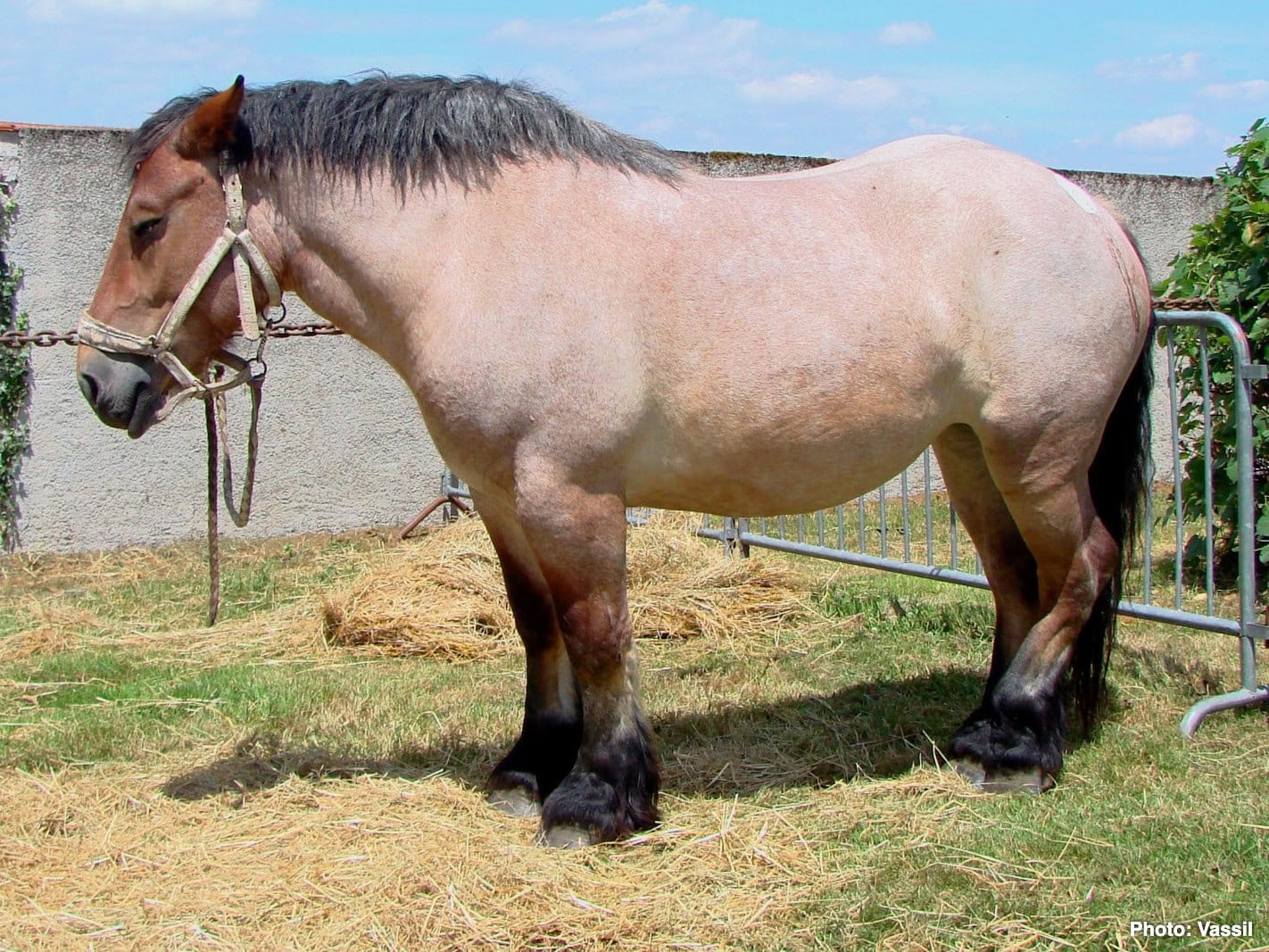
The Ardennes
The Ardennes is one of the oldest draft breeds in Europe, bred in the wooded hills of the Ardennes region where Belgium, Luxembourg, and France meet. Its ancestors are thought to have worked this rugged country since Roman times.
For centuries the Ardennes was a strong, hardy horse used on farms and as an army horse.
Read more Read less
It is said to have hauled artillery for Napoleon’s army on the retreat from Moscow in 1812. In the 19th and 20th centuries, breeders added heavier blood, including Belgian Draft, to produce the massive, compact horse known today.
The Ardennes is still used in forestry, where it can work steep or sensitive woodland that machines would damage, as well as on small farms and for driving. Sweden developed its own Ardennes population, and the breed has influenced draft horses across Europe.
The Ardennes usually stands about 15 to 16 hands, with a short, powerful body and heavy legs. Bay and roan are most common, with chestnut also seen. It is known for its calm, gentle temperament and its willingness to work.
-
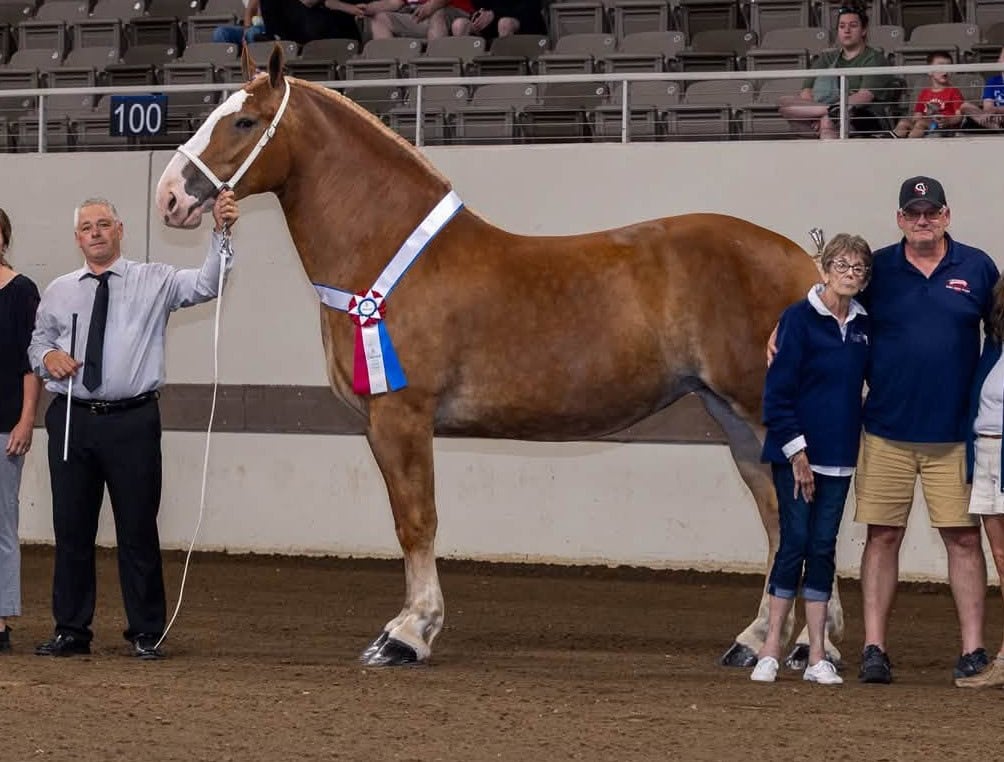
The Belgian Draft
Belgium is a small country, but it produced the largest and most powerful horse in the world. The Belgian Draft - known in its homeland as the Brabant, for the central Belgian province where it was developed - is the horse against which all other draft breeds are measured for raw strength.
Read more Read less
A Belgian stallion named Brooklyn Supreme, foaled in 1928, stood 19.2 hands and weighed 3,200 pounds - the heaviest horse in recorded history. Modern Belgians are somewhat less extreme, but the breed’s reputation for muscle, bone, and pulling power remains unmatched.
The Belgian’s origins lie in the “Great Horse” of medieval Flanders and Brabant - the heavy warhorse that carried armored knights into battle across the Low Countries during the Middle Ages. As cavalry armor became impractical and feudal warfare gave way to gunpowder, these horses found a new purpose in the agricultural fields and canal towpaths of the Low Countries, where their massive pulling power was the engine of a remarkably productive farming economy.
Belgian breeders developed the breed with a focused purpose: maximum pull for minimum feed, combined with the docile temperament that makes a 2,000-pound animal manageable. The Société Royale Le Cheval de Trait Belge was established in 1886 to formalize the studbook. By the early 20th century, the Belgian had become the most popular draft breed in North America, where its practical virtues found a ready audience on the farms of the Midwest and the Great Plains.
Belgium’s geography placed it at the center of the Western Front in World War I, and the country’s horse population was decimated by military requisition and occupation. Belgian breeders rebuilding after the armistice produced the more refined, shorter-legged modern type that differs somewhat from the heavier pre-war Brabant.
The American branch of the breed developed somewhat independently, maintained by Amish and Mennonite farming communities who never stopped working horses on their land, keeping draft breeding alive through the decades of mechanization when most of the world abandoned it. Today the largest concentrations of Belgian Draft horses in North America are found in the farming communities of Pennsylvania, Ohio, Indiana, and Illinois.
The Belgian Draft stands 16 to 18 hands, broad and compact with an unusually short back relative to its mass. The coat is typically sorrel or red sorrel, and Belgians can also be roan, chestnut, or bay. The sorrel or red sorrel coat has become one of the breed’s most recognizable characteristics. In pulling competitions, Belgians have broken records for single-horse and team pulling on multiple occasions. The horse that built Flanders is still here, and it never needed to be anything else.
Photo credit: Summit Professional Services for Millerview Belgians
-

The Belgian Warmblood & The Belgian Sport Horse
Belgian Warmblood
Today the Begian Warmblood (Belgisch Warmbloedpaard) is regularly named the best show jumping studbook in the world, and its horses are found in virtually every major jumping arena on earth.
In the Flemish north of Belgium, riding horse breeding was long restricted to protect the national draft breed, the mighty Brabant.
Read more Read less
Farmers wanting lighter horses held their first stallion show in 1953, without official permission, with just three stallions. The restriction was lifted in 1954, and the BWP studbook opened in 1955. Its founders built on Belgian farm mares crossed with Gelderlander, Hanoverian, Holsteiner, French, and Thoroughbred stallions.
The BWP’s motto captures its confidence: “Breeding is gambling, breeding a BWP is a certainty.” The studbook is relentlessly focused on performance, and stallions must prove themselves in jumping tests before and after approval. The stallion Darco topped the world sire rankings for jumping five years in a row.
The World Breeding Federation for Sport Horses named the BWP the leading jumping studbook in 2017, 2021, and 2022. In 2022, the BWP-bred King Edward, ridden by Henrik von Eckermann, won the individual world show jumping title and was ranked the best jumping horse in the world.
Belgian Warmbloods typically stand 16 to 17 hands, in all solid colors. They are prized above all for scope, carefulness, and bravery over a fence, though the breed also competes in dressage and eventing.
Belgian Sport Horse
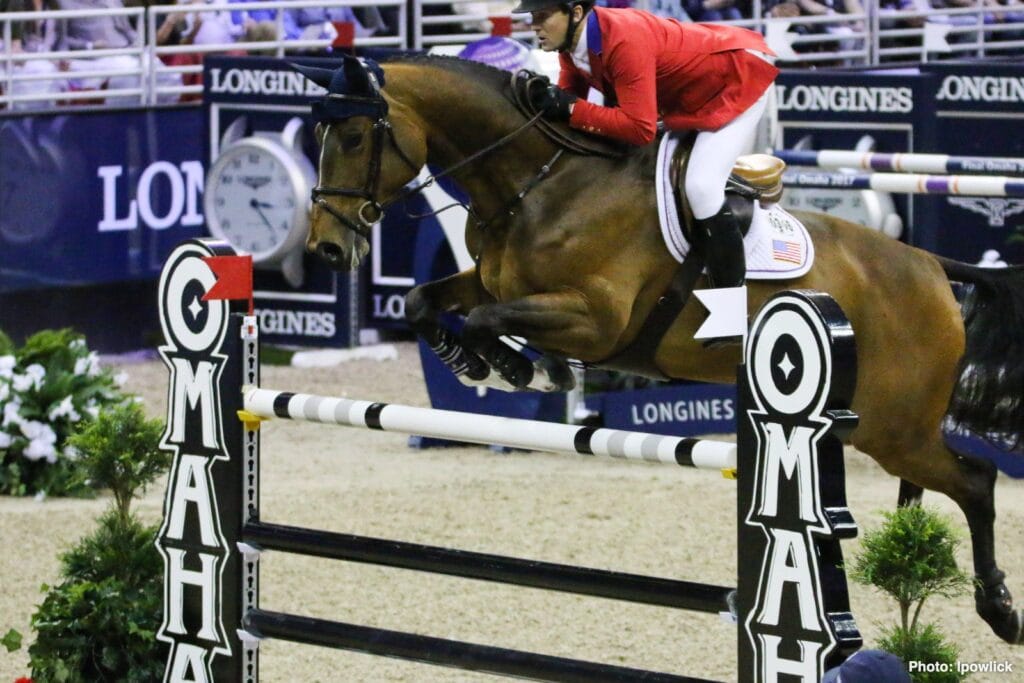
Belgium has three warmblood studbooks, and the oldest of them is the one many riders have never heard of. The Belgian Sport Horse, known by its studbook name sBs, has its roots in the French-speaking south of the country, in Wallonia, and a history that stretches back more than a century.
The studbook was founded in 1920 as a society to encourage the breeding of army horses. Belgian breeders crossed their heavy Brabant draft mares with Thoroughbred and French stallions to produce a sound, capable cavalry horse. Around 1930, as cavalry declined, the society turned toward horses for leisure riding and sport. It was granted royal status in 1967 and took the name SBS Studbook in 1991.
Where the Flemish BWP grew from farm breeding in the north, the sBs drew heavily on French blood, particularly the Selle Français, along with Dutch and Hanoverian lines. The result is a distinct Belgian sport horse with a strong focus on show jumping.
Its horses have reached the very top of the sport. The sBs-registered HH Azur, ridden by McLain Ward, finished in the individual top ten at the 2016 Olympics and won the 2017 World Cup Final in Omaha. In 2017, Belgian studbooks swept the top three places in the world jumping rankings, with the sBs among them.
The Belgian Sport Horse averages around 16 hands, with a range from about 15.2 to 17.3 hands, in solid colors. It is bred for jumping first, but also competes in dressage and eventing.
-
The Camargue Horse
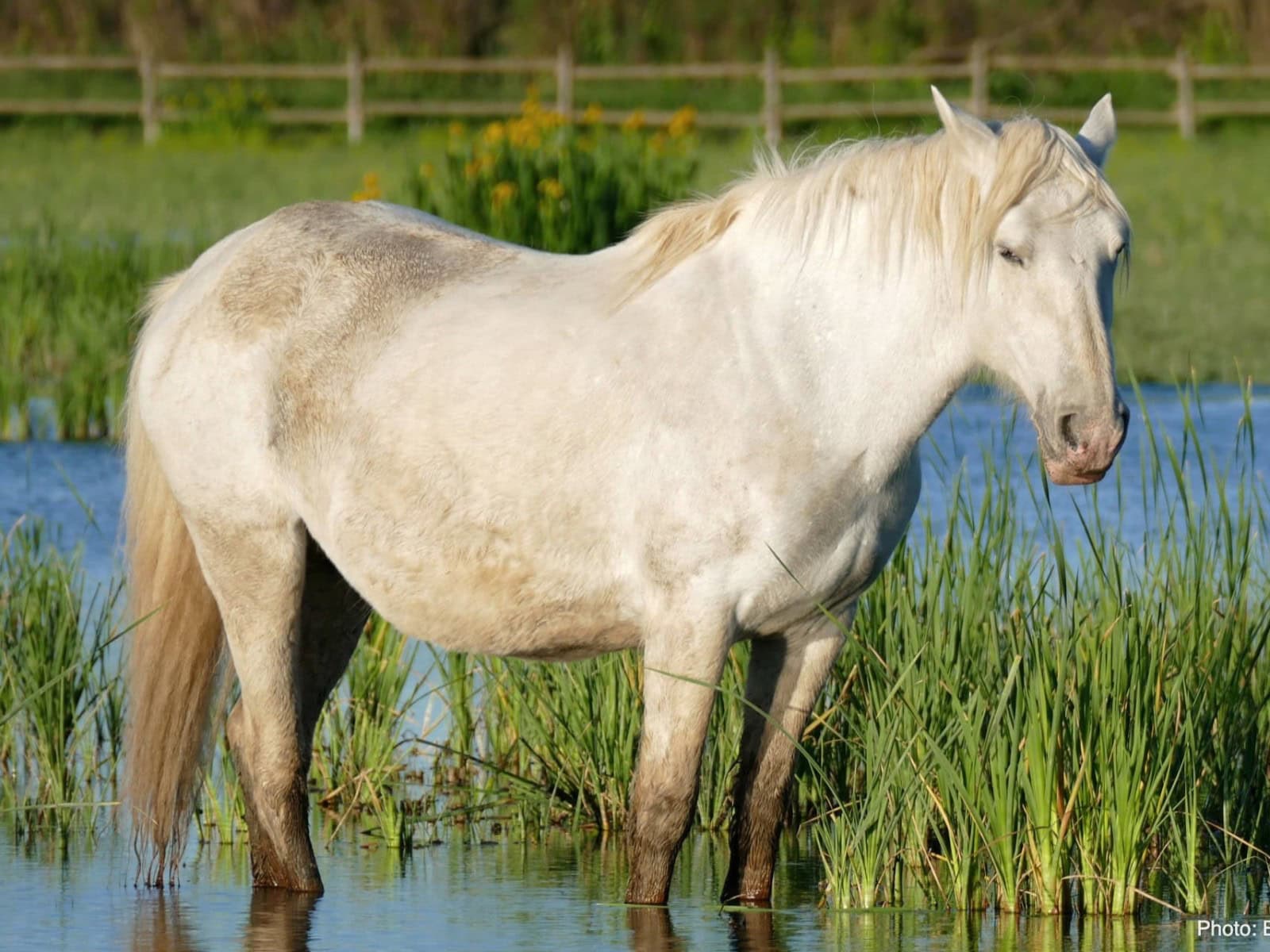
In the delta where the Rhône meets the Mediterranean, in the tangle of salt marshes and shallow lagoons that make up the Camargue of southern France, there are horses that have lived wild for as long as anyone can document and longer. They are white - or nearly so - with round, heavy heads, short thick necks, and the barrel chests of horses adapted to survive on coarse vegetation and brackish water.
Read more Read less
They move through the marsh in bands, heads low into the mistral wind, as indifferent to the presence of tourists as they are to the flamingos that share the wetland.
The Camargue horse is one of the oldest breeds in the world. Bones found in the Camargue region date to 17,000 BC, and while the relationship between those prehistoric horses and the modern breed is not scientifically direct, DNA analysis suggests the Camargue carries some of the oldest genetic material of any European breed. They are sometimes described as “horses of the sea” - a poetic description of a horse whose natural landscape is neither fully land nor fully water.
The Camargue has long been inseparable from the gardians - the French cowboys who have herded the black Camargue bulls of the region for centuries, working from horseback in the marshes and shallow water with the same techniques used since the Middle Ages. The gardian and his Camargue horse are as culturally embedded in the identity of Provence as the lavender fields and the Roman aqueducts.
The breed was officially recognized in 1978, and the horses are managed under a unique semi-wild system: they live outdoors year-round, eating marsh grass without supplementary feed, but are branded and registered by designated breeders. Only horses born in the Camargue to registered parents may be registered as Camargue horses. The system preserves both the breed’s genetic integrity and its wild character.
The Camargue stands 13 to 14.3 hands. Foals are born bay or black and gradually lighten to the characteristic gray-white coat by the age of four to seven years. They are exceptionally hardy, with dense bone and thick, water-resistant hooves.
There are fewer than 10,000 Camargue horses in the world. Most still live wild or semi-wild in the nature reserve that covers 930 square kilometers of the Rhône delta - one of Europe’s most important wetland ecosystems, and the only place on earth where this horse truly belongs.
-
The Cleveland Bay
The Cleveland Bay is England’s oldest established horse breed, and one of its rarest. It comes from the Cleveland district of northeast Yorkshire, where its ancestors, known as Chapman horses, carried goods for traveling merchants and for the great monasteries of the Middle Ages.
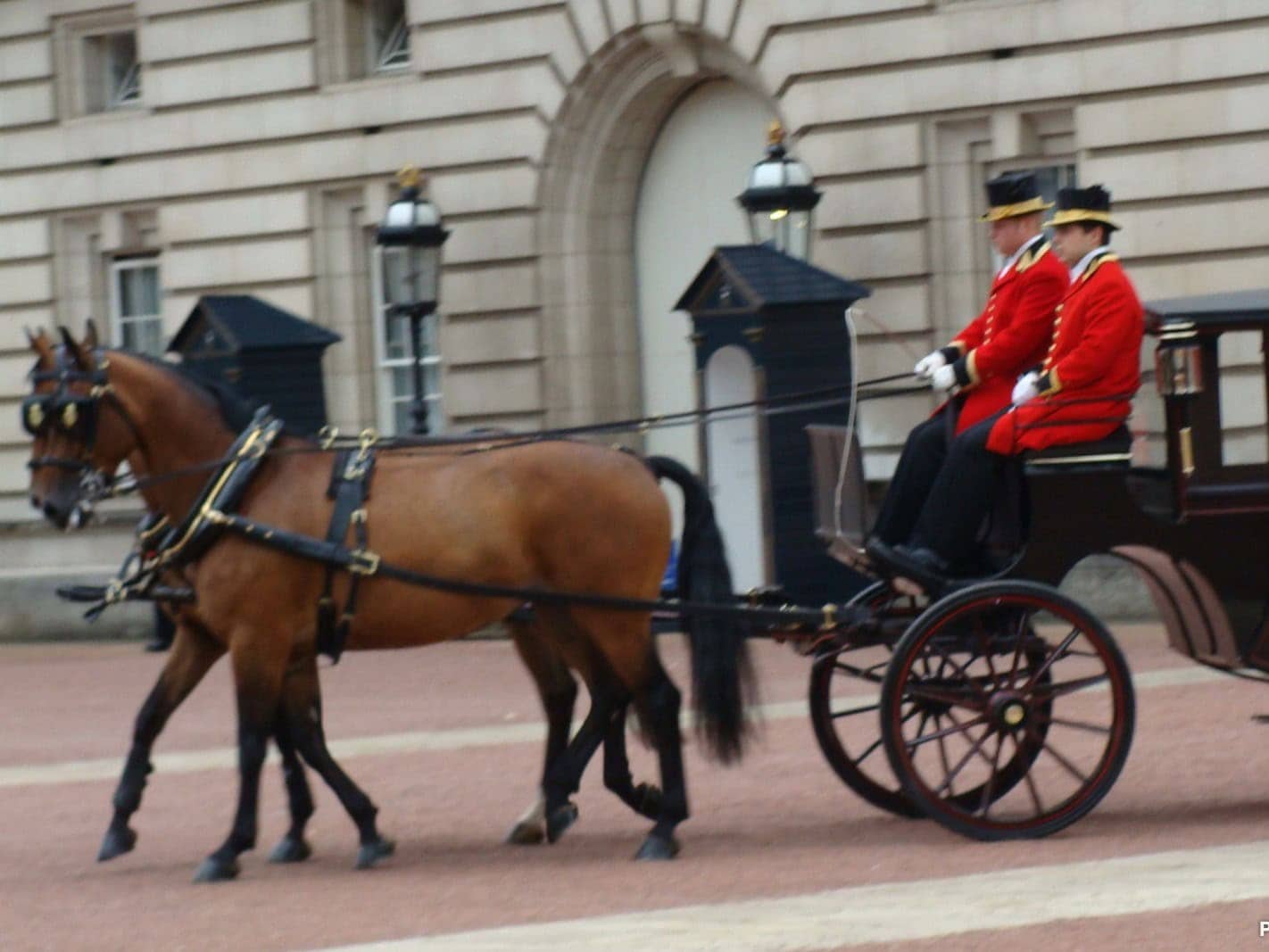
Over the centuries, the Cleveland Bay became the ideal coach horse: tall, strong, and handsome, able to pull a carriage at speed over long distances.
Read more Read less
It was also a fine hunter and farm horse, and its blood helped shape other breeds, including the Holsteiner and the Hanoverian. The Cleveland Bay Horse Society was founded in 1884.
The breed has a long association with the British royal family. Cleveland Bays and Cleveland Bay crosses have drawn carriages in royal processions from the Royal Mews, and Queen Elizabeth II was patron of the breed society. Even so, the breed nearly vanished in the 20th century, and it remains on the Rare Breeds Survival Trust’s watchlist with very few breeding animals.
As its name says, the Cleveland Bay is always bay, with black legs, mane, and tail. It stands about 16 to 16.2 hands, with a large head, deep body, and strong, clean legs. It is known for intelligence, stamina, and a calm, sensible character.
-
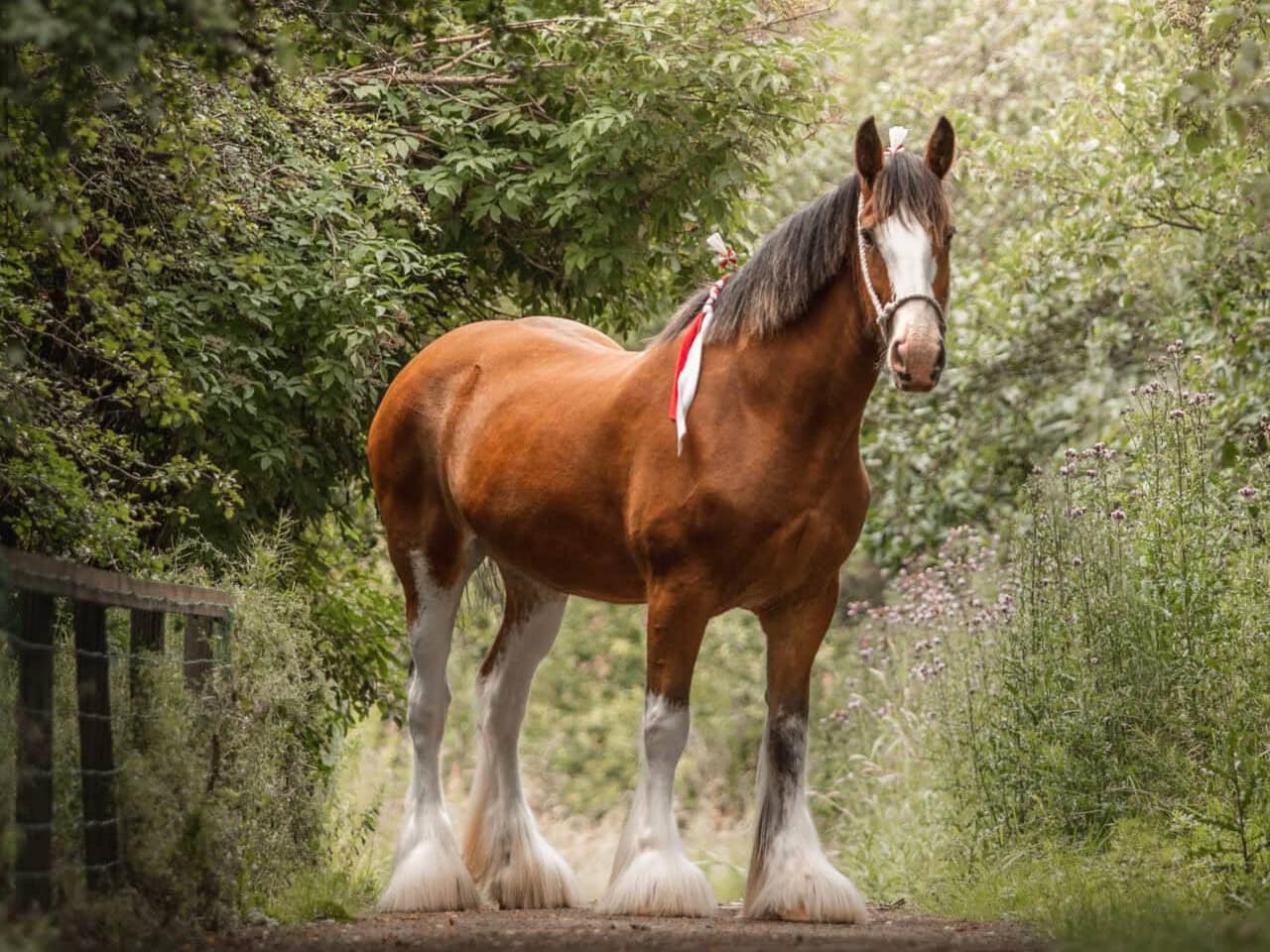
The Clydesdale
Endangered
Scotland’s great horse was built for the land - and nearly destroyed by the war. The Clydesdale, bred in the Clyde Valley of Lanarkshire, was the draft horse of Scottish agriculture from the 18th century, a slightly lighter and more active version of the English Shire that proved ideally suited to the varied terrain and mixed farming of the Scottish countryside.
Read more Read less
The breed’s origin is usually dated to 1715, when the Duke of Hamilton imported Flemish stallions to improve native Lanarkshire mares. The resulting horses were larger and more powerful than the native stock, with a notable action - a high-stepping, almost springy quality to the walk and trot that was unusual in a draft horse and made the Clydesdale particularly suited to road haulage as well as field work. The Clydesdale Horse Society was established in 1877, and by the early 20th century the breed had been exported to Australia, New Zealand, Canada, and the United States in enormous numbers.
The First World War broke the Clydesdale as it broke every draft breed. More than a million horses left Britain for the Western Front; relatively few returned. The inter-war recovery was interrupted by the Second World War, and then by mechanization, which removed the agricultural need that had sustained the breed. By 1975, the Rare Breeds Survival Trust listed the Clydesdale as “vulnerable,” and numbers fell to fewer than 150 registered breeding mares.
The recovery has been slow. Today the Clydesdale remains on the Rare Breeds Survival Trust’s register, though numbers have improved from the lowest point. The breed is known internationally through the Budweiser Clydesdale advertising campaigns that have run since 1933, making these horses among the most recognized in North America, though the actual breed population remains fragile.
The Clydesdale stands 16 to 18 hands, somewhat lighter in bone than the Shire, with significant feathering at the legs and a particularly fine quality of hair. Bay and brown with white face and leg markings are the most typical coloring, though roans and blacks exist. The characteristic springy action remains one of the breed’s most distinctive features.
-
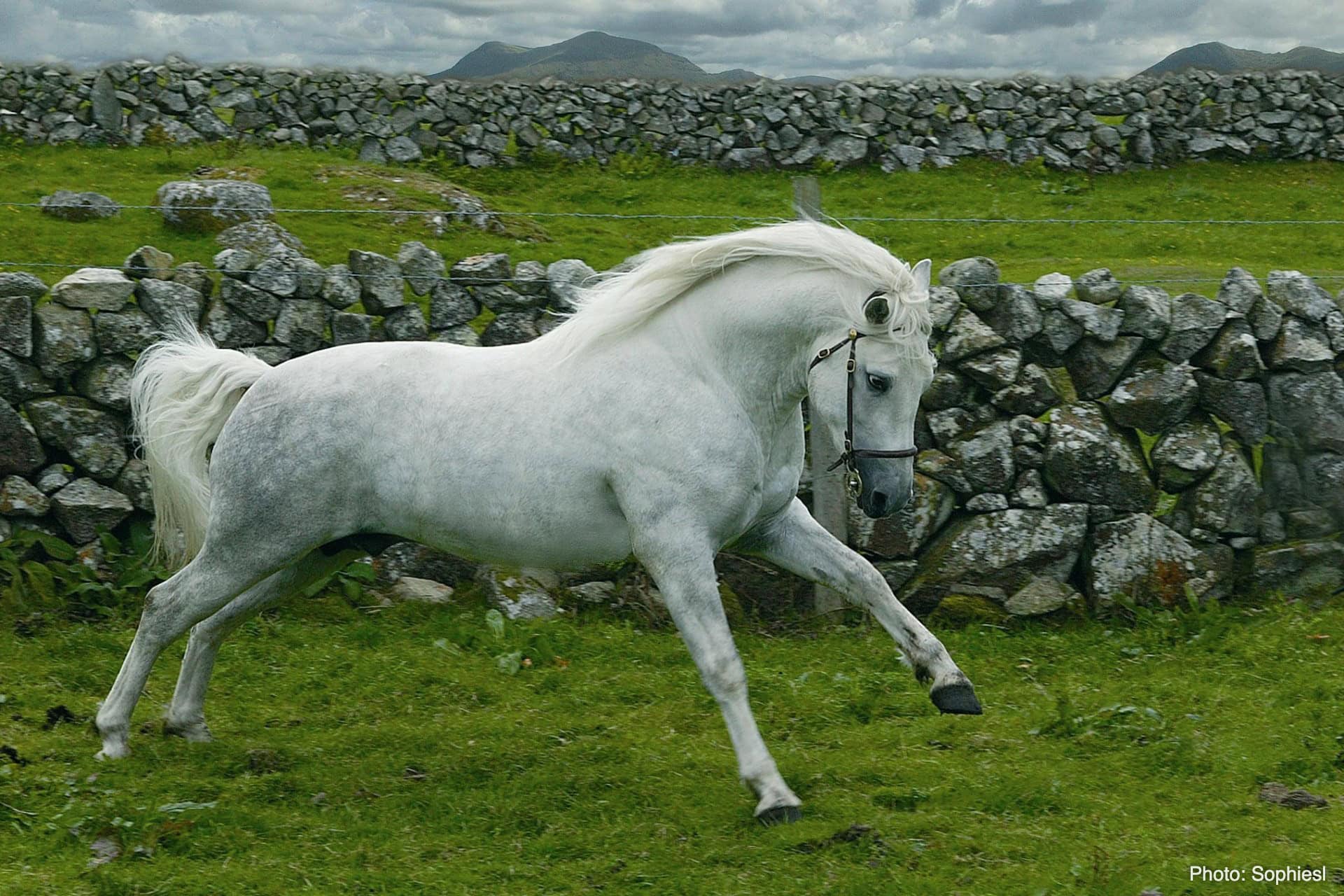
The Connemara Pony
The Connemara is the horse that Connaught made - shaped by the westernmost edge of Ireland, where the land runs out of patience and becomes rock, bog, and sea wind. It is a pony that has spent centuries navigating terrain that would discourage anything else, and it carries that history in every aspect of its character: the sureness of foot on uneven ground, the toughness in winter, the willingness to work that seems encoded rather than taught.
Read more Read less
The Connemara’s origins are ancient and layered. The native ponies of western Ireland are believed to descend from Celtic ponies brought by the Iron Age peoples of Iberia, crossed at various points in history with Spanish horses carried to the Irish coast by traders and by the ships of the Spanish Armada wrecked on the Connacht shore in 1588. Arabian blood was introduced in the 18th century, and later Thoroughbred and Welsh Cob, adding refinement and substance to the native type.
The result is a pony of remarkable range. The Connemara typically stands 12.2 to 14.2 hands - officially classified as a pony - but it carries itself and performs like something larger. In the show jumping ring, the Connemara cross with a Thoroughbred has produced some of the most successful horses in the history of the sport. The legendary Dundrum, ridden by Tommy Wade in the early 1960s, was a pure Connemara standing barely 14.3 hands who became one of the greatest show jumpers in the world, defeating horses twice his size.
The Connemara Pony Breeders’ Society was established in 1923, with the specific goal of preserving the pure native pony from further crossbreeding. The breed standard calls for a compact, well-balanced pony with a short back, well-sprung ribs, and a particularly strong, sloping shoulder. Grey is the most common color, followed by bay, brown, dun, black, and roan. Dun coloring - thought to reflect the oldest genetic heritage - is considered particularly desirable.
The annual Connemara Pony Show held in Clifden, County Galway, is one of the oldest and most atmospheric horse shows in Ireland, drawing breeders and buyers from across the world to the capital of Connemara for a weekend that is as much a cultural gathering as a commercial event.
-
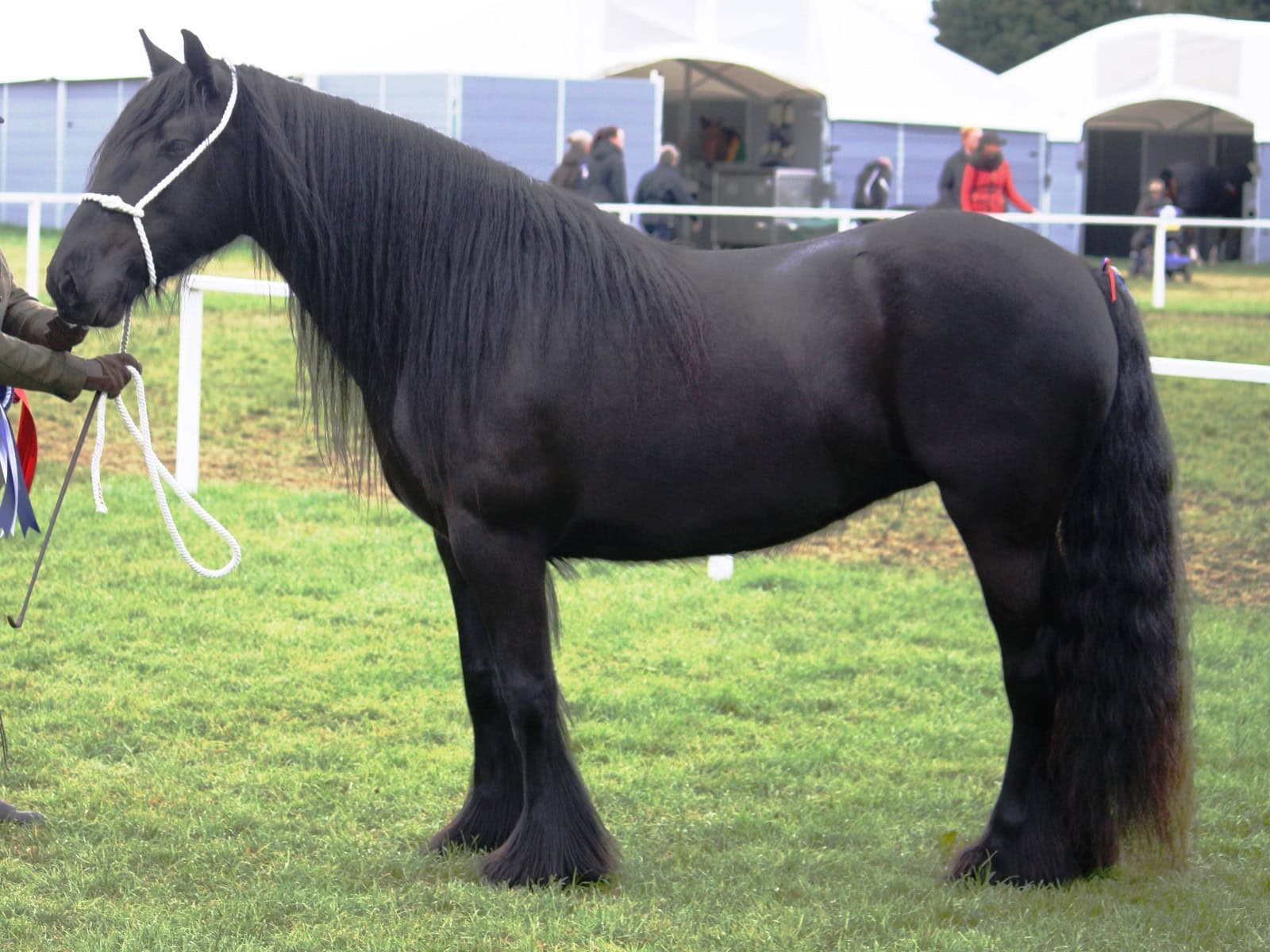
The Dales Pony
Critically endangered
On the eastern side of the Pennines, in the high dales of Yorkshire, Durham, and Northumberland, the Dales pony carried England’s lead industry on its back. Strings of these compact, powerful ponies hauled ore from the mines down to the smelters and ports, each pony carrying heavy loads for long distances over moorland tracks.
Read more Read less
The Dales is a close cousin of the Fell pony from the western side of the same hills, and the two share ancient roots in the native hill ponies of northern England. In the 19th century, Dales breeders added Welsh Cob blood, most famously through the stallion Comet, giving the breed more substance and a powerful, ground-covering trot that made it a favorite in local trotting matches.
The Dales Pony Society was founded in 1916, but the 20th century brought hard times. Many ponies were taken for military service in the Second World War, and mechanization did the rest. By the mid-1950s, only a handful of ponies were registered. A small group of breeders rebuilt the breed, and though it remains rare, it has found a new life as a riding, driving, and trekking pony.
The Dales stands up to 14.2 hands, with strong bone, hard blue hooves, and silky feathering at the heels. Most are black, though brown, bay, grey, and roan occur. It is known for its strength, stamina, and calm, honest nature.
Photo credit: Annapennell / Wikimedia Commons (CC BY-SA 4.0)
-
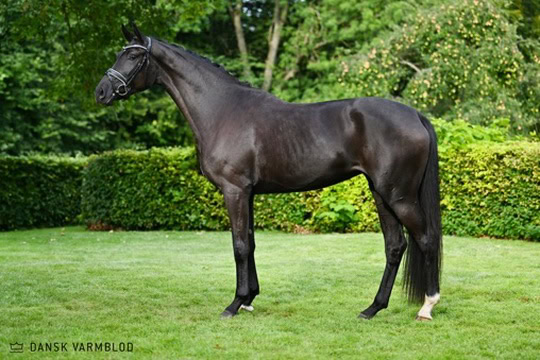
Danish Warmblood
Denmark once bred one of Europe’s most famous horses, the Frederiksborg, at a royal stud founded in the 16th century. The Danish Warmblood is that country’s modern answer: a breed founded in living memory, built deliberately to compete with the best sport horses in the world.
The Danish Sport Horse Breeding Association was formed in 1962, and the first studbook volume, published in 1964, listed 150 mares.
Read more Read less
Most were imported, more than a hundred of them of German breeding, while the Danish-born mares were largely of Oldenburg origin. Frederiksborg mares crossed with Thoroughbred stallions added a native foundation. Hanoverian, Holsteiner, Swedish Warmblood, and Trakehner blood followed, and later Polish, French, and more Thoroughbred lines.
The breed’s guiding principle is performance. Any suitable horse of any origin may be admitted if it passes a strict performance test, and stallions are selected with unusual rigor. In 1979 the society merged with Denmark’s light horse breeders to form today’s Dansk Varmblod.
The Danish Warmblood made its name in dressage. The mare Blue Hors Matine, ridden by Andreas Helgstrand, won freestyle silver at the 2006 World Equestrian Games in Aachen, and her extraordinary, rhythmic performance remains one of the most watched dressage rides ever filmed.
Danish Warmbloods usually stand 16 to 17 hands, in any solid color, with bay the most common. They are bred mainly for dressage and show jumping.
Photo credit: Dansk Varmblod
-
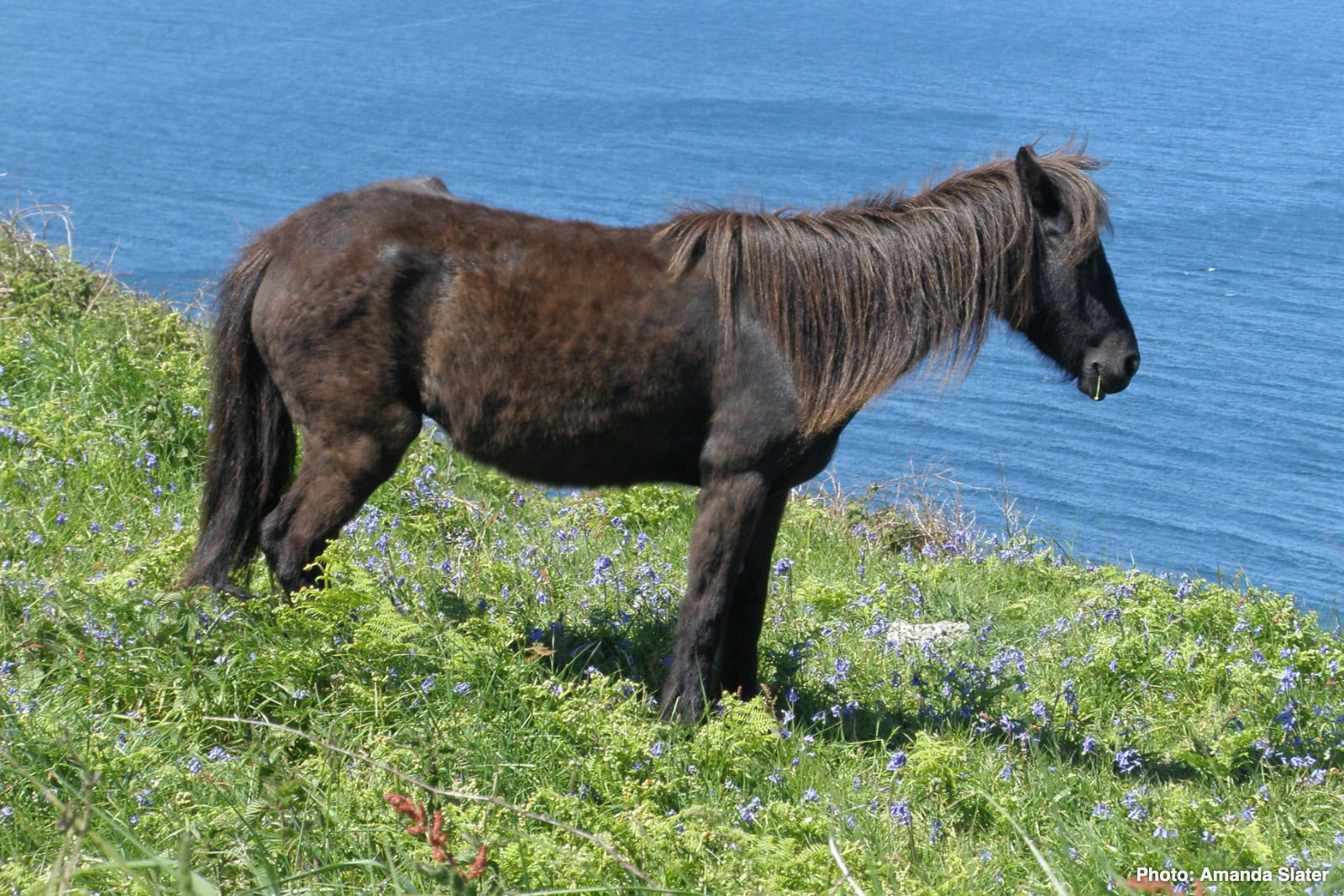
The Dartmoor Pony
Critically endangered
On the granite uplands of Dartmoor in Devon, small, hardy ponies have run free for more than a thousand years. The earliest record dates to 1012, when the will of a Saxon bishop mentions the wild horses of Dartmoor, and the ponies have been part of the moor’s landscape ever since.
Read more Read less
For centuries they worked for the people of the moor, carrying tin from the mines and serving farmers as all-purpose ponies. In the late 19th century the Polo Pony Society established a Dartmoor section, and the Dartmoor Pony Society followed in 1925. The breed came close to disappearing during the Second World War, when the moor was used for military training and only a few registered ponies survived.
Careful breeding restored the Dartmoor, and today it is prized as one of the finest children’s ponies in Britain: small, elegant, sure-footed, and kind. Ponies still live semi-wild on the open moor, though the purebred registered population remains small and the breed is considered rare.
The Dartmoor stands no more than 12.2 hands, with a small, refined head, strong back, and full mane and tail. Bay, brown, black, grey, chestnut, and roan are accepted. Piebald and skewbald are not.
-
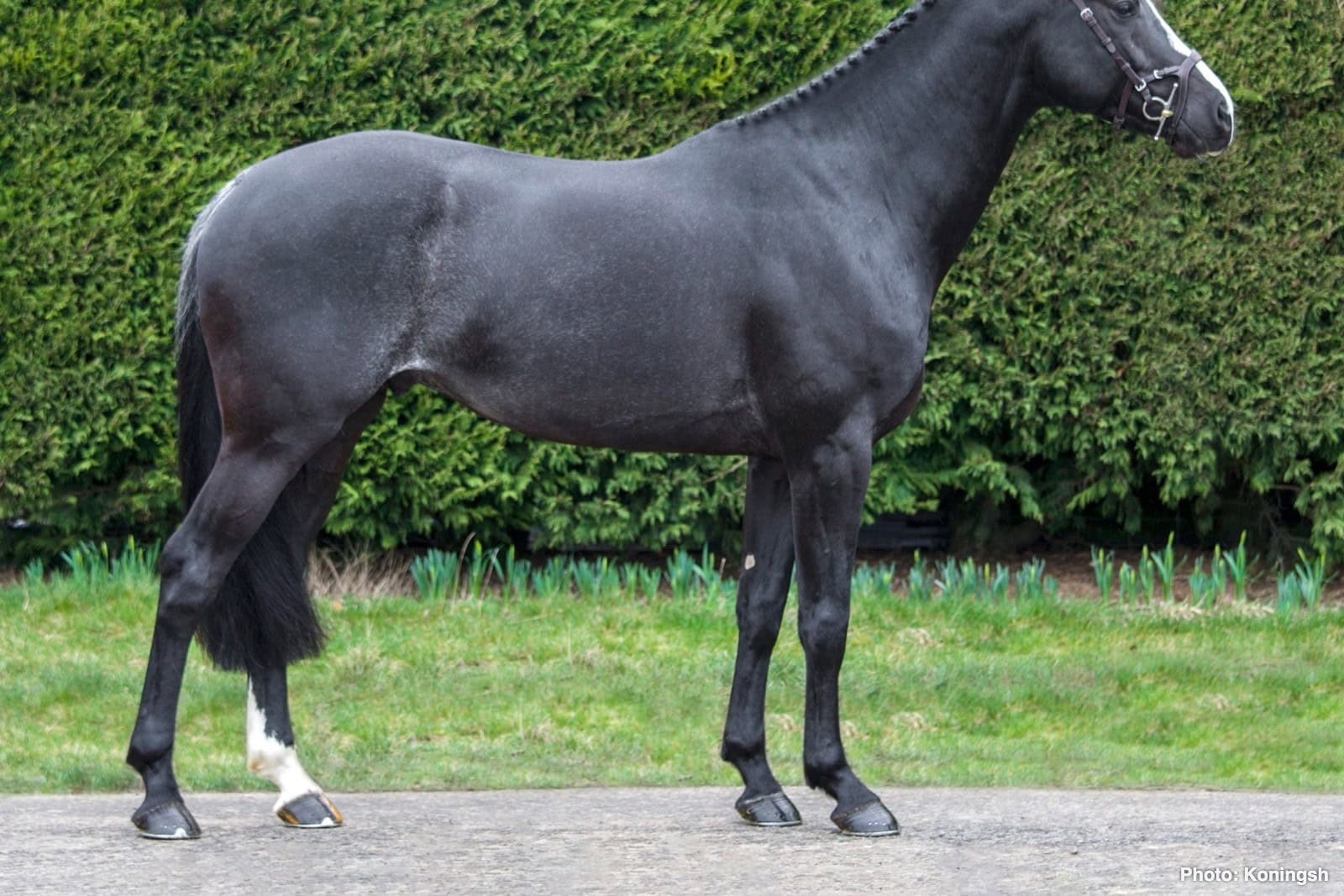
Dutch Warmblood
In a country with no great tradition of cavalry or court studs, Dutch farmers built what is now ranked, year after year, among the most successful sport horse studbooks in the world. The Dutch Warmblood, registered by the Royal Warmblood Studbook of the Netherlands (KWPN), is a modern breed, and a remarkably deliberate one.
Read more Read less
Its foundations are two hardworking farm horses: the Gelderlander of the southern Netherlands, elegant enough to pull a carriage on Sunday, and the heavier Groningen of the north. After the Second World War, as farm horses lost their purpose, Dutch breeders began crossing these mares with Thoroughbred and imported warmblood stallions, aiming squarely at riding and sport. The two regional registries merged in 1969 to form the KWPN, which later received its royal title.
What sets the KWPN apart is the rigor of its selection. Stallions pass through demanding inspections and performance tests, and only a small fraction are approved. Since around 2000, riding horses have been bred in separate dressage and jumper lines. The studbook also registers the Gelderlander and the high-stepping Dutch Harness Horse.
The list of KWPN champions is long. Moorlands Totilas and Valegro each set world records in Grand Prix dressage, Valegro winning Olympic gold with Charlotte Dujardin. Big Star carried Nick Skelton to individual show jumping gold at Rio in 2016, and Explosion W did the same for Ben Maher at Tokyo.
Dutch Warmbloods typically stand 16 to 17 hands or more, with bay, black, chestnut, and grey the most common colors. They are known for their athleticism, their power, and a temperament bred to perform under pressure.
-
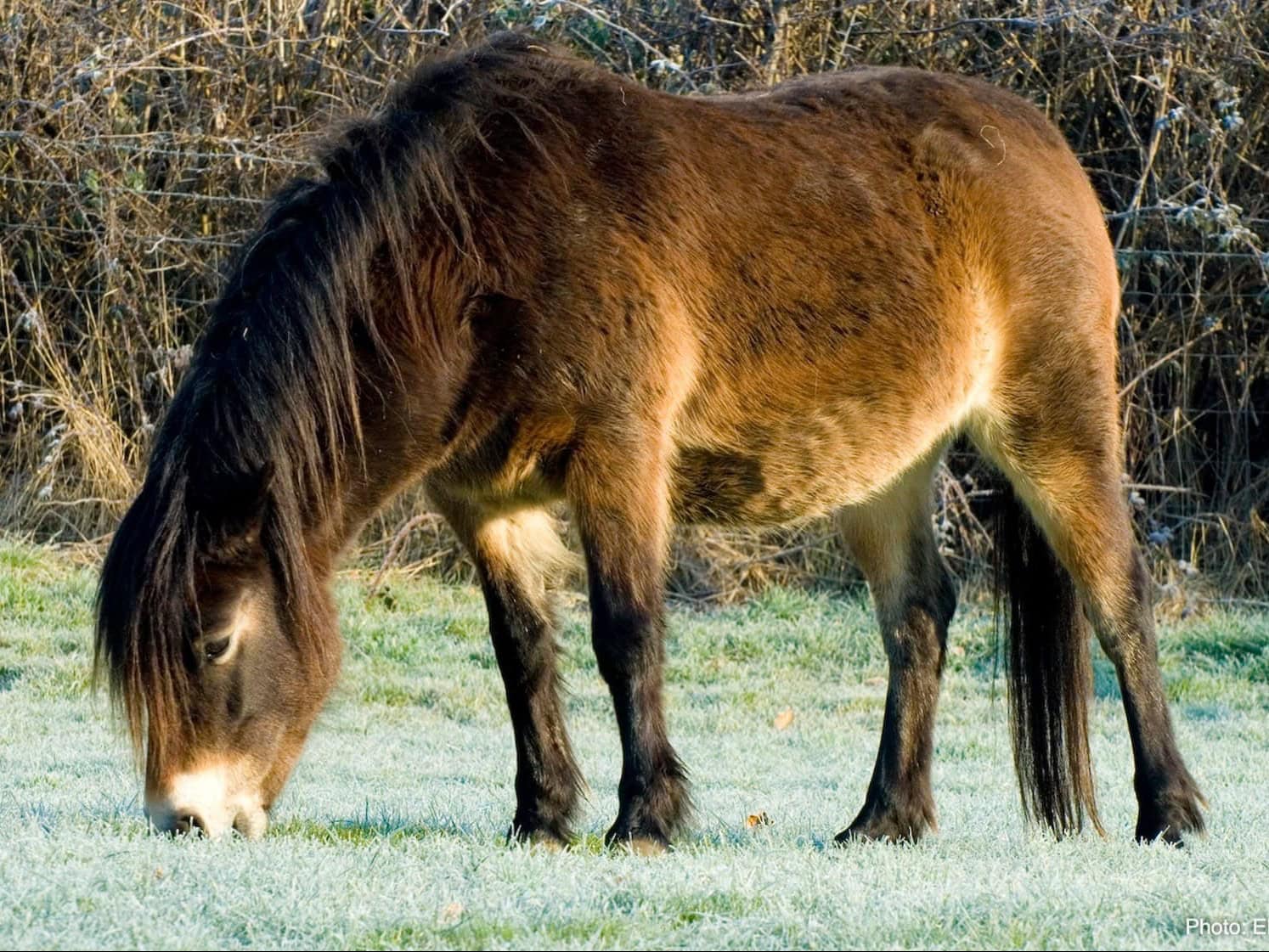
The Exmoor Pony
Critically endangered
In the high moorland of Devon and Somerset, in the wet and wind-scoured landscape of Exmoor, a pony lives today that may be the closest thing in Britain to a direct survivor of the Ice Age. The claim is not mere romance. Bones excavated at Nettlebed in Devon, dated to approximately 50,000 BC, match the conformation of the modern Exmoor pony to a degree that has fascinated geneticists and archaeologists alike.
Read more Read less
DNA studies from the Royal Agricultural University and the University of Exeter have identified haplotypes in the Exmoor associated with post-glacial survivors - genetic material found in few other European breeds.
The Exmoor is recorded in the Domesday Book of 1086, when the moorland of southwest England was a royal hunting forest and the native ponies were gathered annually for taxation. For centuries they were used as pack animals, for herding, and as all-purpose mounts for the farmers and miners of the region - hardy, sure-footed, and entirely self-sufficient on the rough moorland grass.
The breed came close to extinction during and after the Second World War, when ponies were used as target practice by military exercises on the moor, and post-war food shortages led to widespread slaughter. By 1945, fewer than 50 Exmoors remained. The recovery was achieved by a small number of dedicated breeders who gathered what was left and began rebuilding, most notably Mary Etherington, whose work in the post-war decades is considered foundational to the modern breed.
Today the Exmoor Pony Society estimates fewer than 500 breeding mares worldwide. The breed remains on the UK Native Equine Breeds at Risk register as “Priority” - more endangered than some species that attract far greater conservation attention.
The Exmoor stands 11.1 to 12.3 hands. It is exclusively bay or brown with a characteristic mealy muzzle, pale underbelly, and pale markings inside the legs. The “toad eye” with heavy brow ridges is thought to deflect rain; the dense double winter coat is one of the most efficient thermal insulators in the horse world. These are not decorative ponies; they are the unaltered descendants of animals that survived conditions most domesticated horses could not, and they carry that survival in every dense, capable inch.
-
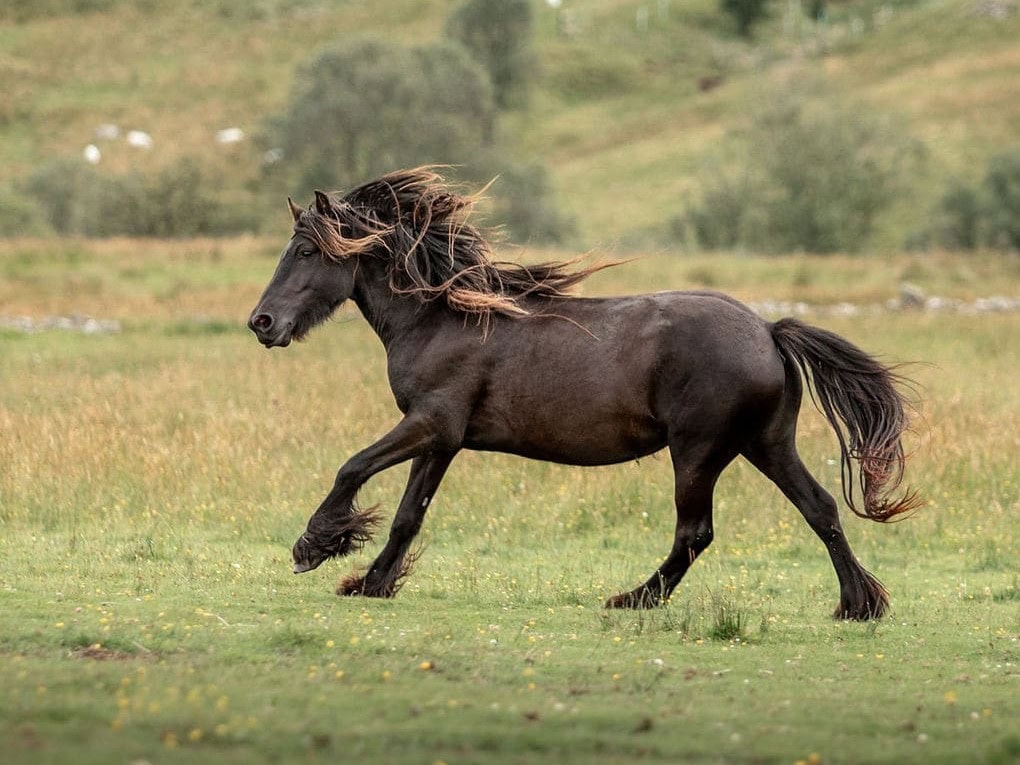
The Fell Pony
Endangered
On the high, bare fells of Cumbria, where the Lake District rises into stone and weather, a black pony has been carrying the north of England on its back for more than a thousand years. The Fell Pony does the work of something far larger, and it does it with a calm, sure-footed patience that the people of these hills have relied on for generations.
Read more Read less
The breed’s roots reach back at least to Roman. The Norse settlers who followed used the ponies to plough and to carry loads across country no cart could cross. The pattern held for centuries: working ponies were kept in the villages, while the breeding herds ran free on the open fell.
The Fell’s great era came with the pack trains. Strings of ponies carried slate, copper, lead, and iron ore down from the mines, and wool from the hill farms, along the packhorse routes whose narrow stone bridges still cross the becks of Cumbria. Even after canals and railways arrived, pack ponies and pony-drawn mail remained a lifeline for remote communities. The Fell also became known for its trot, a powerful, ground-covering stride that made it a favourite in local trotting races.
Mechanization brought the familiar decline, and by the end of the Second World War numbers were very low. The Fell Pony Society, formally organized in 1922, held the breed together until the rise of pleasure riding gave it a new purpose. Queen Elizabeth II became the society’s patron in 1982 and bred Fells herself. For her 90th birthday, 135 Fell ponies formed a guard of honour at Windsor.
The Fell stands up to 14 hands, with 13.2 considered ideal. It is compact and immensely strong, with hard, rounded feet, a long, flowing mane and tail, and fine feathering at the heels. Most Fells are black, though brown, bay, and grey also occur, and over half carry no white at all.
The breed remains on the Rare Breeds Survival Trust’s watchlist, and the semi-feral hill herds that keep its oldest character alive. Where they still range, they now do conservation work as well, grazing back scrub and coarse grasses on the same fells their ancestors walked.
Main photo credit: Equine Legacy Conservation Project
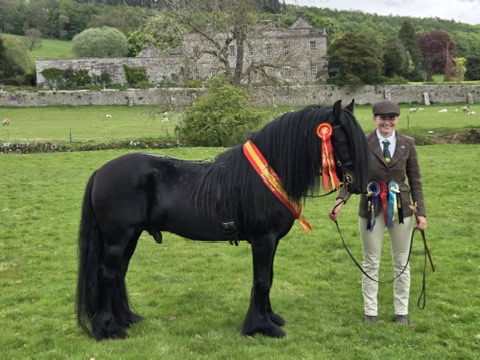
Photo credit: Fell Pony Society/Claire Simpson 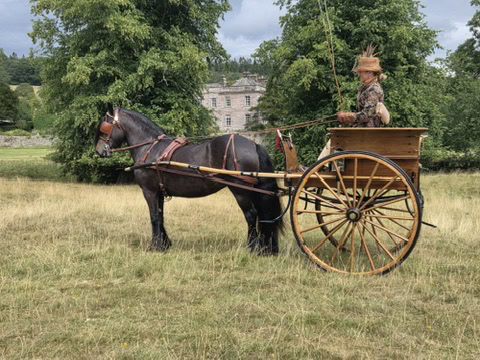
Photo credit: Fell Pony Society/Claire Simpson -
The Finnhorse
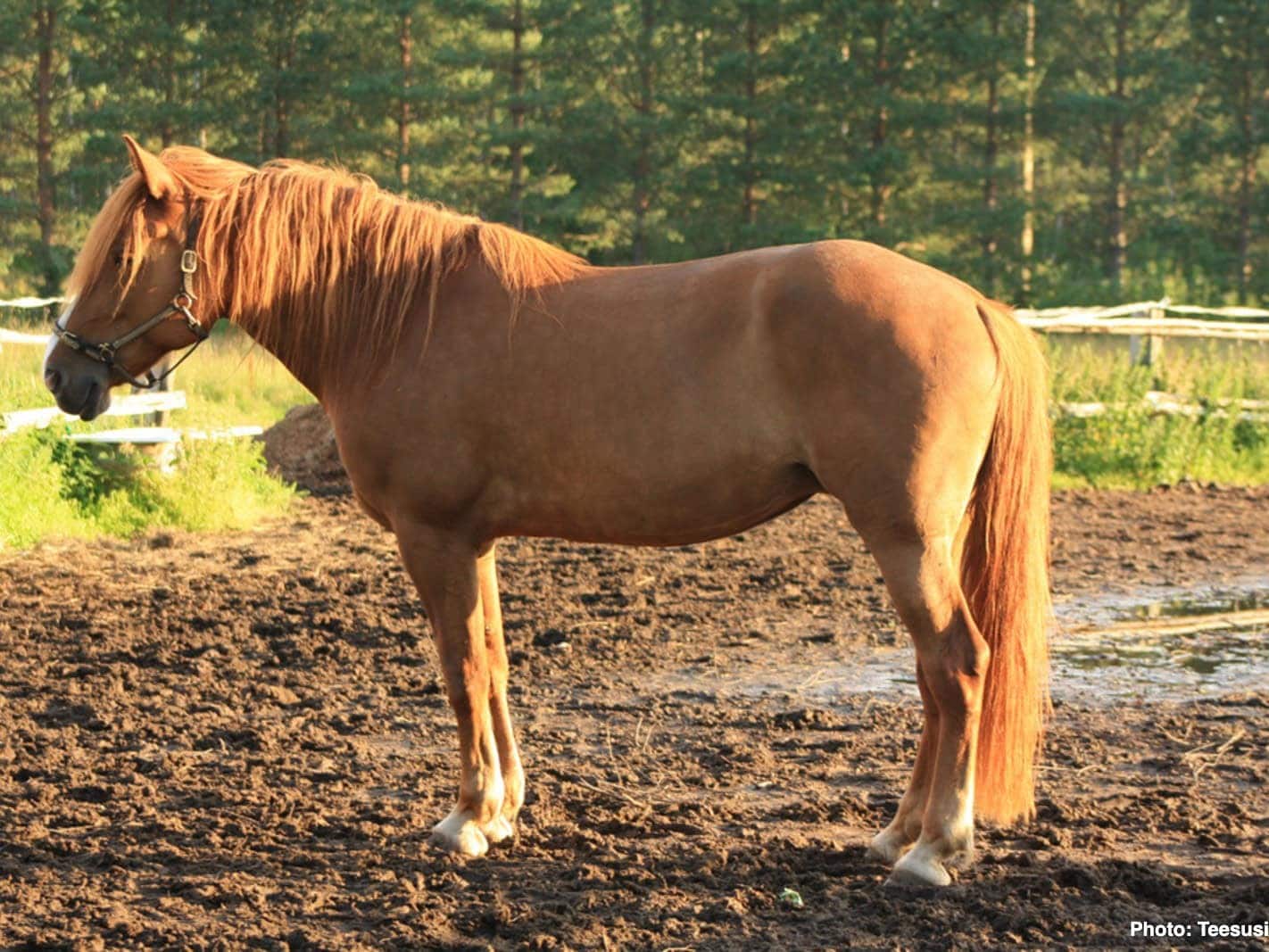
The Finnhorse is Finland’s only native horse breed, and for much of the country’s history it was the horse for everything. It ploughed the fields, hauled timber, carried families to church, raced on frozen lakes, and served in war.
The studbook was established in 1907, and breeders developed the Finnhorse in several types from a single population: a light trotter, a riding horse, a heavier work horse, and a pony-sized type.
Read more Read less
Finnhorses served in Finland’s wars in the 20th century, and in the mid-20th century they numbered in the hundreds of thousands.
Mechanization cut their numbers sharply, but the breed survived thanks to harness racing, which remains enormously popular in Finland. Today the Finnhorse is also valued as a family riding horse, for trekking, and for driving.
The Finnhorse usually stands about 15 to 15.2 hands and is most often chestnut, frequently with a flaxen mane and tail. It is known for its versatility, hardiness, and good nature.
-
The Frederiksborg
In 1562, King Frederik II of Denmark founded a royal stud at Frederiksborg, north of Copenhagen, and stocked it with Neapolitan and Spanish horses. For two centuries its horses were among the most admired in Europe, the parade and carriage horses of kings.
The Frederiksborg influenced breeds far beyond Denmark.
Read more Read less
The grey stallion Pluto, foaled in 1765, became the founder of one of the six classic stallion lines of the Lipizzaner. Frederiksborg horses were also foundation stock for the spotted Knabstrupper and contributed to several of Europe’s heavy warmbloods.
As fashions changed, the breed declined, and the royal stud closed in 1839. Private breeders kept the Frederiksborg alive as a carriage and farm horse, and efforts to re-establish it began in 1939. Through its female lines, it remains part of the foundation of the modern Danish Warmblood.
The Frederiksborg stands about 15.3 to 16.2 hands. Most are chestnut, often with white markings, though any solid color can occur. It is an elegant, high-stepping horse with a kind temperament, and today it is an endangered breed.
-
The Friesian
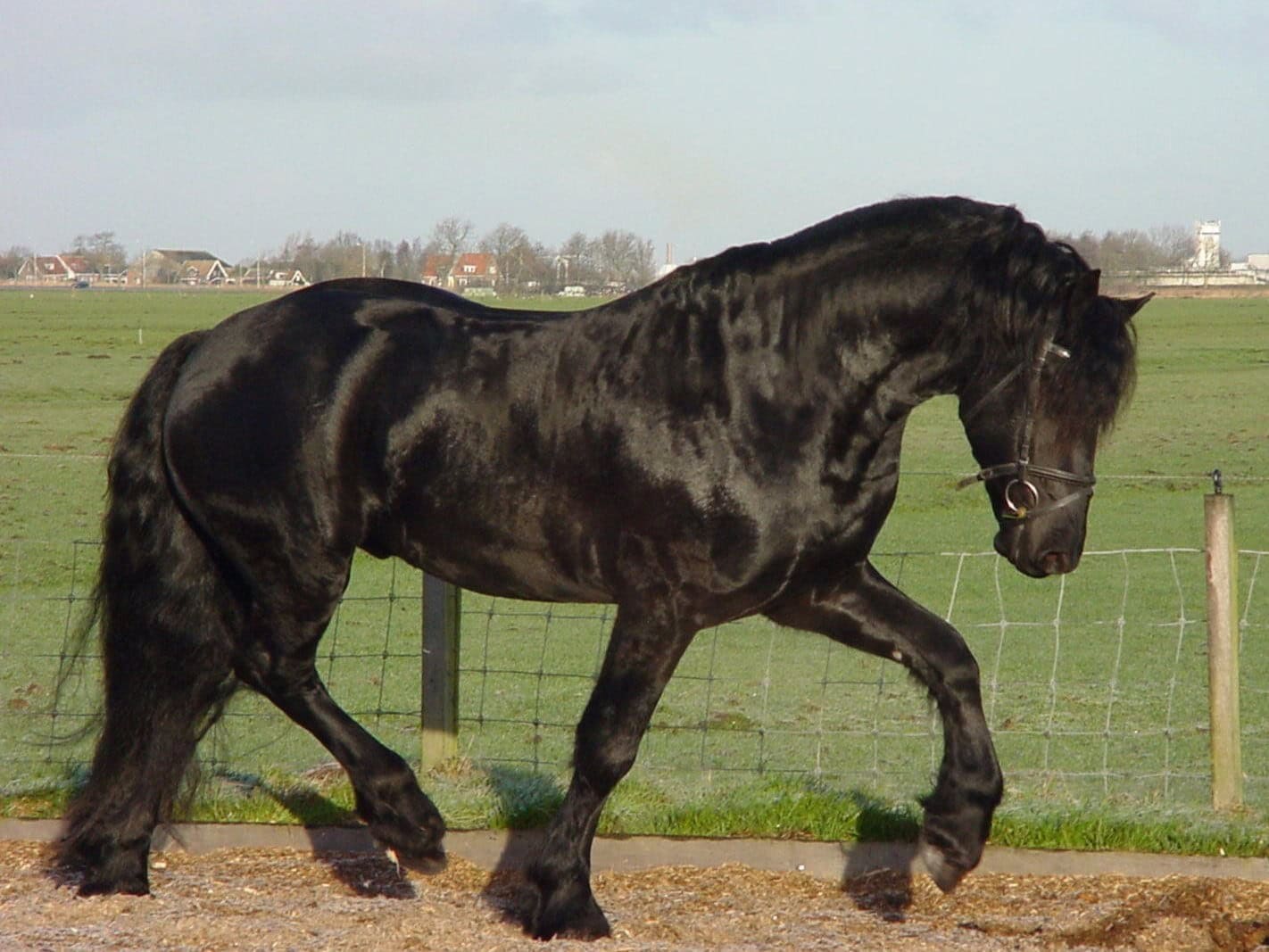
No horse stops a room quite like a Friesian. The jet-black coat, the abundant feathering at the lower legs, the arched neck, the flowing mane and tail - even standing still, a Friesian carries an air of theatrical grandeur that artists and filmmakers have relied on for centuries.
The Friesian comes from the province of Friesland in the northern Netherlands, and its history stretches back over two thousand years.
Read more Read less
Roman historian Tacitus wrote of the heavy horses of the Frisian tribes in the first century AD. In the medieval period, the Friesian became the warhorse of choice for armored knights - powerful enough to carry a fully armored rider, agile enough to maneuver on the battlefield. During the Crusades, Friesian horses were carried to the Middle East and traded across Europe; some historians believe their blood influenced the development of the English Thoroughbred.
The breed reached its peak in the 17th and 18th centuries as a carriage horse for the Dutch aristocracy, moving with the high-stepping elegance that remains its hallmark. But the rise of faster, lighter carriage horses pushed the Friesian toward obsolescence, and it came within a single generation of extinction - not once, but three times. By 1913, only three registered Friesian stallions remained in the world. Dedicated Dutch breeders stepped back from the edge each time, but the genetic bottleneck has left its mark: virtually all modern Friesians are black, and the population’s limited genetic diversity requires careful management.
The Friesian studbook, the Friesch Paarden Stamboek, was established in 1879 and is among the oldest breed registries in the world. Today approximately 45,000 Friesians are registered worldwide, a remarkable recovery from the edge of extinction.
The breed stands 15 to 17 hands, powerfully built but surprisingly light on its feet. The only permitted color is black, and white markings are not acceptable for registration except a very small star. The characteristic trot - high, round, and animated - made the Friesian the star of the 17th-century riding academy, and it has lost none of that quality.
In film and television, the Friesian has become shorthand for equine magnificence. In the breeding world, the recovery of the Friesian from the brink of extinction is considered one of the great achievements of 20th-century horse breeding.
-
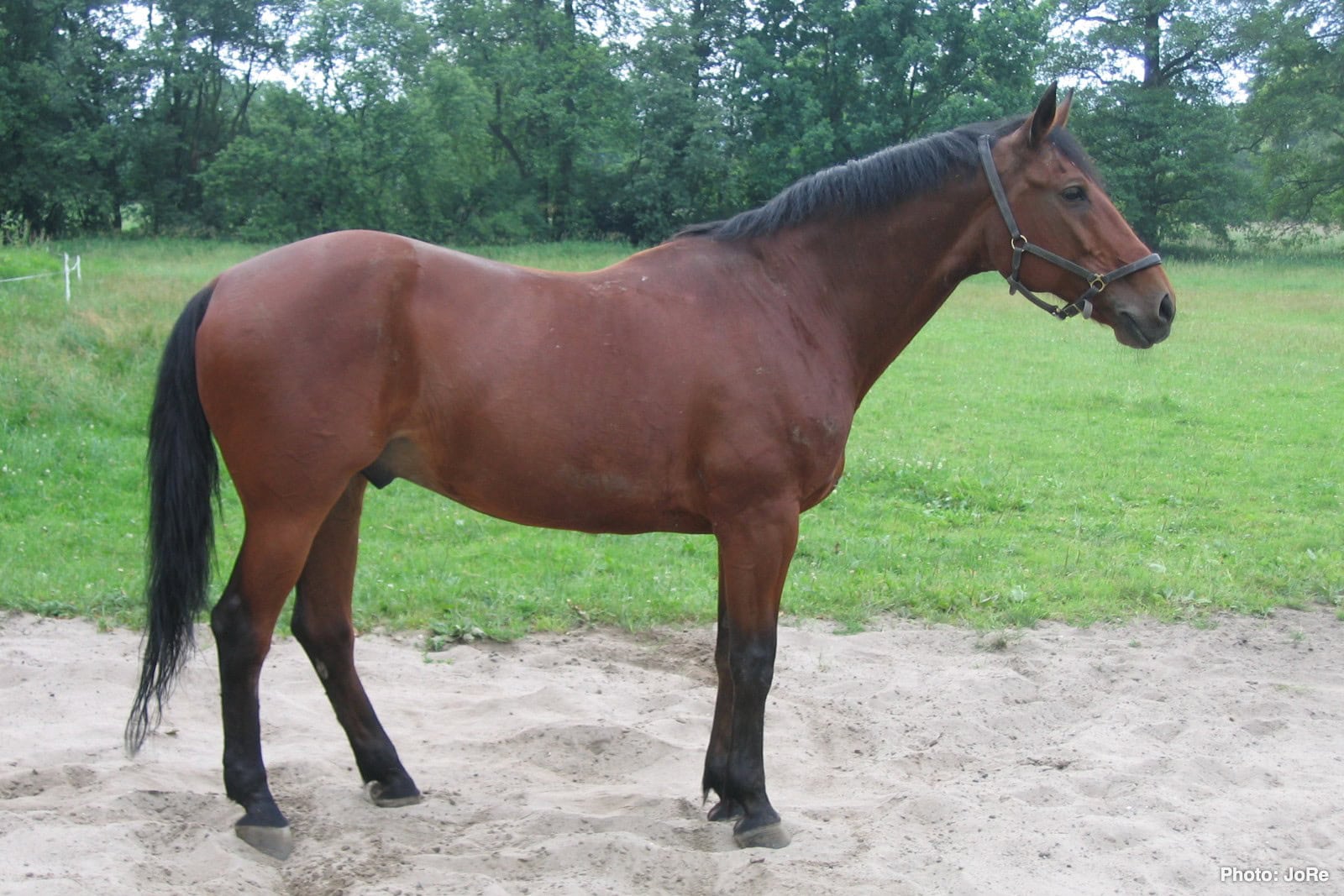
The Furioso-North Star
The Furioso-North Star is named for two English Thoroughbred stallions, and it was bred on the great plains of Hungary at the state stud of Mezőhegyes, one of the largest stud farms in Europe.
Furioso, foaled in 1836, was crossed with local Hungarian mares from 1841. North Star, foaled in 1844, was imported from England in 1852 and crossed with local mares in the same way.
Read more Read less
For some years the two lines were kept apart, Furioso producing riding horses and North Star lighter driving horses, until they were merged in the late 19th century into a single elegant, athletic halfbred.
The breed became popular across the Austro-Hungarian Empire as a cavalry horse and carriage horse, and later as a sport horse. Today it is rare, and it is considered endangered in Romania, where it was once widely bred.
The Furioso-North Star stands about 16 hands and is usually bay, liver chestnut, or black. It combines the refinement of the Thoroughbred with the toughness and sound constitution of the Hungarian plains horse.
-
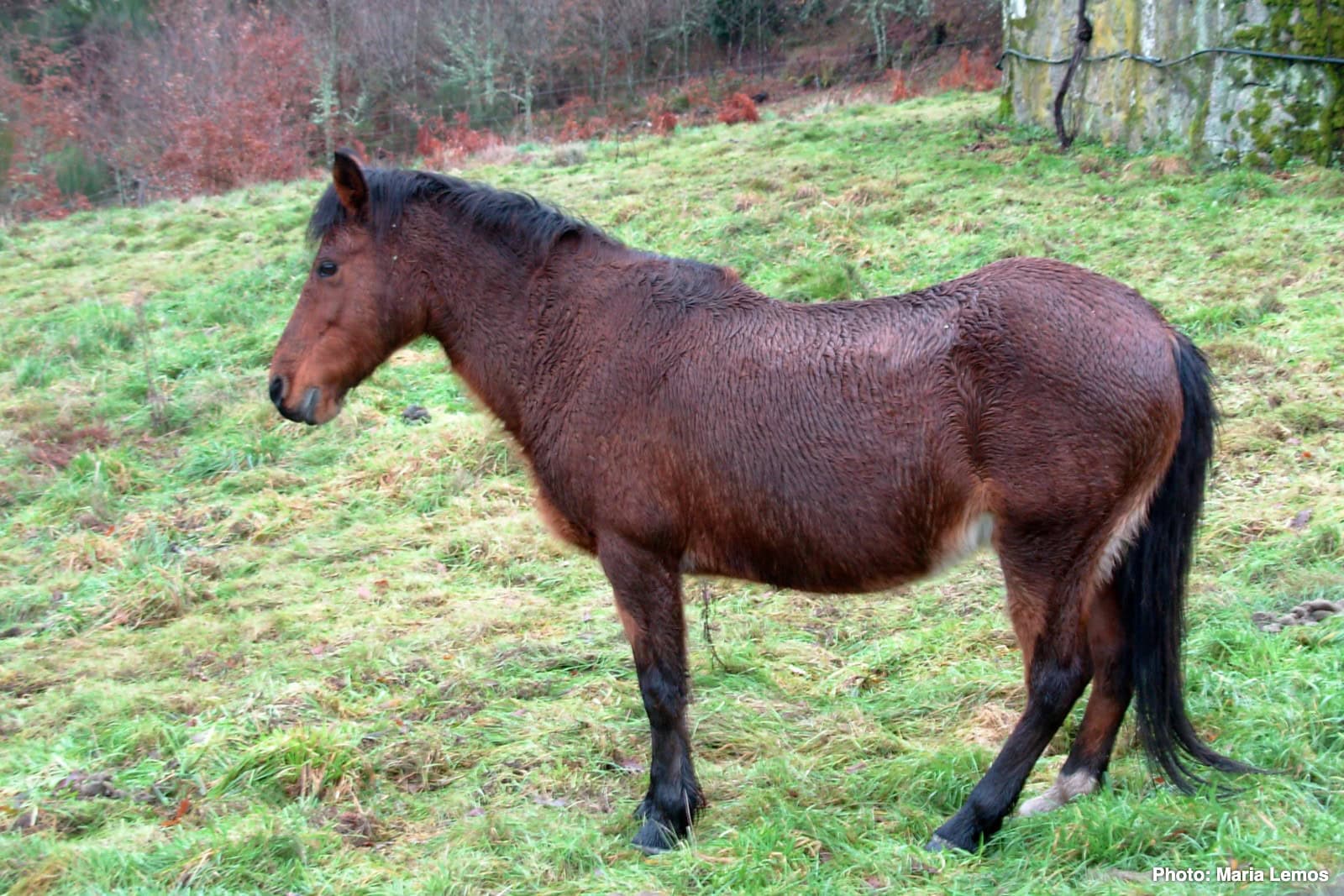
The Garrano
In the mountains of northern Portugal, small, sturdy ponies called Garranos have roamed the hills for thousands of years. Many still live semi-wild in and around Peneda-Gerês National Park, Portugal’s only national park, where they share the landscape with the Iberian wolf.
The Garrano is believed to be one of the oldest horse types on the Iberian Peninsula, and some see a resemblance to the small horses painted in prehistoric caves.
Read more Read less
For centuries, the farmers of Minho and Trás-os-Montes used Garranos as pack and riding ponies, and they were traditionally raced at local fairs.
The breed’s numbers have declined, and it is considered endangered. A breed society now works to protect it, and the semi-wild herds are an important part of the mountain ecosystem.
The Garrano stands about 12 to 13 hands, usually dark bay or chestnut, with a thick mane and tail. It is hardy, sure-footed, and intelligent, well suited to trekking in rough mountain country.
-
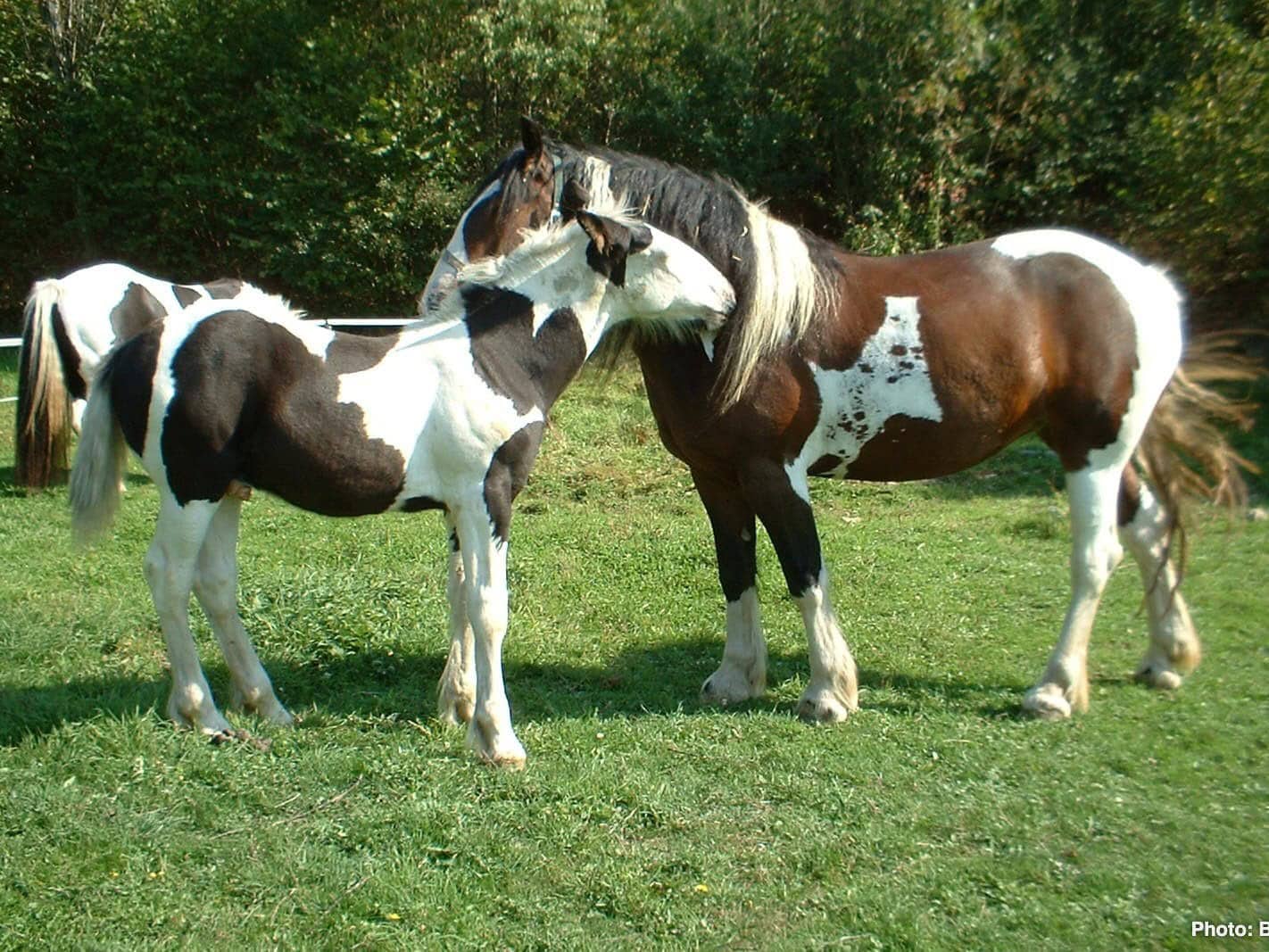
The Gypsy Vanner (Irish Cob)
For generations, Romani and Traveller families in Britain and Ireland bred a horse to pull their bowtop wagons: strong enough to draw a family’s home down the road, gentle enough for the children to ride, and beautiful enough to stop traffic. That horse is known today as the Gypsy Vanner, Gypsy Cob, Traditional Cob, or Irish Cob.
Read more Read less
Travellers selected their horses with great care, prizing power, a kind temperament, and spectacular feathering on the lower legs. Colorful coat patterns, especially piebald and skewbald, were favored. The horses were traded at fairs such as Appleby in Cumbria, where Travellers still gather each June to buy, sell, and wash their horses in the River Eden.
The breed’s formal registry history began in 1996, when the Gypsy Vanner Horse Society was founded in the United States to recognize and record the horses being imported from Britain and Ireland. Other societies followed in Europe. Today these horses are popular for driving, pleasure riding, and dressage around the world.
The Gypsy Vanner usually stands 13 to 16 hands, compact and heavily muscled, with an abundant mane and tail and long, silky feathering. Piebald and skewbald are the classic colors, though any color is accepted. Its gentle, people-oriented temperament is its most treasured trait.
-
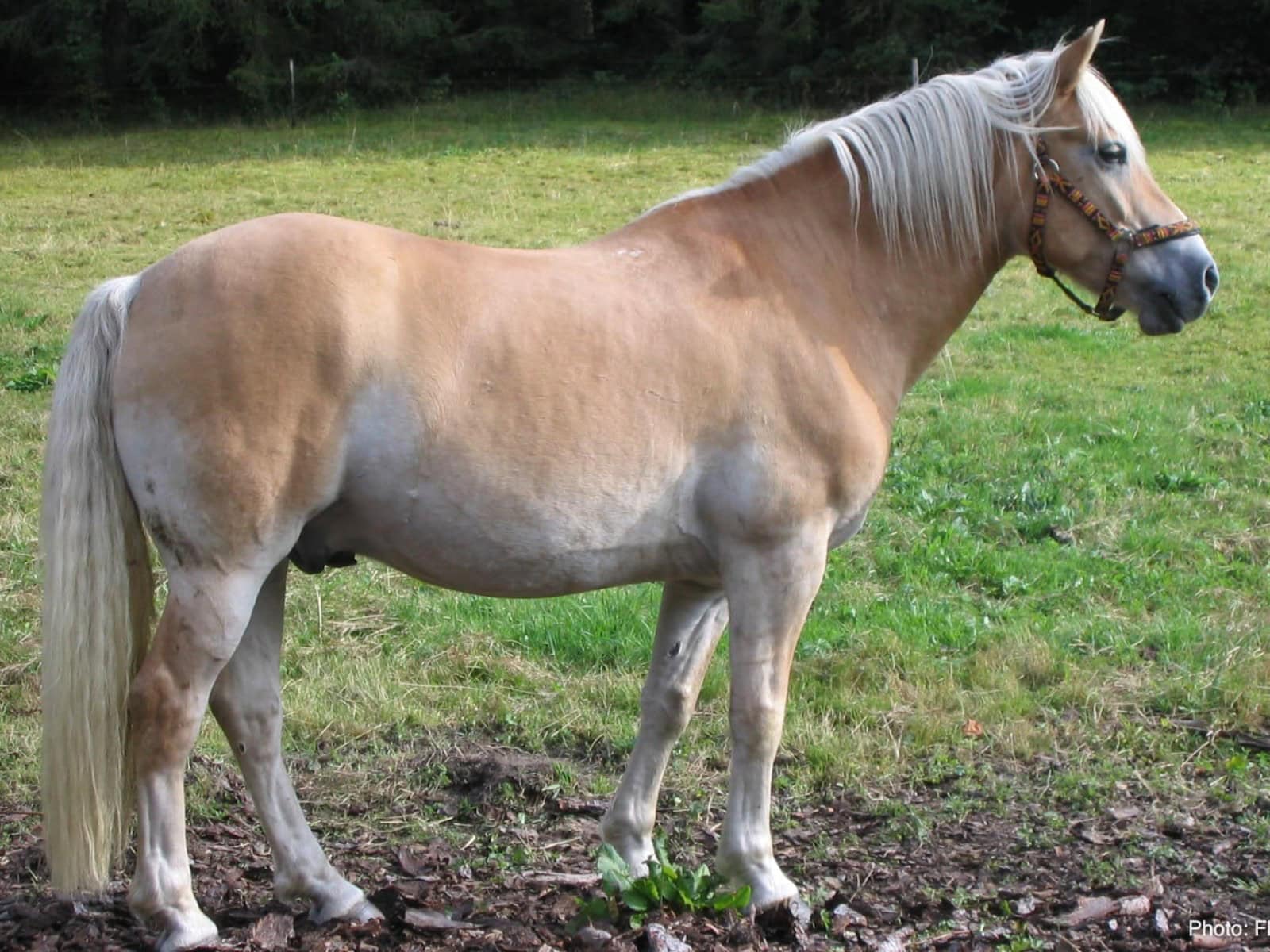
The Haflinger
Every Haflinger in the world is chestnut with a flaxen mane and tail. This is not coincidence - it is one of the most carefully preserved breed standards in the equestrian world, a deliberate uniformity that makes a field of Haflingers one of the most visually striking sights in horse breeding.
Read more Read less
The Haflinger originated in the mountain villages of Tyrol - the alpine region that straddles present-day Austria and northern Italy - and takes its name from the village of Hafling, now in the South Tyrol of Italy. The breed’s official history begins in 1874, when the half-Arabian stallion El Bedavi XXII was bred to a native Tyrolean mare and produced a colt named 249 Folie - the foundation sire of the entire modern breed. From that single cross, the Haflinger was established and refined.
The breed was developed with a specific purpose: to be the mountain horse of Alpine communities, capable of navigating steep terrain while transporting supplies, timber, and agricultural goods across passes that no vehicle could manage. The Haflinger was small enough to be economical - standing between 13.2 and 15 hands - but strong enough to carry heavy loads. It was sure-footed where other horses would slip, willing where others would refuse, and hardy enough to winter outdoors at altitude on minimal fodder.
During World War II, the Haflinger was extensively used by mountain troops on both sides of the conflict. The post-war period saw numbers reduced sharply, and breeders worked to rebuild the population while maintaining the breed’s distinctive characteristics. The Haflinger Society of Great Britain was established in 1971; breed registries now operate across Europe, America, and Australia.
All Haflingers trace in a direct male line to 249 Folie. The breed society requires that all registered horses carry a brand - the Edelweiss symbol on the left side of the neck, with the stallion’s identification number below - preserving traceability through every generation.
Modern Haflingers have been selectively bred somewhat larger and more refined than their mountain-working ancestors, but the character remains: energetic, intelligent, willing, and with a constitution that makes them genuinely low-maintenance. They are among the most popular breeds in Europe for trail riding and driving, beloved for a temperament that combines energy with tractability in a proportion few breeds match.
-
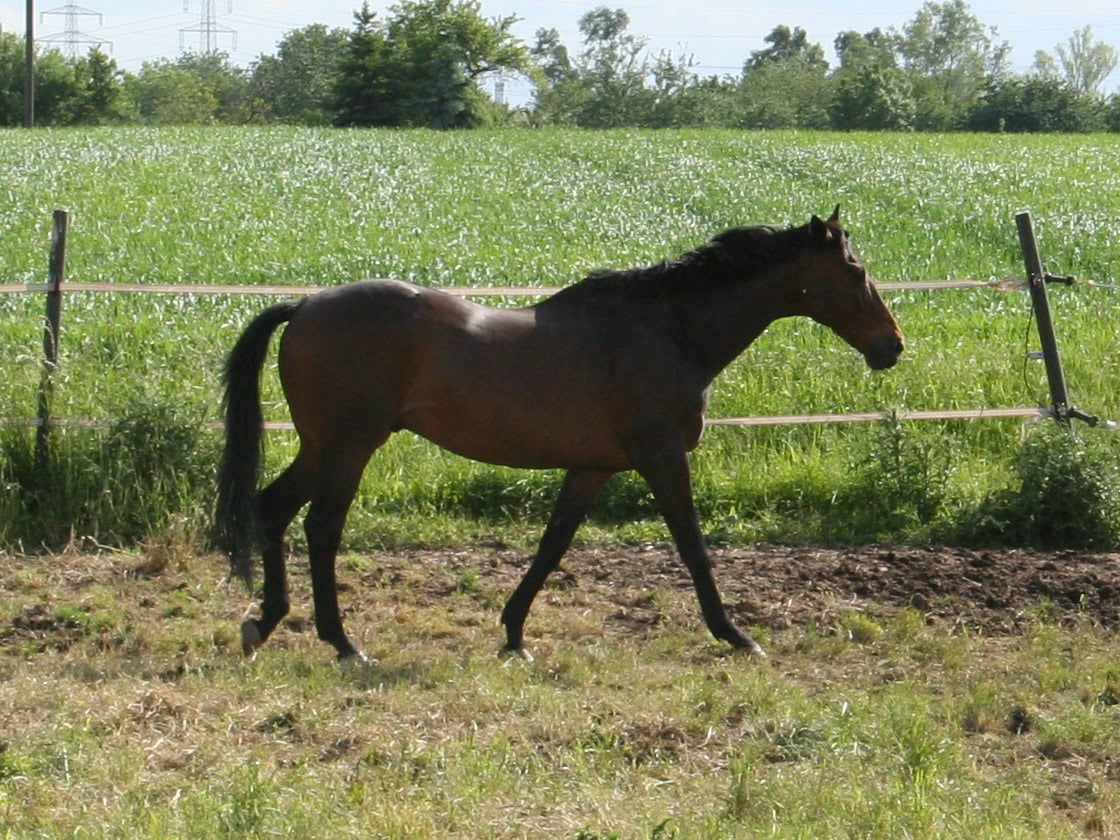
The Hanoverian
When the modern Olympic disciplines of dressage, show jumping, and eventing were formalized in the early 20th century, no single breed was more consistently at their center than the Hanoverian. Today, the Hanoverian is the world’s most successful and most-registered warmblood breed, and the horses that win Olympic medals with improbable frequency in all three disciplines share a history rooted in a very specific political project.
Read more Read less
The Hanoverian’s modern history begins in 1735, when George II, King of Great Britain and Elector of Hanover, established the state stud at Celle in Lower Saxony. The purpose was practical: to supply the region’s farmers and military with quality horses by offering the use of state stallions to private mares. The initial stallions were Holstein horses of Spanish and Oriental blood; over the following century, Thoroughbred blood was added to produce a horse of greater refinement and scope.
The result was a horse built for the shifting demands of 18th and 19th century Europe - powerful enough for agricultural and military use, elegant enough for carriage work, and athletic enough for the riding of the aristocracy. When cavalry became obsolete in the 20th century, the Hanoverian breed association pivoted decisively toward sport, introducing Thoroughbred and Trakehner blood to increase quality, and implementing the rigorous performance testing system that has become a model for warmblood breeding worldwide.
Every Hanoverian stallion must pass a series of performance tests - including rideability, jumping ability, and temperament evaluation - before being approved for breeding. The Hannoveraner Verband in Verden conducts annual stallion licensing events that draw buyers from across the globe. The system has produced horses of extraordinary consistency: big-moving, careful, and trainable in proportions that allow them to reach the top of every Olympic discipline.
The Hanoverian stands 15.3 to 17.2 hands, powerful and elastic with a long neck, well-angled shoulder, and the hindquarter mechanics to produce the powerful, ground-covering gaits that judges reward. Bay, chestnut, gray, and black are the most common colors.
More Hanoverian horses have competed at Olympic Games than any other breed. That consistency, sustained across nearly three centuries of careful breeding, is one of the most deliberate achievements in equine history.
Photo credit: A. Köhler / Wikimedia Commons (CC BY-SA 3.0)
-
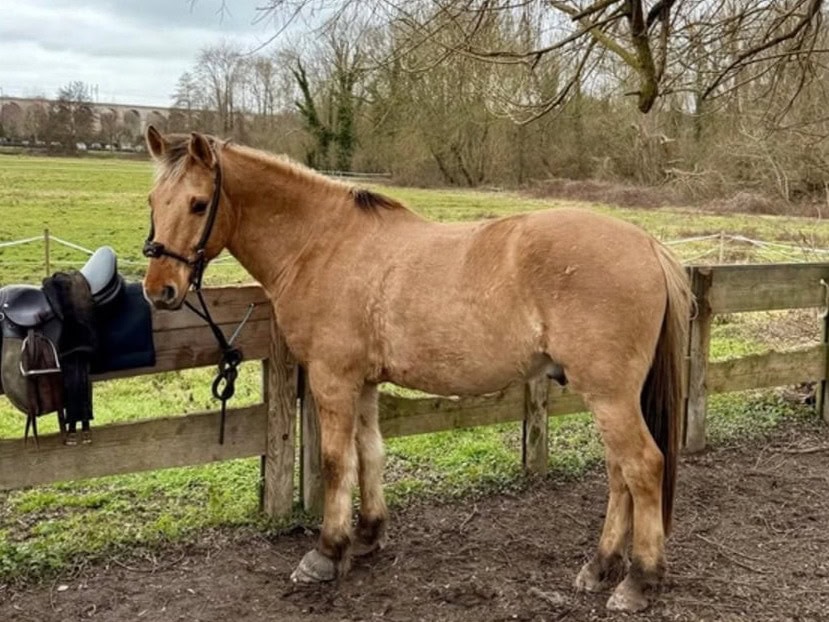
The Henson Horse
Near the Baie de Somme in northern France, in the tidal flats and salt marshes of Picardy where medieval pilgrims once crossed on foot to Mont Saint-Michel, a horse has been bred for barely fifty years - and has already become emblematic of the landscape it inhabits.
The Henson is the most recently created of all French horse breeds and one of the youngest recognized breeds in the world.
Read more Read less
Its story begins in 1972, when a French breeder named Bernard Bizet returned from a trip to Denmark enchanted by the Norse Fjord horse and determined to create a horse suited to leisure riding through the nature reserves of the Somme. He crossed Fjord stallions with mares of various riding breeds and spent the next decade refining the type with fellow breeder Lionel Berquin.
The Henson Breeders’ Association was formalized in 1983, the studbook closed to outside blood in 1995, and in 2003 the French government officially recognized the Henson as a distinct breed. It was the first French horse breed created specifically for ecotourism - designed from the outset to carry riders gently through protected natural environments with minimal disturbance to the surrounding ecosystem.
The Baie de Somme, where the breed originated and where the majority of the world’s Hensons still live, is one of France’s most important natural reserves: a 70-square-kilometer estuary of tidal flats, salt meadows, and dune systems supporting grey seals, migratory birds, and an exceptional diversity of coastal flora. The Henson is bred and used within this landscape, its semi-feral herds managed as part of the reserve’s ecological framework, functioning as a living conservation tool as much as a riding horse.
The breed stands 14.1 to 15.2 hands, broad and compact with the Fjord’s characteristic musculature and dun coloring - many Hensons carry the dark dorsal stripe and primitive markings of their Fjord ancestors. They are exceptionally calm, with a willingness suited to novice riders and the steady temperament required for riding through wetland habitats where sudden noise and unusual sights are inevitable.
With fewer than 1,000 individuals recorded as of their most recent census, the Henson is among the rarest breeds in France. Its growth is slow and deliberate - a breed that exists to inhabit one specific landscape, and that, for those who know it, is exactly as it should be.
Photo credit: Equestrian Destinations
-
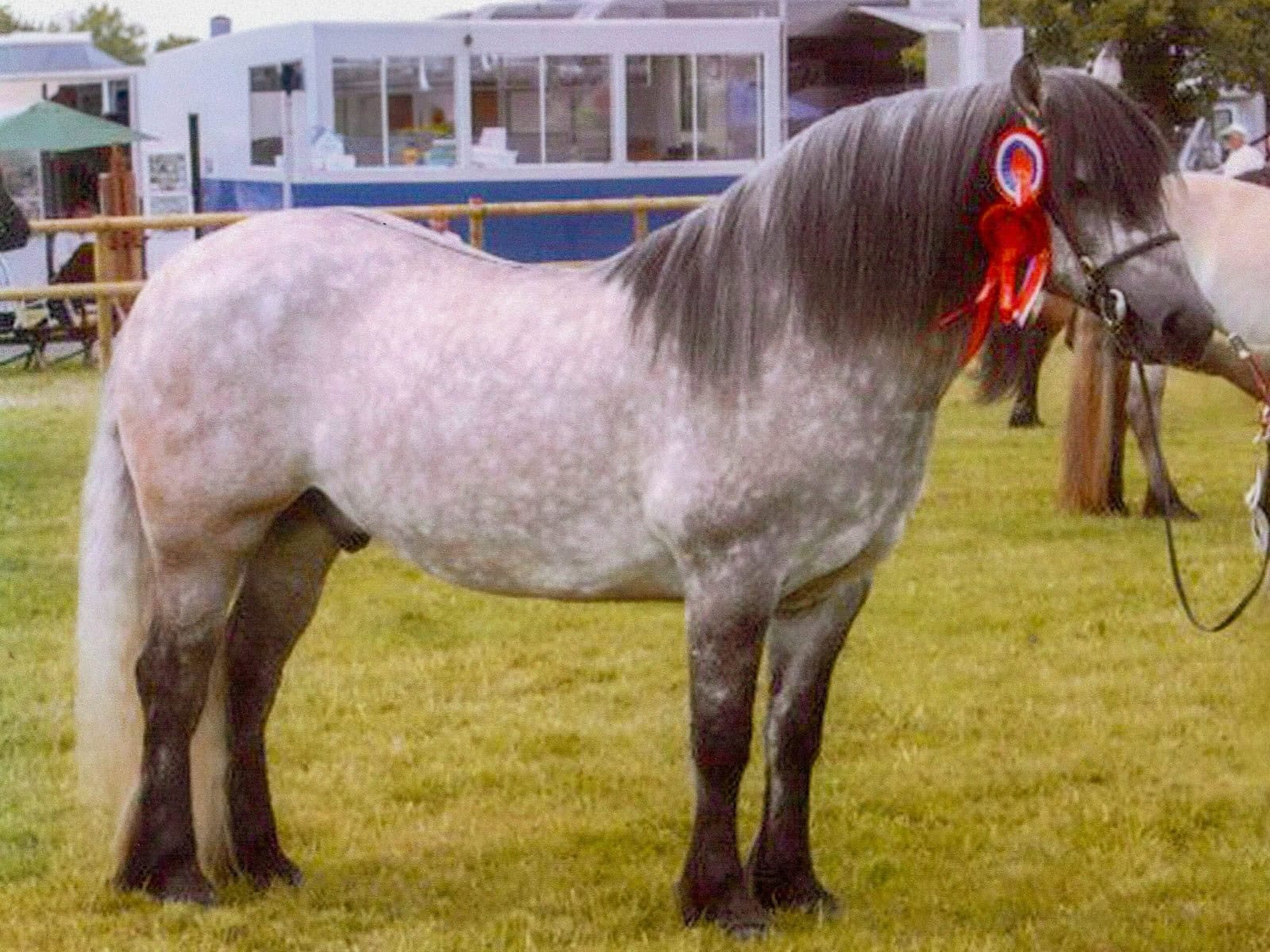
The Highland Pony
Critically endangered
Scotland’s oldest and largest native pony has walked the same mountain ground for thousands of years. The Highland Pony is a creature of the Highlands and the western islands - of mist and heather, of stony ground and sudden weather, of a landscape that has shaped it into something as tough and reliable as the hills themselves.
The breed’s origins are ancient.
Read more Read less
DNA studies have confirmed the presence of horse populations on the British mainland since before the last Ice Age, and the Highland’s genetic profile suggests a long history of relative isolation and adaptation to the northern environment. By the time of the early Celtic peoples, native ponies were well established across the Scottish Highlands and islands, and the Romans who pushed into Caledonia encountered mounted warriors on small, sturdy horses not unlike the Highland pony of today.
Two types were historically distinguished: the Island type, found in the Hebrides and particularly on the Isle of Skye - slightly smaller, adapted to the rocky coastal terrain - and the Mainland type, slightly larger and more substantial, bred on the plateau and mountain country of the central Highlands. Over time, these types merged into the single recognized breed, though Island characteristics can still occasionally be seen in modern Highlands of western breeding.
The Highland carried Jacobite armies into battle in 1745. It carried deer-stalking parties through the hills of the great Highland estates in the 19th and 20th centuries - a use for which it remains prized today. Highlands are still used on sporting estates across Scotland to bring stag carcasses down from the hill, the pony walking sure-footedly through heather and across burn stones carrying loads of several hundred pounds. No other horse could do the same job.
Queen Victoria fell in love with the Highland at Balmoral, and the Royal Family’s association with the breed has continued for over a century. The Highland Pony Society, established in 1923, maintains the studbook. The Highland typically stands 13 to 14.2 hands, powerfully built with dense bone, a broad forehead, large kind eyes, and the deep body that suggests the capacity to carry heavy loads for long distances over difficult terrain. Grey or different shades of Dun are the most common colors, and many individuals carry primitive markings - the dorsal stripe, leg barring, and shoulder stripe that connect them to their ancient ancestors.
The coat is one of the Highland’s most remarkable features: a dense, double-layered winter coat with a waterproof outer layer of straight, coarse hair. Highlands can live outdoors year-round in conditions that would compromise other breeds, requiring minimal supplementary feeding in all but the hardest winters.
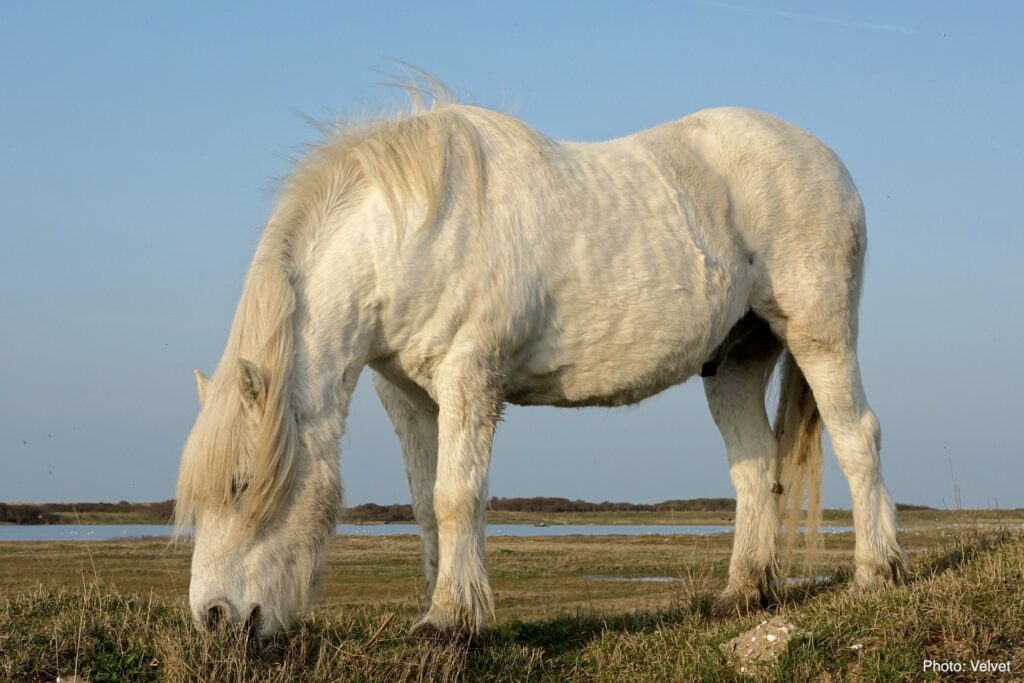
Photo credit: The Highland Pony Society (main photo)
-
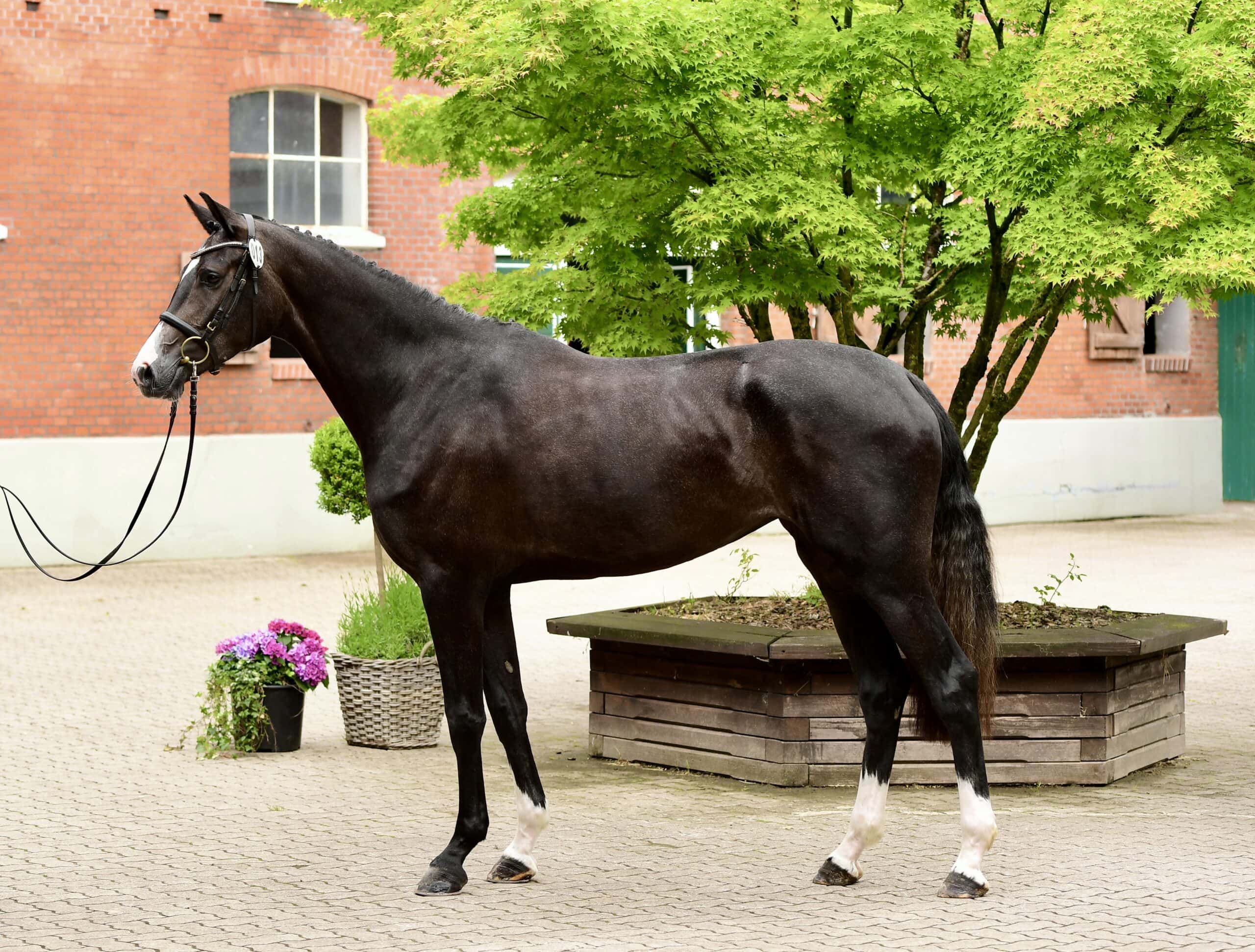
The Holsteiner
The Holsteiner is the oldest warmblood breed in the world - a distinction maintained by a studbook that dates to the 13th century, when the monasteries of the Uetersen region in what is now Schleswig-Holstein, northern Germany, began keeping records of their horses. Monks bred for utility: the horses needed to work the land, carry soldiers, and pull carriages.
Read more Read less
What they produced, over centuries of selective improvement, became the foundation of German warmblood breeding.
The monastery records at Uetersen document horse breeding as early as 1225, making the Holsteiner’s documented history older than virtually any other European warmblood by several centuries. The early Holsteiner was a heavier horse than its modern descendant - bred from native marsh horses crossed with Andalusian, Neapolitan, and Oriental blood during the 16th and 17th centuries to produce the large, powerful carriage horse that the northern German nobility required. The Holsteiner horse was among the most traded in Europe during the 17th and 18th centuries, exported to France, Denmark, and across the continent.
The transformation of the Holsteiner into a modern sport horse was driven by the introduction of Thoroughbred blood to reduce weight and increase quality. The shift accelerated after World War II, when the demand for cavalry and carriage horses collapsed entirely, and German breeders pivoted to horses for the newly formalized competitive disciplines of dressage, show jumping, and eventing. The Holsteiner adapted with remarkable effectiveness.
The breed’s greatest contribution to modern equestrian sport has been in show jumping. The Holsteiner tends to produce horses with exceptional athletic ability over a fence - careful, powerful, and brave. Meteor, ridden by Fritz Thiedemann, won team gold at the 1956 Stockholm Olympics. The stallions Cor de la Bryère (a Selle Francais) and Capitol I (a Holsteiner), are among the most influential sires in 20th-century warmblood breeding, their bloodlines appearing in virtually every European warmblood studbook.
The Holsteiner Verband in Elmshorn maintains strict stallion licensing - only a fraction of presented stallions receive approval to breed. The breed stands 16 to 17 hands, well-built with a characteristic broad head, strong topline, and the muscular hindquarters that generate the powerful jump. The typical Holsteiner movement is ground-covering and expressive with high knee action in trot and canter.
Eight centuries of recorded breeding. From the monks of Uetersen to the Olympic arena, the Holsteiner has been at the center of European horsemanship long enough that its history is, in many ways, the history of European breeding itself.
-
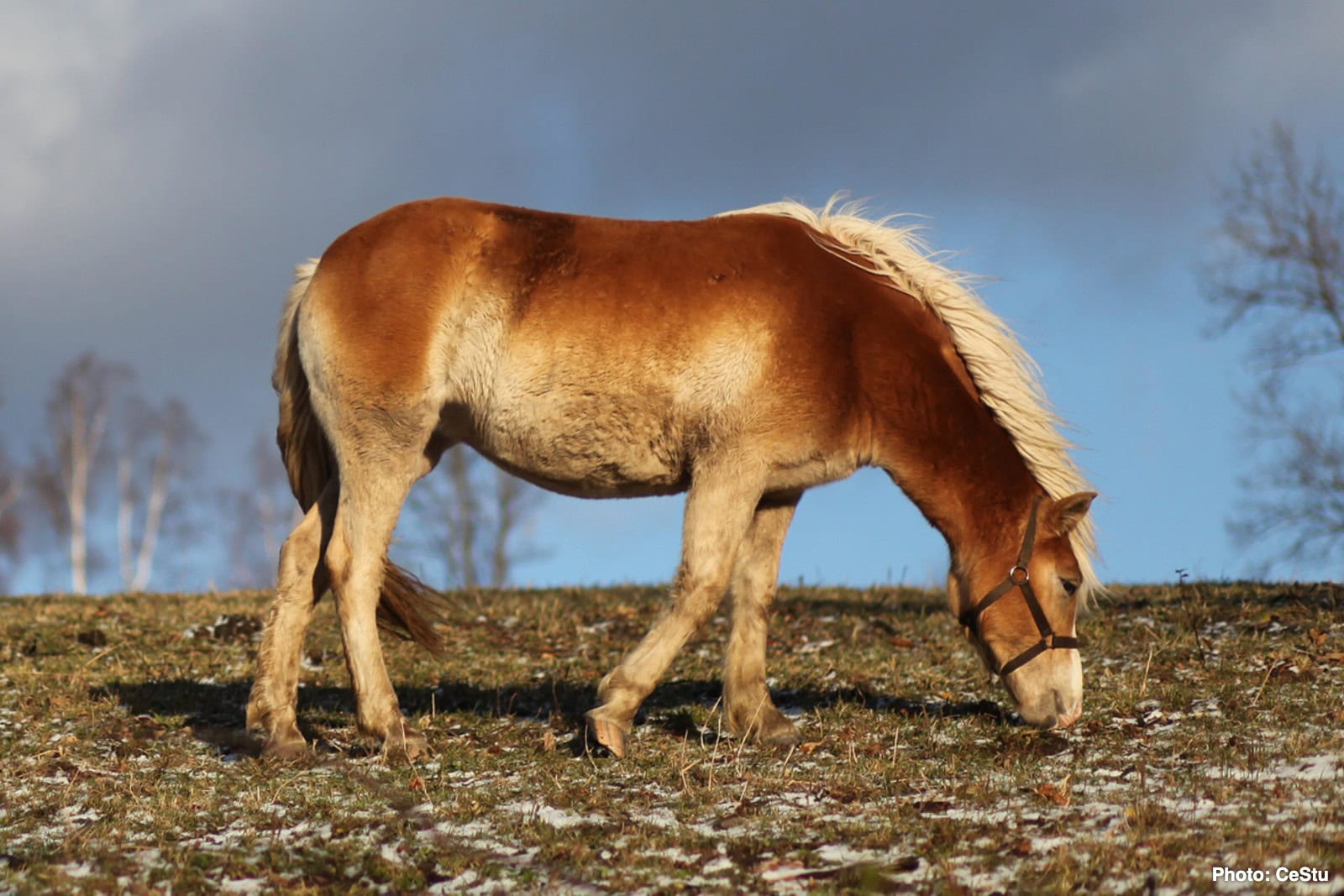
The Hucul
The Hucul is the pony of the Carpathian Mountains, named after the Hutsul people of the highlands where Ukraine, Romania, and Poland meet. For centuries it carried goods and people along steep mountain tracks where no cart could pass.
The Hutsuls bred their ponies for strength, endurance, and sure-footedness.
Read more Read less
In the 19th century the Austro-Hungarian army valued the Hucul as a pack horse, and in 1856 a stud was founded at Lucina, in Romania, which still breeds the Hucul today. Poland’s stud at Gładyszów is another important center of the breed.
Today the Hucul is used for mountain trekking, driving, and hippotherapy. Huculs also compete in “Hucul paths,” trail competitions that test how well a horse handles natural mountain obstacles.
The Hucul stands about 13 to 14 hands and is usually bay, black, or dun, often with a dorsal stripe and other primitive markings. It is calm, hardy, and famously sure-footed.
-
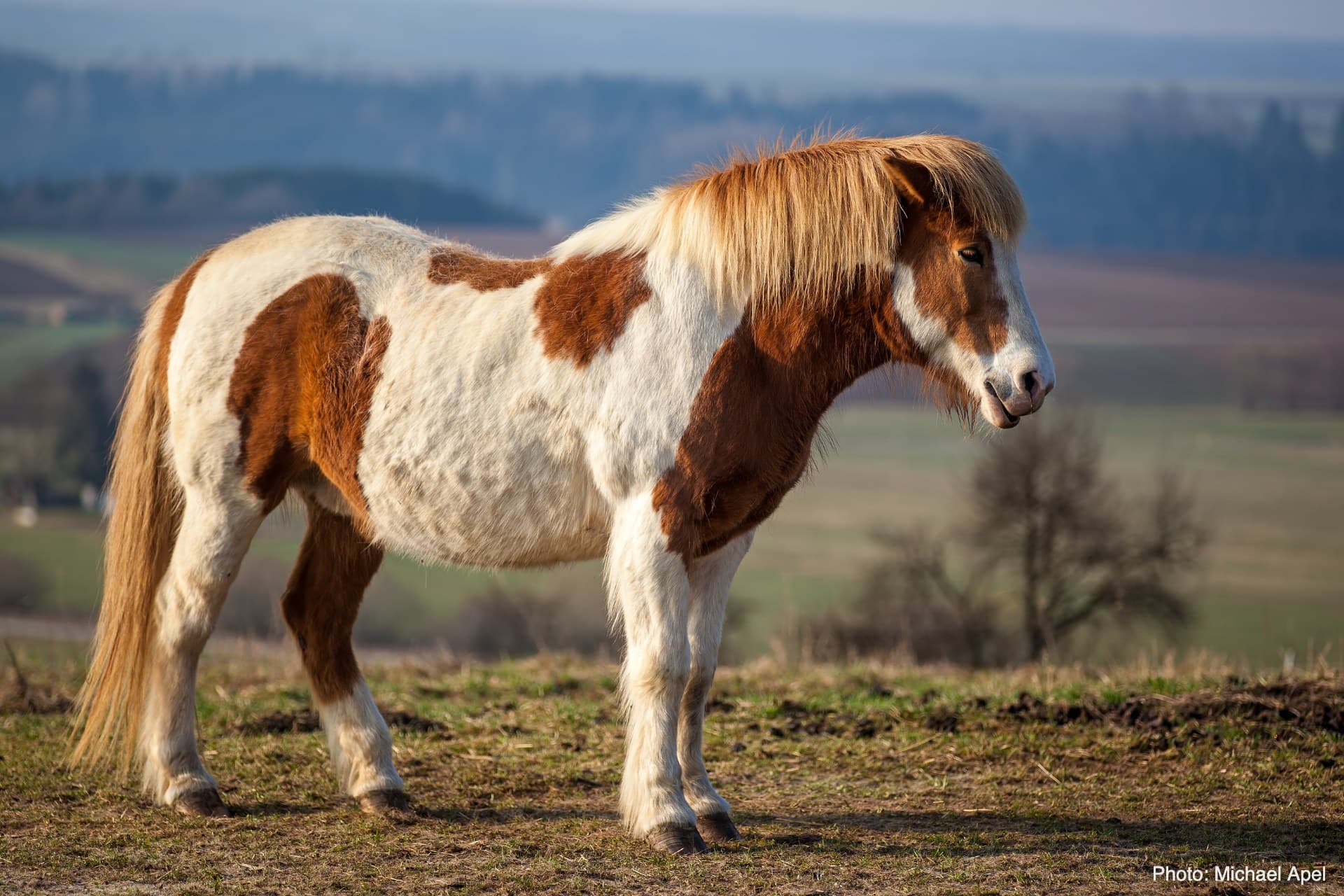
The Icelandic Horse
Iceland has one rule about its horses that has been kept for over a thousand years: nothing comes in. No other breed of horse has been permitted to import to Iceland since the Althing - the Icelandic parliament, the oldest in the world - passed a law forbidding it in 982 AD. And any Icelandic horse exported leaves forever; it may never return.
Read more Read less
The reasoning is both practical (disease prevention) and genetic: the Icelandic horse has been bred in complete isolation for a millennium, and that isolation has produced something entirely its own.
The horses arrived in Iceland with the Norse settlers who colonized the island from around 874 AD, brought from Norway, Sweden, the British Isles, and possibly the Faroe Islands. The founders were small, sturdy horses of mixed Norse and Celtic descent, and over a thousand years of island life, they adapted to one of the harshest environments in which any horse lives: volcanic rock, winter temperatures to -40 degrees Celsius, and a diet of whatever could be scratched from under the snow.
The result is a breed of extraordinary hardiness combined with a characteristic that exists in no other breed: five gaits. All horses have the walk, trot, and canter; most gaited breeds add one smooth four-beat amble. The Icelandic has two: the tolt - a smooth, fast four-beat amble that can be performed from a crawl to a full gallop and produces almost no vertical motion for the rider - and the flying pace, a two-beat lateral gait of explosive speed used in racing, at which some Icelandics exceed 30 miles per hour.
The tolt, in particular, is the reason Icelandic horse enthusiasts speak of their breed with the fervor of converts. To sit a good tolt for the first time is, many riders say, to understand immediately why someone would cross an ocean and spend any amount of money for the experience.
The Icelandic stands 13 to 14 hands - officially classified as a horse in Iceland, where no distinction between horse and pony is made - and comes in an extraordinary range of colors, with over 100 recognized color variations. Icelanders are deeply attached to their horses; in Icelandic culture, giving a horse as a gift remains among the highest expressions of respect.
-
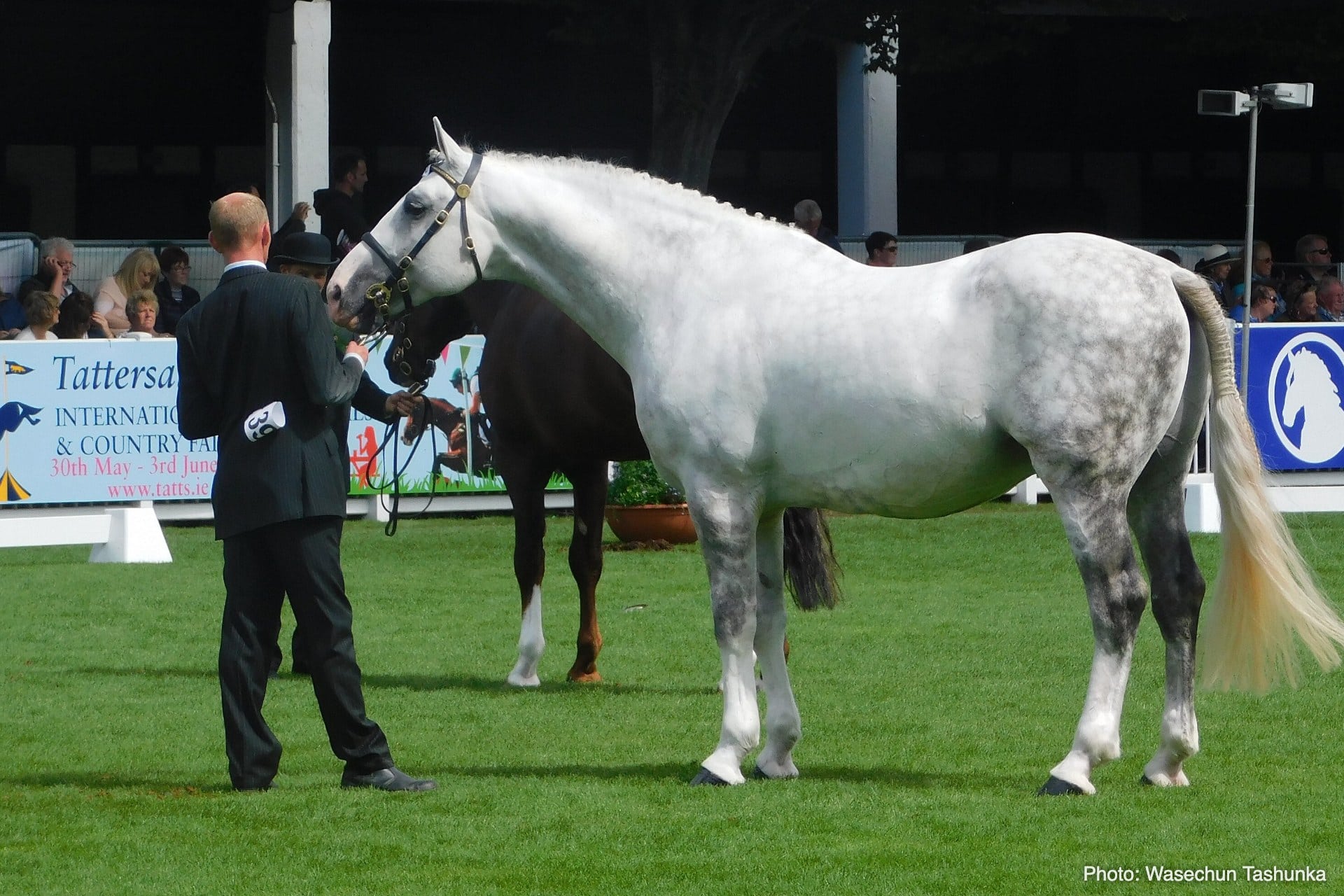
The Irish Draught
Ireland’s national horse is not what most people expect when they picture a native breed. The Irish Draught is not small, or shaggy, or particularly romantic-looking. It is a powerfully built, level-headed, surprisingly athletic horse - the foundation of the Irish sport horse industry, the source of the Irish love of horses, and one of the most versatile breeds in the world.
Read more Read less
The Irish Draught evolved over centuries of agricultural life on the west coast of Ireland, shaped by the particular demands of small Irish farms where a single horse had to do everything. It plowed the fields, pulled the cart to market, carried the family to church, and then jumped the stone wall at the end of the day hunting. That range of function produced a horse of exceptional capability - strong enough for heavy work, sound enough for consistent use, brave enough for the hunting field.
The breed’s origins are ancient, blending native Irish stock with Andalusian blood brought by Spanish traders and, later, with Thoroughbred and Clydesdale influences. By the 19th century, the Irish Draught was established as a distinct type across Ireland. But the Great Famine of the 1840s, followed by two World Wars, devastated Irish horse populations. The breed came close to extinction in the mid-20th century, its numbers reduced by a combination of agricultural mechanization and two catastrophic exportation events during the World Wars, when thousands of horses were shipped to the front and never returned.
The Irish Draught Society was founded in 1976 to preserve and promote the breed, and today it is recognized internationally for its contribution to sport horse breeding. When an Irish Draught mare is crossed with a Thoroughbred, the result is the Irish Sport Horse - arguably the world’s finest all-round competition horse, the dominant breed in eventing and one of the finest show jumpers in the world.
The Irish Draught stands 15.1 to 16.3 hands, broad and powerful with a kind eye and a temperament described by breeders as “genuine.” It is the horse that made Ireland’s reputation in the equestrian world, and it did so quietly, through generations of useful work in the fields and on the hills of Connacht.
-
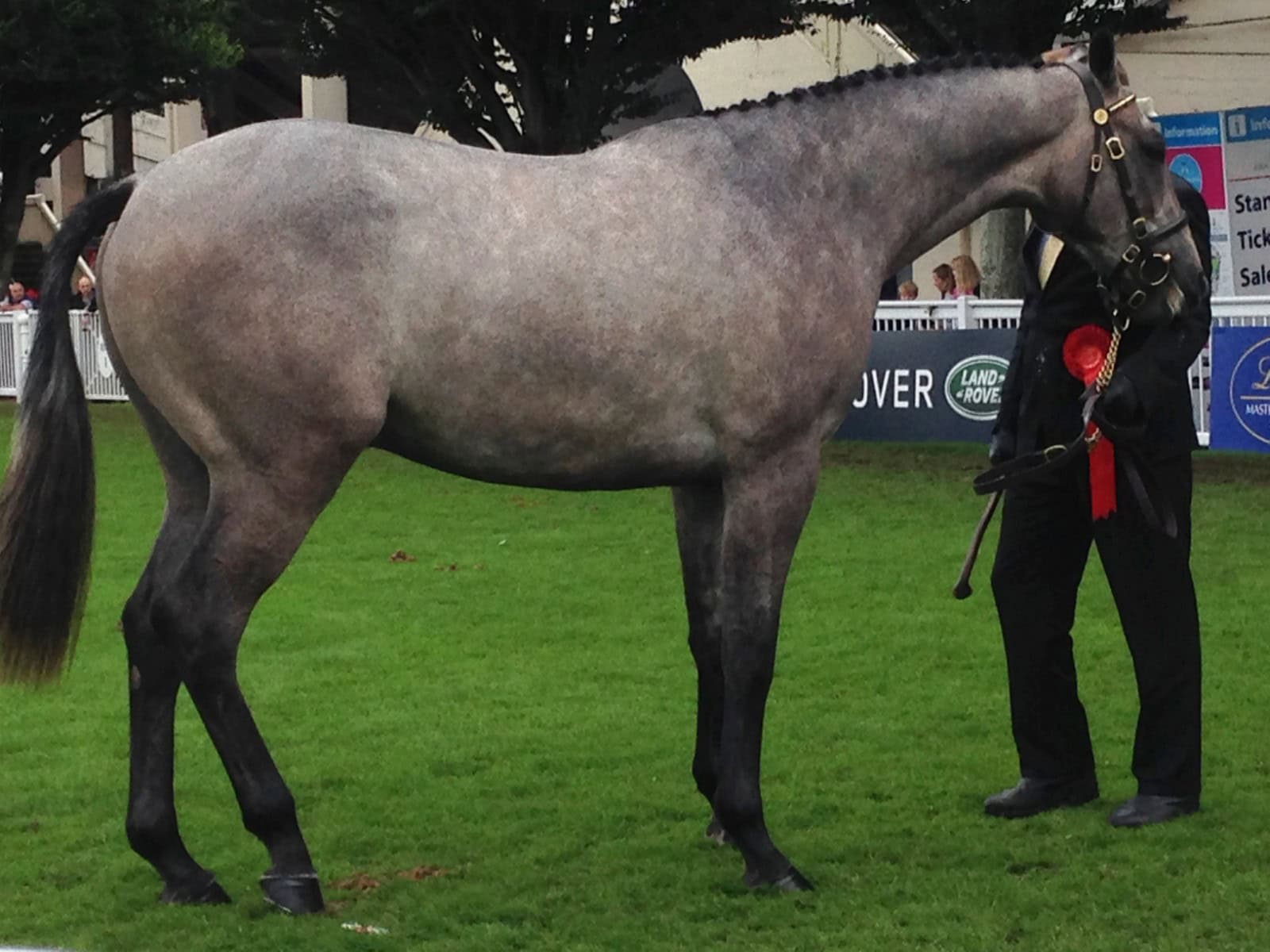
Irish Sport Horse
Ireland’s genius for horses is often summed up in a single cross: the powerful, sensible Irish Draught mare bred to the fast, brave Thoroughbred. The result is the Irish Sport Horse, also known as the Irish Hunter, a horse built for galloping across country and jumping whatever stands in the way.
Read more Read less
The cross grew out of Ireland’s hunting tradition, where horses had to carry riders all day over banks, ditches, and stone walls. The breed was formalized in the 1920s, and today Horse Sport Ireland maintains the Irish Sport Horse Studbook. A Traditional Irish Horse category recognizes horses whose pedigrees contain only Irish Sport Horse, Irish Draught, Thoroughbred, and Connemara Pony blood.
In eventing, the sport that most closely tests the qualities of a great hunter, the Irish Sport Horse has been the dominant breed for decades. The World Breeding Federation for Sport Horses ranked it first in eventing almost every year from 1994 to 2018. Irish horses are also prominent in show jumping, and the horse has appeared on Irish coins for much of the last century.
Irish Sport Horses usually stand 16 to 17 hands and come in any color. They are known for their soundness, intelligence, courage, and a temperament that riders across the world trust.
Photo credit: Wasechun tashunka / Wikimedia Commons (CC BY-SA 4.0)
-
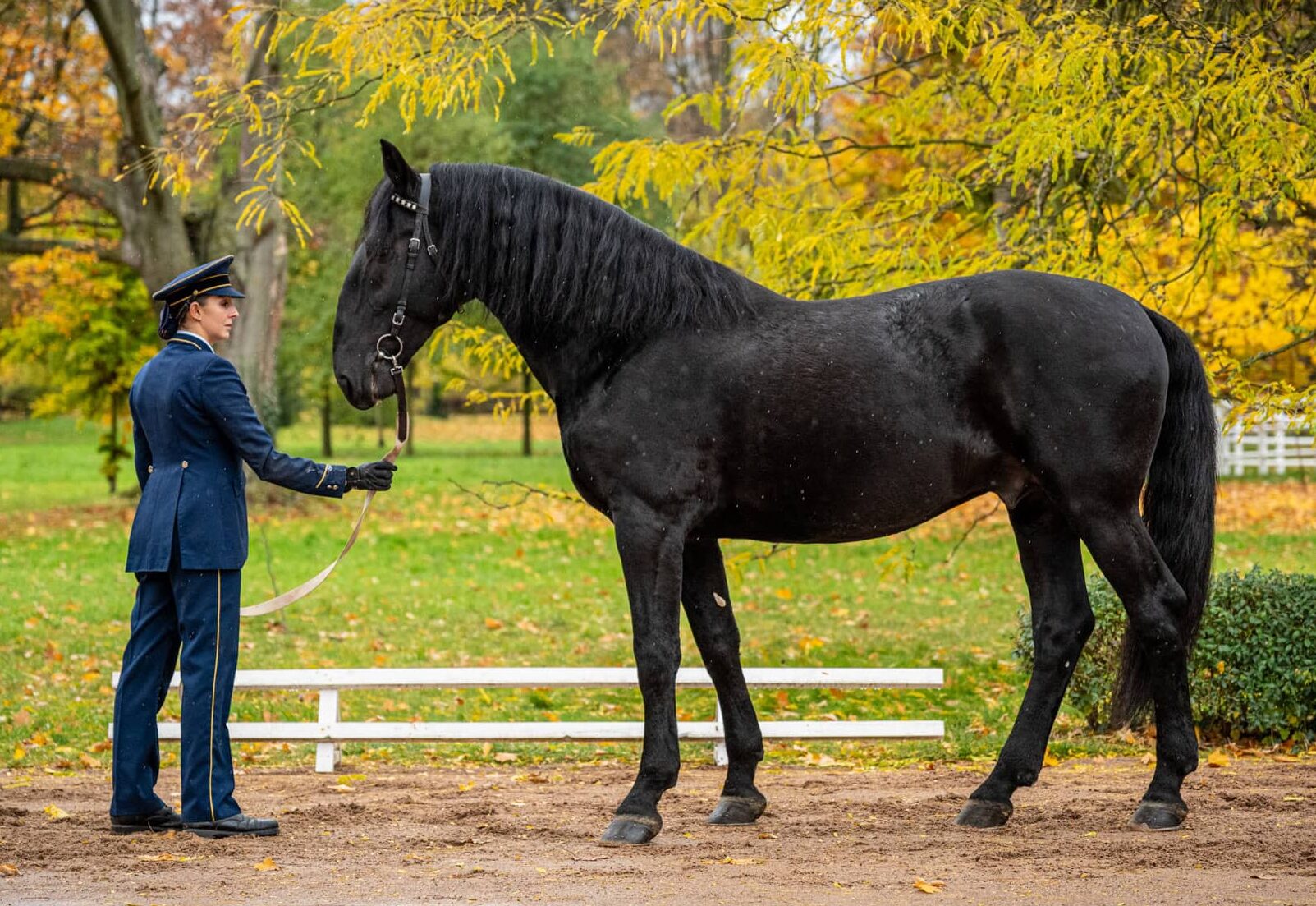
The Kladruber
Endangered
For more than four centuries, the horses of Kladruby nad Labem have been bred for ceremonial purposes as carriage horses. In the Elbe lowlands of Bohemia, the Habsburgs bred a horse built for ceremony, tall, powerful, high-stepping, with the arched neck and Roman nose of the Baroque age.
Read more Read less
The Kladruber is the oldest native horse breed of the Czech Republic and one of the oldest in the world, and it is still bred today on the same land where it began.
Emperor Rudolf II raised Kladruby to the status of an imperial court stud in 1579. Its foundation was Old Spanish and Old Italian blood, the same Iberian and Neapolitan horses that shaped the Lipizzaner. The goal was the gala carriage horse: an animal of presence and dignity that could pull the heavy state coaches of Vienna in matched teams, step for step.
Two colors defined the breed and served two purposes. The greys drew the imperial family on state occasions. The blacks served the high clergy and drew the carriages of state funerals. A bay line also existed until the 1830s, when their breeding was deliberately discontinued.
The fall of the Habsburg monarchy in 1918 removed the court the breed was built to serve, and the blacks, considered the less noble line, suffered most. Between 1925 and 1931, the black herd at Kladruby was broken up and dispersed. The breed came close to losing half its identity entirely.
Its rescue came from a single determined man. Professor František Bílek of the University of Agriculture in Prague gathered the last surviving black Kladrubers and, in 1941, began rebuilding the line. The work continued for decades at Slatiňany and was not officially completed until 1973. Bílek, who also founded Przewalski’s horse breeding in Czechoslovakia, is credited with saving the black Kladruber from extinction.
The Kladruber typically stands around 16.2 to 17.2 hands, a big, substantial warmblood with a convex profile, a high, rounded action, and a calm, cooperative temperament. Grey foals are born dark and lighten with age. In 2019, the stud and its surrounding landscape were inscribed as a UNESCO World Heritage Site, and the population, closed to outside blood since 1996, is carefully managed to protect its genetic diversity. Kladrubers are still driven in competition, ridden in classical dressage, and kept in ceremonial service.
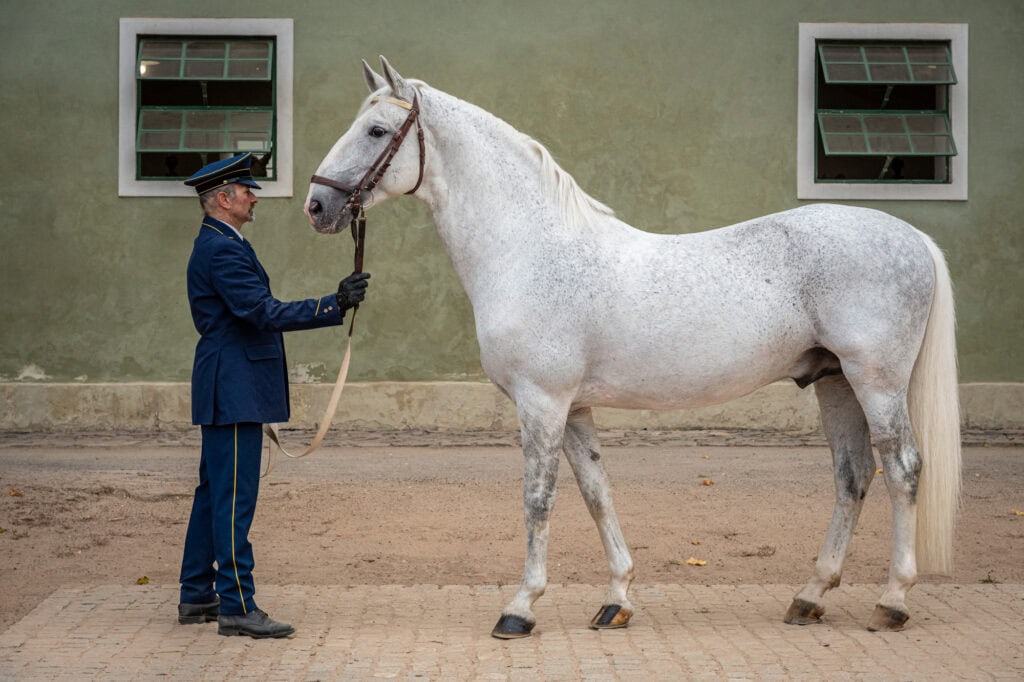
Photo credit: Lucie Macáková and The National Stud Kladruby nad Labem
-
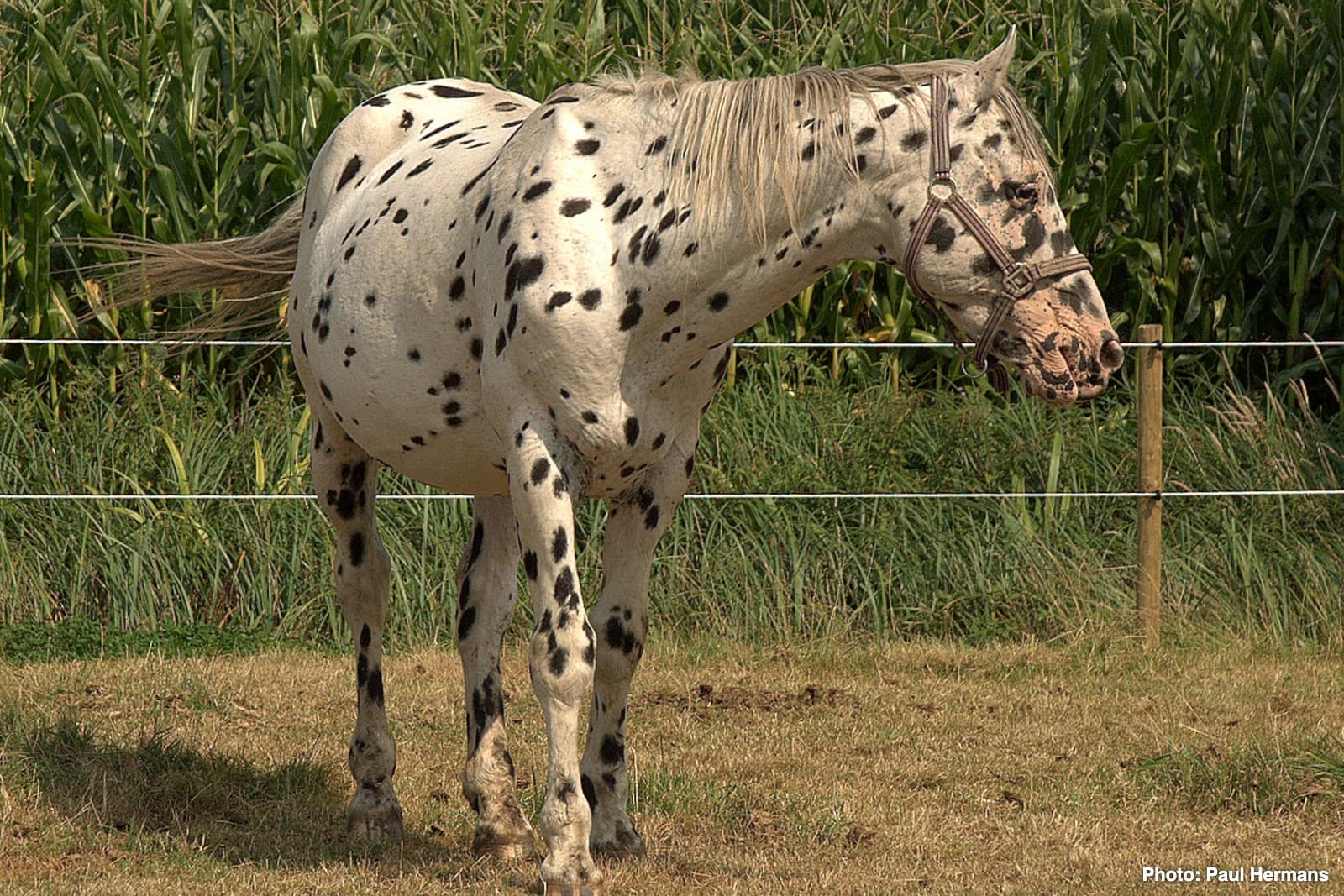
The Knabstrupper
The Knabstrupper is Denmark’s spotted horse, and its story begins with a single remarkable mare. In 1812, Major Villars Lunn of the Knabstrup estate on Zealand acquired a chestnut mare with a spotted, blanket-like coat, known as the Flæbehoppen.
Bred to a Frederiksborg stallion, she produced a spotted colt, and Lunn began breeding for the coat pattern.
Read more Read less
The spotted horses became fashionable as carriage horses and circus horses across Europe. Over time, though, the breeding narrowed, and by the 20th century the Knabstrupper was rare.
Modern breeders revived the breed in the 1970s with Appaloosa and later warmblood outcrosses, and today the Knabstrupper is bred in sport, baroque, and pony types. It competes in dressage and jumping, and it remains a favorite in the circus ring and on film.
Knabstruppers vary in size from pony height to about 16 hands. They are best known for their leopard-spotted coats, though some are solid. They are intelligent, friendly, and easy to train.
-
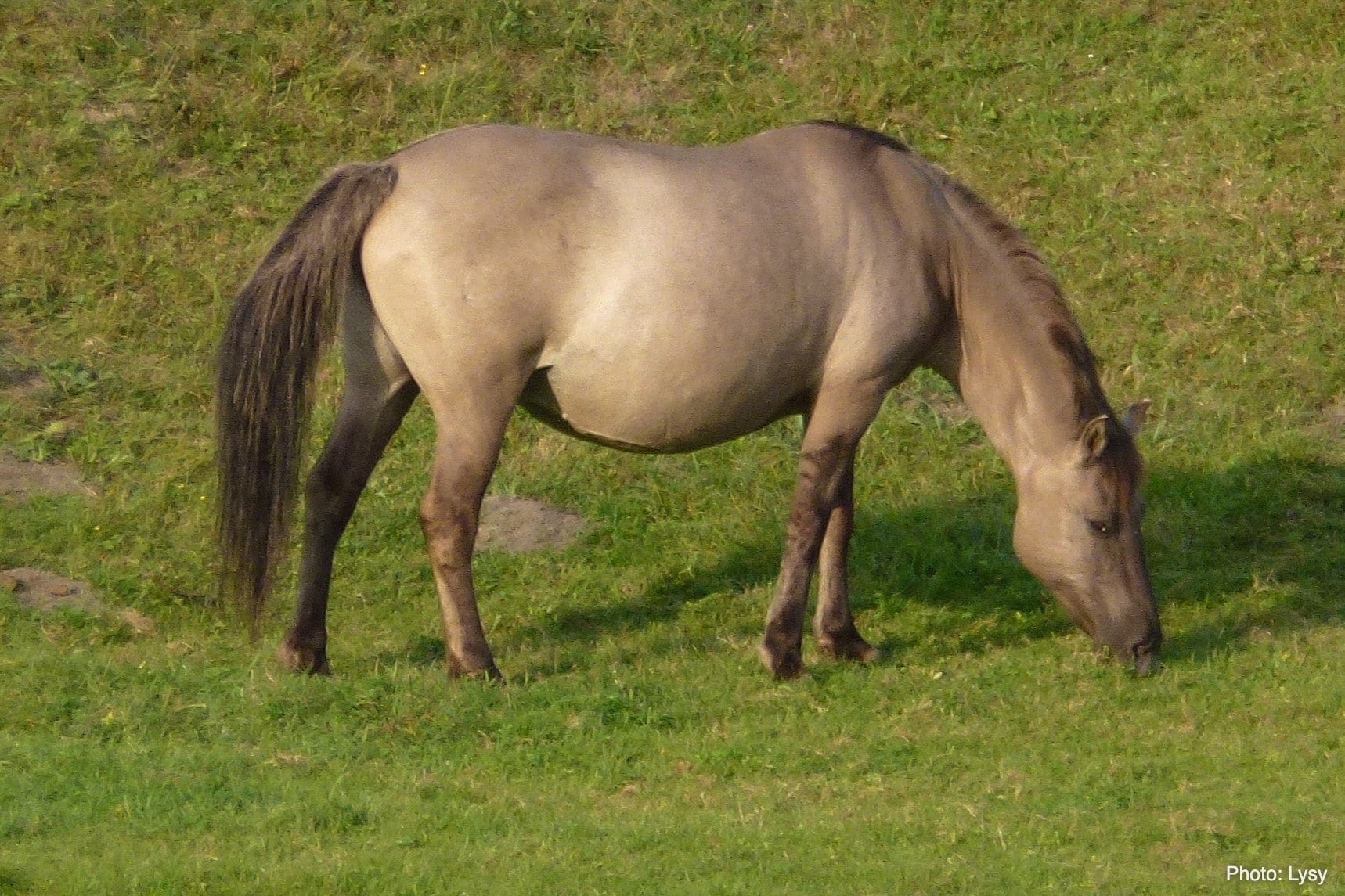
The Konik
The Tarpan - the wild horse of the Eurasian steppes - went extinct in the wild in 1879. The last known individual died in captivity in 1909. With it went the oldest equine presence in Europe, the horse that had roamed the plains of the continent since before the first human settlement. Or so it seemed.
Read more Read less
In the 1920s, Polish scientist Professor Tadeusz Vetulani began searching the farming villages of eastern Poland for horses that most resembled the Tarpan in type. He found them - small, gray-dun horses with primitive markings, the dorsal stripe, and the wild-type temperament of an animal that had never been fully removed from its ancestral context. He called them Koniks - “little horses” in Polish - and began a selective breeding program to consolidate and preserve what remained of the Tarpan’s genetic legacy.
Whether the Konik represents a true descendant of the Tarpan or simply a horse that closely resembles one remains a subject of scientific debate. Modern DNA analysis suggests the relationship is more complex than a direct line of descent. What is not in question is the Konik’s value as a conservation tool.
Since the 1970s, the Konik has been deployed across Europe in rewilding programmes - released into wetlands, river deltas, and woodlands to act as what ecologists call an “ecosystem engineer.” Koniks graze coarse vegetation that would otherwise overwhelm marsh habitats, open up reed beds for nesting birds, and create the mosaic of grazed and ungrazed areas that supports maximum biodiversity. In the Netherlands, the Oostvaardersplassen nature reserve became the most famous experiment in Konik-assisted rewilding, and the model has been replicated in Germany, France, the UK, and across eastern Europe.
The Konik stands 13 to 14 hands, mouse-gray in color - the technical term is grullo - with the dark dorsal stripe and leg striping of its Tarpan ancestors. In semi-feral conditions, the horses form stable family bands and self-manage in ways that distinguish them from fully domesticated breeds. They are, in every meaningful sense, a bridge between the wild and the domestic - the closest living thing to the horse that once ran free across the whole of Europe.
-
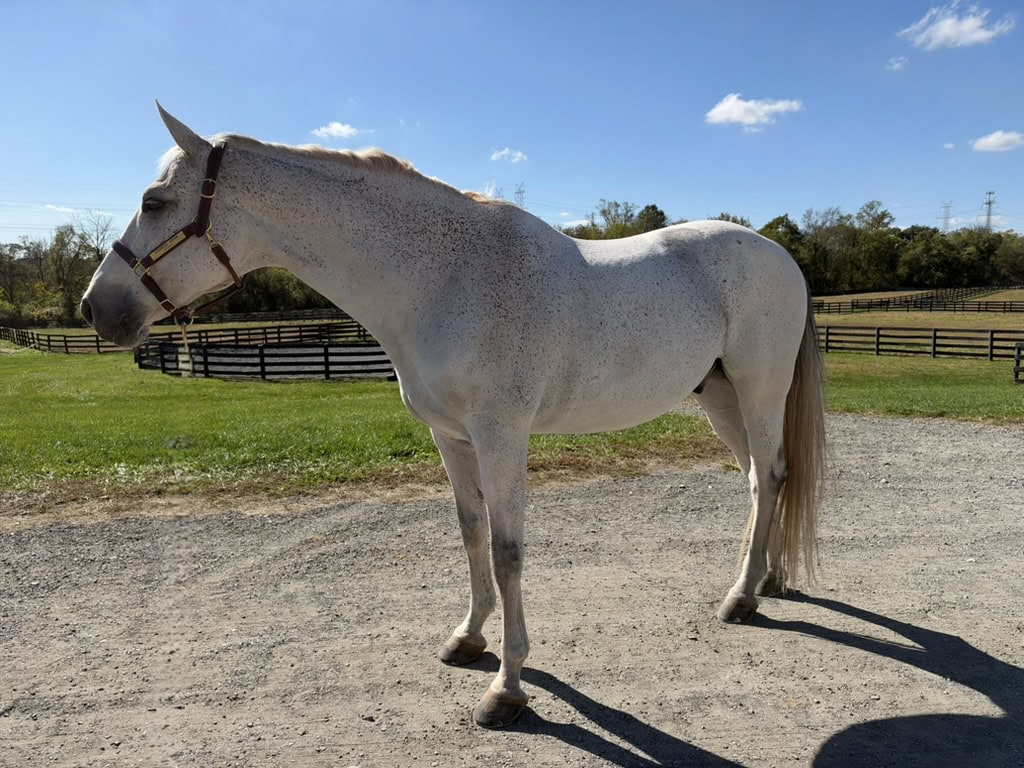
The Latvian Warmblood
The Latvian Warmblood, known in Latvia as the Latvijas zirgs, or Latvian horse, is the national horse of a small Baltic country, shaped by more than a century of careful breeding and by the turbulence of Latvian history.
Its story begins in 1856, when Western European horses were first crossed with the small, hardy native horses of Latvia.
Read more Read less
Planned breeding began in 1890, drawing on ten different breeds, mainly Hanoverian and Oldenburg, with some Holsteiner influence. Between 1920 and 1941, during Latvia’s first independence, more than a hundred Oldenburg horses were imported from Germany and the Netherlands, and they became the core of the breed. A herd book was established in 1927.
The Latvian horse was officially recognized as a breed in 1952, during the Soviet era. For most of its history it was a strong harness and carriage horse, used on farms and in transport across the Baltic. From the 1960s, demand for sport horses led breeders to add Hanoverian, Arabian, and Thoroughbred blood, producing a lighter riding type alongside the traditional harness type.
Today the breed is divided into those two types: the heavier Latvian Harness Horse and the lighter Latvian Riding Horse, used in show jumping, dressage, and driving. Stallions stand about 15.3 to 16.1 hands, and mares slightly smaller. The breed is known for its calm, steady temperament and its strength.
The Latvian horse is a small population and is considered endangered, maintained through national conservation breeding. For Latvians, it is a living link to their rural past and a source of national pride.
Photo credit: Equestrian Destinations
-
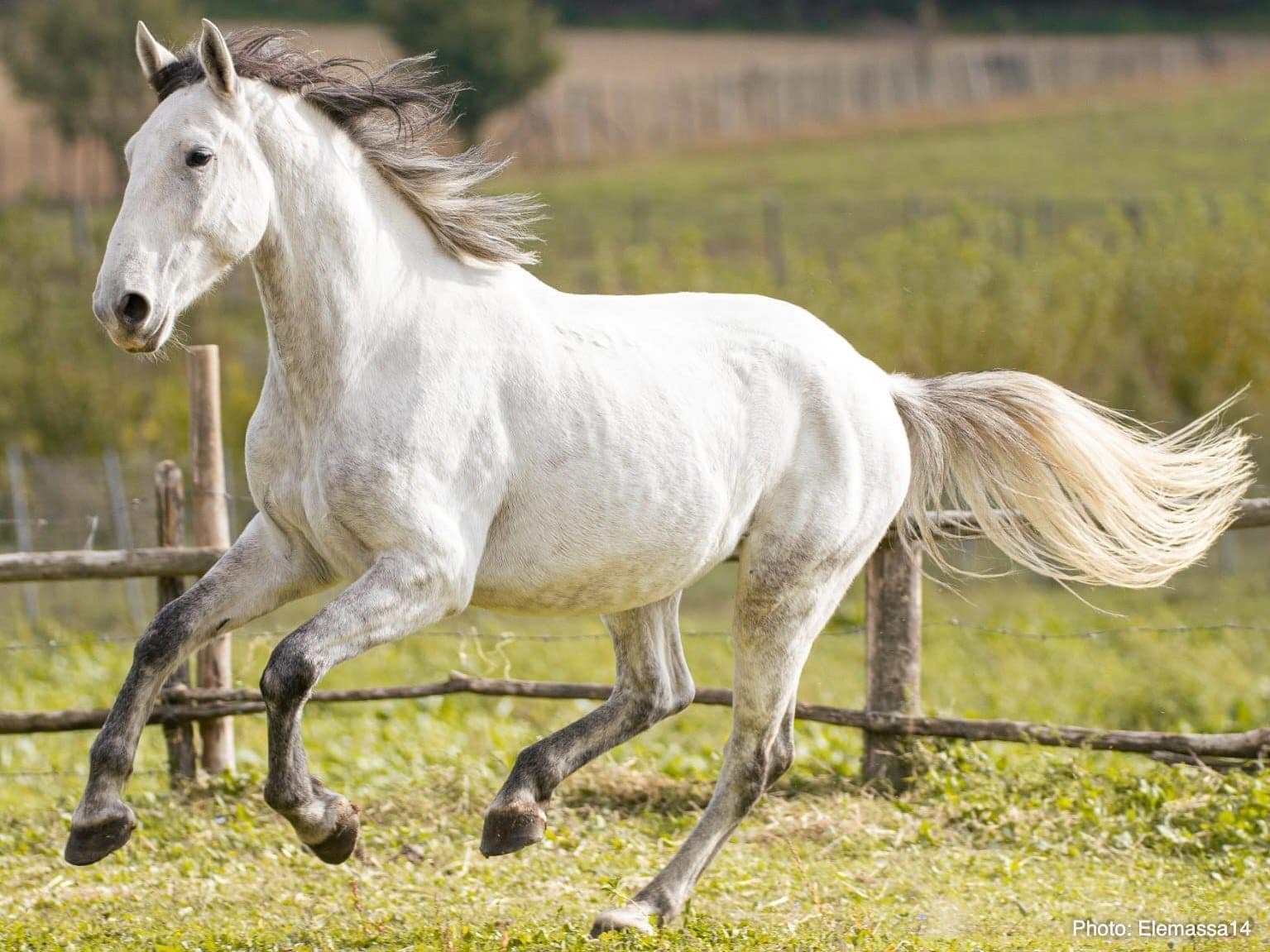
The Lipizzaner
In the spring of 1945, General George Patton diverted American forces on a mission that had nothing to do with defeating Nazi Germany. He authorized Operation Cowboy - a rescue mission to save the white horses of the Spanish Riding School of Vienna from advancing Soviet forces. The horses were transported to American-controlled territory, saved from what their riders believed would be capture or slaughter.
Read more Read less
Patton, himself a cavalryman and an Olympian, understood precisely what was at stake.
The Lipizzaner is among the rarest and most historically significant breeds in the world, and its story is inseparable from the Habsburg dynasty that created it. In 1580, Archduke Charles II of Austria established a stud at Lipizza - now Lipica, in present-day Slovenia - to breed horses for the Imperial Court in Vienna. The foundation stallions were Andalusian, brought from Spain with the explicit purpose of producing horses capable of the haute école - the classical movements of collection, levade, courbette, and capriole that transformed riding into high art.
Six stallion lines and eight mare lines form the foundation of the entire modern Lipizzaner breed, and every registered horse traces directly to those 16th-century ancestors. The Spanish Riding School in Vienna, established in 1572, has trained Lipizzaners continuously ever since - through two world wars, the dissolution of the Austro-Hungarian Empire, and the upheaval of the 20th century - making it the oldest classical riding academy in the world.
Lipizzaners are famously slow to mature; they are not considered fully trained until the age of seven or eight, and they may continue performing into their twenties. They are born dark - bay or black - and most gray out to the distinctive white coat by the age of six to ten, though the occasional dark individual is considered good luck at the Spanish Riding School and is always kept.
The breed stands 14.2 to 15.2 hands, compact and powerful with a characteristically short, thick neck, broad chest, and powerful hindquarters. Their intelligence and memory are extraordinary - a Lipizzaner trained in the haute école never forgets a movement once learned.
Operation Cowboy saved 375 horses. They returned to Vienna after the war and continue performing at the Spanish Riding School today, the same white horses executing the same movements in the same baroque hall, a living thread connecting the present to the Renaissance.
-
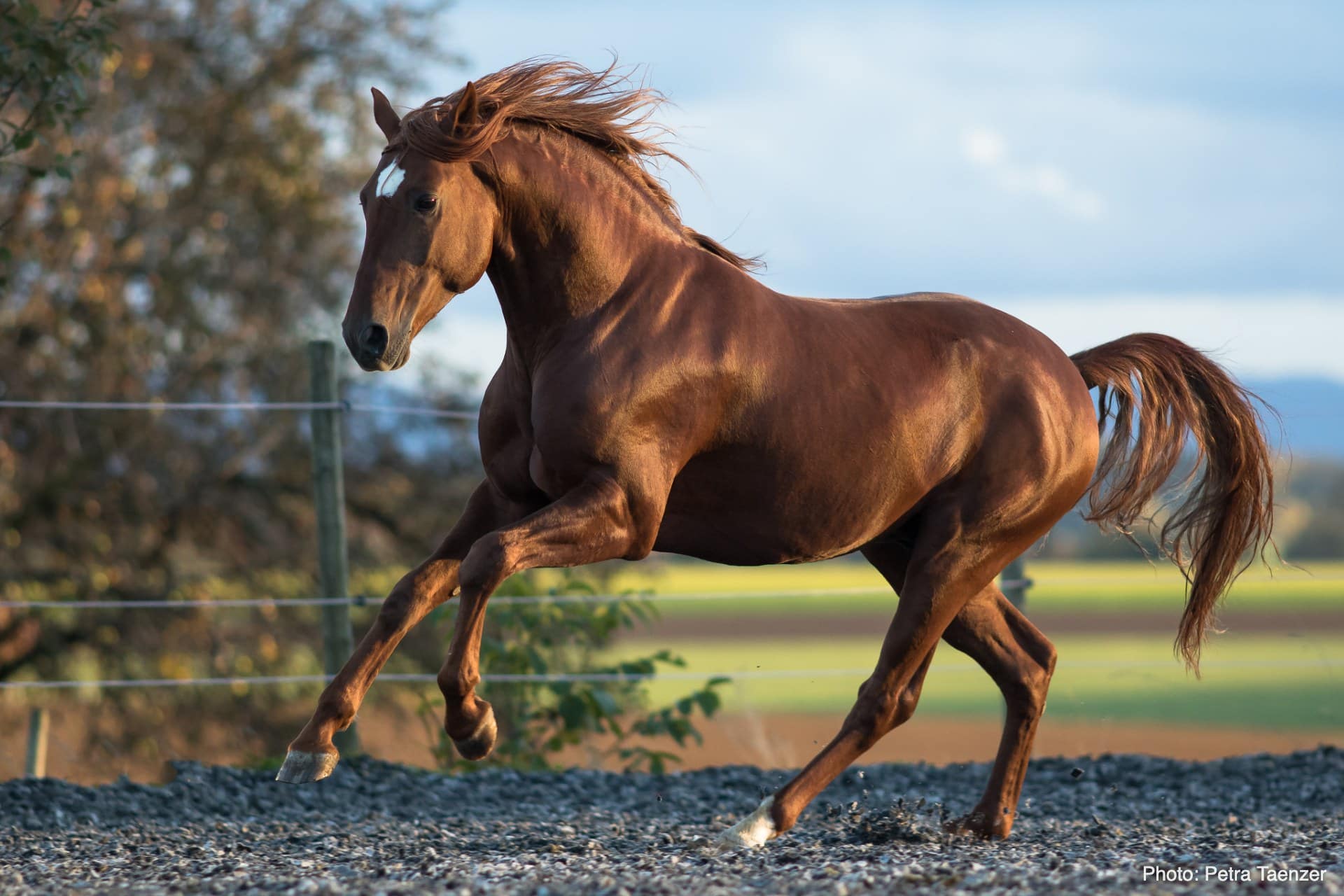
The Lusitano
Portugal and Spain share the Iberian Peninsula, and their horses share ancient roots. But the Lusitano - the Portuguese equivalent of the Andalusian, taking its name from Lusitania, the Roman province that covered most of modern Portugal - developed its own distinct character through its own history, shaped above all by a tradition that has no parallel anywhere else in the equestrian world: the Portuguese bullfight.
Read more Read less
The Lusitano’s history runs parallel to the Andalusian’s for much of its length. Both descend from the same ancient Iberian horses, shaped by Moorish and North African influence; both were prized throughout medieval Europe as cavalry horses of exceptional quality; both contributed to the development of the classical dressage tradition. But while Spain’s bullfight moved the matador out of the saddle and onto his feet in the 18th century, Portugal’s tradition - the corrida de toroada - kept its most skilled performers mounted. The rejoneador, fighting on horseback, required a horse of extraordinary collection, lateral movement, and courage - a horse that could work within feet of a charging bull, pivoting and collecting on a dime, responding to the lightest aids of a rider whose hands were occupied with the lance.
The Lusitano became that horse. Centuries of selective breeding for the bullring produced an animal of exceptional suppleness - perhaps more naturally collected than any other breed in the world - combined with a bravery and a responsiveness to the rider’s leg and seat that make them among the most rewarding horses in classical riding.
The Lusitano stands 15 to 16 hands, compact and powerful with a convex or straight profile, a muscular arched neck, and powerful hindquarters that sit naturally beneath the body. Gray and bay are the most common colors. The movement is cadenced and elevated, with a natural tendency toward collection.
The breed is bred in Portugal’s Ribatejo region and Alentejo province, where the great bullfighting families - the Andrades, the Veiga, the Infante da Câmara - maintained the bloodlines that define the modern Lusitano. At the Alter do Chão stud in the Alentejo, established in 1748 and still operating as a state stud, some of the most important horses in the breed’s history were produced and are still bred today.
-
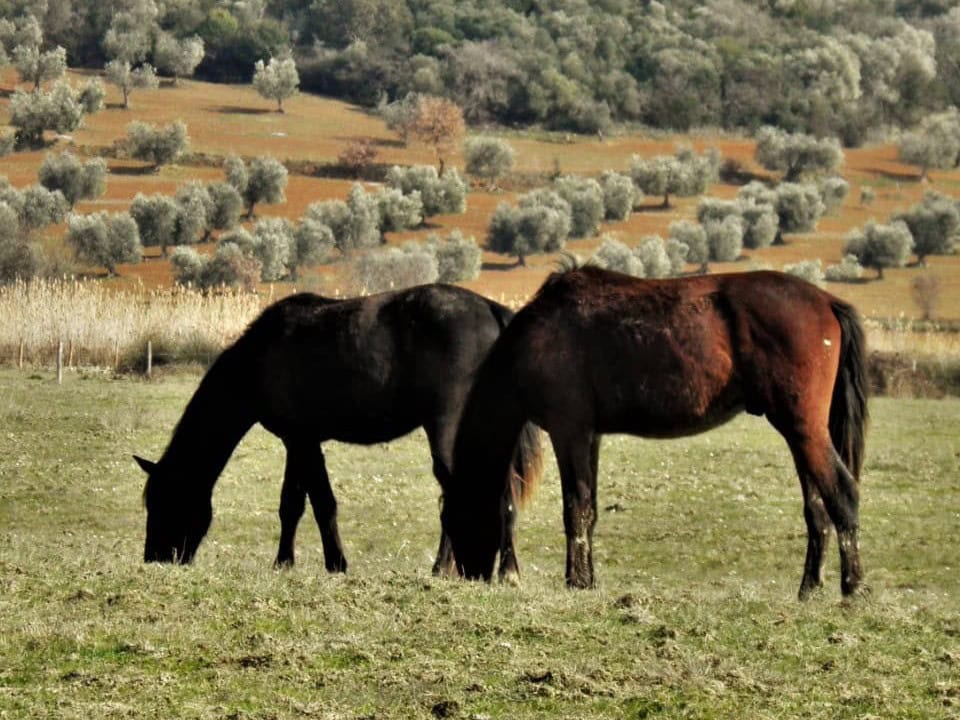
The Maremmano
Endangered
In the Maremma, the coastal plains and hills of southern Tuscany and northern Lazio, mounted cowboys called butteri have herded long-horned Maremmana cattle for centuries. Their horse is the Maremmano: tough, sure-footed, and steady, bred for long days in the saddle in a land of marsh, scrub, and summer heat.
Read more Read less
The breed’s ancestors may reach back to the horses of the Etruscans, and through the centuries the native stock absorbed Spanish, Neapolitan, and Barb blood. In the 19th and 20th centuries, Thoroughbred crosses added size and refinement, and the Maremmano became a valued cavalry horse for the Italian army. A studbook was established in 1980.
The butteri still work cattle on horseback in the Maremma, and their skill is celebrated in public displays and competitions. The most famous story in their history tells of 1890, when butteri challenged Buffalo Bill’s touring Wild West show and, by their own account, outrode his cowboys.
The Maremmano usually stands 15.1 to 16.1 hands, with a strong neck, muscular body, and hard feet. Most are bay, brown, or black. Calm, hardy, and willing, it is used for cattle work, endurance, and trail riding, and it is the horse most visitors ride on Tuscany’s Maremma coast.
-
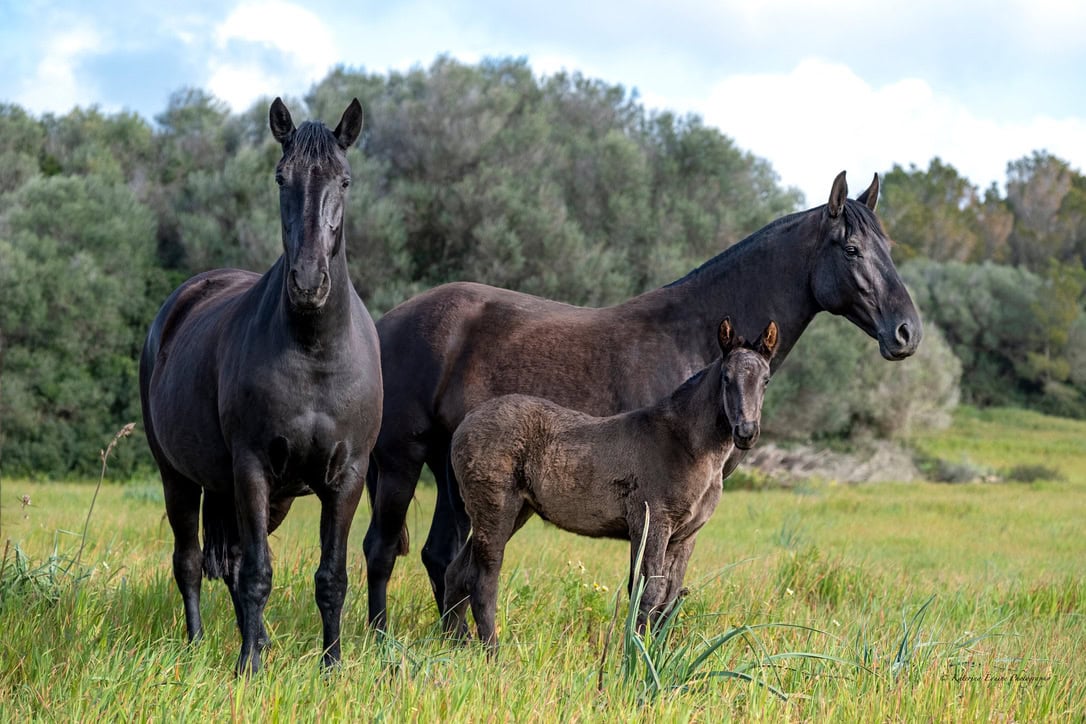
The Menorquín
Endangered
On the island of Menorca, in the Spanish Balearics, a tall, elegant black horse takes center stage each summer. During the Festes de Sant Joan in Ciutadella, riders on Menorquín horses make their way through crowded streets, and the horses rise onto their hind legs among the cheering crowds in a moment called the jaleo.
Read more Read less
The Menorquín descends from the island’s ancient horse population, refined over centuries. It was officially recognized as a breed in 1989. The island has its own style of riding, the doma menorquina, which showcases the horse’s ability to rear and walk on its hind legs.
The Menorquín is also the ideal horse for exploring the island. The Camí de Cavalls, a historic bridle path that circles the coast, passes coves, cliffs, and watchtowers, and it is one of the great riding routes of the Mediterranean.
The Menorquín is always black and usually stands around 15.2 to 16 hands. It is light, elegant, and spirited, with a noble head and a proud, upright carriage.
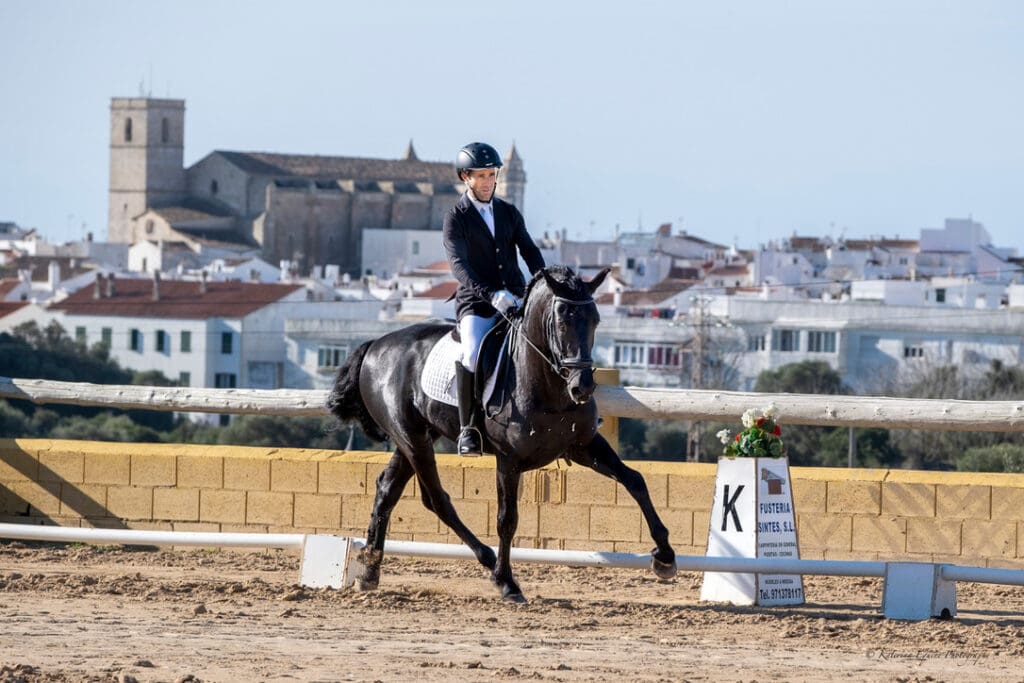
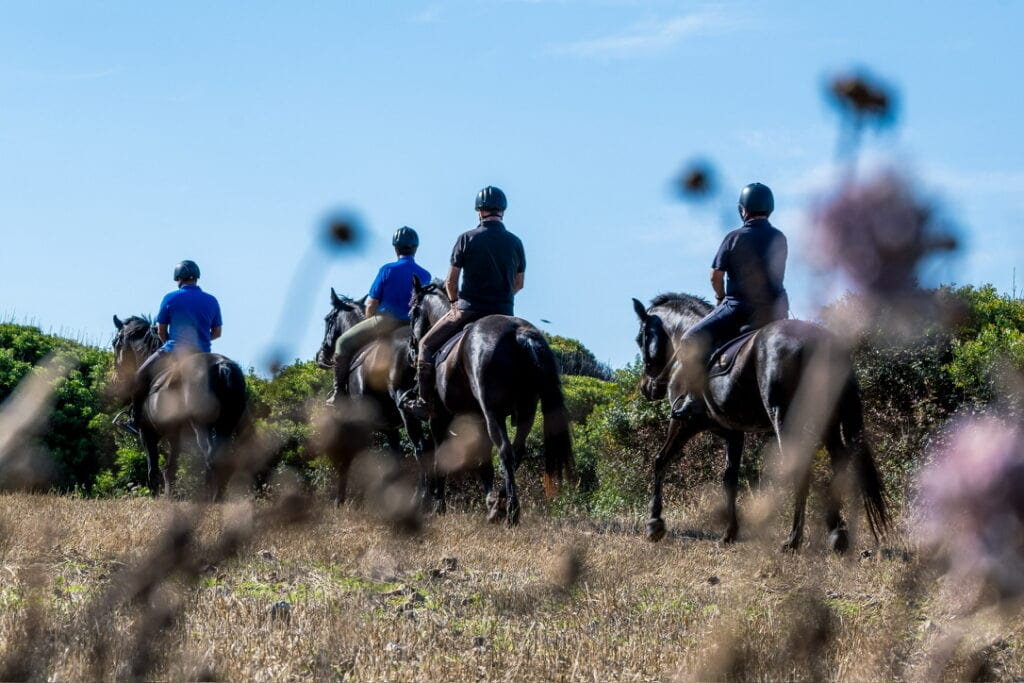
Photo credits: Ekaterina Pustoshnaia and the Associació Cavalls Raça Menorquina
-
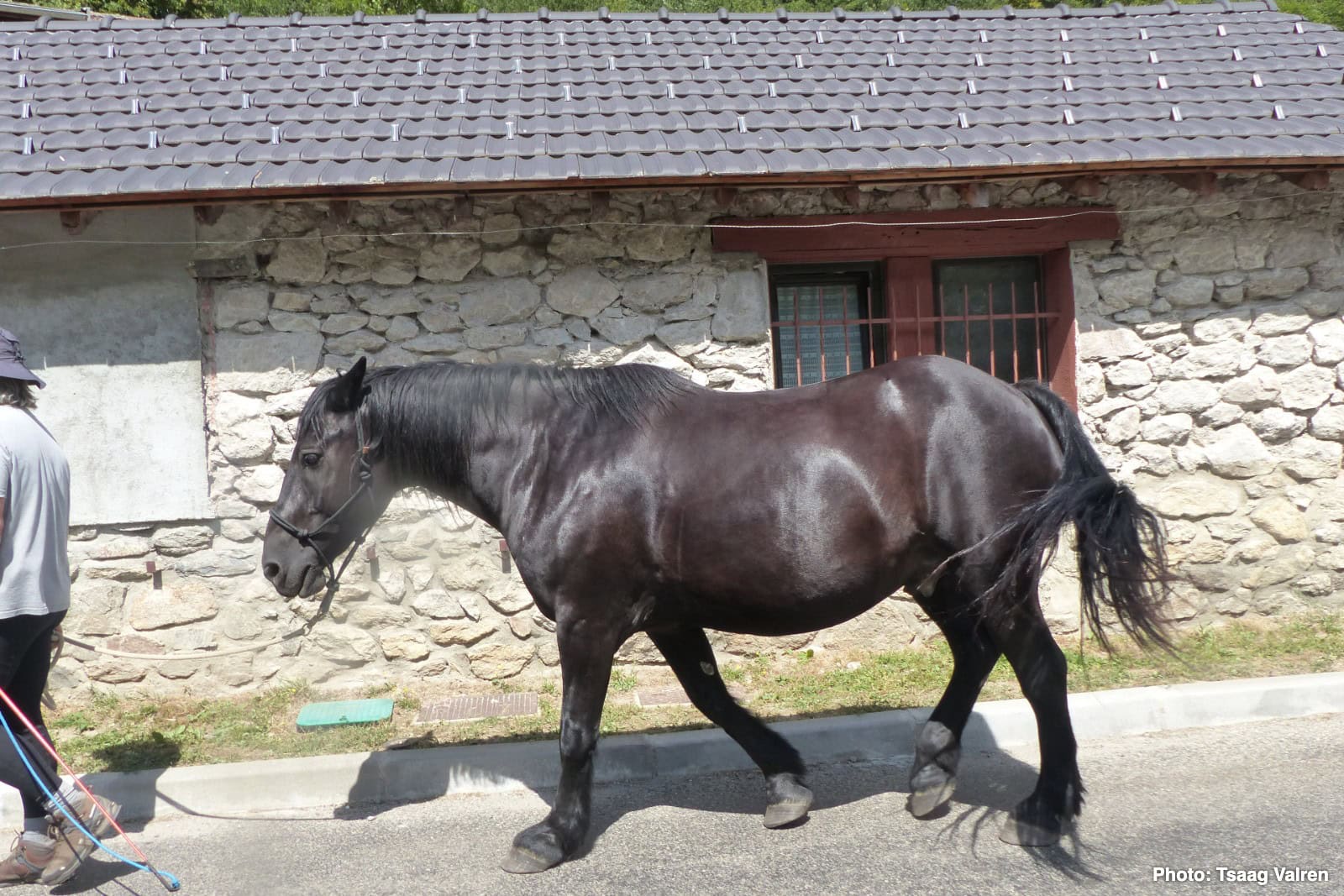
The Mérens
The Mérens is the black horse of the Ariège, in the French Pyrenees. Its ancestors are thought to have lived in these valleys since prehistoric times, and it is often compared to the horses painted on the walls of the nearby Niaux cave.
For centuries the Mérens worked the mountain farms, hauling timber and carrying goods over high passes into Spain.
Read more Read less
A studbook was established in 1908. As mechanization spread, the breed declined, but in the 1970s it found a new purpose as a trekking and leisure horse.
Mérens horses still spend their summers grazing on high mountain pastures, moved up and down the slopes each year in a traditional transhumance. They are among the best horses for riding holidays in the Pyrenees.
The Mérens stands about 14 to 15 hands, always black, with a thick mane and tail. It is hardy, sure-footed, calm, and intelligent.
-
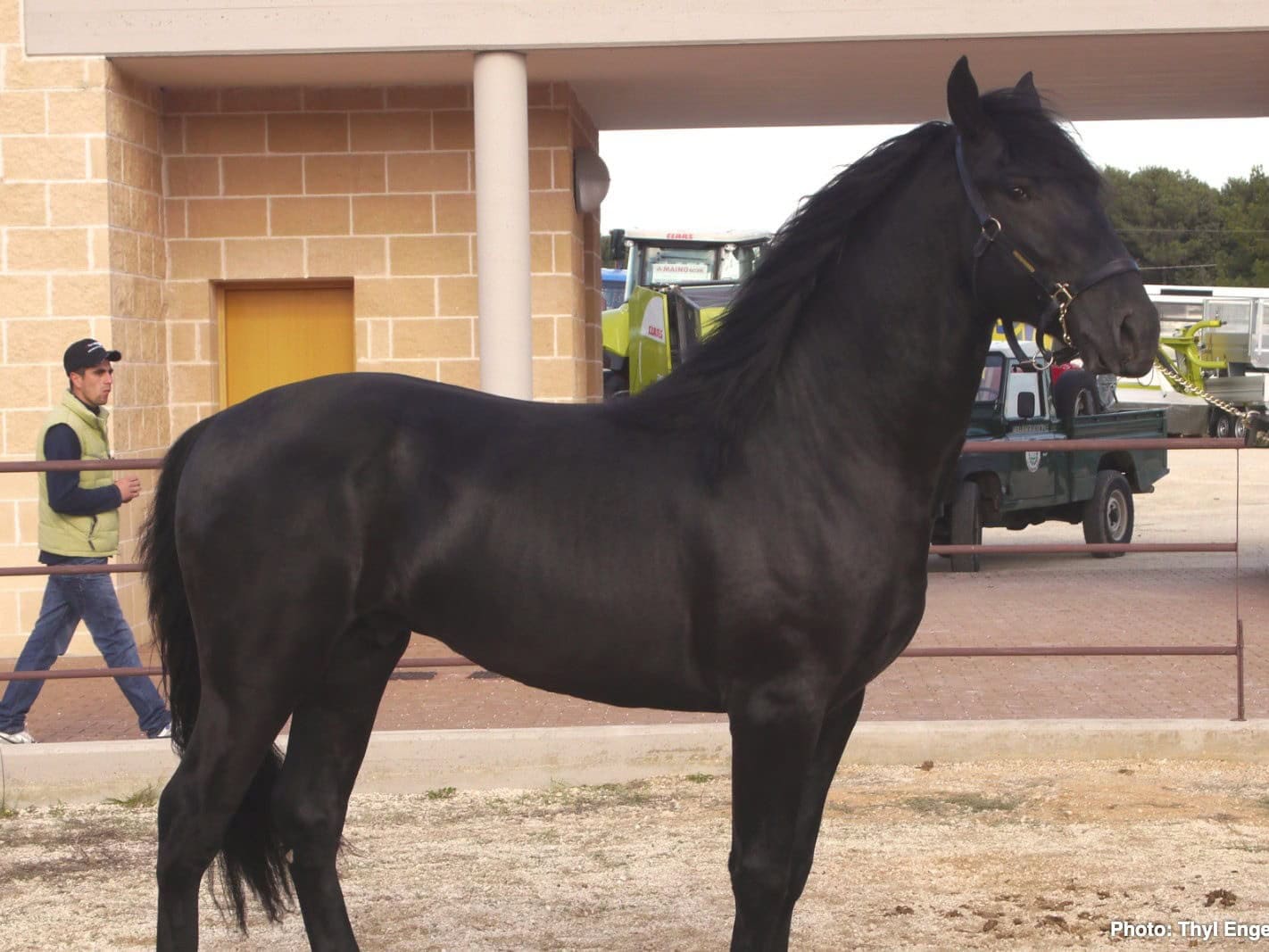
The Murgese
The Murgese comes from the Murge, a limestone plateau in Puglia, in the heel of Italy’s boot. Horses have been bred here for centuries, and during the era of Spanish rule in southern Italy, the region’s horses were influenced by Iberian and Barb blood.
The Conti di Conversano, local nobility, bred fine horses in the area, and the Murgese was valued as a cavalry and working horse.
Read more Read less
The modern breed was formally recognized in the 1920s, and later efforts have preserved its traditional type.
Today the Murgese is used for trekking, riding, and light draft work, and it is well suited to exploring the olive groves, masserie, and countryside of Puglia.
The Murgese usually stands around 15 to 16 hands and is predominantly black, though a blue roan type also occurs. It is strong, hardy, and sure-footed, with a calm and willing temperament.
-
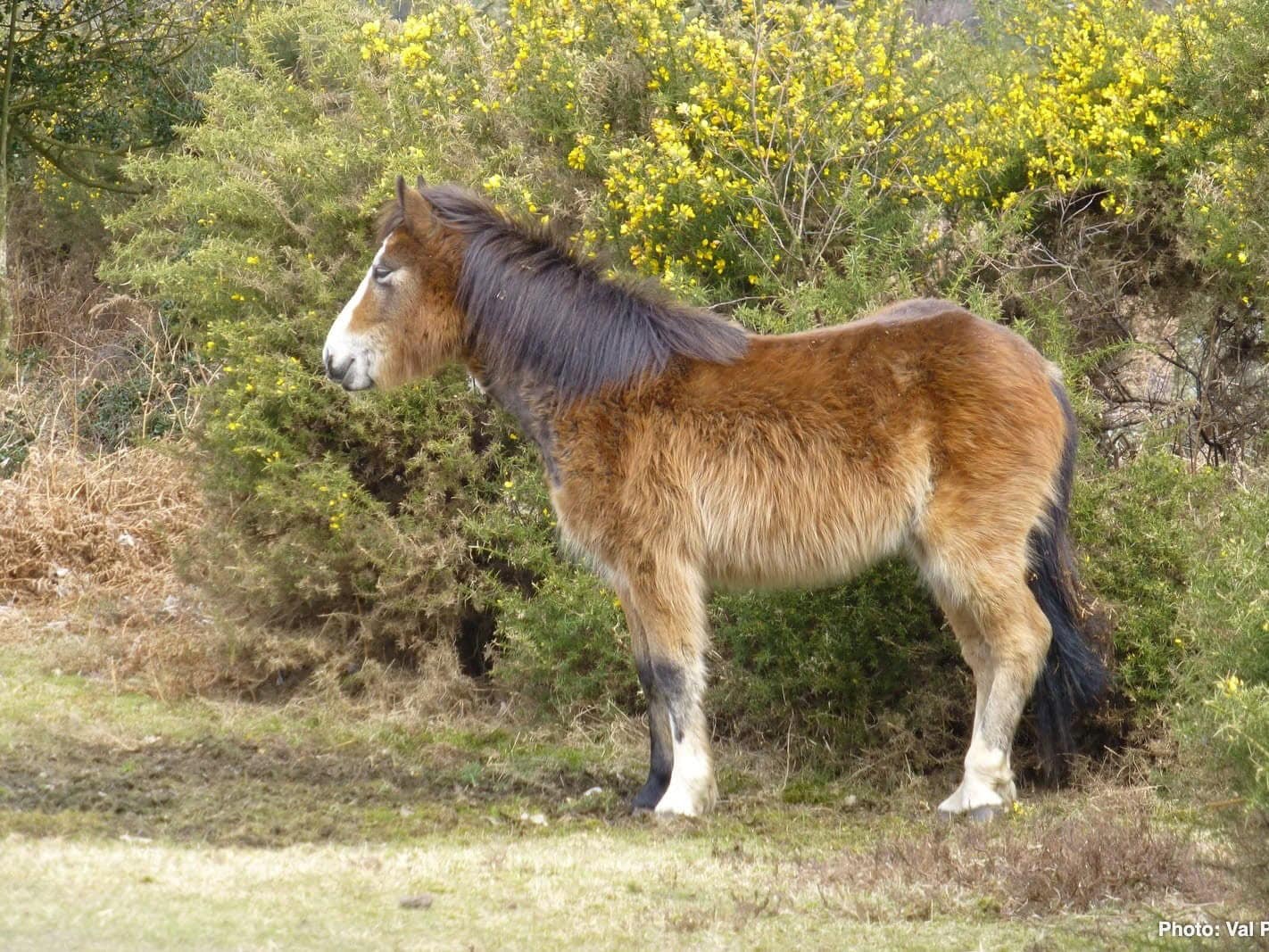
The New Forest Pony
In the ancient woodland and open heath of the New Forest in Hampshire, ponies have grazed freely for nearly a thousand years. They are one of the defining sights of southern England, wandering the heathland, the villages, and sometimes the roads, under a system of common grazing rights that dates back to the Norman kings.
Read more Read less
The ponies belong to local “commoners,” who have the right to turn out animals on the Forest. Each autumn, the ponies are gathered in drifts, and many foals are sold at the Beaulieu Road sales. Over the centuries, the native stock was crossed with other breeds, including Thoroughbred and Arabian. Queen Victoria lent the Arab stallion Zorah to the Forest in 1852 to improve the ponies, and a breed society was formed in 1891.
The result is a versatile, surprisingly athletic pony, narrow enough for children and strong enough for adults, with a sensible temperament shaped by life among people and traffic. New Forest ponies compete in jumping, dressage, eventing, and driving, and several thousand still roam the Forest today.
The New Forest pony stands up to 14.2 hands and may be any color except piebald, skewbald, or blue-eyed cream. Bay and brown are most common.
-
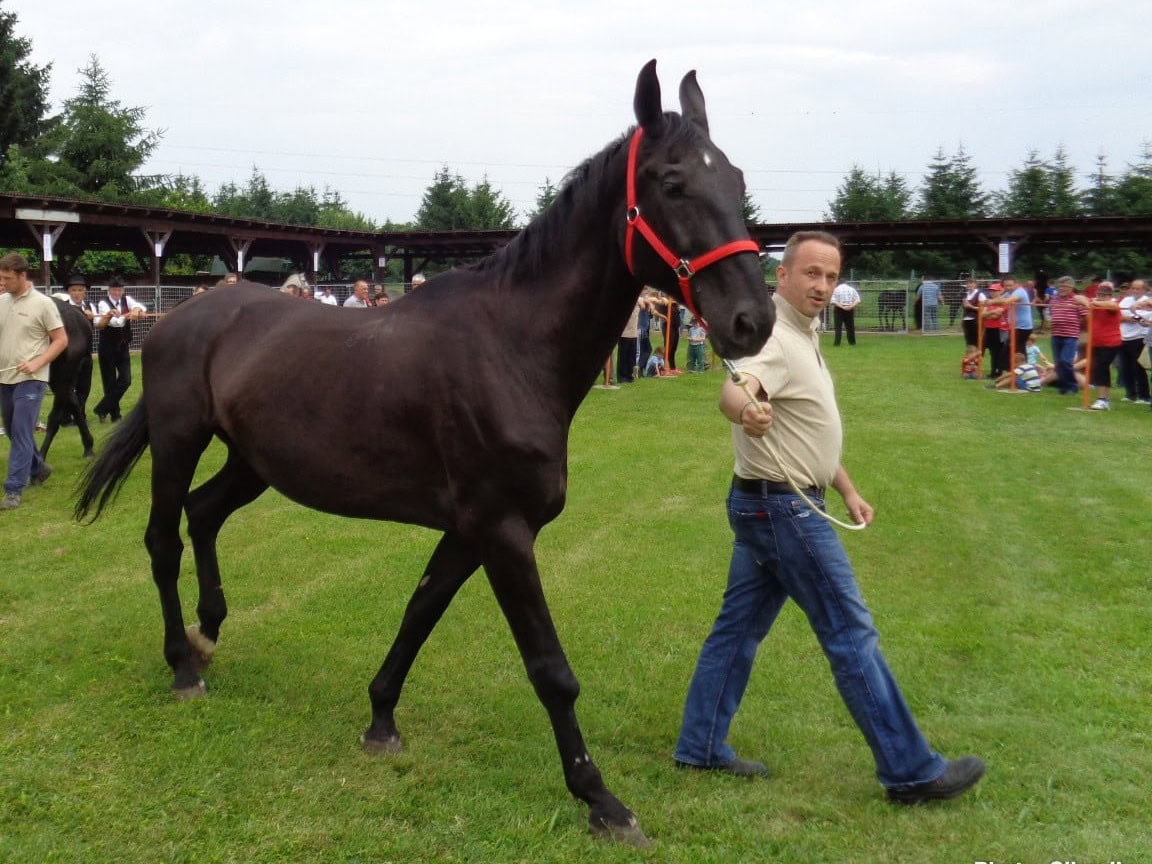
The Nonius
The Nonius traces its entire line to a single stallion taken as a prize of war. Nonius Senior was foaled in Normandy in 1810, captured from the French stud at Rosières-aux-Salines during the Napoleonic Wars, and brought to the Hungarian state stud at Mezőhegyes in 1816.
Mezőhegyes, founded in 1784 as the State Stud of the Hungarian Royal and Imperial Court, bred Nonius Senior’s descendants closely to fix his type.
Read more Read less
Arabian and Thoroughbred stallions later added balance and elegance. The breed won the title of “Ideal Horse” at the 1900 Paris Exposition Universelle, and it became one of the great working horses of Central Europe: a strong carriage horse, a farm horse, and a cavalry mount.
The Second World War left only about 50 mares. The breed was rebuilt, a national breeders’ association was formed in 1989, and today there are roughly 450 mares and 80 stallions, mostly at Mezőhegyes and in Hungary’s Hortobágy National Park, a UNESCO World Heritage Site.
The Nonius stands 15.1 to 16.1 hands and is usually black, dark bay, or brown. Heavy-boned and kind, it is used in combined driving, farm work, and leisure riding.
-
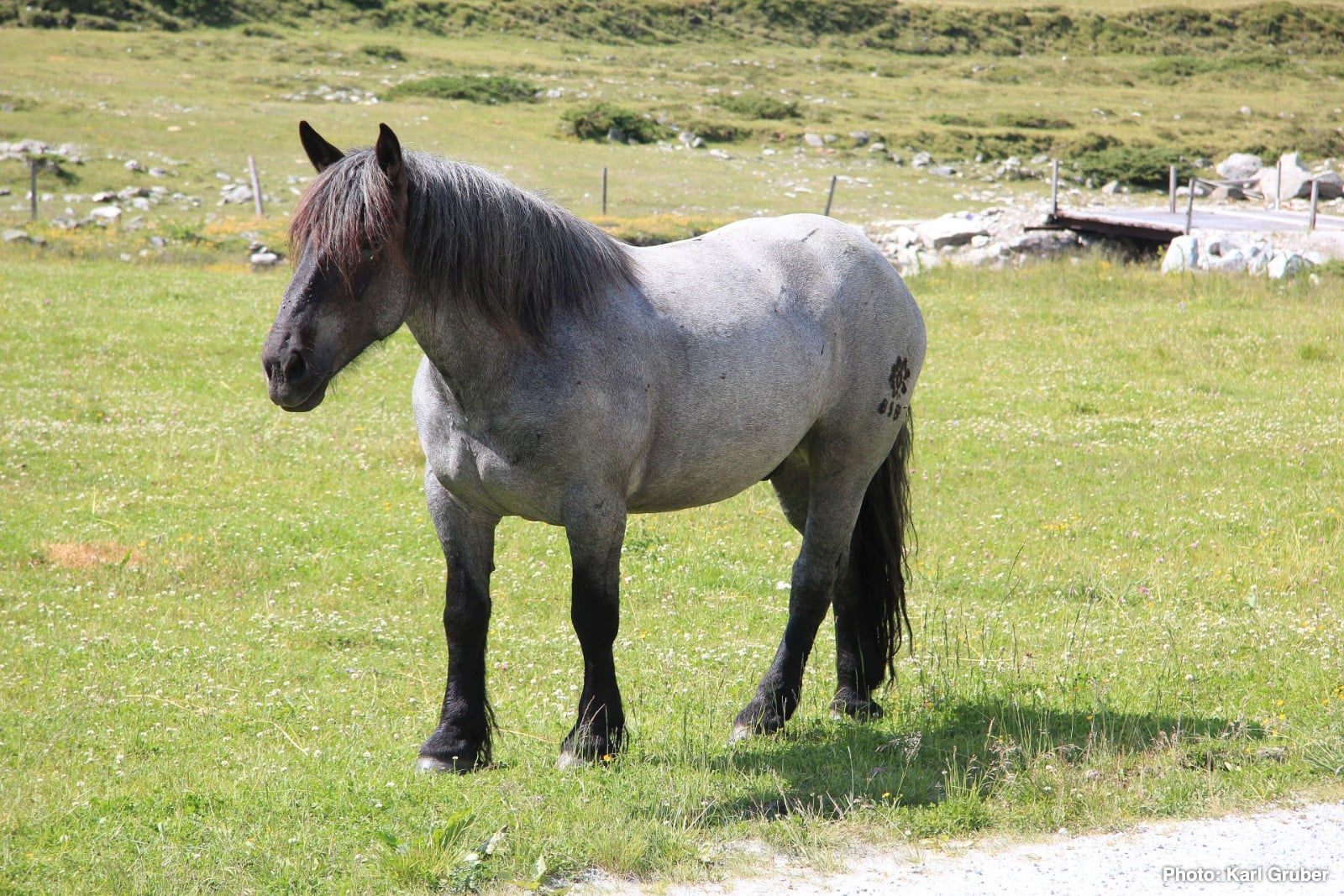
The Noriker
The Noriker is the mountain draft horse of Austria, named for Noricum, the Roman province that once covered much of the Eastern Alps. For centuries it carried goods over the Alpine passes and worked the steep farms and forests of the mountains.
Monasteries, especially in the Salzburg region, played an important role in developing the breed.
Read more Read less
The Noriker is strong yet surprisingly agile, a combination that made it essential in mountain country. Breeding records in Salzburg go back centuries, and the breed’s characteristic types include the spotted Pinzgauer.
Today the Noriker works in forestry and agriculture, pulls sleighs and carriages in Alpine resorts, and is ridden on leisure and trekking rides.
The Noriker usually stands about 15.3 to 16.2 hands. Colors include bay, black, chestnut, roan, and the distinctive leopard-spotted coats. It is calm, kind, and steady, perfectly suited to mountain work.
-
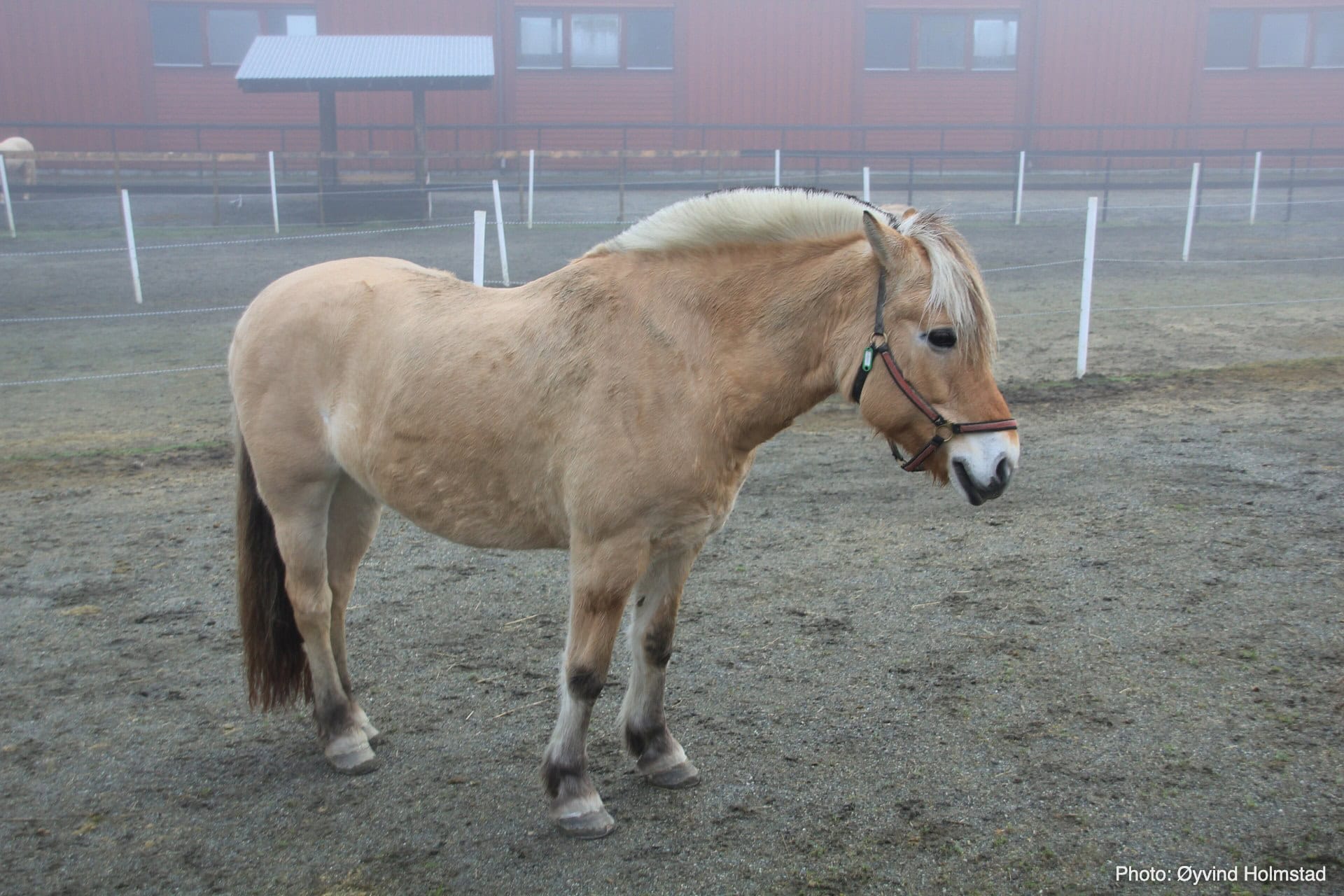
The Norwegian Fjord
Of all the horse breeds in the world, the Norwegian Fjord may have changed the least since prehistoric times. Cave paintings at Lascaux and Altamira show horses with the same compact build, the same upright mane, the same dun coloring with dorsal stripe. The Fjord has been domesticated for at least 4,000 years in western Norway, and selective breeding has never significantly altered what nature made.
Read more Read less
The Fjord was the horse of the Vikings. Archaeological evidence from Viking burial sites confirms the breed’s presence in Scandinavia from at least the Iron Age; horses were sacrificed and buried with warriors of high status, and the skeletons match the modern Fjord’s conformation. When the Norse people settled Iceland, the Faroe Islands, and the British Isles, they brought Fjord horses with them, and the Fjord’s influence can be traced in the Icelandic Horse, the Shetland Pony, and various other Northern European breeds.
The breed is found in five color variations, all of which are shades of dun: brown dun (the most common), white dun, red dun, grey dun, and yellow dun. Every Fjord carries the primitive markings of its wild ancestors: the dark dorsal stripe running from poll to tail, the zebra striping on the legs, and the characteristic bi-colored mane - dark in the center, lighter at the edges - that is traditionally trimmed to a short, crescent-shaped brush to display this pattern.
The Fjord stands 13.1 to 14.3 hands, compact and exceptionally strong relative to its size. It is one of the few breeds regularly used in harness and under saddle interchangeably, with a willing temperament and a steady constitution that makes it an excellent horse for beginners and children while being fully capable of demanding agricultural and trail work.
Norway considers the Fjord a national emblem, and the breed is maintained under strict standards by the Norwegian Fjord Horse Registry. Abroad, the Fjord has a devoted following wherever terrain demands a sure-footed, honest horse capable of working through difficult conditions - which is to say, in exactly the landscapes where horses have always been most necessary.
-
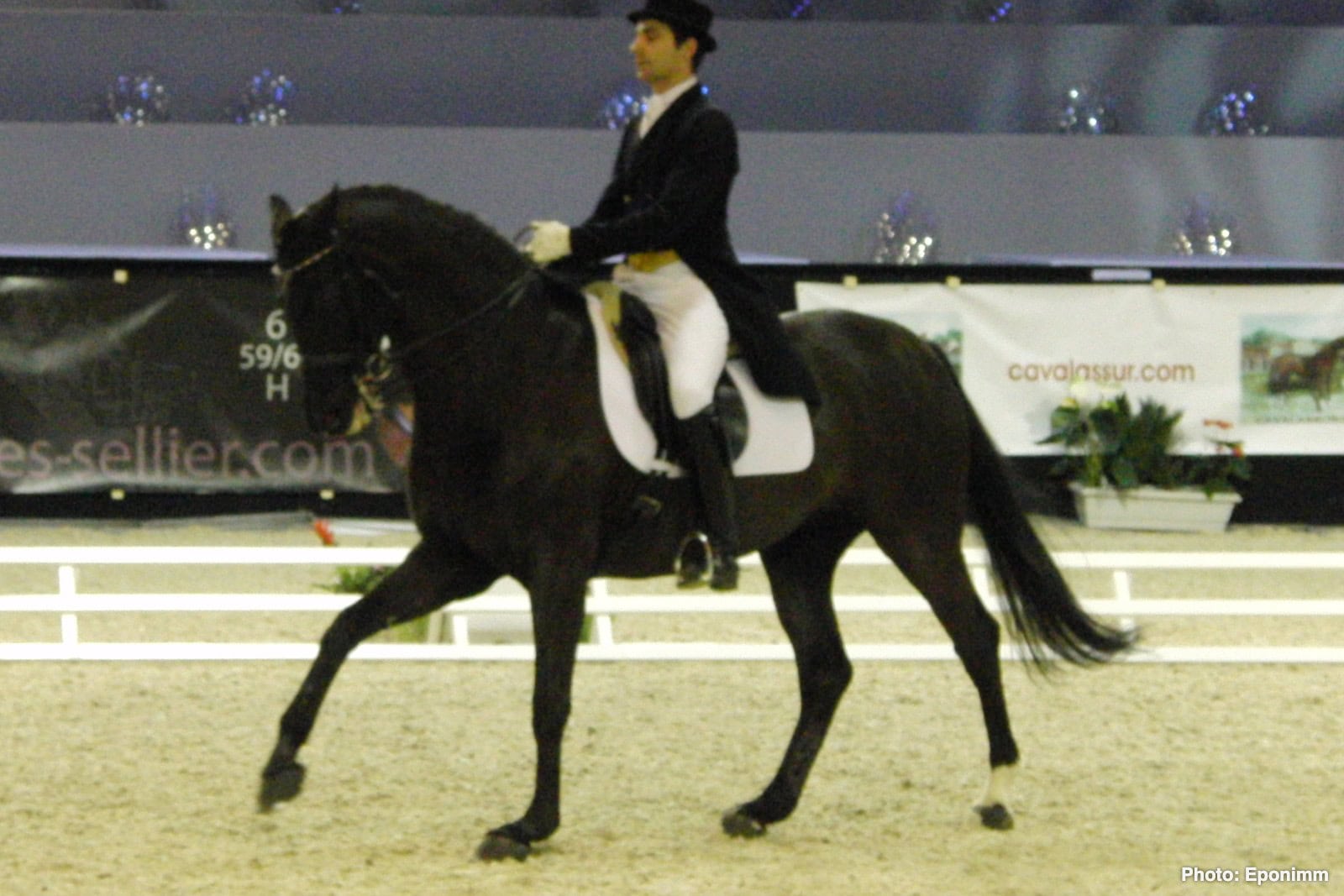
The Oldenburg
The Oldenburg was born as a carriage horse for a ducal court and reinvented itself as one of the great sport horses of the world. Its home is the former Grand Duchy of Oldenburg in northwestern Germany, a flat, wet country of marsh and pasture where heavy, elegant coach horses were bred for centuries.
Read more Read less
The breed’s story begins with Count Johann XVI, who bought fine Frederiksborg stallions and crossed his stock with Turkish, Neapolitan, and Andalusian horses, and with his successor, Count Anton Günther (1583 - 1667), who made his stallions available to the farmers of his lands. The result was a stately, high-stepping carriage horse that also worked the fields. Stallion inspections reached Oldenburg in 1755, and in 1923 the regional studbooks merged into the Oldenburg Horse Breeders’ Association.
Mechanization in the 1940s and 1950s ended the coach horse’s working life almost overnight. Oldenburg breeders responded faster and more boldly than most, bringing in the Anglo-Norman stallion Condor and, in 1959, the Thoroughbred Adonis xx to lighten and refine their horses. That willingness to look anywhere for quality became the breed’s defining trait. The Oldenburg has one of the most open breeding policies in Europe, judging a stallion by what he produces rather than where he comes from.
The approach has produced some of the most influential sires in modern sport, among them the dressage stallions Donnerhall and Sandro Hit. In 2001, a separate studbook for show jumpers, Oldenburg International (OS), was established.
The Oldenburg typically stands 16 to 17.2 hands, with black, bay, brown, chestnut, and grey the most common colors. It is known for expressive, elastic movement and a willing, rideable temperament, and it competes at the top level in dressage, show jumping, and eventing.
-
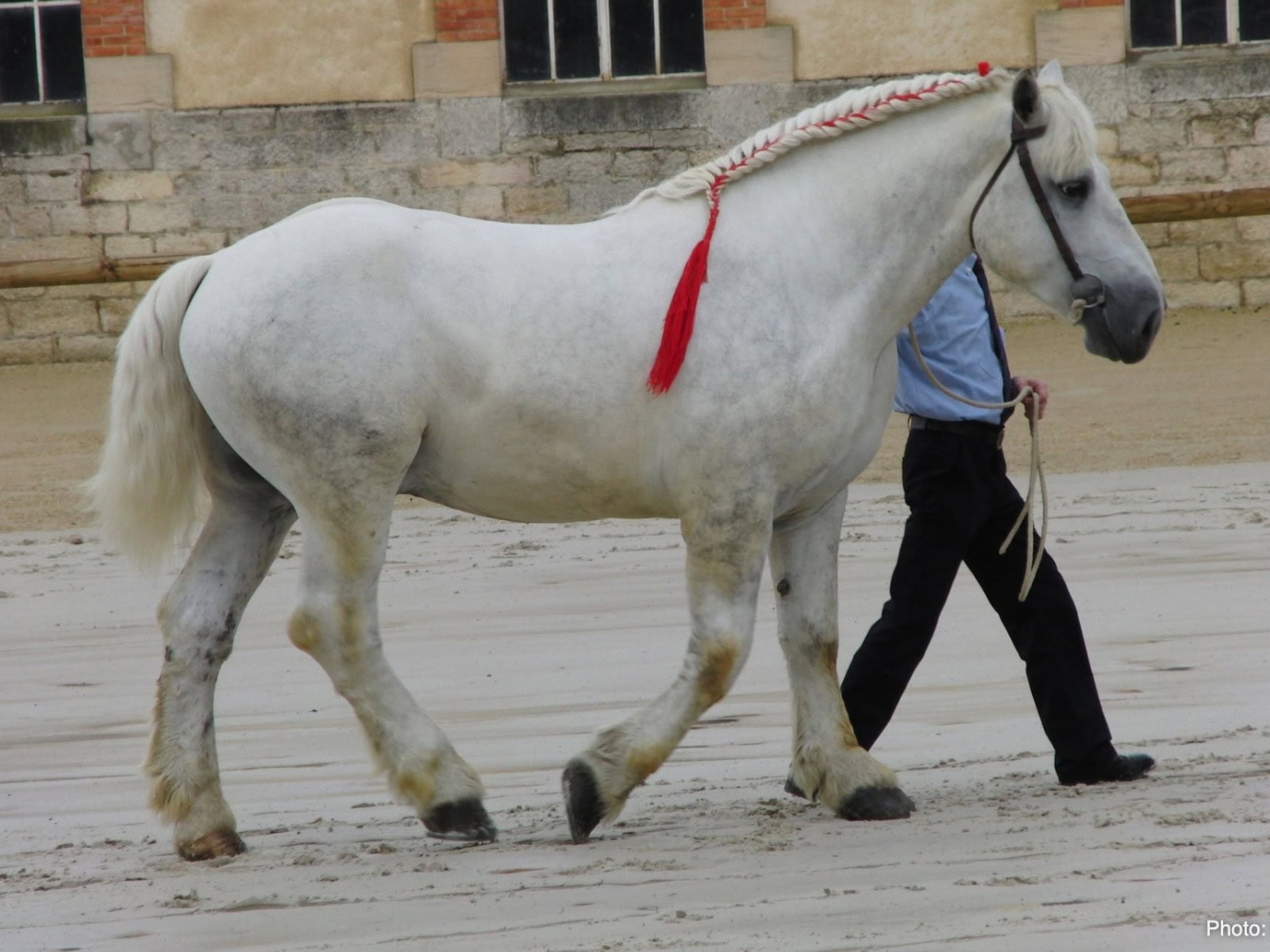
The Percheron
In the gentle landscape of Le Perche - the region of Normandy that rolls south from the Orne département into the Loire Valley - a draft horse was bred that would eventually work on six continents. The Percheron is the most widely exported heavy horse in history, the breed that pulled the flour wagons of Paris and the plows of the American Midwest, that served in both World Wars and rebuilt the farms of post-war Europe, and whose particular combination of power and intelligence set it apart from every other draft breed.
Read more Read less
The breed’s origins in Le Perche can be traced at least to the 8th century. The horses of the Perche were likely shaped by the encounter between native Gallic stock and the Oriental horses captured at the Battle of Poitiers in 732 AD - the moment Charles Martel stopped the Moorish advance into Europe and acquired, in the process, the desert horses of the Saracen cavalry. Whether this account is historically exact or embellished by later breeders anxious to explain the Percheron’s unusual refinement is difficult to say. What is not disputed is that Arabian blood, at various points in the breed’s history, gave the Percheron qualities of intelligence, elegance, and endurance that distinguish it from the heavier, more phlegmatic continental drafts.
The Percheron stands 15.2 to 19 hands - there is considerable range within the breed - heavily muscled with a broad, slightly dished face and the massive hindquarters that characterize the powerful draft. It comes almost exclusively in gray or black and carries little feathering at the lower legs, making it well suited to the heavy clay soils of Normandy. Napoléon used Percherons as artillery horses, valuing their combination of power and relative agility.
By the mid-19th century, the Percheron was the dominant breed of Paris’s commercial traffic: the omnibus and delivery wagon horses that moved the city were overwhelmingly Percherons, and hundreds of thousands were at work on French roads. American importers took notice. Between 1870 and 1920, more than 200,000 Percherons were exported to the United States, transforming American draft horse breeding and becoming the dominant working horse of the Midwest - more numerous in America, at one point, than all other draft breeds combined.
When World War I consumed a generation of horses, Percherons went to the front on both sides of the Atlantic. The breed recovered, but not to its former numbers. Today the Percheron is maintained in France, the United States, Australia, and Canada, where a growing number of farmers committed to sustainable agriculture have returned to working the land with Percheron teams.
The horse of Le Perche has traveled farther than almost any other breed. It carries that history with the same patience it brings to everything else.
-
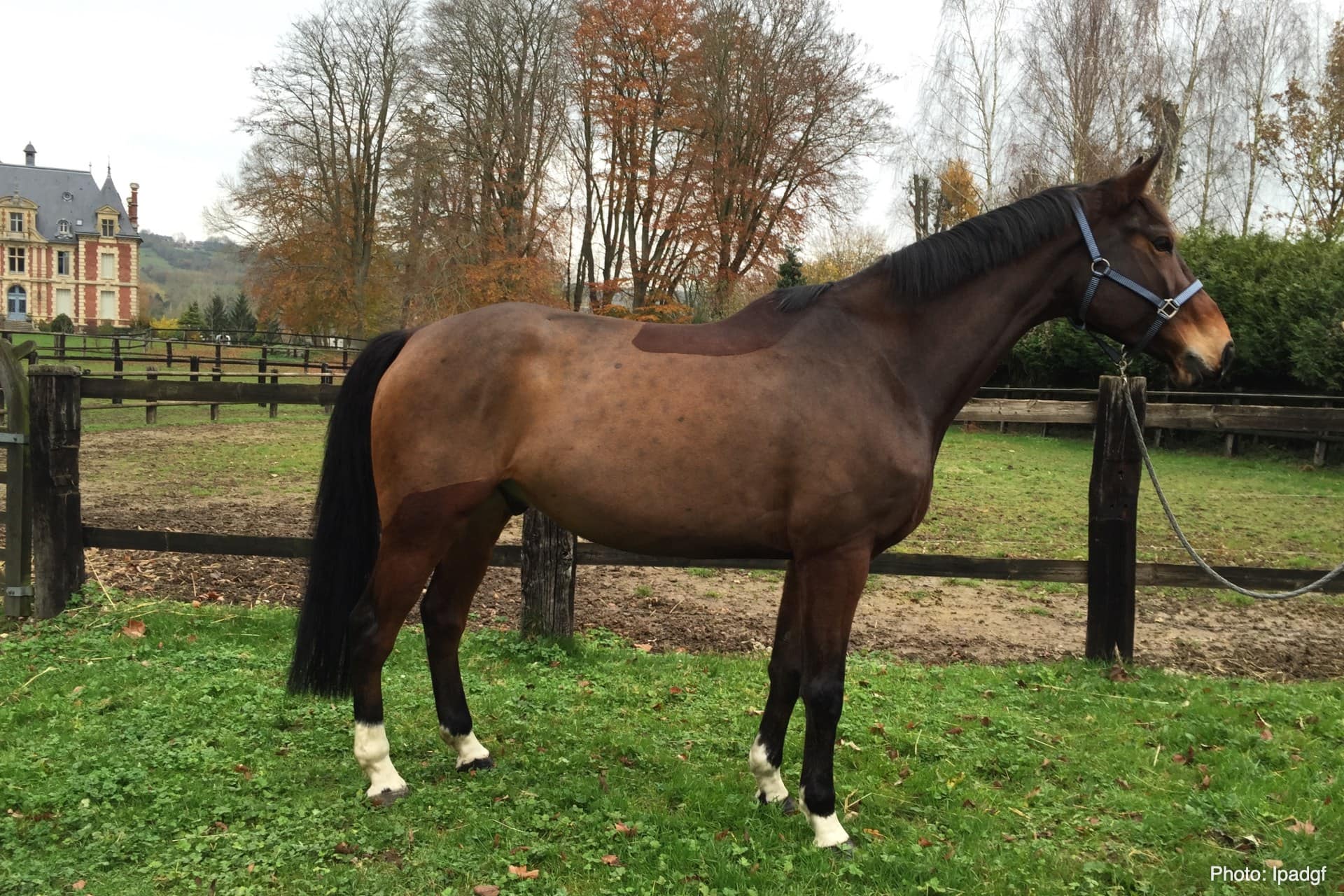
The Selle Français
France has given the equestrian world many things - the classical riding tradition codified by La Guérinière, the Camargue horse running wild in the Rhône delta, the Haras Nationaux system of state studs that shaped European breeding for centuries. But its most significant contribution to modern competitive riding may be the Selle Français: the horse from which much of the current world show jumping elite descends.
Read more Read less
The Selle Français - literally “French Saddle Horse” - was not so much bred as consolidated. Its official creation in 1958 was an administrative act: France unified several regional warmblood registries, including the respected Anglo-Norman studbook of Normandy and the Demi-Sang types of other regions, into a single national studbook. The decision reflected a broader shift in equestrian culture - as cavalry and agricultural use declined, France needed a unified sport horse breeding program to keep its equestrian industry competitive in the era of the Olympic Games.
The foundations, however, were older and deeper. The Anglo-Norman horse of Normandy had been developed through the 19th century by crossing local Norman mares with English Thoroughbred stallions. The result was a horse of real substance and scope, with the bone and power of the native Norman stock combined with the refinement, courage, and athleticism of the Thoroughbred. This type had been producing fine cavalry horses and carriage horses for generations before 1958; the Selle Français formalized and focused what already existed.
The breed’s open studbook - which permits crosses with Thoroughbreds, Anglo-Arabs, Arabians, and French Trotters - has been central to its competitive success. Rather than closing bloodlines, French breeders continued to introduce outcrosses that added speed, scope, and mental agility, producing a horse that tends toward larger size (15.3 to 17 hands), elastic gaits, and the natural ability over a fence that makes a show jumper great.
The results have been extraordinary. Baloubet du Rouet, ridden by Rodrigo Pessoa, won three consecutive World Cup Finals and an Olympic gold medal. Jappeloup, ridden by Pierre Durand, won Olympic gold at Seoul in 1988 and became a national hero in France - the subject of a biographical film and a postage stamp. The roll call of Selle Français horses at the top of world jumping competition is as long as the sport’s modern history.
The ANSF manages the studbook from Normandy, the heartland of the breed, where the annual stallion and foal sales at Deauville draw buyers from across Europe. The Selle Français’s influence has spread into virtually every warmblood studbook on the continent - the Holsteiner, the Oldenburg, the Belgian Warmblood, the Zangersheide all carry Selle Français blood in their most successful lines. It is a breed born of pragmatism that became, quietly, the engine of modern show jumping.
-
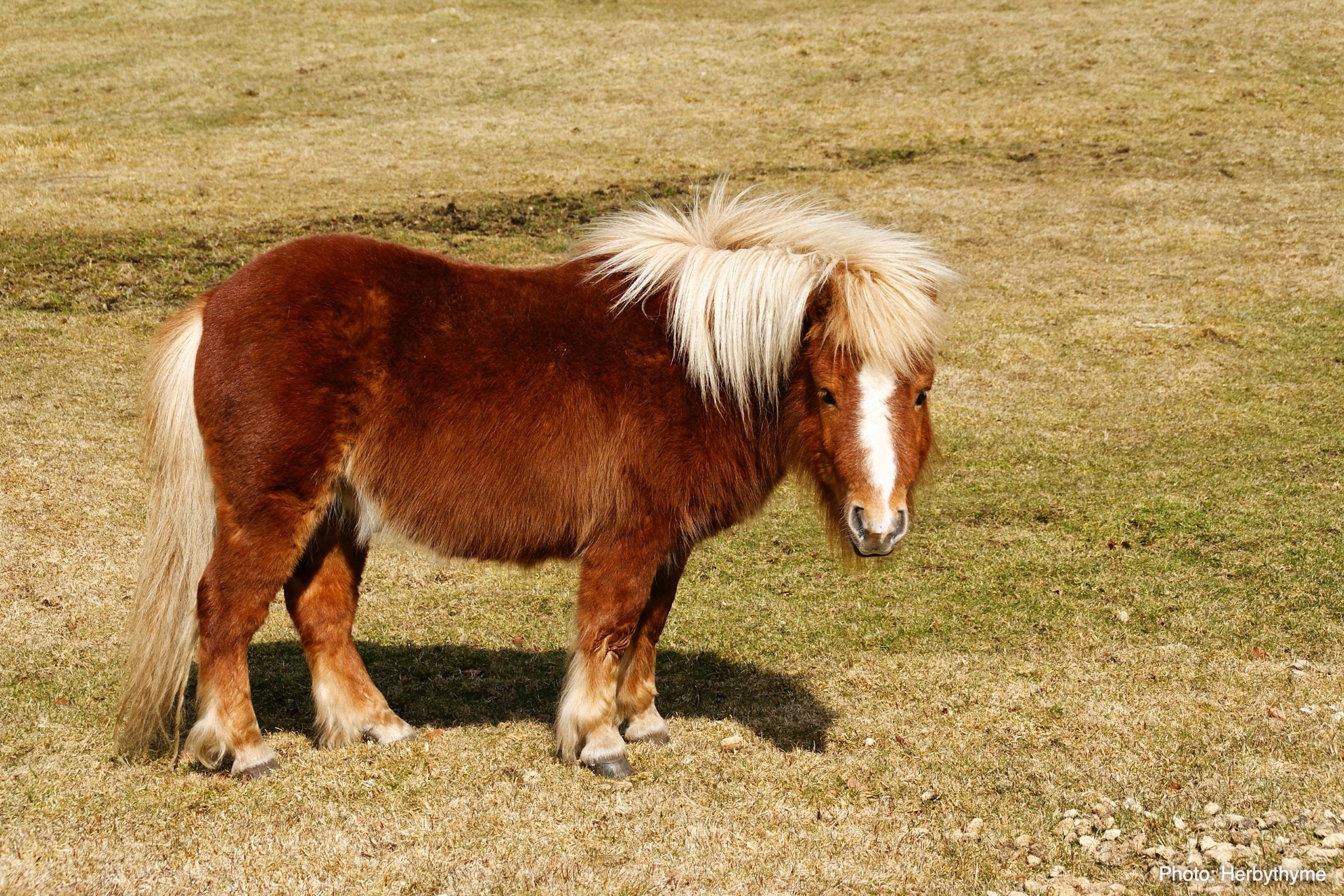
The Shetland Pony
They are the smallest horse in Britain and, pound for pound, the strongest equine in the world. A Shetland pony can carry up to a third of its own body weight - a proportion that surpasses even the horse’s legendary capacity - and it can do so across terrain and in weather conditions that would challenge animals three times its size.
Read more Read less
The Shetland is not a novelty or a children’s accessory, though it has become both of those things. It is one of the most functionally capable animals ever produced, shaped by one of the harshest environments on earth.
The Shetland Islands lie at the 60th parallel north, 100 miles north of mainland Scotland and equidistant between Norway and the Orkney Islands. The land is peat bog and bare rock, treeless and scoured by Atlantic winds; the winters are long, dark, and raw. DNA analysis has confirmed that horses have lived on Shetland since at least the Bronze Age, and the isolation of an island group 100 miles from the nearest landmass has preserved a genetic distinctiveness still visible in modern Shetlands.
The ponies developed in complete proportion to their landscape: small because there was not enough food to sustain anything larger; dense-coated because the winters demanded it; sure-footed because the ground gave no other option; and possessed of a constitution so efficient that a Shetland in reasonable grass will maintain condition through conditions that leave other breeds depleted.
For most of their history, Shetland ponies were working animals for crofting families - carrying peat in panniers, working small plots of ground, and transporting goods across the island. The Industrial Revolution changed their role entirely. The Mines Act of 1842 prohibited women and boys under ten in British coal mines, creating urgent demand for small animals that could work low-ceilinged underground passages. Shetland ponies, small enough to stand upright in a mine shaft, were exported in their thousands to the collieries of South Wales, Yorkshire, and the Midlands. Many spent their entire lives underground. Some never saw daylight.
The Shetland Pony Stud Book Society was established in 1890 to formalize registration. When mechanization eventually replaced pit ponies in the mid-20th century, the Shetland transitioned to its current role as the quintessential children’s pony and companion animal - a role it fills with the same uncomplaining competence it brought to everything before.
The Shetland stands 7 to 11.2 hands, comes in virtually every color, and carries a mane and tail of extraordinary fullness. In winter, it is wrapped in one of the most effective thermal insulators among domestic animals. On Shetland itself, semi-feral herds still range the hill ground, living as their ancestors have for thousands of years - small, immovable, entirely at home.
-
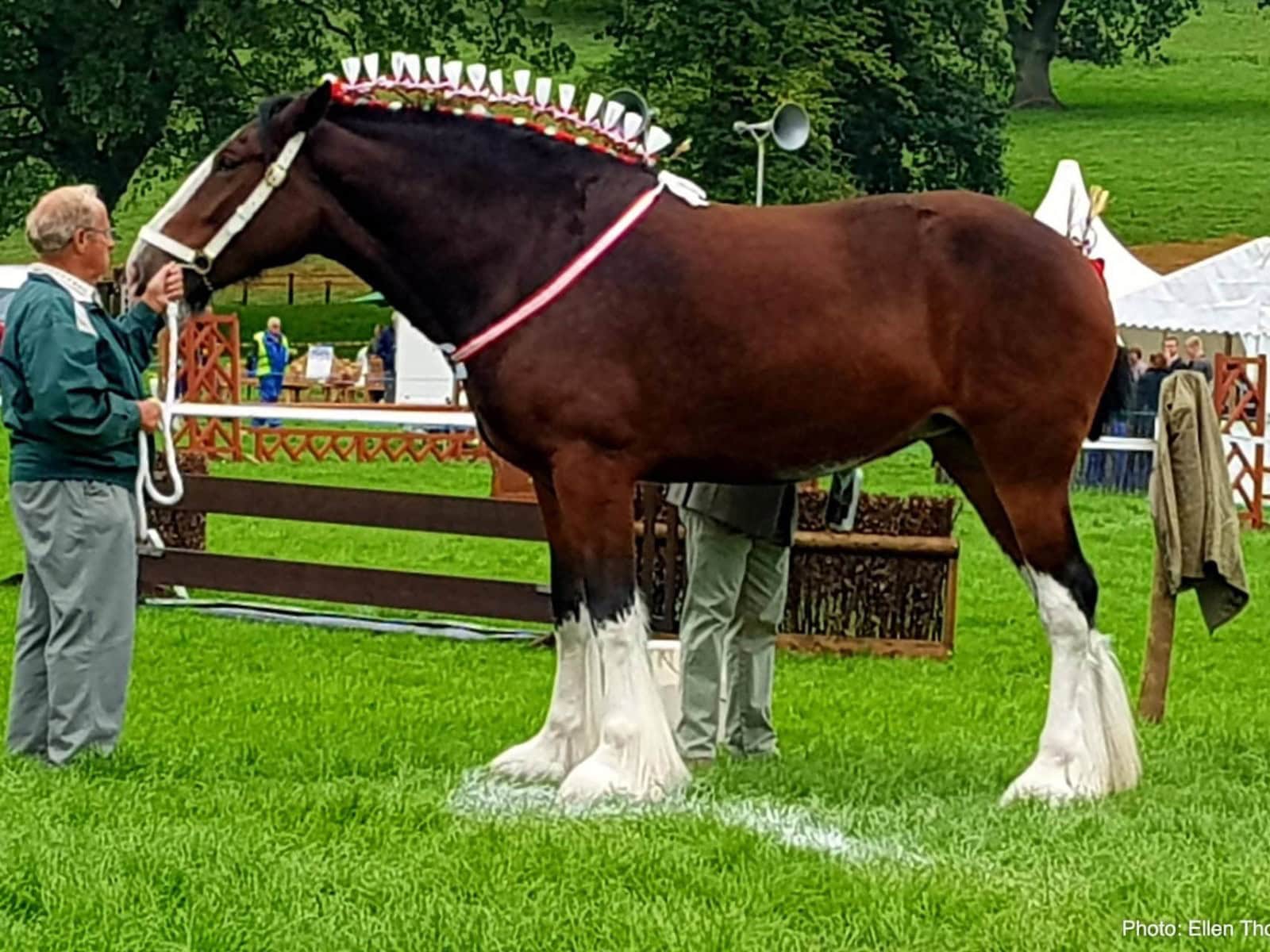
The Shire Horse
In the 19th century, when London was the largest city in the world and its docks moved the commerce of an empire, the horses that did the work were Shires. They pulled the brewery drays, the coal wagons, the timber loads along the Thames. A single Shire could pull five tons.
Read more Read less
They moved through the streets of Victorian London in their thousands, immense and patient, their great feathered feet ringing on the cobblestones, their breath misting in the winter cold.
The Shire is the tallest horse breed in the world - stallions regularly stand 17 to 19 hands, and the world record holder, a Shire named Sampson foaled in 1846 in Bedfordshire, measured 21.2½ hands and weighed over 3,300 pounds - and it is one of the great tragedies of modern agricultural history that the breed nearly disappeared with the work that created it.
The Shire’s origins lie in the “Great Horse” of medieval England - the heavy warhorse capable of carrying a fully armored knight. Over centuries of agricultural development, the type was refined toward a massive but surprisingly active working horse, and the Shire Horse Society was established in 1878 to standardize and promote the breed. At its peak in the early 20th century, over a million Shires worked in Britain.
Then came the First World War, which consumed horses on an industrial scale, and the mechanization of agriculture, which made them redundant. By 1955, fewer than 100 Shires were registered annually. The breed came closer to extinction than most people realize, sustained by a handful of breeders who refused to let it go.
The Rare Breeds Survival Trust has monitored the Shire as “at risk” for decades; the Shire Horse Society reports that numbers remain concerningly low relative to the breed’s historical importance. Today, Shires are kept for showing, ceremonial purposes, and by a growing number of farmers returning to horse-powered agriculture for sustainability reasons. Several British breweries - Wadworth and Samuel Smith among them - still use Shire horses for local deliveries, as much for tradition and marketing as for practicality.
The Shire stands 17 to 19 hands, with the characteristic heavy feathering of white silky hair at the lower legs, a wide flat face, and a disposition as gentle as its size is enormous. Bay, brown, black, and gray are the standard colors.
-
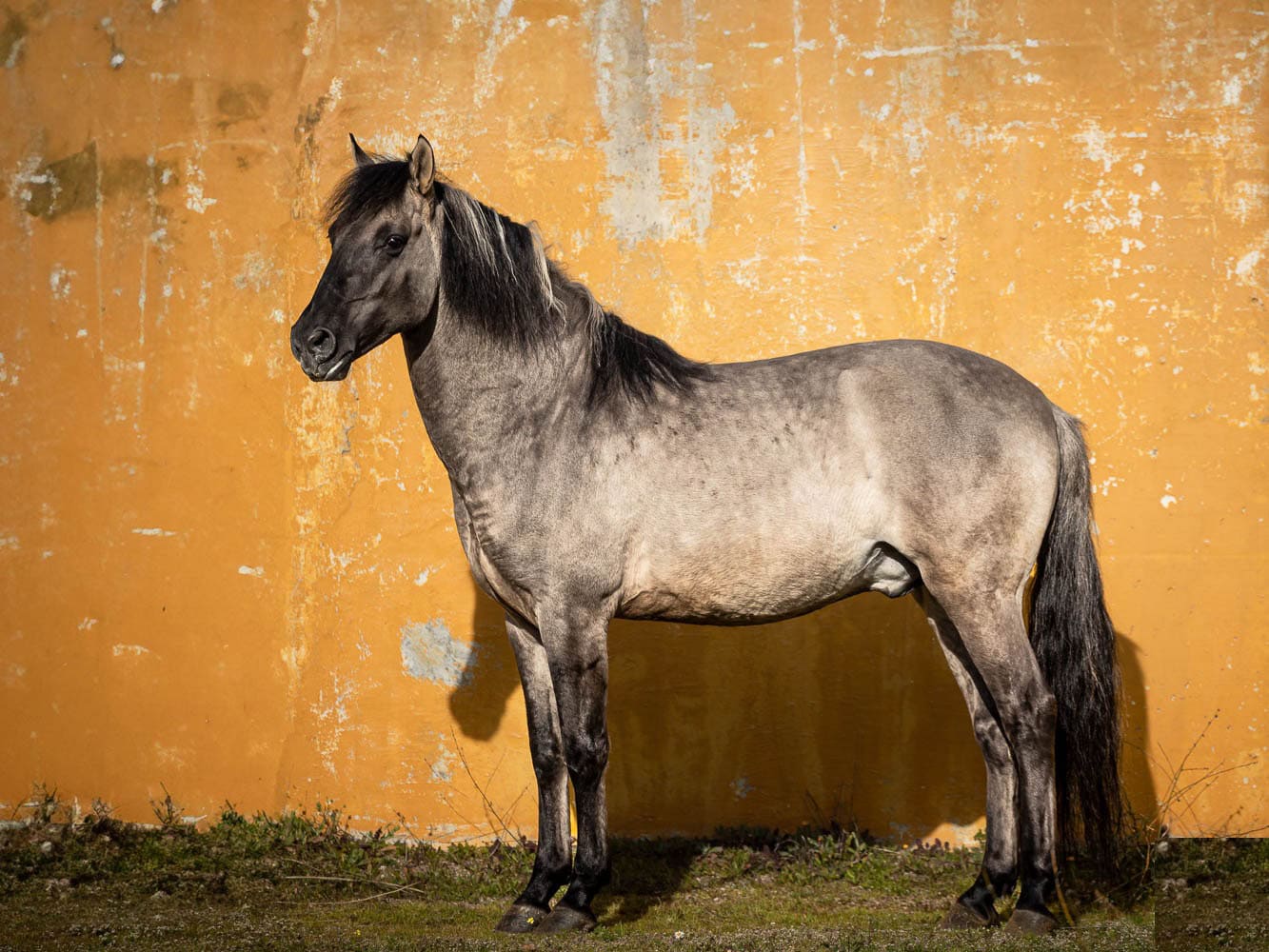
The Sorraia
Endangered
In the river valleys of the Sorraia basin in Portugal, in the years after the First World War, a Portuguese zoologist named Ruy d’Andrade noticed something the local farmers had long overlooked: some of the horses running on the land looked different. Not like the Lusitanos or the fine-bred horses of the great estates, but older, stranger - dun or grullo in color, with the dark dorsal stripe and leg markings of an animal connected to something prehistoric.
Read more Read less
D’Andrade recognized in them the horses of the cave paintings.
The Sorraia is thought by many researchers to be the oldest horse breed on the Iberian Peninsula - a direct descendant of the wild horses that inhabited the region since the Paleolithic. The cave paintings of Altamira and other Iberian sites depict horses with the same distinctive coloring, the same primitive markings, the same head profile as the modern Sorraia. Whether this represents a direct genetic lineage or simply parallel preservation of an ancient equine type is a matter of ongoing scientific debate, but the physical resemblance is unmistakable.
D’Andrade established the Vale de Zebro stud farm in the 1930s to preserve what he had found. He gathered horses from the Sorraia River basin - the area between the Sor and Raia rivers in the Ribatejo - and began a breeding program designed to prevent their disappearance. Without his intervention, the type would almost certainly have been lost within a generation.
The Sorraia stands 14 to 15 hands, light and lean with the narrow build of a horse that evolved without surplus resources. The coat is almost always grullo or dun, carrying the dorsal stripe, leg barring, and frequently the shoulder stripe - the primitive markings associated with the ancestral wild horse. The head is convex in profile; the mane and tail often bicolored, like the Konik and the Fjord.
The breed’s significance extends far beyond Portugal. D’Andrade and subsequent researchers have argued that the Sorraia contributed to the development of the Lusitano and the Andalusian, and through those breeds to the Spanish colonial horses carried to the Americas - meaning that the Criollo, the Florida Cracker, the Mustang, and other New World breeds may all carry, at some genetic distance, the blood of the Sorraia. The argument is contested, but the circumstantial evidence is compelling.
Today the Sorraia is among the most endangered horse breeds in the world. Estimates of the global population range from 150 to 200 individuals, with the main populations in Portugal, Germany, the United States, and Canada - conservation breeders scattered across the world, maintaining a breed whose value is more genetic and historical than practical. What d’Andrade recognized in those valley horses - the line between the living and the ancient - is still there. Each one is irreplaceable.
Photo credit: The Pixel Nomad, Alter Real Stud / Coudelaria Nacional
-
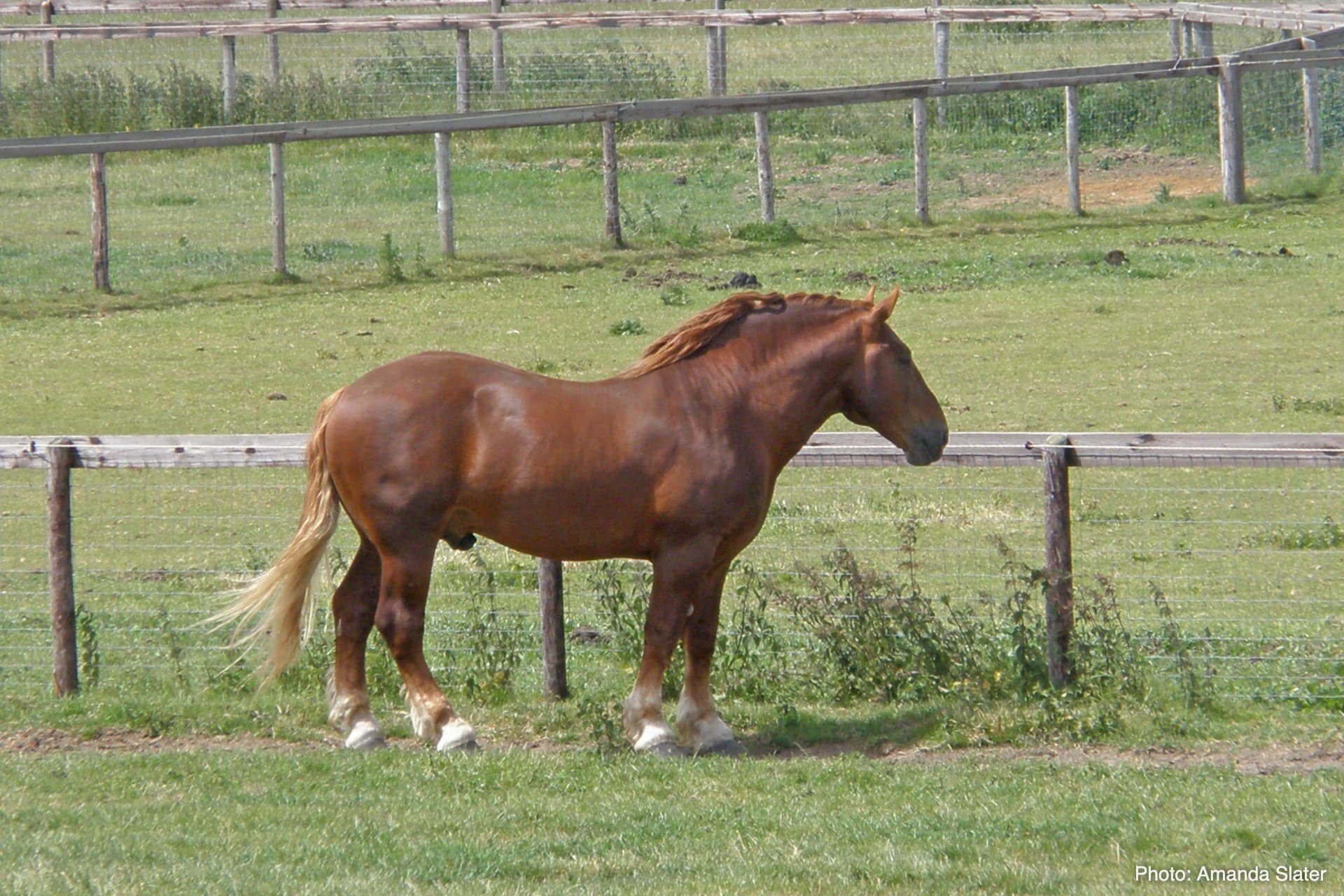
The Suffolk Punch
There is a horse in England that traces every registered individual to a single stallion foaled in 1768, near the market town of Woodbridge in Suffolk. His name is not recorded with certainty - he was known variously as Crisp’s Horse of Ufford and Horse of Thomas Crisp of Ufford - but every Suffolk Punch alive today descends from him.
Read more Read less
No other breed in the world can make that claim with such precision.
The Suffolk Punch is England’s oldest horse breed still maintained in pure form, and one of its most endangered. The breed has worked the heavy clay soils of East Anglia since at least the 16th century - there are references to Suffolk horses in 1506 - but the modern breed’s documented pedigree traces entirely to that single foundation sire of 1768, making the Suffolk’s recorded history the most genetically concentrated in British breeding.
The name tells you something about the horse. “Suffolk” for the county; “Punch” for the build - short, round, and powerful, with a broad barrel, short legs, and the low, deep chest that gives the horse its remarkable ability to dig in and pull. Unlike the Shire and Clydesdale, the Suffolk has no feathering at the lower legs - a practical adaptation for working in the wet, clay-heavy fields of East Anglia, where feathering collects mud and leads to skin conditions. The Suffolk is always chesnut - the breed uses the old spelling without the ‘t’ - in one of seven recognized shades from pale golden to dark liver. No other color occurs.
The Suffolk was bred for economy as much as power. East Anglian farmers needed a horse that could work all day on minimal rations, go out early, come home late, and be ready the next morning. The Suffolk obliged, and has always been considered one of the most willing and kind-natured of all draft breeds.
The breed’s near-extinction came with mechanization. By 1966, only nine registered mares remained in Britain. The Suffolk Horse Society, founded in 1877, has worked to reverse this decline, and today fewer than 300 breeding mares are registered globally. The breed has found some recovery through interest in horse-powered farming, forestry work, and conservation grazing, but the Rare Breeds Survival Trust continues to list it as “critical.”
A Suffolk Punch team in full work was once considered the finest sight in English agriculture. That there is anyone left to see it is the result of devoted work against considerable odds, and the survival of a lineage that stretches, in an unbroken documented line, to a horse foaled in Suffolk more than 250 years ago.
-

The Swedish Warmblood
The Swedish Warmblood was bred for the Swedish crown’s cavalry, and the royal studs that created it are still standing. At Flyinge, in the southern province of Skåne, horses have been bred since 1658, making it one of the oldest working studs in Europe.
Read more Read less
From the 17th century, Swedish studs at Flyinge, Strömsholm, and Ottenby crossed native mares with imported horses, at first mainly Spanish and Friesian, later from Denmark, England, France, Germany, Hungary, and beyond. In the late 19th and early 20th centuries, Arabian, Thoroughbred, Hanoverian, and especially Trakehner blood gave the horses more size, power, and consistency. A studbook was begun in 1874, and the Swedish Warmblood Association was founded in 1928.
The Swedish approach has always been practical and thorough. Stallions are approved only after performance evaluation, and the studbook accepts horses from other approved warmblood registries, so the breed continues to draw on the best of Europe while keeping its own character.
That character is what the Swedish Warmblood is best known for: a balanced, sensible temperament combined with correct conformation and fluid, ground-covering gaits. Swedish horses have long been successful in dressage, show jumping, and eventing, and the breed is equally valued as an all-round riding horse.
The Swedish Warmblood typically stands 16 to 17 hands and may be any solid color, with bay, brown, chestnut, and grey most common.
-
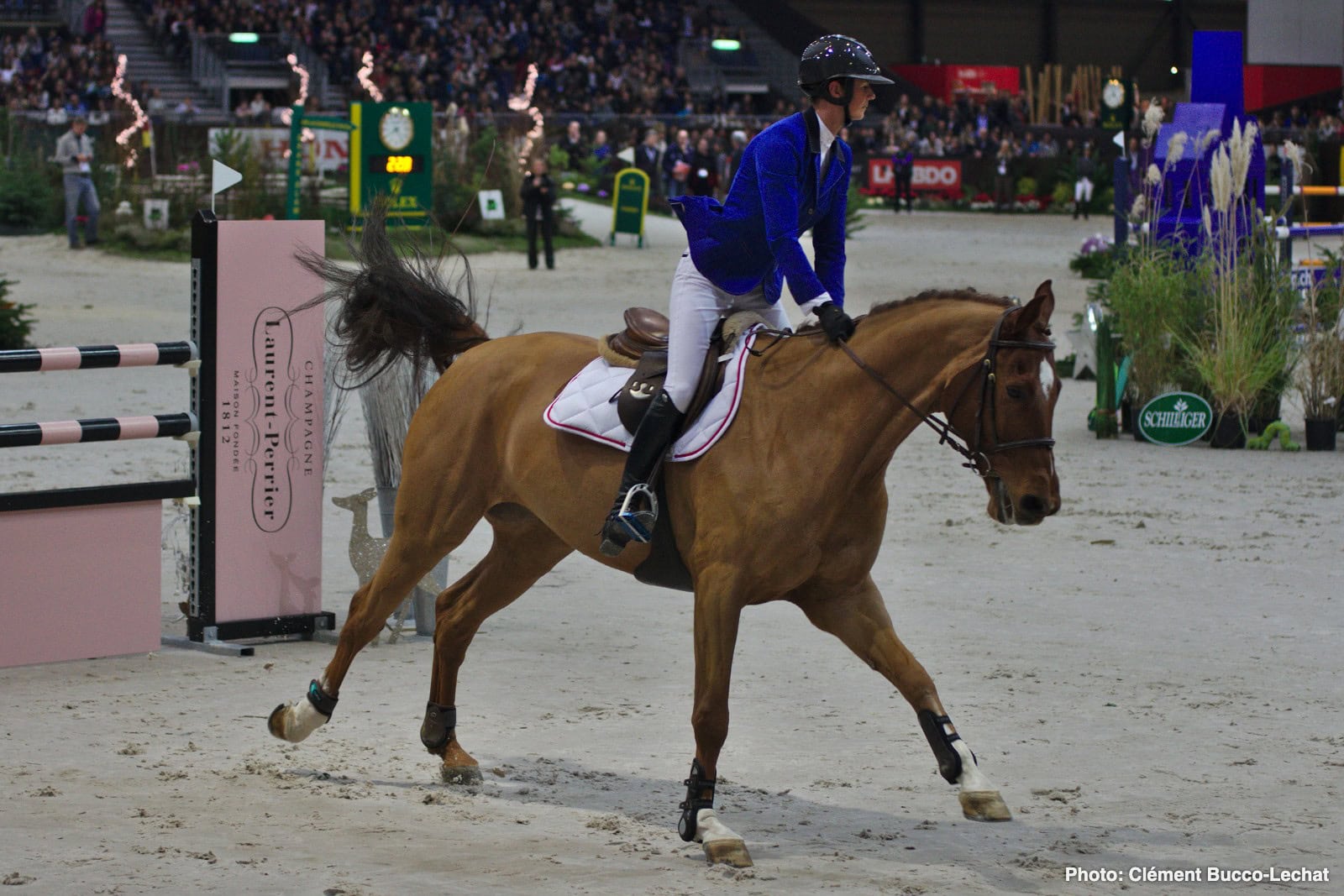
The Swiss Warmblood (Einsiedler)
For roughly a thousand years, Benedictine monks have bred horses at the Abbey of Einsiedeln, high in the Swiss canton of Schwyz. Their horse, the Einsiedler, also known as the Cavallo della Madonna, is the ancestor of the modern Swiss Warmblood, and the abbey still keeps a small herd of the traditional type today.
Horse breeding at Einsiedeln reaches back to the 11th century.
Read more Read less
The monks kept breeding records from 1655 and began a more detailed studbook in 1784, making theirs one of the oldest continuously documented horse lines in Europe. The Einsiedler was a sturdy, versatile riding and carriage horse, valued throughout Switzerland and beyond.
In the mid-20th century, Switzerland set out to build a modern sport horse. The Einsiedler was merged with the Swiss Halfblood and several local breeds to create the Swiss Warmblood, sometimes called the Neue Einsiedler. A studbook was started in 1950, and in the 1960s breeders introduced Anglo-Norman, Holsteiner, and Swedish Warmblood stallions. The Swiss National Stud at Avenches became the center of the breeding program.
The Swiss Warmblood is a refined, athletic horse bred for dressage, show jumping, and driving, and also prized as a calm, capable all-round riding horse. Most stand about 15.1 to 16.1 hands, and chestnut is the most common color, followed by bay.
With a population of only a few thousand, the Swiss Warmblood is small by European standards. But at Einsiedeln, where the monks still breed their horses beside one of the great pilgrimage churches of the Alps, its roots run deeper than almost any other sport horse.
-
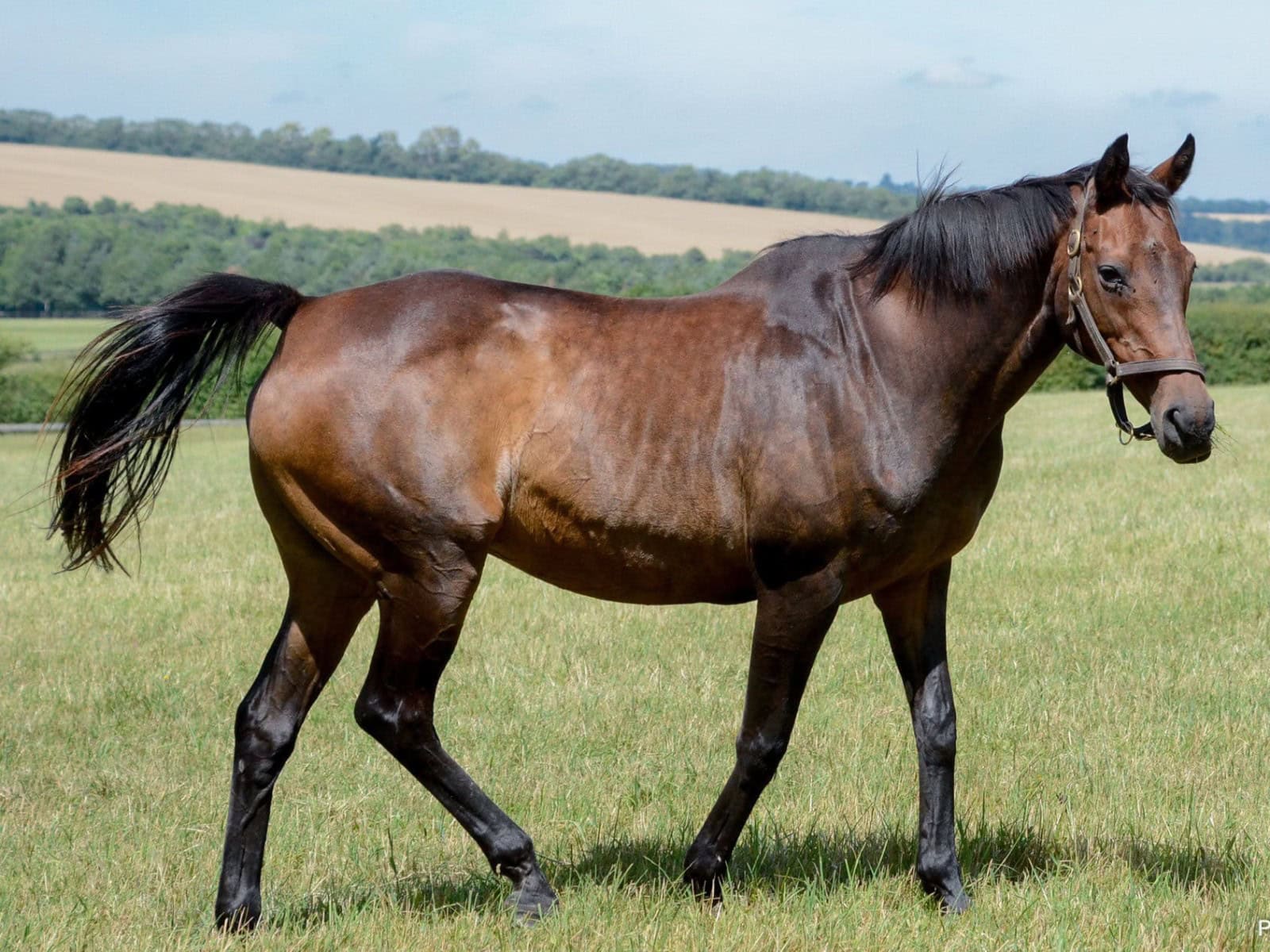
The Thoroughbred
Every Thoroughbred alive today traces to three stallions. The Byerley Turk arrived in England around 1689 as the war trophy of Captain Robert Byerley, who rode him at the Battle of the Boyne. The Darley Arabian arrived in 1704, shipped from Aleppo by Thomas Darley for his father’s estate in Yorkshire.
Read more Read less
The Godolphin Arabian arrived via Paris around 1729 and spent his career at the Godolphin stud in Cambridgeshire. None of them looked like much against the heavier English horses of their time. All of them changed the world.
The Thoroughbred emerged from the systematic crossing of these Eastern stallions with English mares over several generations, the result of a deliberate project by the English aristocracy to produce the fastest horse on earth for the specific purpose of wagering on it. Racing had been a feature of English court life since at least the time of James I, but the mid-17th century saw an explosion of organized racing, first at Newmarket and then across the country. The horses that won commanded extraordinary stud fees; the fortunes made and lost on them shaped the English aristocracy for generations.
The breed’s greatest early representative is still spoken of with reverence: Eclipse, foaled in 1764, the year of the total solar eclipse from which he took his name. Eclipse was undefeated in 18 races. He won so dominantly that crowds left the racecourse once he took the lead, knowing the result was settled. Approximately 80% of all Thoroughbreds today trace their male line to Eclipse alone.
The Thoroughbred’s athletic gifts - speed, stride length, lung capacity, and metabolic efficiency - have made it the foundation of virtually every modern sport horse breed. The Hanoverian, the Trakehner, the Selle Français, the Irish Sport Horse - all carry Thoroughbred blood in significant proportions. When warmblood breeders speak of “adding quality,” they mean adding Thoroughbred.
In pure racing, the breed continues to set records. Secretariat, who won the 1973 Belmont Stakes by 31 lengths in a time that has never been broken, ran his final quarter mile in 23 seconds flat at a distance where horses typically slow. His heart, examined post-mortem, weighed 22 pounds - approximately three times the normal equine weight.
The Thoroughbred stands 15.2 to 17 hands, lean and long-limbed with a deep girth, long shoulder, and the fine-boned legs that are simultaneously the source of its speed and its fragility. The Jockey Club, founded in 1750 at Newmarket, maintains the General Stud Book - the most comprehensive documented breeding history of any animal species in the world. In North America, The Jockey Club, founded in 1894, keeps The American Stud Book, the breed registry for all Thoroughbreds in the United States and Canada. From three stallions, every racehorse, every Olympic show jumper, and every warmblood champion carries a thread of the blood that arrived at English shores in the late 17th century.
-
The Tolfetano
The Tolfetano comes from the Tolfa Mountains, a range of wooded hills northwest of Rome in Lazio. Like the Maremmano to the north, it is the horse of the butteri, the mounted cattle herders who still work the semi-wild Maremmana cattle of the region.
The Tolfetano lived for centuries in semi-wild herds, ranging freely over the hills and developing great hardiness and sure-footedness.
Read more Read less
It was officially recognized as a breed in the late 20th century, and today breeders work to preserve its traditional type.
Tolfetano horses are still used for cattle work, and they are popular for trail riding and trekking in the hills of northern Lazio and southern Tuscany.
The Tolfetano is smaller than the Maremmano, usually about 14.2 to 15.1 hands, and is mostly bay, black, or grey. It is rugged, sure-footed, and steady.
-
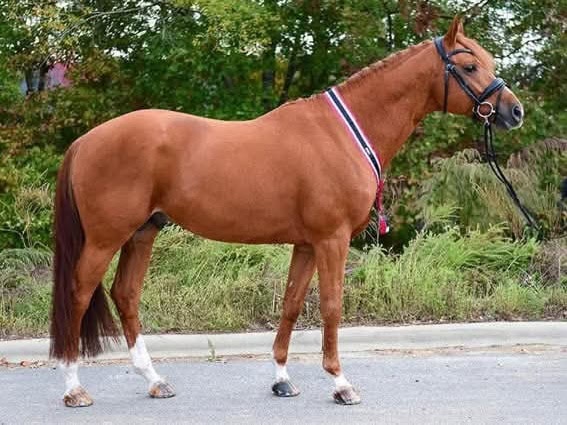
The Trakehner
There is a name in Trakehner history that horse people speak of with particular gravity: the Flucht nach Westen - the Flight to the West. In the winter of 1944-45, as Soviet forces advanced rapidly into East Prussia, the people of the Trakehnen region - where the royal Prussian stud had bred the finest horses in Germany for over two centuries - faced an impossible choice.
Read more Read less
The horses could not remain. And so they ran.
The Trakehnen stud was established in 1732 by Frederick William I of Prussia, who consolidated the wild horse reserves of East Prussia into a systematic breeding program in the Elchniederung marshes. Over 200 years, the stud produced horses of extraordinary refinement and athleticism - the basis of the German cavalry, the carriage horses of the Prussian court, and eventually some of the finest sport horses in Europe. The Trakehner’s quality came from its selective use of Thoroughbred and Arabian blood on a native East Prussian foundation, producing a warmblood of unusual lightness and sensitivity alongside great stamina.
When the Red Army began its winter offensive in January 1945, the civilian population of East Prussia - along with their horses - attempted to flee westward across frozen ground and brutal cold. Thousands of horses and refugees crossed the frozen Vistula Lagoon under artillery fire in temperatures of -20 degrees Celsius. Hundreds drowned when the ice broke. Of approximately 25,000 registered Trakehner horses in East Prussia at the war’s outset, fewer than 1,000 reached the safety of western Germany. Entire breeding lines were lost.
From those 1,000 survivors - dispersed across the chaos of post-war Germany, their registries destroyed, their pedigrees relying on the memories of breeders who had fled with nothing but their horses - the Trakehner breed was rebuilt. The Association of Breeders and Friends of the Warmblood Horse of Trakehner Origin was established in 1947, and the laborious work of confirming identities and reconstructing pedigrees began.
The result is one of the finest warmbloods in the world: a horse of exceptional quality, characterized by its floating, elastic movement, its sensitivity, and the quality that German breeders call Adel - nobility - that sets the Trakehner apart from heavier warmbloods. The breed stands 15.2 to 17 hands, lighter in frame than the Hanoverian, with a refined head and the gaits of a horse that carries its extraordinary history in every step.
The Trakehner’s brand - a double moose antler, the symbol of the East Prussian elk - is among the most recognized in European horse breeding. It is a mark that survived the war, the flight, and the destruction of the world that produced it, carried forward by horses and people who refused to let it disappear.
Photo credit: MacMillan Photography, courtesy of the American Trakehner Association. Premium Approved Stallion American Dream, bred and owned by Alayna Pastuck.
-
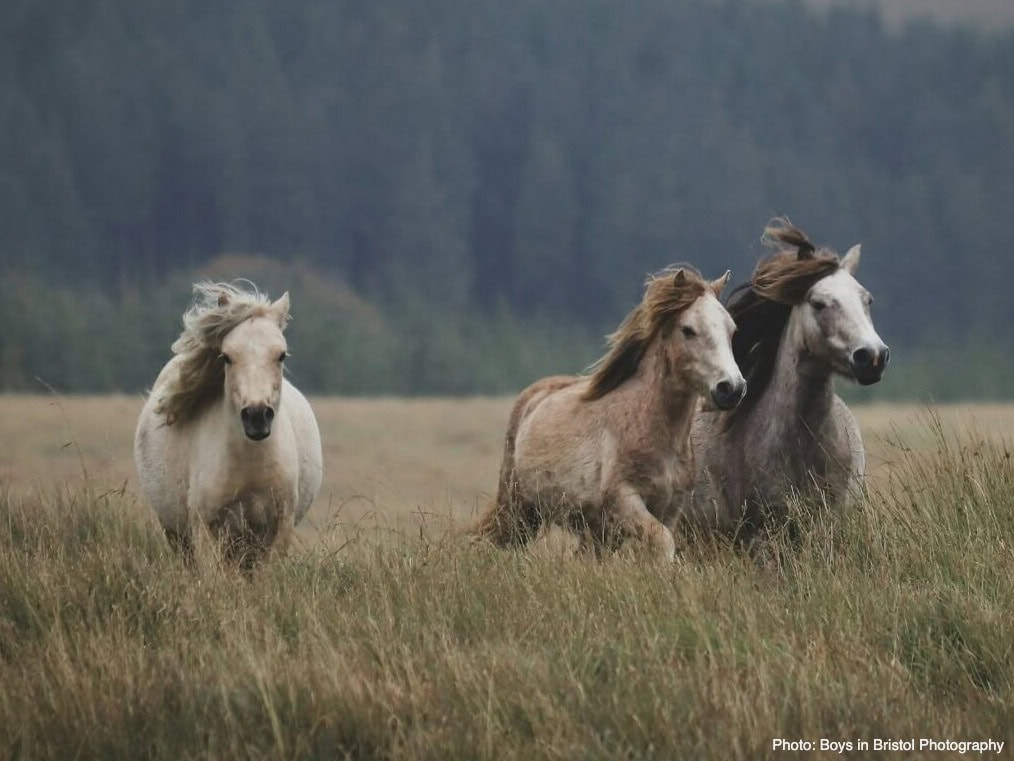
The Welsh Pony and Cob
Wales gave the world a family of horses, not a single breed. The Welsh Pony and Cob comes in four sections - A, B, C, and D - each distinct in size and type, but all carrying the same ancient mountain blood and the same quality that Welsh breeders have been refining for over a thousand years.
Read more Read less
The native horses of Wales are among the oldest in Britain. When Julius Caesar invaded Britain in 55 BC, he noted the small, tough horses of the mountain tribes of the west. The Romans, and later the Normans, introduced eastern blood to the Welsh stock, adding refinement without erasing the native hardiness. In the 16th century, Henry VIII ordered the destruction of all horses under 15 hands in an attempt to improve the English cavalry - the Welsh mountain pony survived, in part because the terrain of Wales made enforcement impractical.
The Welsh Mountain Pony - Section A, standing no more than 12 hands - is the foundation of the family and one of the most beautiful native breeds in the world. With a dished face, large eyes, and a naturally arched neck, the Section A has a refinement that belies its toughness; these ponies live semi-wild on the Brecon Beacons and Carneddau mountains. The Section B, slightly larger and somewhat more refined, is the riding pony of the family - perhaps the finest children’s competition pony in existence. The Section C, the Welsh Pony of Cob type, combines the native pony with the power of the Cob in a compact, versatile package. The Section D Welsh Cob, standing 13.2 hands and above with no upper height limit, is one of the great driving breeds of the world - powerful, active, and possessed of a trot so impressive that Welsh Cob stallions were historically trotted alongside prospective buyers to demonstrate their action.
The Welsh Pony and Cob Society, founded in 1901, maintains the oldest continuously published stud book for any native British breed. Today, Welsh ponies and cobs are bred on six continents, prized for their temperament, conformation, and extraordinary versatility across disciplines from mountain trail riding to international dressage.
-

The Westphalian
The Westphalian is the sport horse of Germany’s industrial heartland, bred in the rolling farmland of Westphalia between the Rhine and the Weser. It has produced some of the most decorated Olympic horses in history, and it is known among riders for something rarer than talent: a horse that amateurs can actually ride.
Read more Read less
The breed is inseparable from the State Stud at Warendorf, founded in 1826 to supply stallions to the Prussian provinces of Westphalia and the Rhineland. The first Westphalian studbook followed in 1888. For decades the region bred heavier farm and draft horses, but after the Second World War, as tractors replaced teams, breeders turned to the riding horse, adding Thoroughbred, Trakehner, and Hanoverian blood to refine their stock.
The results arrived on the world stage in the 1980s. The Westphalian Ahlerich won individual dressage gold at the 1984 Los Angeles Olympics. Rembrandt, ridden by Nicole Uphoff, won individual gold in 1988 and again in 1992. Westphalians have also ridden on gold-medal German teams in both dressage and show jumping.
The Westphalian usually stands 15.2 to 17.2 hands. The registry does not discriminate by color, though chestnut, bay, black, and grey are most common, and every horse carries the Westphalian brand on the left hip. Versatile, athletic, and even-tempered, it is a horse bred as much for the rider as for the medal podium.
-
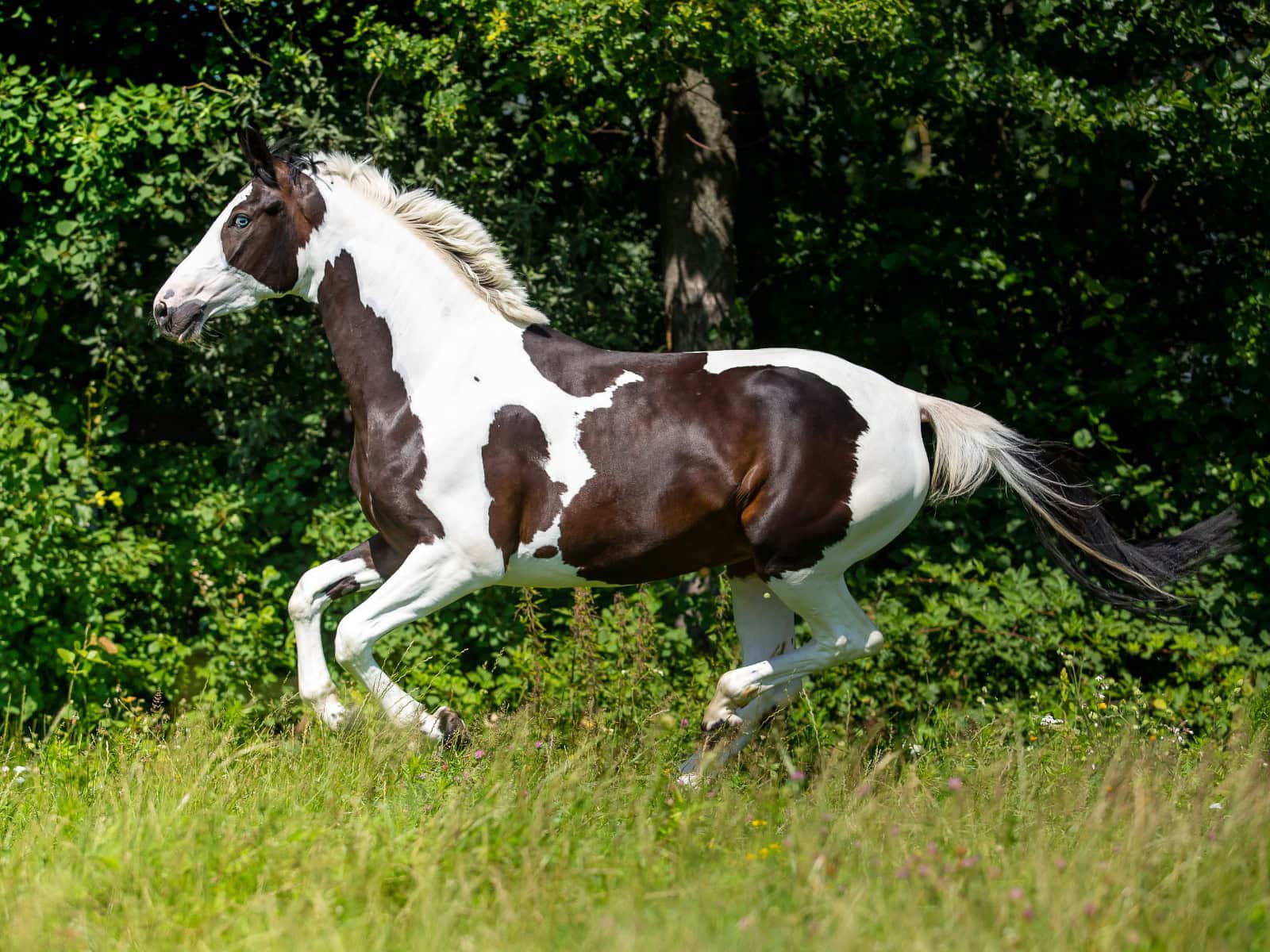
The Wielkopolski
The Wielkopolski is Poland’s sport horse, named for Greater Poland, the historic region around Poznań. It brought together several older Polish warmblood types that no longer exist as separate breeds, and the Wielkopolska Horse Studbook was established in 1965.
The breed was developed by refining the local horse population with East Prussian and Trakehner bloodlines and, to a lesser extent, other half-bred strains of both domestic and foreign origin.
Read more Read less
Thoroughbreds, purebred Arabians, and Anglo-Arabians also played a significant role in its creation and refinement.
Three older types went into the breed: the Poznań horse; the Masurian horse, largely descended from Trakehner and East Prussian stock and bred at Liski; and the West Pomeranian horse, derived from Hanoverian and East Prussian bloodlines. Breeding of the Poznań horse began at the Sieraków Stud Farm in 1829 and continued at studs such as Posadowo, Racot, and Gogolewo. Together they carried the legacy of the great East Prussian stud farms, and the Wielkopolski inherited their quality and stamina.
The breed has two lines: a lighter type for competitive riding and a heavier type for harness and general work. It competes in show jumping, eventing, and dressage, and Polish breeders continue to refine it with Thoroughbred and warmblood stallions.
The current breed standard calls for a height of 160 to 172 cm (about 15.3 to 16.3 hands), depending on sex, and all coat colors are permitted. The Wielkopolski is valued for its endurance, good temper, and versatility.
Photo credit: Polish Horse Breeders Association (PZHK) archives
Africa & the Middle East
-
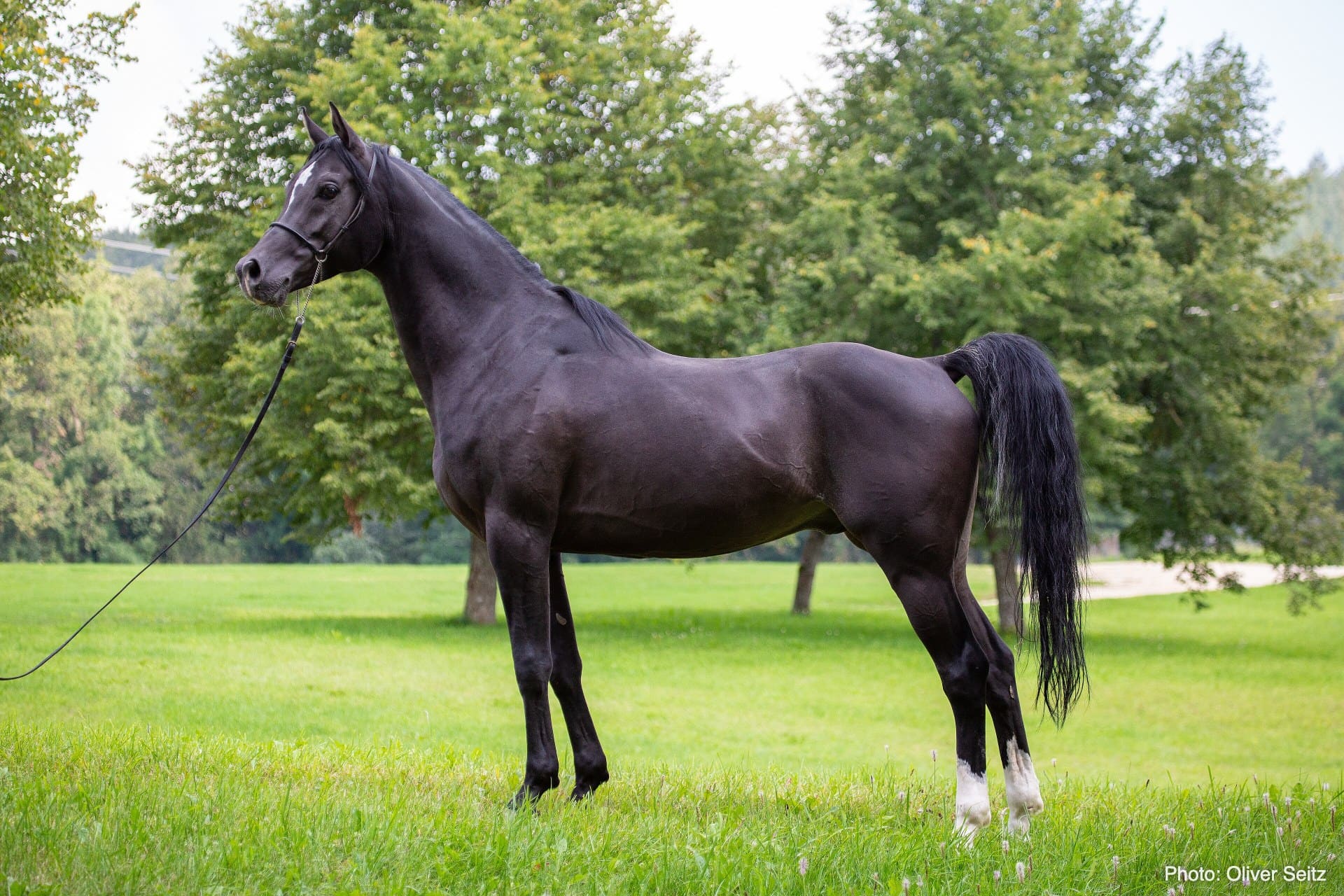
The Arabian
Every warm-blooded horse in the world carries Arabian blood. The Thoroughbred, the Standardbred, the Hanoverian, the Trakehner - all modern sport horses trace to the three foundation stallions imported to England in the late 17th and early 18th centuries, all of them Arabians or of closely related eastern blood.
Read more Read less
No other breed has done more to shape the equine world, and no other breed has been kept as pure, for as long, with as much deliberate care.
The Arabian horse developed in the desert of the Arabian Peninsula, bred by the Bedouin people over at least 2,500 years of meticulous selective breeding. The conditions of the desert - extreme heat, scarce water and forage, constant movement - produced a horse of extraordinary metabolic efficiency, capable of covering great distances on minimal resources. The Bedouin treated their finest mares as family members, sometimes sheltering them in their tents and feeding them dates when grazing was scarce. The pure mare, the asil, was considered so sacred that her bloodline could not be diluted with any outside blood.
The Prophet Muhammad commanded his followers in the 7th century to care for the Arabian horse as a gift from God, and Islamic culture elevated the breed to a position of spiritual as well as military importance. The great tribal confederacies of Arabia maintained complex oral pedigrees, tracing individual horses through dozens of generations, with the accuracy of those records a matter of tribal honor.
When Arabians reached Europe - through the Moorish conquest of Spain, through the Crusades, and through the deliberate importations of the 17th and 18th centuries - their effect on European breeds was transformative. The Byerley Turk, the Darley Arabian, and the Godolphin Arabian, three stallions standing in England between 1689 and 1724, became the foundation sires of the entire Thoroughbred breed. Every Thoroughbred alive today traces to all three.
The Arabian stands 14.1 to 15.1 hands, fine-boned and compact with the characteristic dished face, large nostrils, and enormous dark eyes. The skin is always black beneath the coat, regardless of color. The breed carries one fewer vertebra and two fewer ribs than most horses - an anatomical difference so consistent it is used for breed verification.
In endurance riding - the discipline that most closely mirrors the demands of desert travel - the Arabian dominates world competition so thoroughly that other breeds compete in separate categories.
-
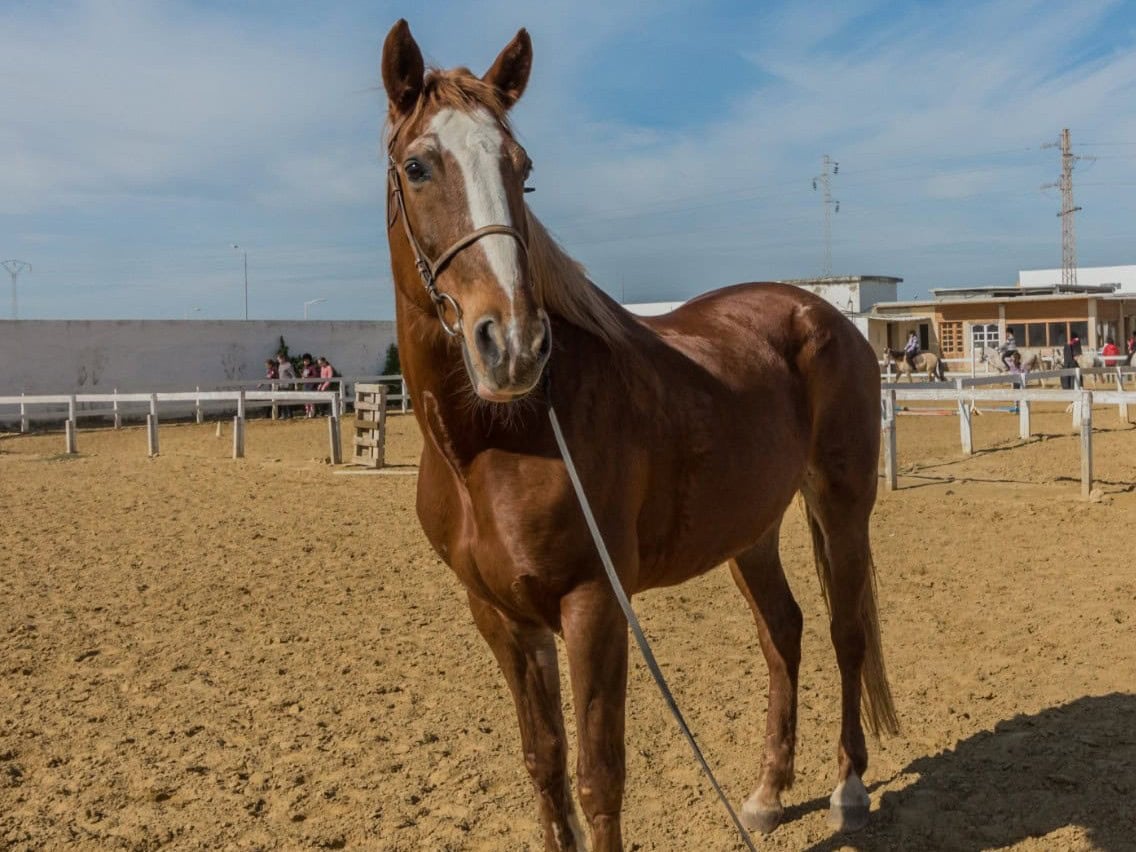
The Barb
Long before the Arabian was known in Europe, before the great warmbloods of Germany were conceived, before any of the sport horse lineages that dominate modern equestrian competition had been established, the horses of the Barbary Coast were already shaping the equine world. The Barb - from the Berber tribes of North Africa, across Morocco, Algeria, Tunisia, and Libya - is one of the oldest horse breeds in existence, and one of the least celebrated given its influence.
Read more Read less
The Barb is not the Arabian, and it is not the Andalusian, though it contributed significantly to both. It is a distinctly North African horse, shaped by the Sahara and the Atlas Mountains rather than the Arabian Desert - a land of different demands, different conditions, and a different cultural relationship between horse and human. The Berber peoples of North Africa were among the finest horsemen in the ancient world, and the Barb was their instrument.
The breed’s origins predate recorded history. Rock carvings in the Sahara depict horses that match the Barb’s conformation dating to 2000 BC and earlier. The Roman cavalry in North Africa mounted Barbs. The Vandals who crossed into Iberia in 409 AD brought them. And in 711 AD, when Tariq ibn Ziyad led the Moorish forces across the Strait of Gibraltar into Iberia, the Barb crossed with them - and what followed was a transformation of the entire Western equine world.
The crossing of the Barb with native Iberian horses produced the foundation stock from which the Andalusian and Lusitano were developed. Those breeds in turn shaped the Spanish Jennet, the colonial horses of the Americas, and the European Baroque breeds. The Barb’s contribution to world horse breeding, delivered through this sequence, is almost immeasurable - yet the Barb itself remains largely outside the public consciousness.
The Barb is physically distinct from the Arabian. Where the Arabian has a dished face and a high-set tail carried aloft, the Barb has a convex or straight profile and a lower-set tail. The hindquarters slope slightly. These physical characteristics - the convex profile, the sloped croup - appear in the Andalusian and Lusitano, evidence of the Barb’s direct contribution to those breeds.
The breed stands 14.2 to 15.2 hands, lean and hardy, with excellent hooves and the endurance of an animal that evolved to cover long distances on sparse grazing. It is still used in Morocco and Algeria in the Fantasia - the spectacular ceremonial horseback display in which riders charge at full gallop and fire muskets in synchronized volleys - one of the last living expressions of a horse culture that once shaped the military history of two continents.
The World Barb Horse Association works to preserve pure Barb bloodlines as dilution by Arabian crossbreeding accelerates across North Africa. The horse that shaped the West is, in its own homeland, slowly disappearing.
-
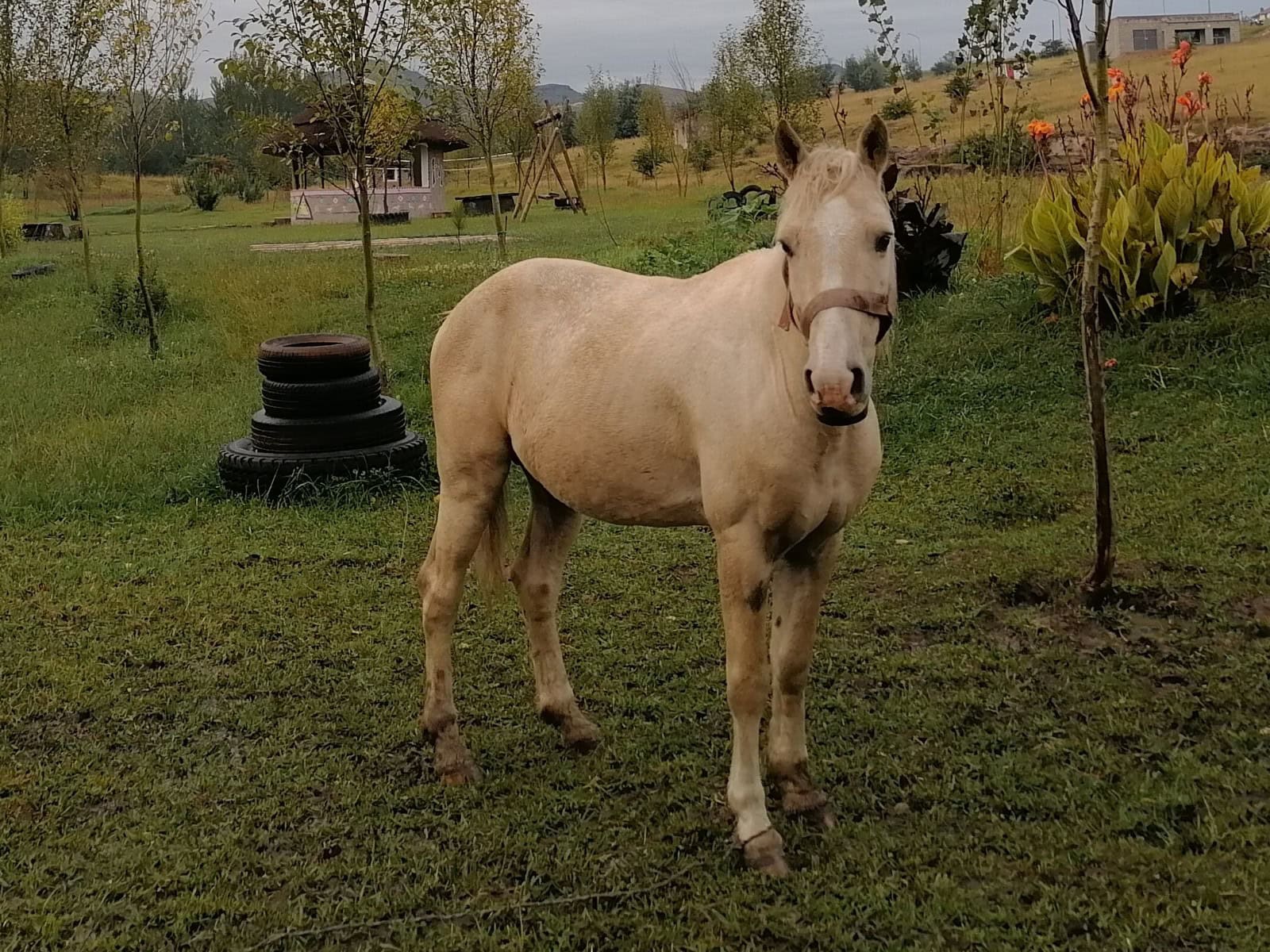
The Basotho Pony
In the mountain kingdom of Lesotho, where villages sit high above the valleys and roads are few, the Basotho pony has been the main means of transport for nearly two centuries. Wrapped in their famous woolen blankets, Basotho horsemen ride these sure-footed ponies over steep, rocky trails that no vehicle can manage.
Read more Read less
The Basotho pony descends from Cape horses brought into the mountains in the early 19th century, when King Moshoeshoe I and his people acquired horses through trade and raiding. Generations of life in the harsh highlands shaped a small, tough, sure-footed pony with great stamina. Basotho ponies were in demand as war ponies in the Anglo-Boer War, and so many were exported that the breed’s quality declined.
In the 1970s, Lesotho established a national stud to restore and protect the breed. Today the Basotho pony remains essential to rural life, carrying people, goods, and supplies, and it is the horse of the country’s pony-trekking routes through some of the most spectacular mountain scenery in Africa.
The Basotho pony stands about 14 to 14.2 hands and is usually bay, brown, grey, or chestnut. It is famous for its sure-footedness on mountain paths, its hardiness, and its calm, willing nature.
Photo credit: Nakengtsapoho / Wikimedia Commons (CC0)
-
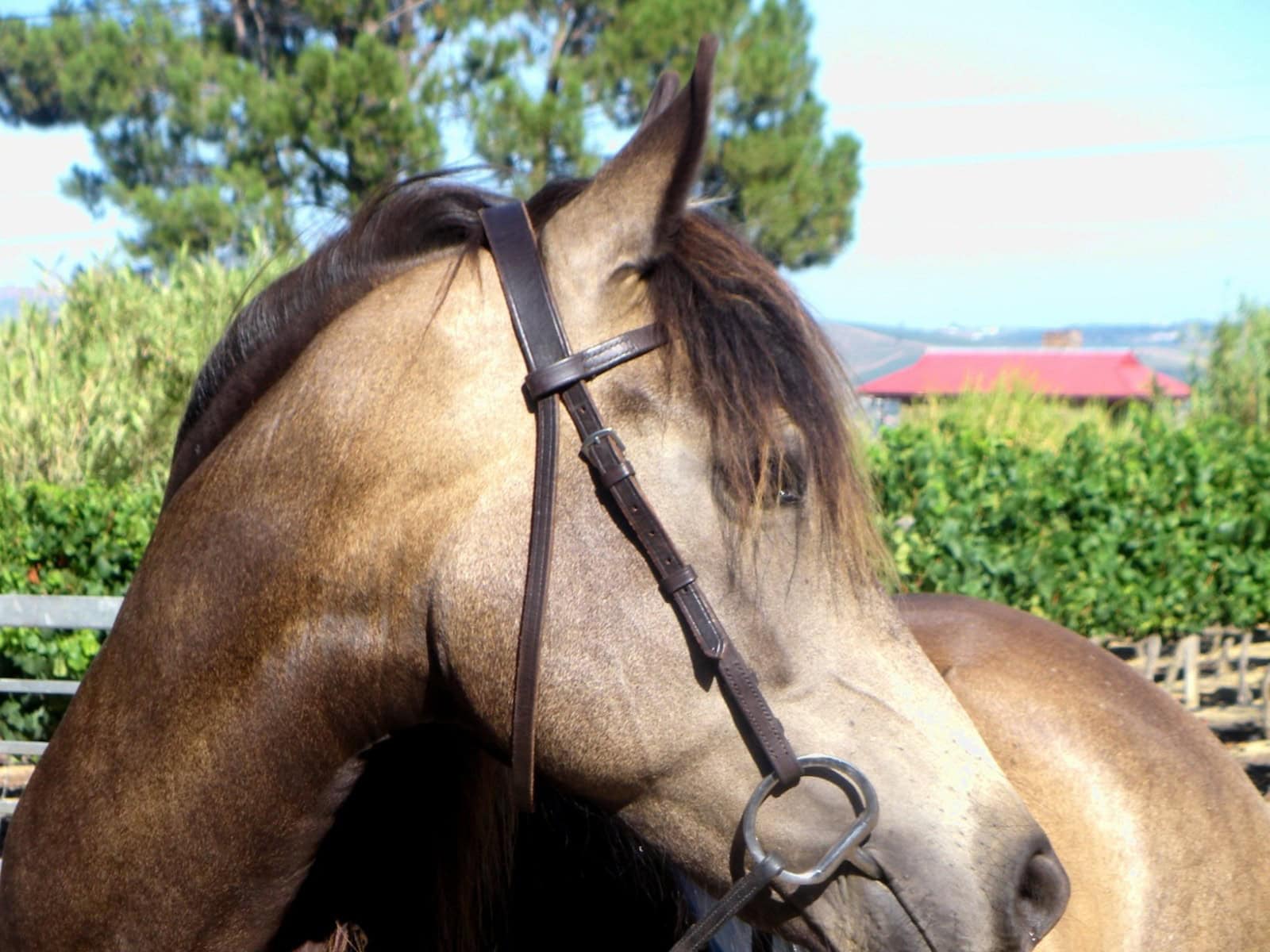
The Boerperd
The Boerperd, or “farmer’s horse,” is South Africa’s own breed, descended from the horses that arrived at the Cape in the 17th century. The first horses were landed at the Cape by the Dutch East India Company in 1653, brought from Java, and the colony’s stock was later improved with Arabian, Barb, Spanish, and Thoroughbred blood.
Read more Read less
The Cape horse that resulted was tough, sure-footed, and enduring, and it moved inland with the Voortrekkers on the Great Trek in the 1830s. In the Anglo-Boer War of 1899 to 1902, Boer commandos relied on these hardy horses, and their mobility on horseback became legendary. Many horses were lost in the war, and breeders later worked to recover the old type. A breed society was formed in the 1970s.
The modern Boerperd is a versatile riding horse, used for farm work, endurance, trail riding, and showing. Some carry a smooth extra gait inherited from their Cape ancestors.
The Boerperd usually stands 14.2 to 15.3 hands and comes in many colors. It is known for its endurance, intelligence, and calm temperament, and it is a fine horse for exploring South Africa’s mountains and farmland.
Photo credit: JCBrand / Wikimedia Commons (CC BY-SA 3.0)
-
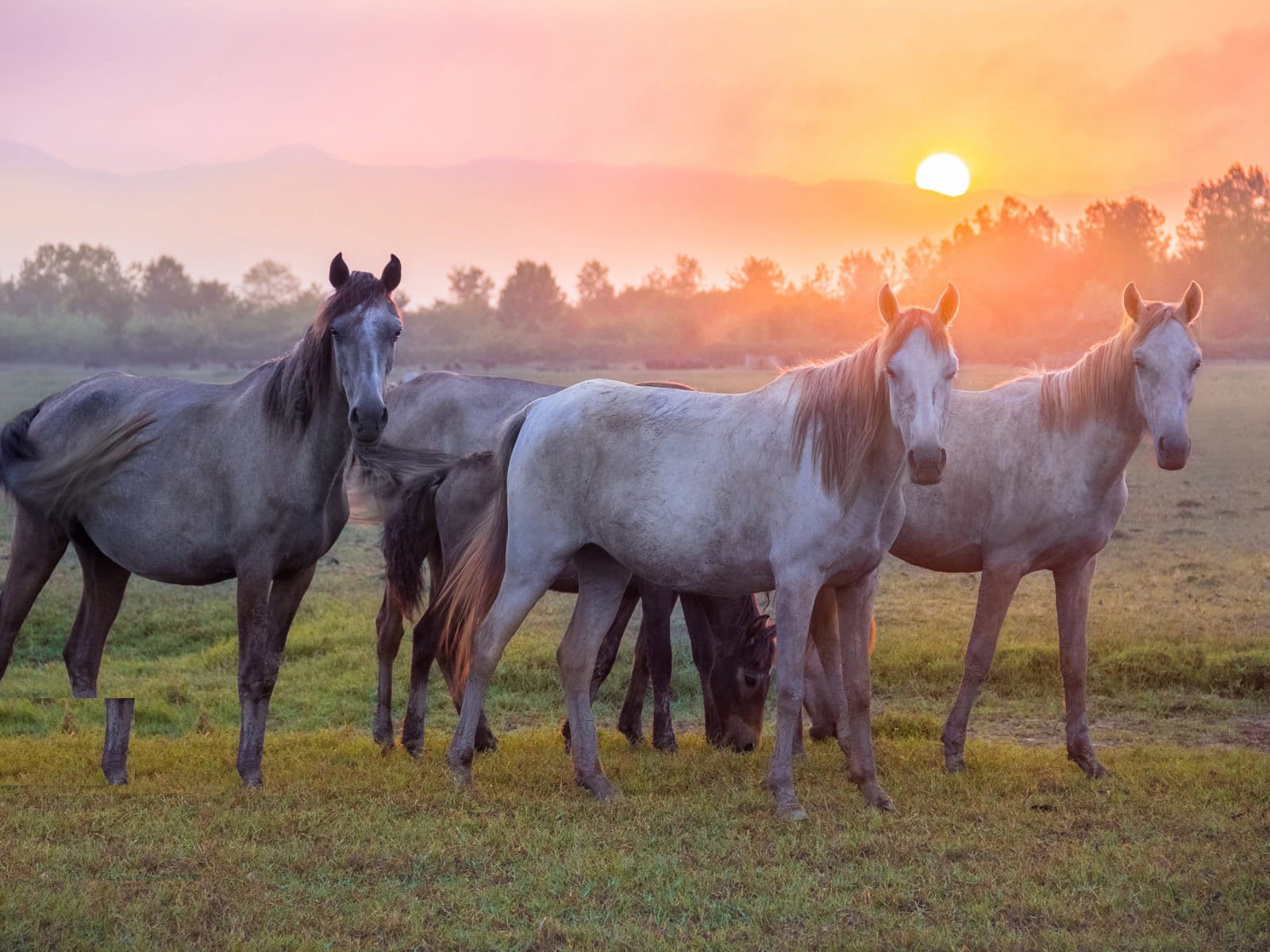
The Caspian
Critically endangered
In 1965, an American-born horsewoman named Louise Firouz went looking for ponies for a riding school in Tehran. In the remote villages near the Caspian Sea in northern Iran, she found tiny, elegant horses pulling carts, and she came to believe they were survivors of an ancient breed.
The Caspian is often compared to the small horses depicted in ancient Persian art, including the seal of Darius the Great.
Read more Read less
Though small enough to be called a pony, it has the proportions, gaits, and character of a horse.
Firouz began a breeding program, and Caspians were exported to Britain and elsewhere. Political turmoil in Iran later disrupted breeding, and the breed remains rare, maintained by dedicated societies around the world.
The Caspian stands about 10 to 12.2 hands, usually bay, grey, or chestnut. It is intelligent, gentle, and athletic, an excellent jumper and driving pony for children.
Photo credit: Esmail Golshan Mojdehi / Wikimedia Commons (CC BY-SA 3.0)
-
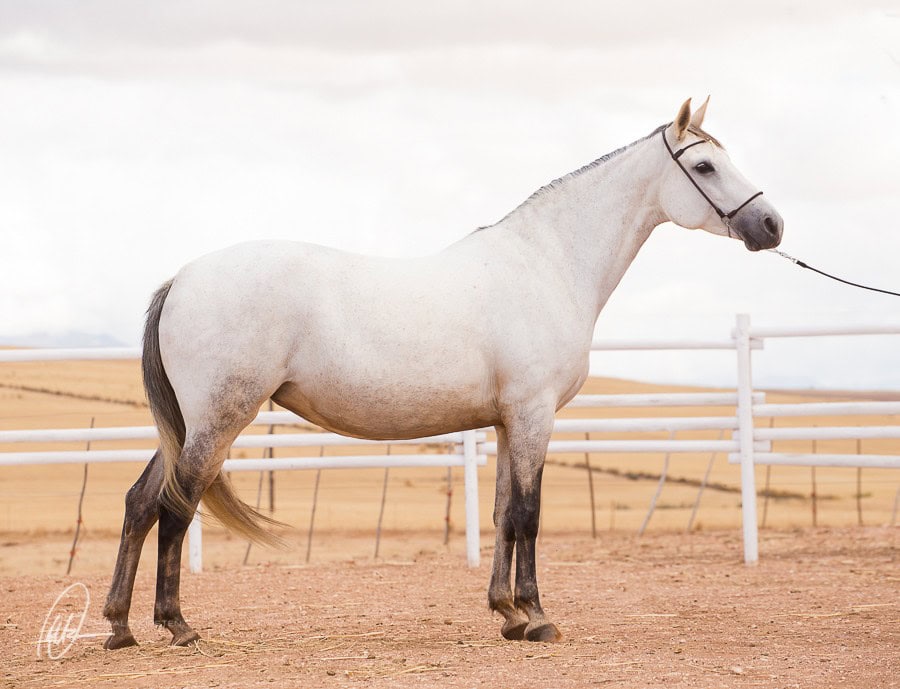
The Nooitgedacht
The Nooitgedacht is a South African pony with a conservation story. In 1951, the South African Department of Agriculture began a breeding program at the Nooitgedacht research station, near Ermelo in Mpumalanga, to save the hardy Basotho pony type from disappearing.
The Nooitgedacht’s closest ancestor is the legendary Cape Horse, which was exported to near extinction during colonial times, to the Crimea, Australia, and other British colonies.
Read more Read less
Breeders selected for the qualities that made the old Basotho pony so valued: hardiness, sure-footedness, and endurance, combined with good conformation and a sensible temperament. The Nooitgedacht was recognized as a breed in 1976, and a breeders’ society now oversees it.
Unlike other breeds, the Nooitgedacht has a very stringent inspection process, and temperament is one of the disqualifying traits. Breeders select for the all-terrain vehicle of horse breeds: a horse with an affinity for humans and excellent trainability. Thanks to their Arabian ancestry, Nooitgedachts also have exceptional resting heart rates and endurance on par with the Arabian, even without the Arabian’s top speed.
The Nooitgedacht is not a flashy mover, but it is super comfortable to ride and covers ground over difficult terrain second to none. It has cow sense and is a favorite with stock farmers and game rangers. Today it is used for endurance, trail riding, and as a family and children’s horse, and some carry a natural extra gait.
The breed standard includes ponies bigger than 13.2 hands and horses shorter than 16.1 hands. However, the bulk of the population usually stands between 14.2 and 15.2 hands and is most often grey, bay, or chestnut. It is hardy, gentle, and intelligent.
Photo credit: Maret van Rensburg, Karorado Stud
Asia
-
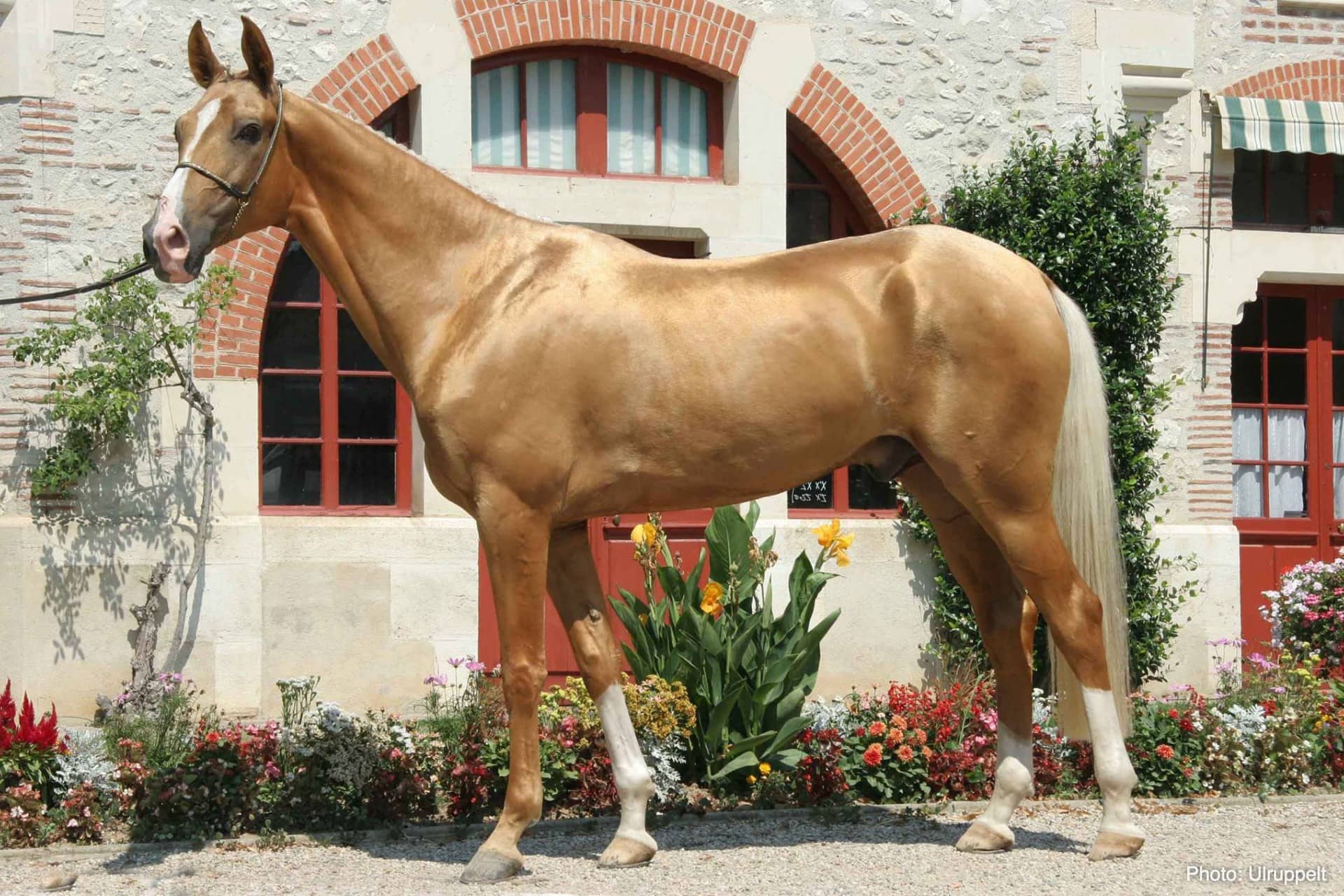
The Akhal-Teke
If you have never seen an Akhal-Teke in the sunlight, you may not fully believe what you are about to read. The breed’s coat carries a metallic sheen - a structural adaptation of the hair shaft that causes light to reflect in a way unlike any other animal, giving a golden or silver dun Akhal-Teke the appearance of a horse cast in liquid metal.
Read more Read less
In Turkmenistan, they are called “Heavenly Horses” or “Horses of Gold.” The description, for once, is not an exaggeration.
The Akhal-Teke is one of the oldest and rarest horse breeds in the world, bred for at least 3,000 years by the Teke tribe of Turkmenistan in the harsh desert environment of the Karakum. The same selective pressures that shaped the Arabian shaped the Akhal-Teke: extreme heat, minimal water, long distances. But where the Arabian was bred by nomadic herders across the entire Peninsula, the Akhal-Teke was developed by a single tribe in a single oasis, producing a breed of extraordinary consistency and genetic purity.
The horse’s most famous historical appearance is in the Chinese imperial records of the Han Dynasty (206 BC-220 AD), where the Emperor Wu launched military campaigns into Central Asia specifically to acquire what the Chinese called “Ferghana horses” or “blood-sweating heavenly horses” - horses with the metallic coat and extraordinary speed of the Akhal-Teke. The “blood-sweating” quality is now thought to be related to the horses’ fine skin and sparse coat that gives the impression of blood mixing with sweat after exertion.
In 1935, a group of Turkmen riders completed a legendary 4,300-kilometer trek from Ashgabat to Moscow to demonstrate the breed’s endurance to the Soviet government. The journey took 84 days, including three days crossing the Karakum desert with no water. It remains one of the great feats of equine endurance in recorded history.
The Akhal-Teke stands 14.2 to 16 hands, long and lean with a characteristically narrow build, long neck, and the fine, almost translucent skin of the desert horse. World population is estimated at fewer than 10,000, with the largest population in Turkmenistan, where the horse is depicted on the national coat of arms.
-
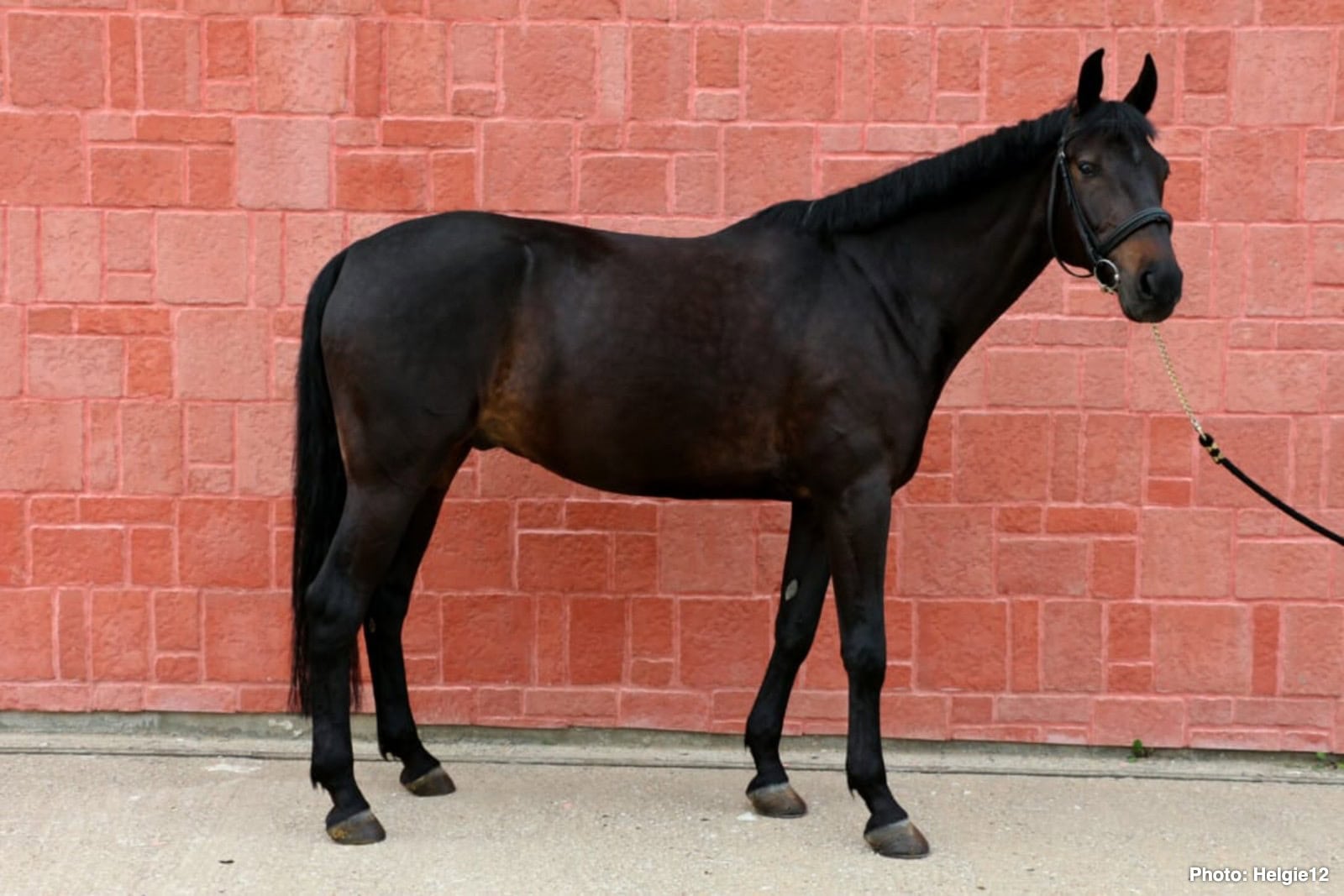
The Kabardin
The Kabardin is the mountain horse of the North Caucasus, bred for centuries by the Kabardian and Circassian peoples in the shadow of Mount Elbrus, Europe’s highest peak.
Bred for travel and fighting in the mountains, the Kabardin became famous for its endurance, sure-footedness, and ability to find its way in fog and darkness.
Read more Read less
It served as a cavalry horse in Russia’s armies, and in the 20th century, studs in the Caucasus refined the breed while keeping its mountain character. Some Kabardins have a natural ambling gait.
Today the Kabardin is used for mountain trekking, endurance, and working livestock, and it is the horse of riding expeditions around Elbrus.
The Kabardin usually stands about 15 to 15.2 hands and is most often bay, dark bay, or black. It is tough, calm, and remarkably agile in rough country.
-
The Kathiawari
On the Kathiawar Peninsula of Gujarat, in western India - where the Arabian Sea curves into the Gulf of Khambhat and the dry thorn forests give way to the salt marshes of the Rann of Kutch - the Kathi people bred a horse that shares one of its most distinctive features with its close Indian cousin, the Marwari: ears that curve inward at the tips until they nearly touch, rotating on their axis to catch sounds before the rider can hear them.
Read more Read less
The Kathiawari and the Marwari are related breeds, developed in neighboring regions by neighboring warrior cultures, and they share the inward-curving ear that is unique to Indian horses. But where the Marwari was shaped by the Rajputs of the desert kingdom of Marwar, the Kathiawari was shaped by the Kathi people of Kathiawar - a pastoral and warrior community for whom the horse was an instrument of both agriculture and combat, worked from the land and trained for the battlefield with equal intensity.
The breed’s origins predate the Mughal period, drawing on the native horses that inhabited the subcontinent long before any recorded breeding program. Arab influence arrived with the Mughal invasions of the early 16th century, introducing the refinement and desert constitution of the Arabian into the native Indian stock. The resulting horse combined the endurance and hardiness of the native Indian type with the Arabian’s speed and sensitivity - well suited to the varied terrain of the Kathiawar Peninsula.
The Kathiawari served in the cavalry of the Maratha Confederacy - the great 18th-century Indian empire that at its height controlled much of the subcontinent - and later in the Indian Army under British administration, until the First World War effectively ended the era of cavalry in modern warfare. Like the Marwari, the breed suffered severely under British colonial policy, which favored imported European breeds, and the dismantling of the princely states after independence removed the patronage that had sustained it.
The horse stands 14.2 to 15 hands and comes in all colors except black - chestnut, bay, gray, dun, and roan are most common. The characteristic ears curve inward to touch or nearly touch at the tips, and the head is narrow and expressive, with large nostrils and the alert, mobile eye of a horse bred for vigilance. The action is lively and comfortable, often with a natural ambling gait that makes the Kathiawari pleasant to ride over long distances.
Today the breed is used for riding, harness work, and tent-pegging - the traditional equestrian sport of South Asia in which riders at speed lean from the saddle to peg targets in the ground - and as a police horse in several Indian states. In the festivals and sporting events of Gujarat, beautifully turned-out Kathiawaris still parade and perform, the continuity of a horse culture that is thousands of years old remaining visible and alive.
-
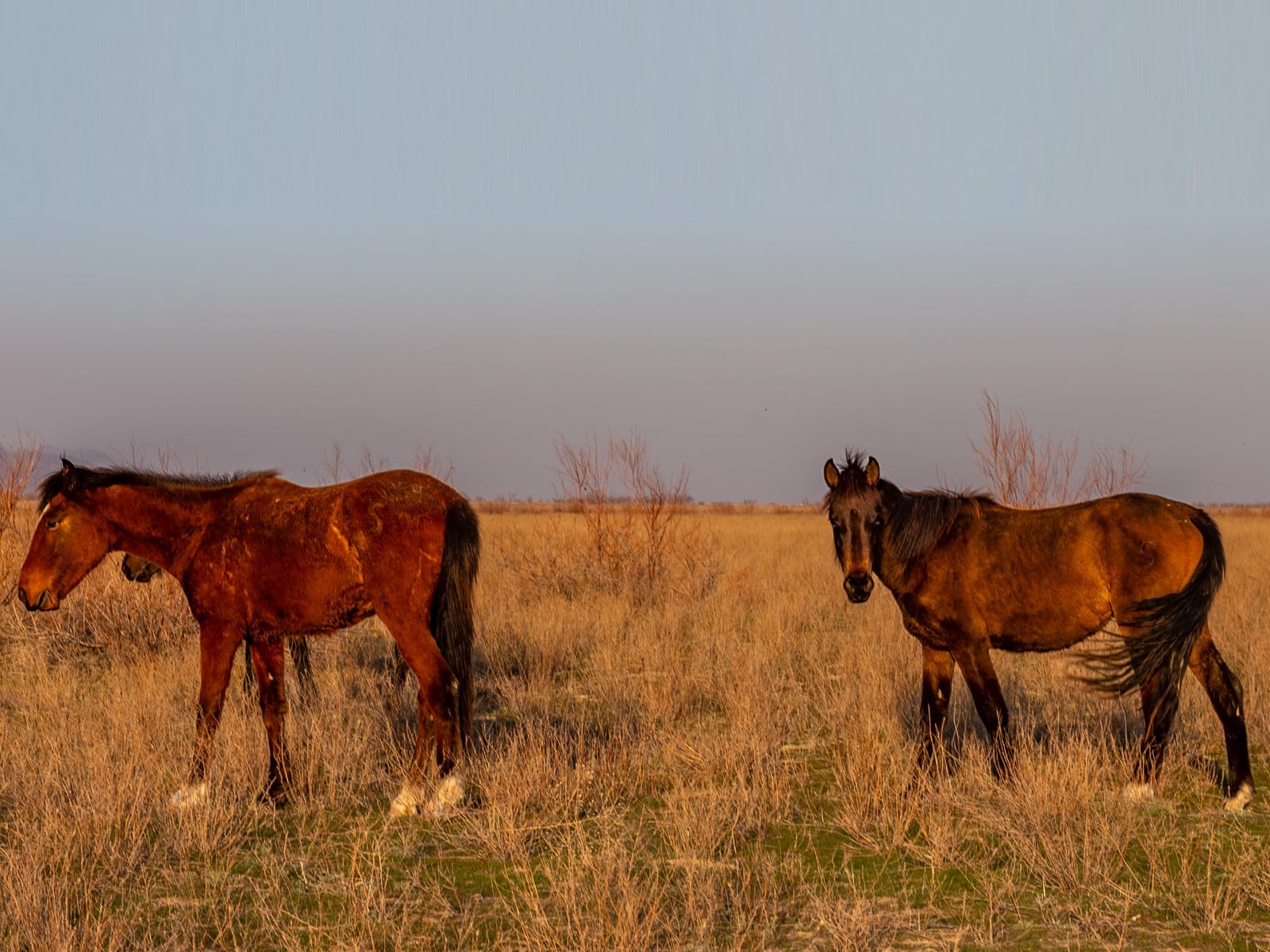
The Kazakh Horse
The steppes of Kazakhstan may be where people first rode and milked horses. At Botai, in the north of the country, archaeologists have found evidence of horse herding and mare’s milk dating back more than 5,000 years.
The Kazakh horse is a direct heir to that tradition. Kazakh nomads bred small, tough horses that could live outdoors year-round, grazing through the snow on the open steppe.
Read more Read less
Horses provided transport, milk for kumis, the fermented drink of the steppe, and a central place in Kazakh culture.
Traditional horse games remain hugely popular, including kokpar, a rough-and-tumble team game played on horseback, and long-distance races across the steppe. Kazakh horses are also the mounts of riding treks in the mountains and steppe.
The Kazakh horse stands about 13.2 to 14.2 hands and comes in many colors, often bay, chestnut, or grey. It is extremely hardy, enduring, and well adapted to harsh conditions.
Photo credit: Nikolai Bulykin / Wikimedia Commons (CC BY-SA 4.0)
-
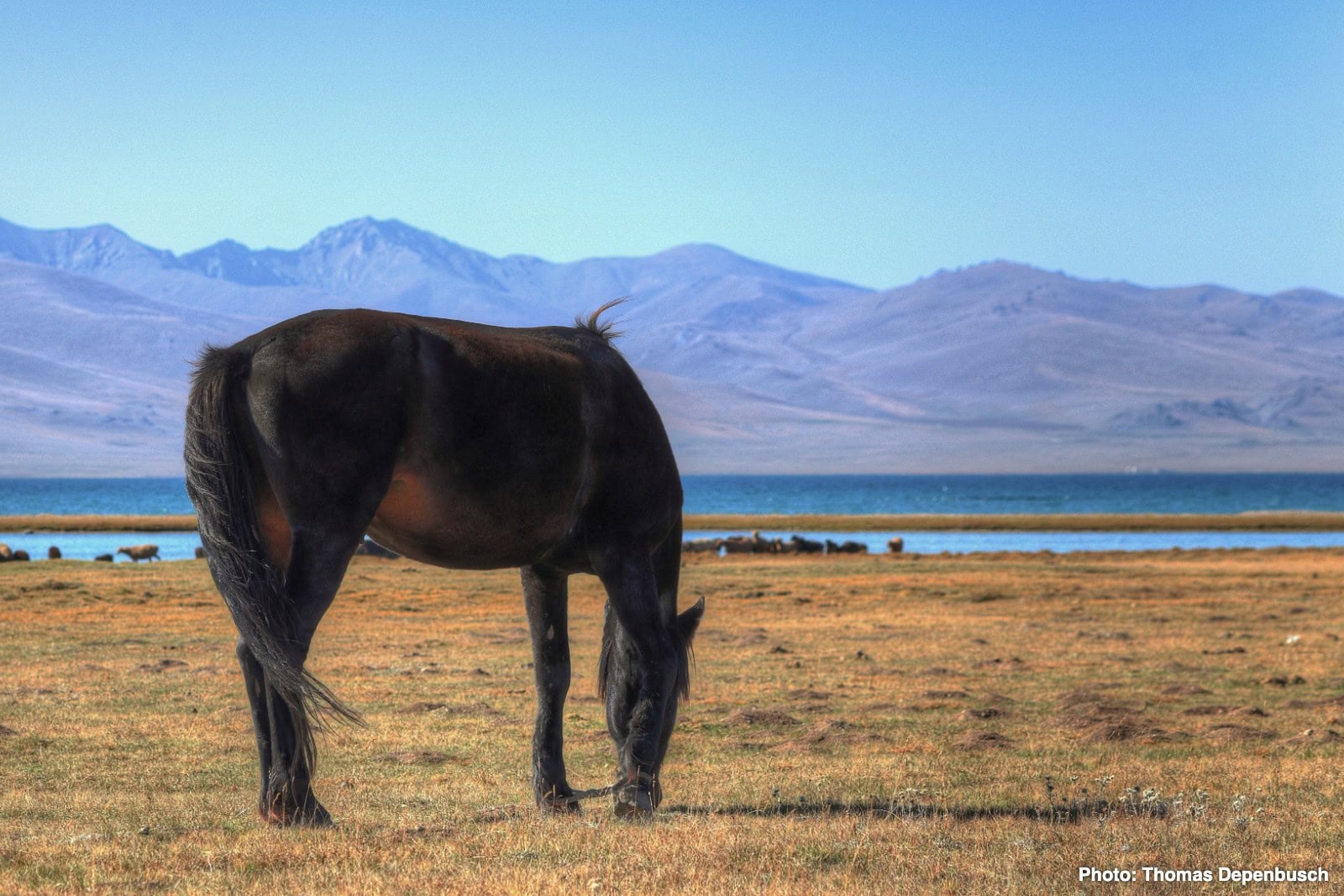
The Kyrgyz Horse
In the Tian Shan mountains of Kyrgyzstan, the horse is the center of nomadic life. Families still move their herds to high summer pastures, or jailoo, where they live in yurts beside alpine lakes such as Song-Kul.
The traditional Kyrgyz horse is small, strong, and sure-footed, bred for mountain travel at high altitude.
Read more Read less
In the Soviet era, breeders crossed it with the Thoroughbred and the Don to produce the larger Novokirgiz, or New Kyrgyz, horse, and the pure traditional type became rare. Efforts are now under way to preserve it.
Horse games are a vital part of Kyrgyz culture. The best known is kok-boru, a fast and fierce team game played with a goat carcass, showcased at the World Nomad Games, which Kyrgyzstan hosted in 2014, 2016, and 2018.
The Kyrgyz horse usually stands about 13 to 14.2 hands and comes in many colors. It is tough, enduring, and agile on steep mountain trails, the ideal horse for treks through the Tian Shan.
-
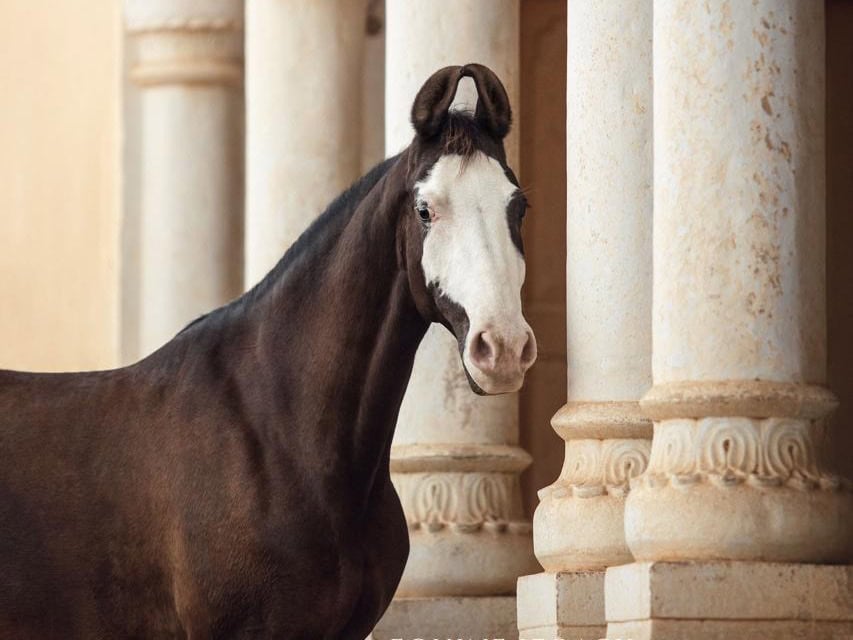
The Marwari
Endangered
The Marwari’s ears are unmistakable. They curve inward at the tips until they nearly touch - a conformation unique to the breed, found nowhere else in the equine world, and prized by its breeders for centuries as a mark of purity. In battle, the ears were said to act as a natural radar, rotating and locking onto sounds before the rider could detect them.
Read more Read less
Whether this is physiologically accurate matters less than what it reveals about how the Marwari was regarded: not simply as a horse, but as a partner whose senses extended beyond the human.
The Marwari originates in the Marwar region of Rajasthan, in northwestern India, bred by the Rathore clan of Rajput warriors over at least eight centuries of meticulous selection. The Rathores, forcibly displaced from their original kingdom in 1193, retreated into the Thar Desert and spent the following centuries rebuilding their power on horseback. Their horses were their most strategic asset - bred for endurance in the desert, speed in battle, and an extraordinary courage and loyalty to their riders.
Marwaris were reputed to carry fallen riders to safety. They were said to refuse to leave a battlefield without their owner. Whether literal or legendary, these stories reflect the intimacy of the Rajput warrior-horse relationship - an animal selected not only for physical capability but for a specific quality of character that went beyond obedience.
British colonial rule nearly ended the Marwari. The British preferred other breeds and actively discouraged the Marwari’s use, and with independence and the dismantling of the princely states in the 1950s, the great Rajput families that had bred the horses lost their lands and their means. By 1997, the estimated global population had fallen to approximately 500.
The recovery was led by Francesca Kelly, a British horsewoman who founded Marwari Bloodlines in 1995, and Raghuvendra Singh Dundlod, a Rajput descendant who helped establish the Indigenous Horse Society of India. Today, approximately 42,000 Marwaris are registered. The breed is experiencing a renaissance - in India’s luxury heritage travel industry, in ceremonial riding, and among classical riding enthusiasts who have discovered that the Marwari’s natural collection and lateral movement make it a remarkable dressage prospect.
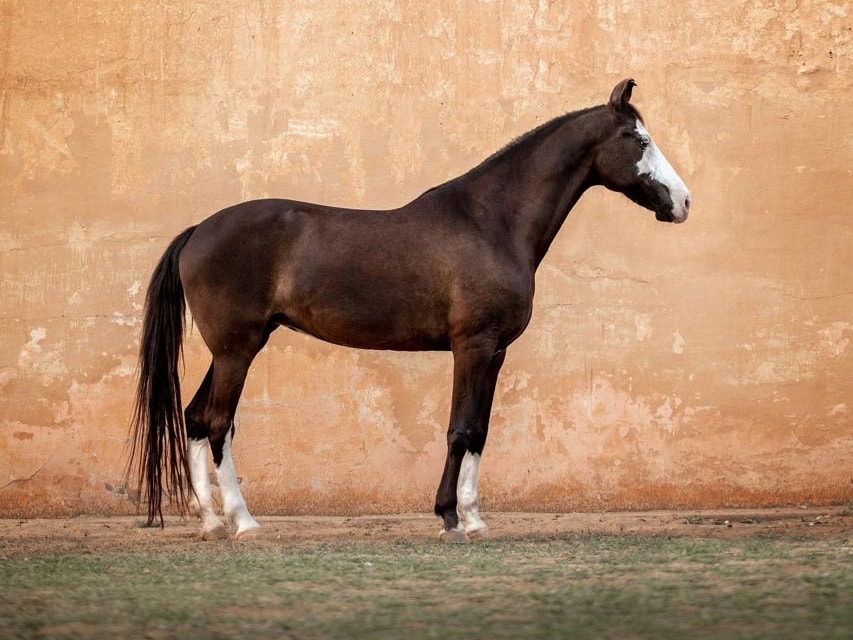
Photo credit: Equine Legacy Conservation Project
-
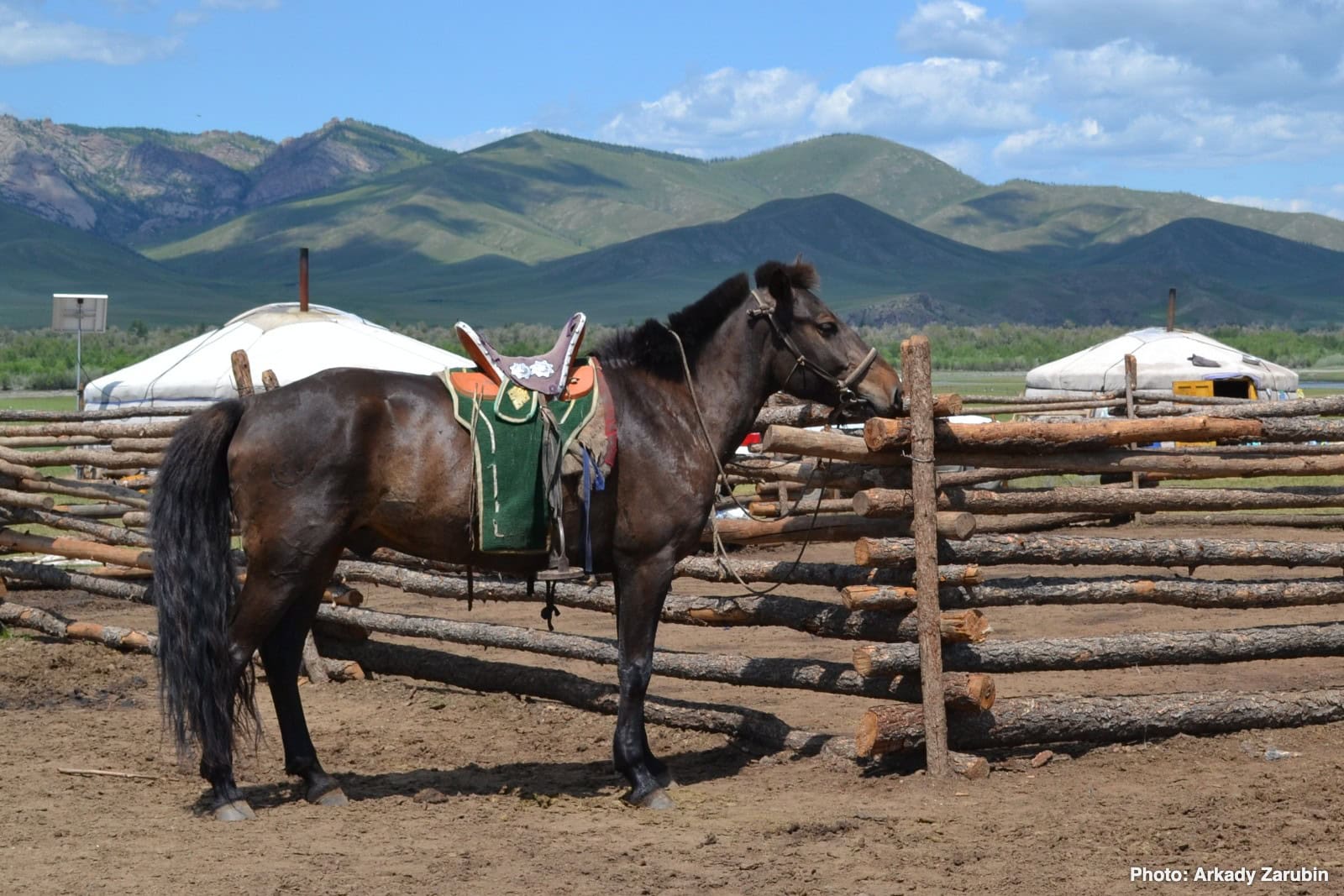
The Mongolian Horse
In Mongolia, there are more horses than people. More than three million of them live on the open steppe, grazing, foaling, and surviving the brutal winters largely on their own, much as they have for thousands of years. The Mongolian horse is the foundation of one of the world’s great horse cultures.
Read more Read less
These small, tough horses carried Genghis Khan’s armies across Asia in the 13th century, enabling the largest land empire in history. Each warrior traveled with several horses, switching mounts to cover extraordinary distances. Mongolian horses also carried the riders of the Yam, the empire’s vast relay messenger system.
Today horses remain central to life for Mongolia’s herding families. Children learn to ride almost as soon as they can walk. Mares are milked to make airag, the fermented drink of the steppe, and horse racing is one of the “three manly games” of the Naadam festival, in which young jockeys race across the open country over distances of up to 30 kilometers.
The Mongolian horse stands about 12 to 14 hands, stocky and short-legged, with a large head, thick mane and tail, and a dense winter coat. It comes in many colors. Its endurance, hardiness, and ability to live on sparse grazing make it one of the most resilient horses on earth.
-
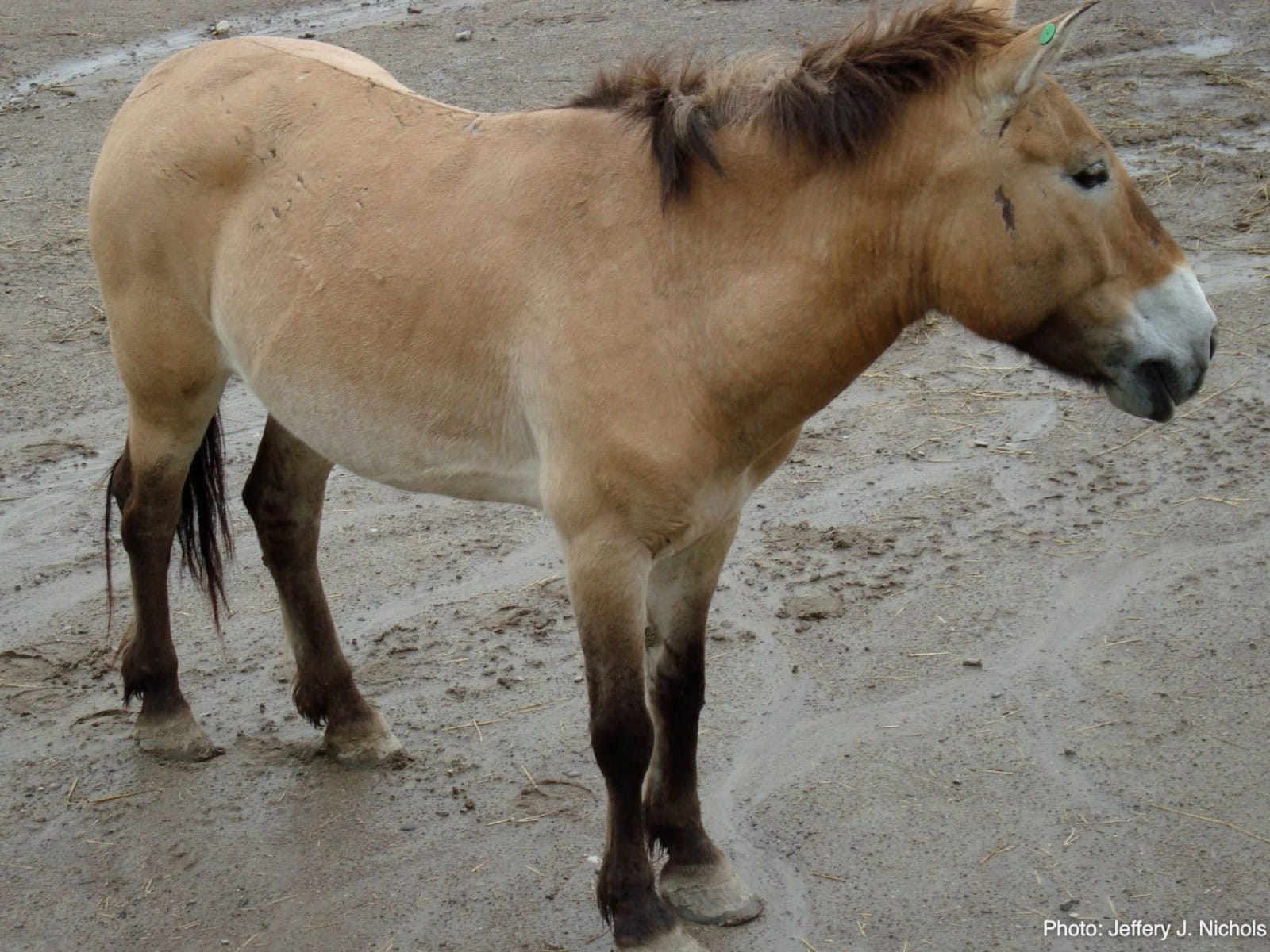
Przewalski’s Horse
It is not a feral horse, not a descendant of a domestic breed that escaped or was released. The Przewalski’s horse - known as the takhi in Mongolian, meaning “spirit” - is the only true wild horse species in existence. Every other wild horse population in the world, from the American Mustang to the Australian Brumby, consists of feral descendants of domesticated animals.
Read more Read less
The Przewalski’s horse was never domesticated. It is the direct descendant of the wild horses that once roamed the Eurasian steppe, and its survival is one of the most extraordinary stories in the history of conservation.
The breed was encountered by Western science in the 1870s, when Russian explorer Nikolai Przhevalsky encountered wild herds in the Dzungarian steppe on the border of China and Mongolia and brought specimens back to Europe. The horses already known to the Mongolian people for millennia - the small, stocky, dun-colored horse with the stiff, dark upright mane and no forelock - entered the scientific literature as Equus ferus przewalskii.
By the early 20th century, trophy hunting and habitat loss had reduced wild populations to a remnant. The last confirmed sighting of a wild Przewalski’s horse occurred in 1969. The species survived only because a small number had been captured for zoos in the late 19th and early 20th centuries. The entire current world population descends from just 14 individuals.
From that genetic bottleneck, one of the most ambitious conservation breeding programs in history was launched. By 1992, enough horses had been bred in captivity to begin reintroductions to their native range. Sixteen horses were transported to Hustai National Park in Mongolia. They survived their first winter. Their offspring survived theirs.
Today, more than 500 Przewalski’s horses roam free in Mongolia, Kazakhstan, and China. In 2008, the IUCN reclassified the species from “extinct in the wild” to “critically endangered.” By 2011, it had been upgraded again to “endangered.” The takhi has come back from nothing.
The Przewalski’s horse stands 12 to 14 hands, dun with a dark dorsal stripe, dark legs, a stiff upright mane, and no forelock. It has 66 chromosomes, compared to the domestic horse’s 64 - a fundamental genetic distinction that sets it apart from every other equid.
Its return to the Mongolian steppe is not simply a conservation success story. It is a restoration of something that was always there, returned after an absence that, measured against the species’ history, was barely a pause.
Oceania
-
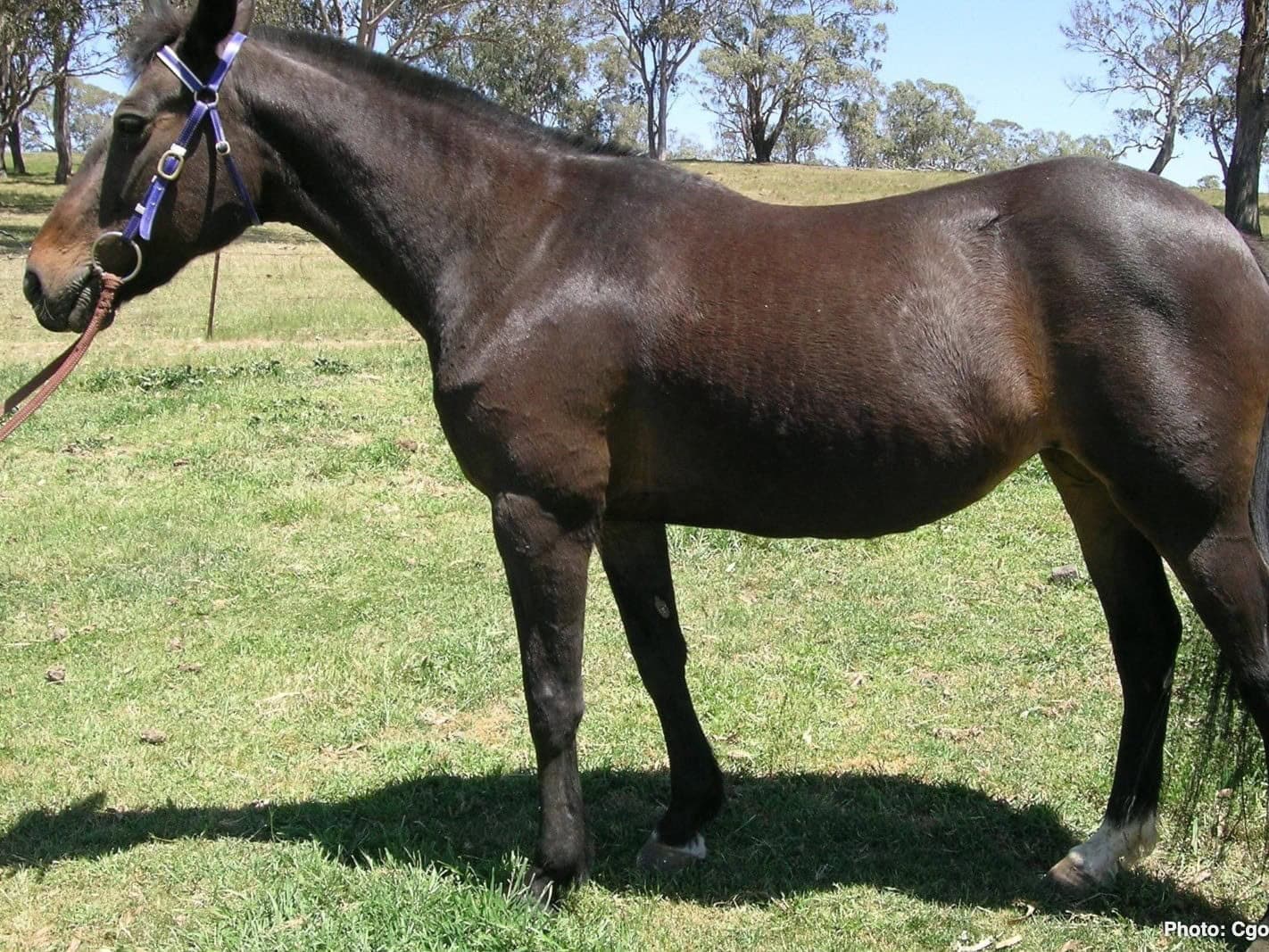
The Australian Stock Horse
The Australian Stock Horse is the working horse of the Australian outback, bred to muster cattle over huge distances in heat, dust, and rough country. It descends from the horses of the early colonists, the same stock that produced the famous Waler.
From the arrival of the First Fleet in 1788, Australian horses were bred for toughness and versatility, with Thoroughbred and Arabian blood added over the following century.
Read more Read less
In the 20th century, Quarter Horse and Thoroughbred influence continued to shape the type. The Australian Stock Horse Society was founded in 1971 in Scone, New South Wales, the self-proclaimed horse capital of Australia, to formalize the breed.
The Australian Stock Horse is valued above all for its versatility. It works cattle on stations, competes in campdrafting, polocrosse, and polo, and is ridden in show jumping, dressage, and eventing. It is also a favorite of riders on Australian trail rides and station stays.
The breed usually stands 14.2 to 16.2 hands and comes in every solid color. It is known for agility, endurance, intelligence, and a calm, willing temperament.
-
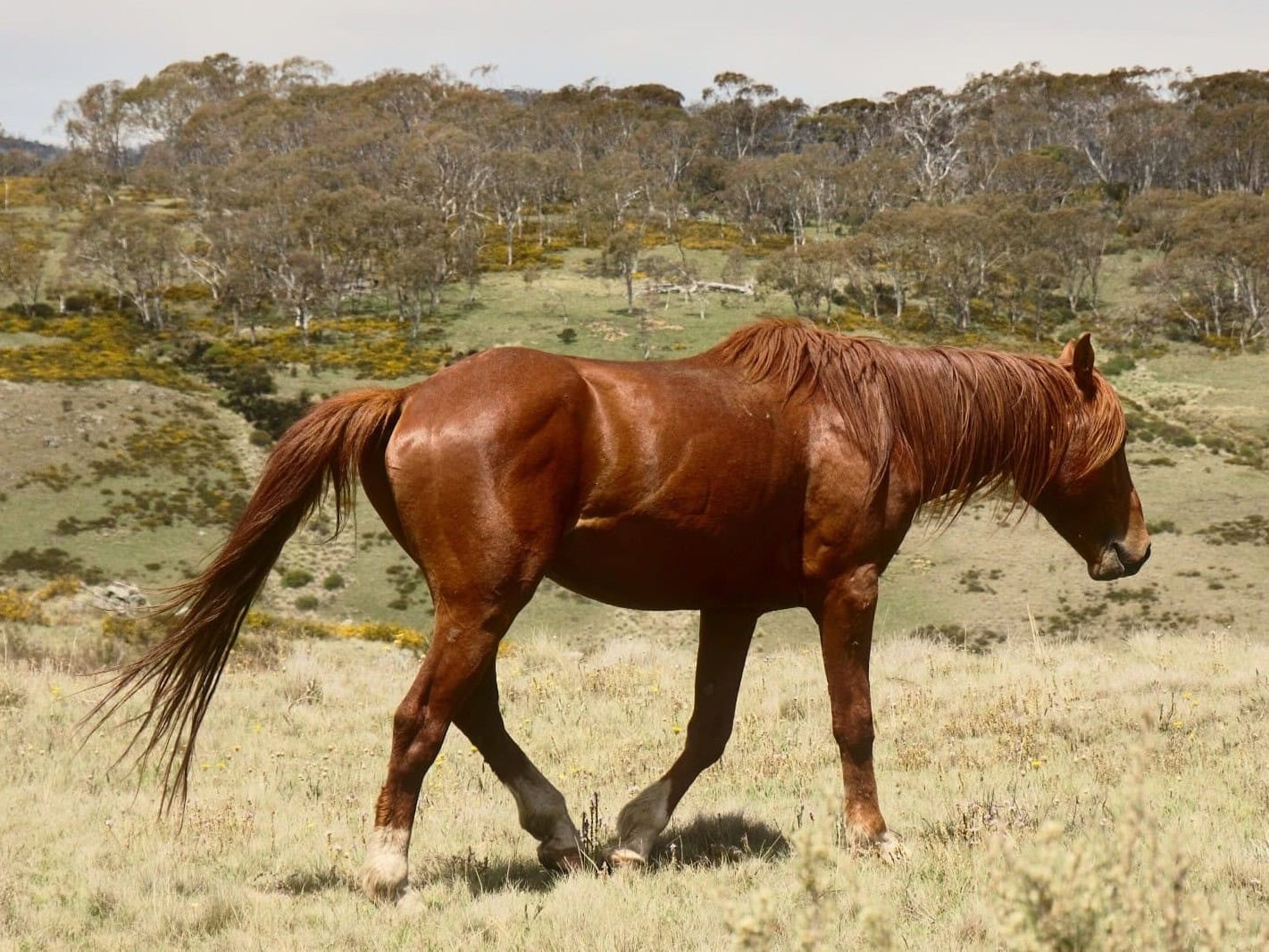
The Brumby
Australia was not always horse country. Horses did not exist on the continent for millions of years before the First Fleet arrived in 1788, carrying domestic horses from Britain, the Cape of Good Hope, and India. Within decades, some of those horses had escaped or been released, and by the mid-19th century, wild horses roamed the continent in numbers no one had anticipated.
Read more Read less
They were called Brumbies - a word of disputed origin, possibly from a Queensland Aboriginal language meaning “wild,” or possibly from Sergeant James Brumby who left horses behind when he departed his property in 1804.
The Brumby is not a single breed but a diverse population of feral horses descended from virtually every type that entered colonial Australia: Thoroughbreds, Arabians, draft breeds, Walers, Welsh and Shetland ponies. Over generations of wild life, the horses have been shaped by the continent - tougher and more self-reliant than their domestic ancestors, adapted to the extremes of Australian climate from the alpine high country to the tropical north.
Banjo Paterson immortalized the Brumby’s musterer in “The Man from Snowy River” in 1890, and the wild horse became woven into Australian national mythology as a symbol of freedom and the untamed bush. That cultural weight makes the Brumby’s conservation status one of the most contested debates in Australian environmental management.
Environmentalists argue - with scientific support - that feral horses cause severe damage to Australia’s alpine and semi-arid ecosystems, eroding riverbanks, destroying native vegetation, and competing with native wildlife for water. Parks and wildlife agencies have conducted aerial culling operations that have provoked intense public opposition from groups including the Australian Brumby Alliance, which advocates for mustering, rehoming, and gentling programs as alternatives to lethal control.
The debate cuts across lines of ecology, history, and national identity in a way that resists easy resolution. The Brumby is simultaneously an introduced pest and a living piece of Australian heritage - and the argument over what to do about it says as much about Australia’s relationship with its own colonial history as it does about land management.
-
The Kaimanawa
In the Kaimanawa Ranges of New Zealand’s central North Island, wild horses roam tussock grassland and river valleys. The Kaimanawa horses descend from domestic horses released or escaped in the 19th and 20th centuries, including ponies, farm horses, and cavalry horses.
By 1979 only about 174 horses remained, and in 1981 the herd was protected.
Read more Read less
Numbers then grew rapidly, and the New Zealand Department of Conservation now manages the herd with regular musters, rehoming many of the horses to new owners.
Rehomed Kaimanawas have become popular riding horses, and some have gone on to compete successfully in show jumping, eventing, and other sports.
Kaimanawa horses usually stand about 13.2 to 15 hands and come in many colors. Shaped by life in the wild, they are hardy, sure-footed, and intelligent.
-
The Waler
The Waler takes its name from New South Wales, where the colony’s horses were first bred. In the 19th and early 20th centuries, Walers were exported in huge numbers as cavalry remounts, and they earned a reputation as some of the toughest war horses in the world.
Walers served the British Army in India and in the Boer War, but their greatest fame came in the First World War.
Read more Read less
More than 120,000 Australian horses were sent overseas. With the Australian Light Horse, Walers carried their riders through the deserts of Sinai and Palestine, and on 31 October 1917 they made the famous mounted charge at Beersheba, one of the last great cavalry charges in history.
Because of quarantine restrictions, the horses could not come home. Of all those sent abroad, only one is recorded as returning to Australia, a horse named Sandy. The Waler type survived in remote cattle country, and dedicated breeders have since worked to preserve it as a heritage breed.
The Waler typically stands 14.2 to 16 hands and is usually bay, brown, chestnut, black, or grey. It is hardy, strong, and enduring, able to cover great distances on little water and poor feed.
Photo credits: The Equine Legacy Conservation Project, various breed associations & societies, and Equestrian Destinations
The Equine Legacy Conservation Project
The Equine Legacy Conservation Project coffee table book, Fading Hoofprints, and complementing documentary and podcast series, strive to educate people on some of the most extraordinary, yet vulnerable horse breeds around the world.
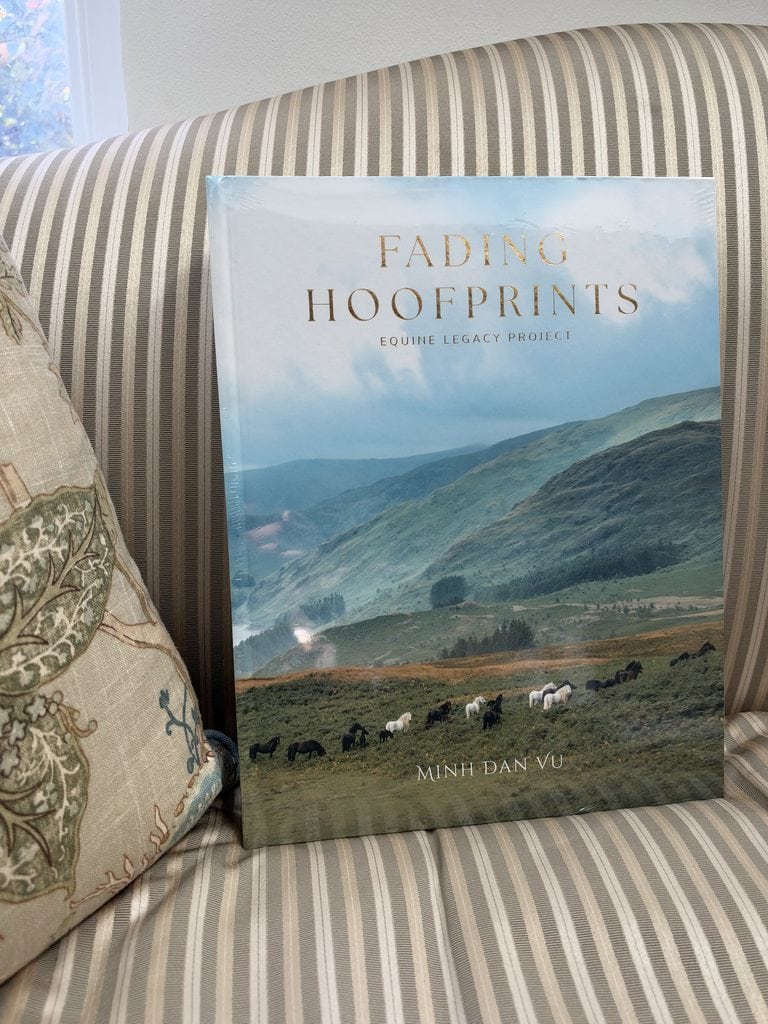
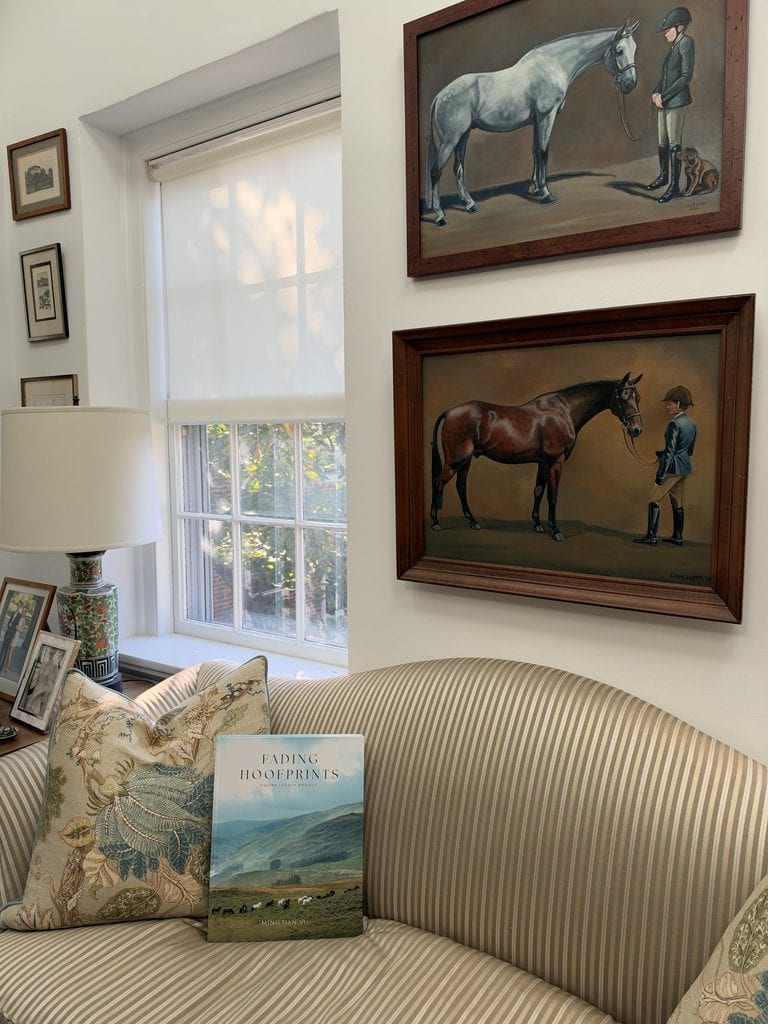
“In creating our coffee table book Fading Hoofprints and documentary series, we have journeyed from the sheep-dotted countryside of England to the dusty plains of Rajasthan, and from the rolling hills of Kentucky to the beaches of Puerto Rico. Along the way, we have met many people - breeders, owners, ecologists, geneticists, historians, police, horse trainers and animal wranglers, and veterinarians - all deeply passionate about the unique equine breeds featured in this project.” Minh Dan Vu
Find out more about the Equine Legacy Conservation Project and ways to help here.
The Equine Legacy Conservation Project featured breeds: The Sorraia, The Fell Pony, The Mountain Pleasure, The Clydesdale, The Marwari, The Kladruber, The Paso Fino (Title Photo) at top of page.
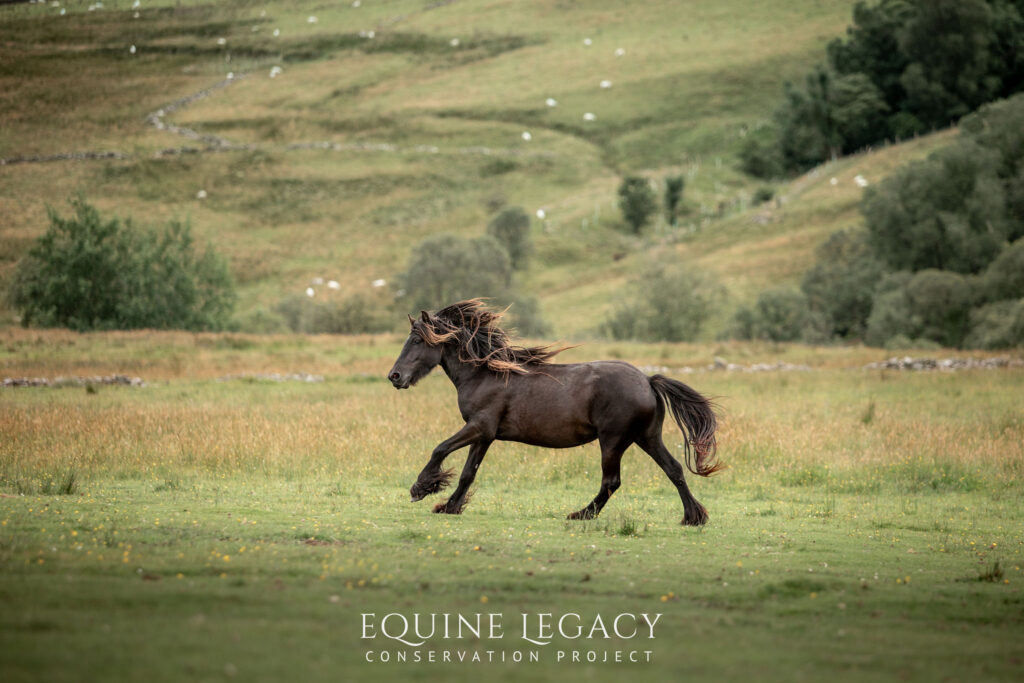
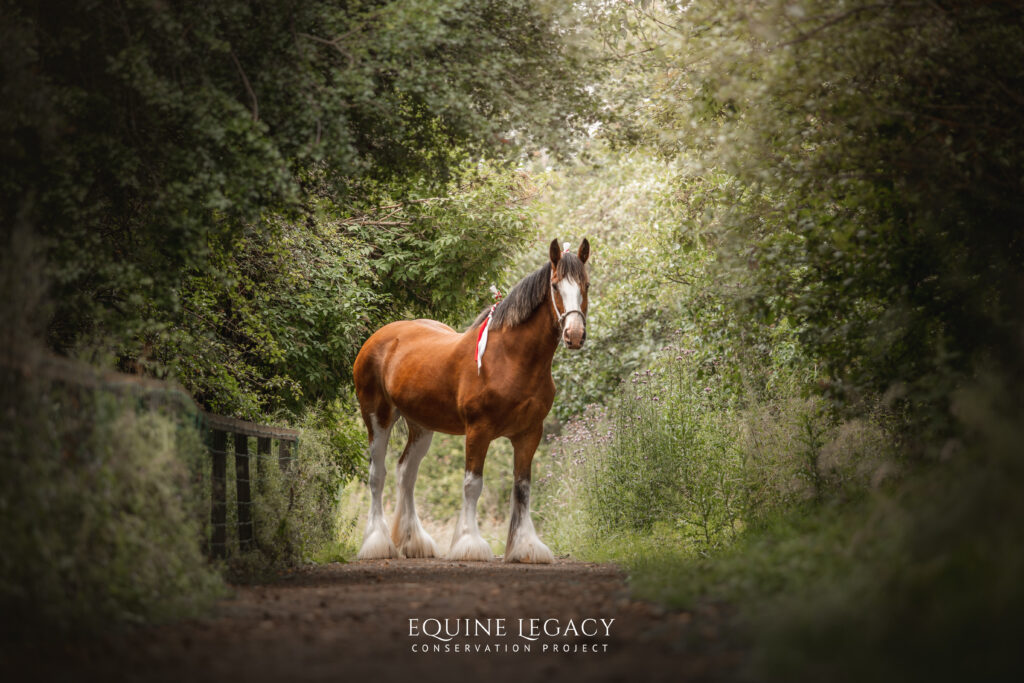
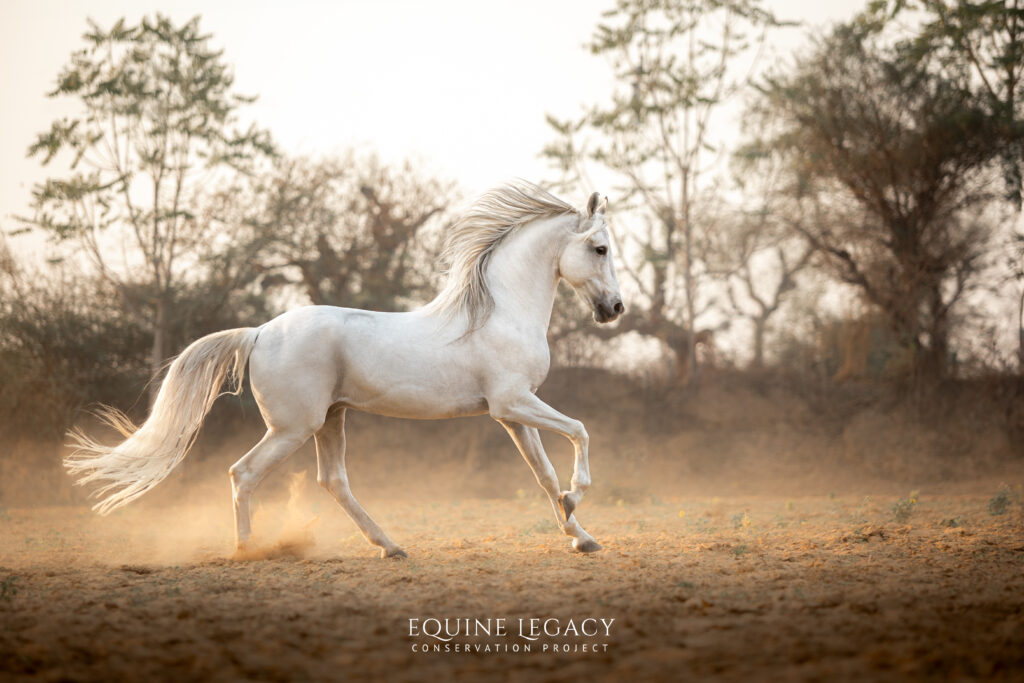
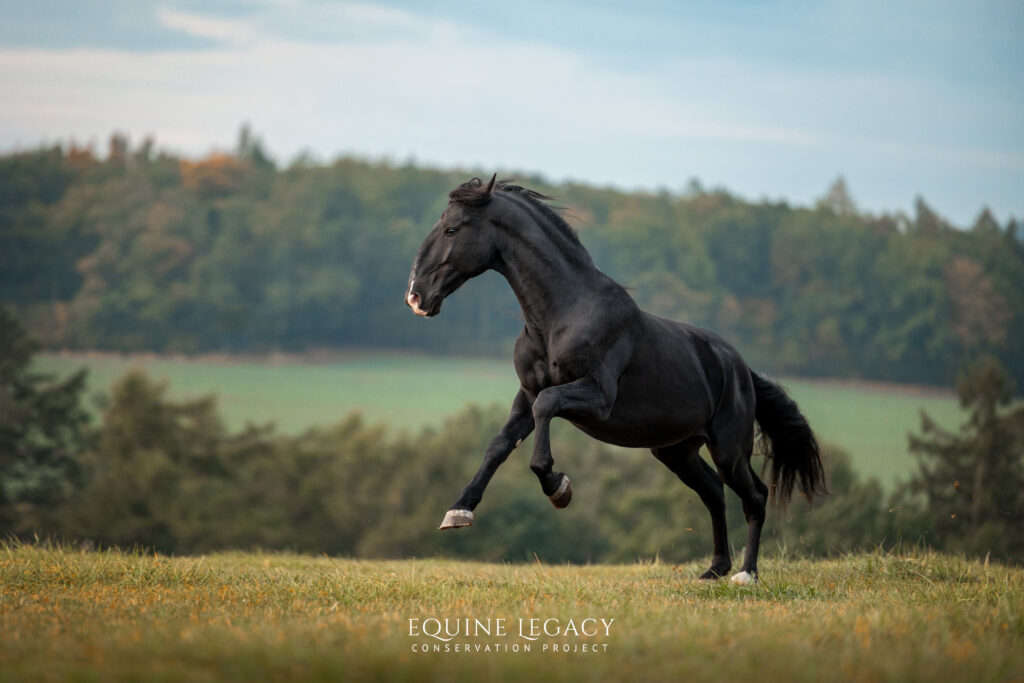
Photo credits: The Equine Legacy Conservation Project, various breed associations & societies, and Equestrian Destinations