

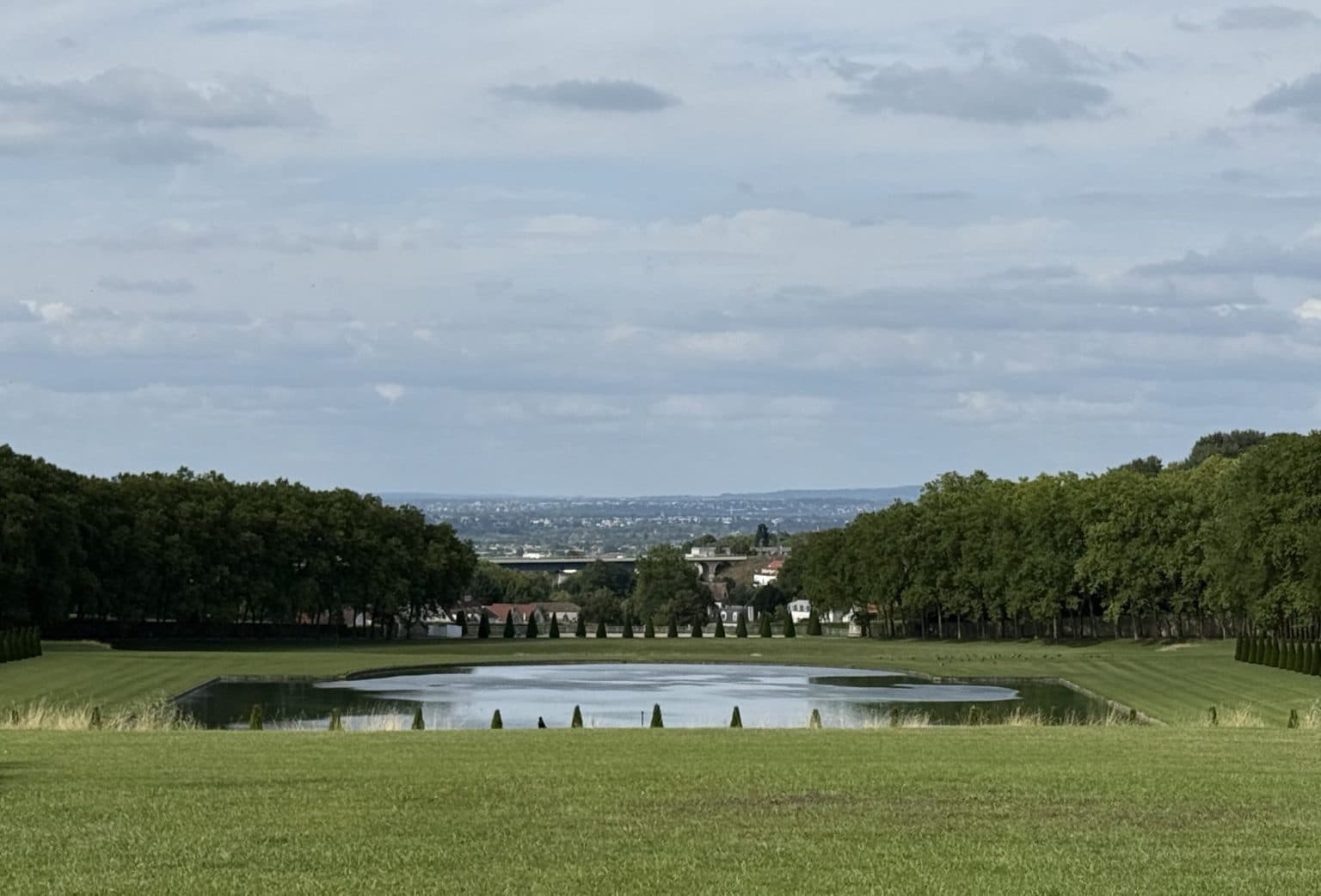
A King’s Hunting Lodge: Marly-le-Roi Pavillon Royal
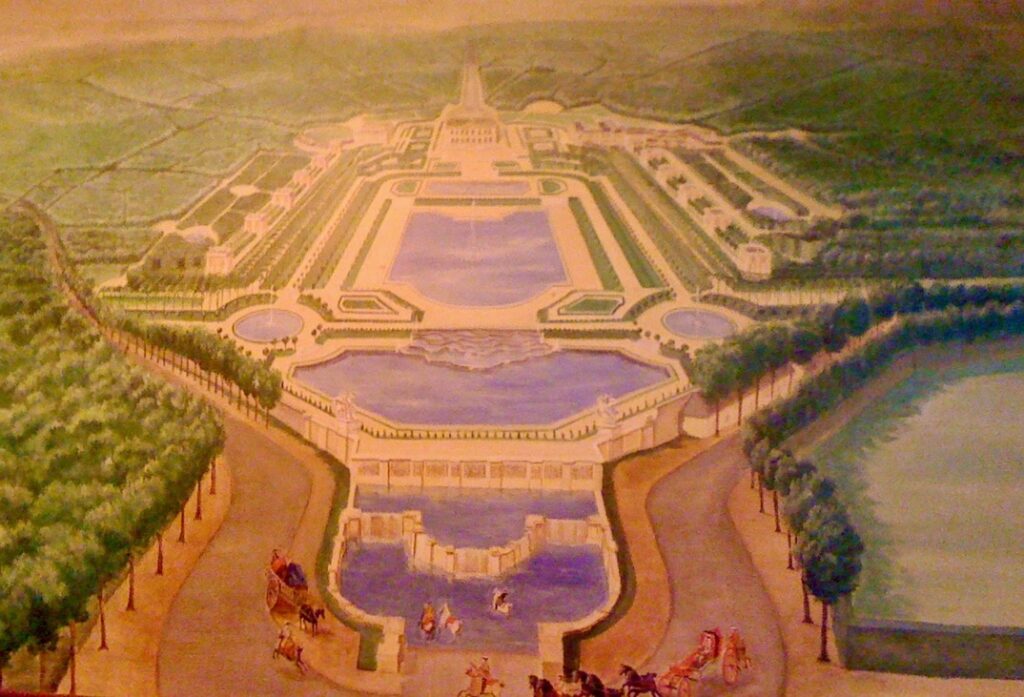
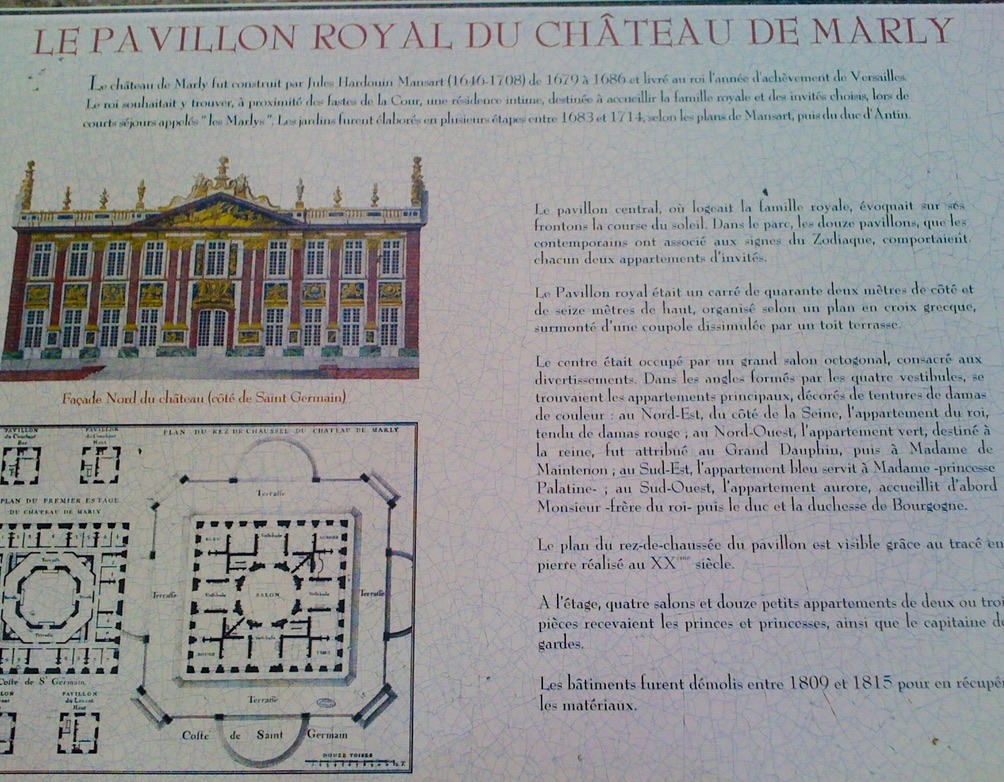
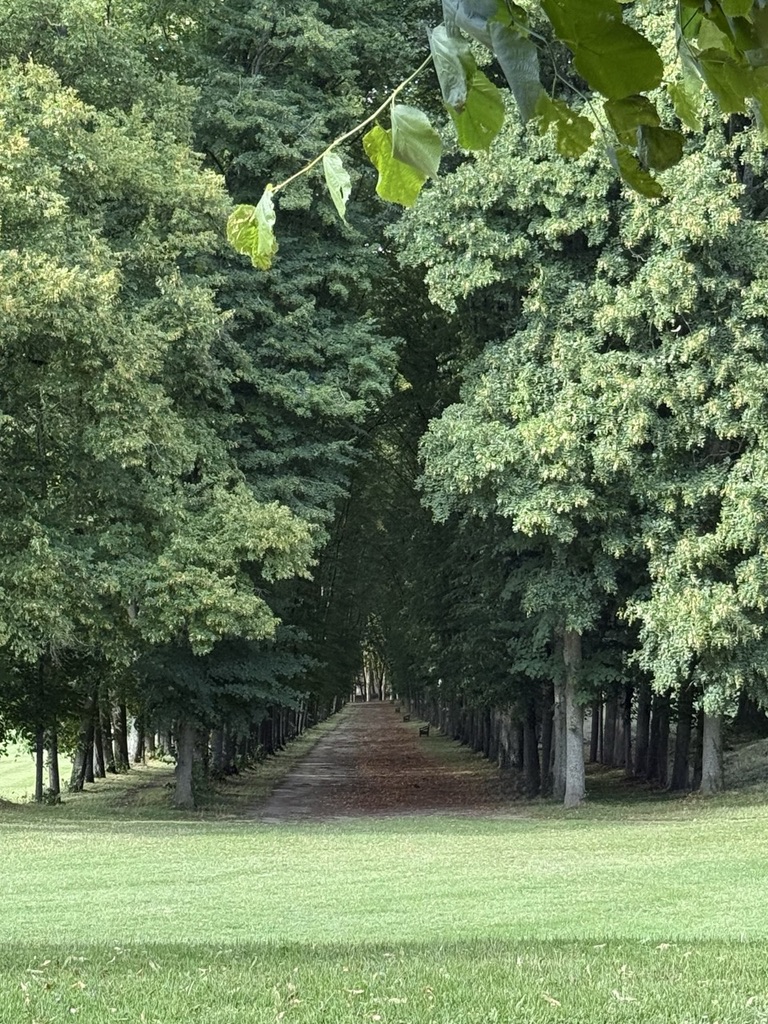
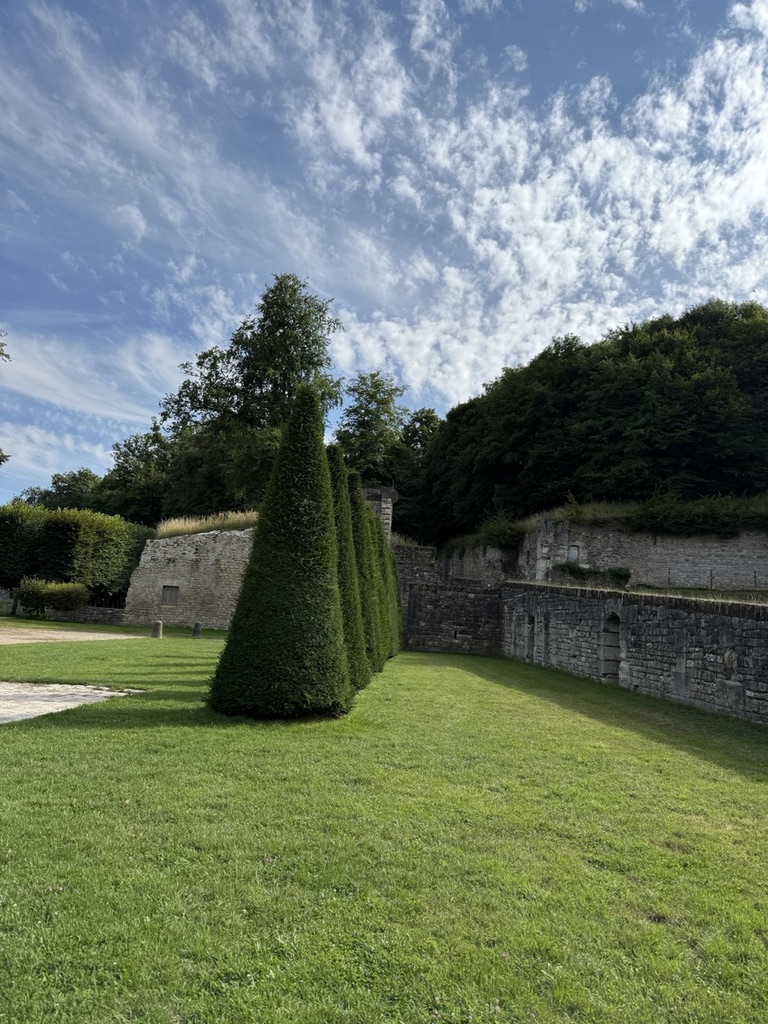
Not far from Versailles is the town of Marly-le-Roi, where I stayed with my family. While there, I visited Le Pavillon Royal du Château de Marly, one of King Louis XIV’s several retreats from Versailles. The King used this château and its surrounding cottages to invite close friends, primarily to hunt. Today, only the foundations of the château and its cottages remain. A fire in the 1800s destroyed the château, and the surrounding cottages later fell into disrepair and were abandoned.
Louis XIV’s Horseback Hunting Grounds
Marly wasn’t chosen at random. Its surrounding forest was one of a small circle of royal hunting grounds — alongside Versailles, Saint-Germain, Compiègne, Fontainebleau, and Rambouillet — where Louis XIV rode out on horseback for the chasse à courre, the traditional French stag hunt conducted on horseback with hounds. While the palace grounds closer to the château were used for more formal hunting with weapons, it was the surrounding forest itself where the King and his court took to their horses in pursuit of stag.
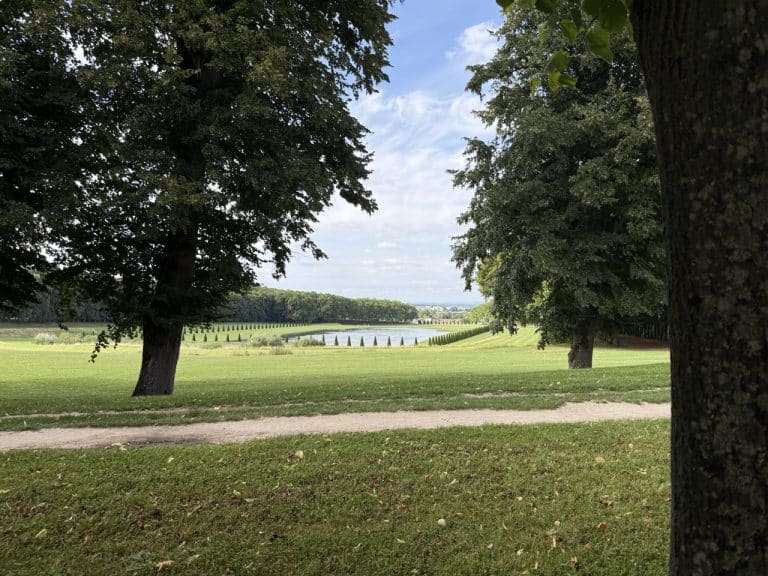
That tradition, it turns out, hasn’t entirely left. While walking the grounds, one of the custodians asked whether I was planning to continue down the narrow path ahead. He warned me to be careful, as there had been daily sightings of two stags nearby, and urged me not to walk any farther alone — a vivid, present-day reminder that the “chevreuil,” as he called them, that Louis XIV once hunted on horseback through these same woods are still very much here.
The Horses of Marly
Marly’s connection to horses runs deeper still. In the 1740s, King Louis XV commissioned the sculptor Guillaume Coustou to create two dramatic marble groups — each a rearing horse restrained by a groom — to flank the horse trough at the château’s grand entrance. Known today as the Chevaux de Marly, or the Horses of Marly, they’re considered among the finest works of 18th-century French sculpture.
The horses didn’t stay at Marly. In 1794, they were moved to Paris to mark the entrance to the Champs-Élysées, where they came to symbolize France itself. By the 1980s, decades of exposure and the vibrations from annual military parades had taken their toll, and the originals were moved indoors to the Louvre, where the courtyard housing them is now named the Cour Marly in their honor. Marble copies stand in their place at the top of the Champs-Élysées today — meaning anyone who has walked from the Place de la Concorde into the Champs-Élysées has walked directly beneath a piece of Marly’s equestrian history, whether they knew it or not.
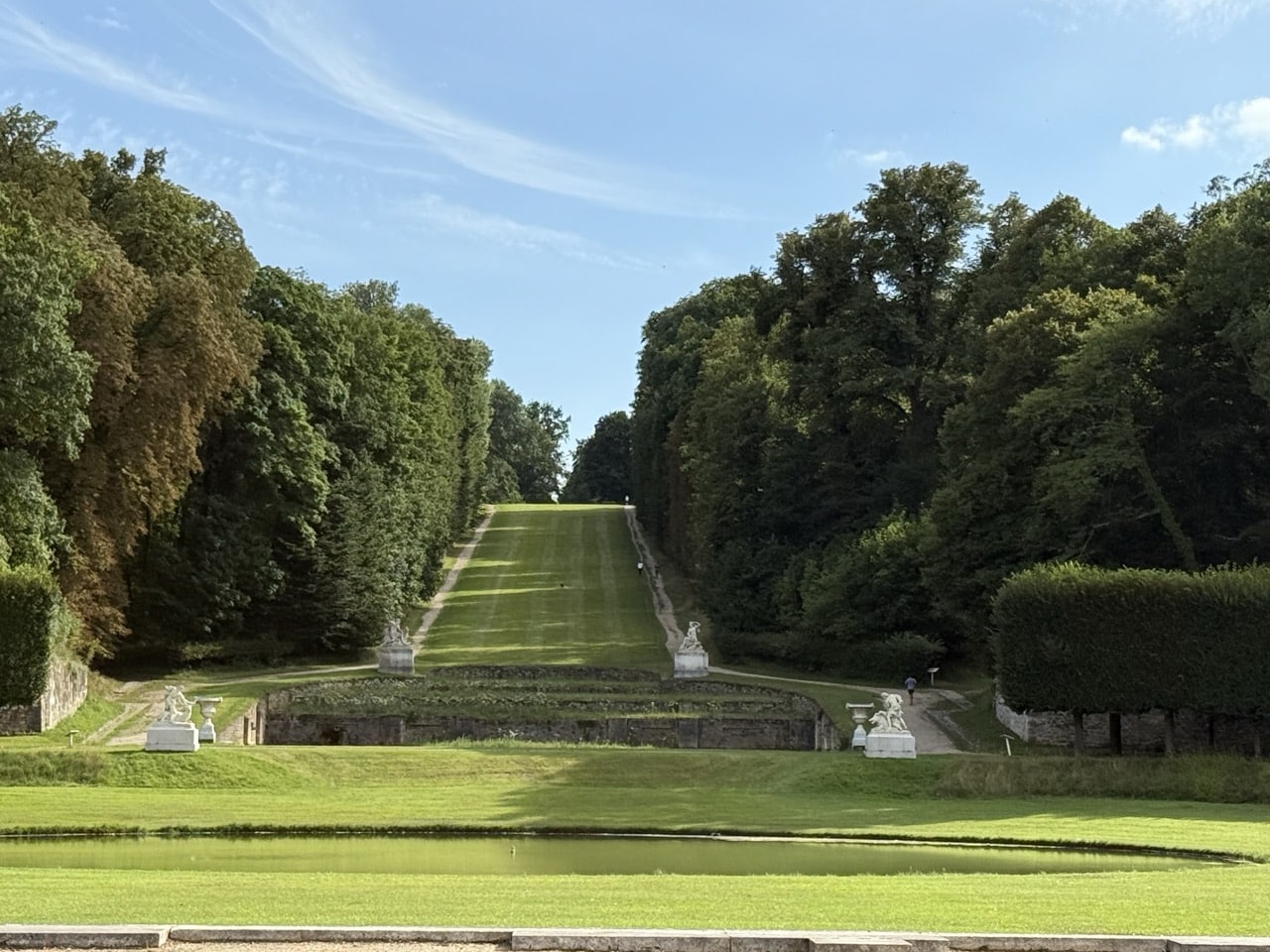
The grounds where the Horses of Marly once stood.
A Blueprint for Washington, D.C.
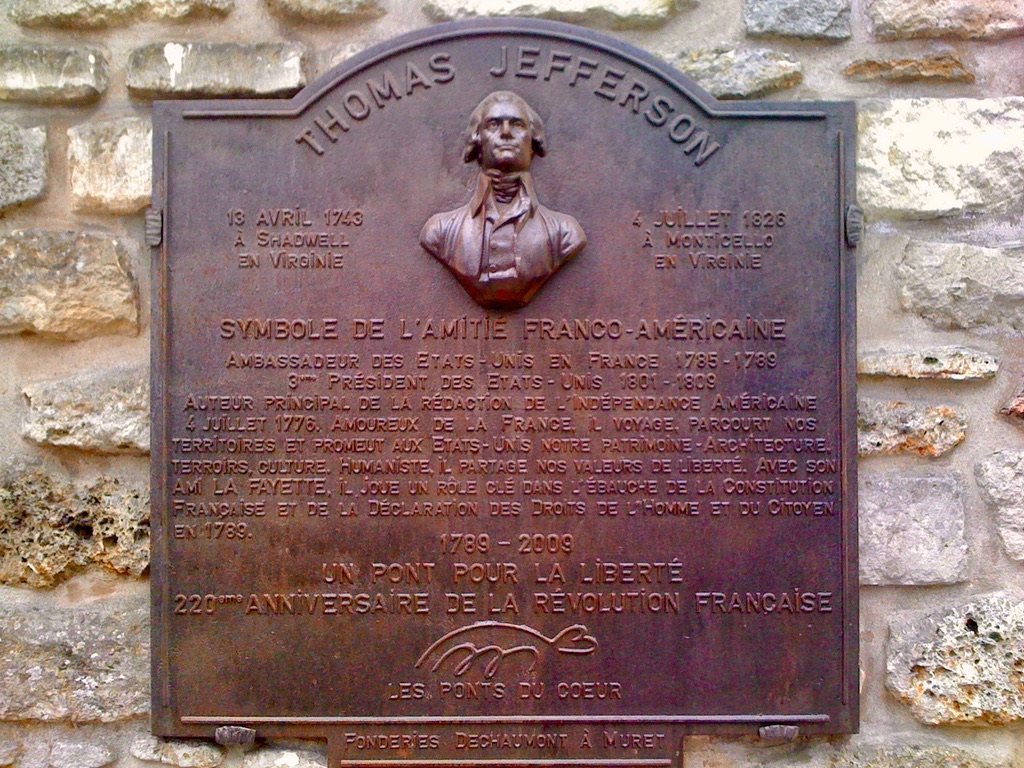
The grounds of Le Pavillon Royal du Château de Marly were frequently visited by Thomas Jefferson during his time as Ambassador to France, before his presidency. As the story goes, walks here with his friend, the French-born architect Pierre Charles L’Enfant, helped shape the vision that would become Washington, D.C.’s National Mall. Whatever the precise origin of the idea, the resemblance is well documented: Marly’s park centered on a rectangular reflecting pool flanked by guest pavilions, dominated by the château — an arrangement closely echoed in the Mall’s design, with the reflecting pool at its heart and museums lining its sides between the Capitol and the Lincoln Memorial, much as guest cottages once lined the grounds at Marly.
See the horses: The original Chevaux de Marly are on view in the Cour Marly at the Louvre in Paris; marble copies still mark the entrance to the Champs-Élysées at Place de la Concorde.
Beyond the view, this is also where Alexandre Dumas is said to have written The Three Musketeers and The Count of Monte Cristo, and where Béarnaise sauce is said to have first been created and served.
Plan Your Visit
See it: The grounds of the former Château de Marly are open to the public and free to visit — walking paths trace the outline of the château and its surrounding forest, where deer are still regularly seen.
Pair it with: a visit to Versailles itself, just down the road.
Where to Stay
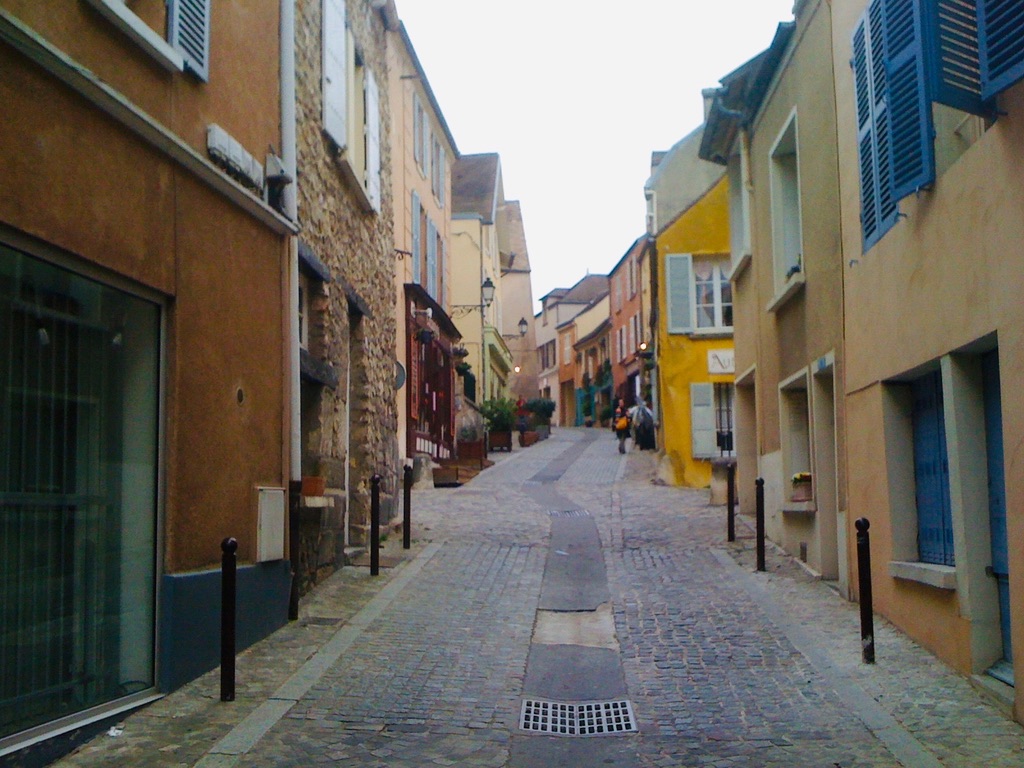
Where: Marly-le-Roi, a short drive from Versailles in the Yvelines department.
If you’re interested in staying in the area, Le Pavillon Henri IV, in nearby Saint-Germain-en-Laye, offers a lovely terrace view of Paris in the distance. The site was once home to the first royal castle here, extending to the adjacent Château Neuf — the birthplace of King Louis XIV, and today a museum. The court later moved permanently to Versailles.
For more information on the hotel, visit: Le Pavillon Henri IV