Marble Mountain Ranch sits on a 150-year-old mining site at the confluence of the Klamath and Salmon Rivers, deep in Northern California’s Klamath National Forest — a location so remote that grid electricity remains unavailable through much of the surrounding area, and so dark at night that the ranch is regularly named among California’s best places to stargaze. It began, unusually for a dude ranch, as a rafting company: owners Doug and Heidi Cole started guiding whitewater trips on the Klamath in the 1970s and only added horses later, discovering along the way that their guests wanted trail time and river time in equal measure.
That discovery became the ranch’s defining offering: California’s only “saddle and paddle” vacation, combining morning trail rides through the Klamath’s dramatic mountain terrain with afternoon whitewater rafting or kayaking on a fresh stretch of river each day. Add sporting clays, steelhead fly fishing, and jet boat tours to the Pacific, and Marble Mountain becomes one of the more genuinely varied dude ranch experiences in the American West — all personally guided by the Cole family rather than handed off to third-party outfitters.
The Experience
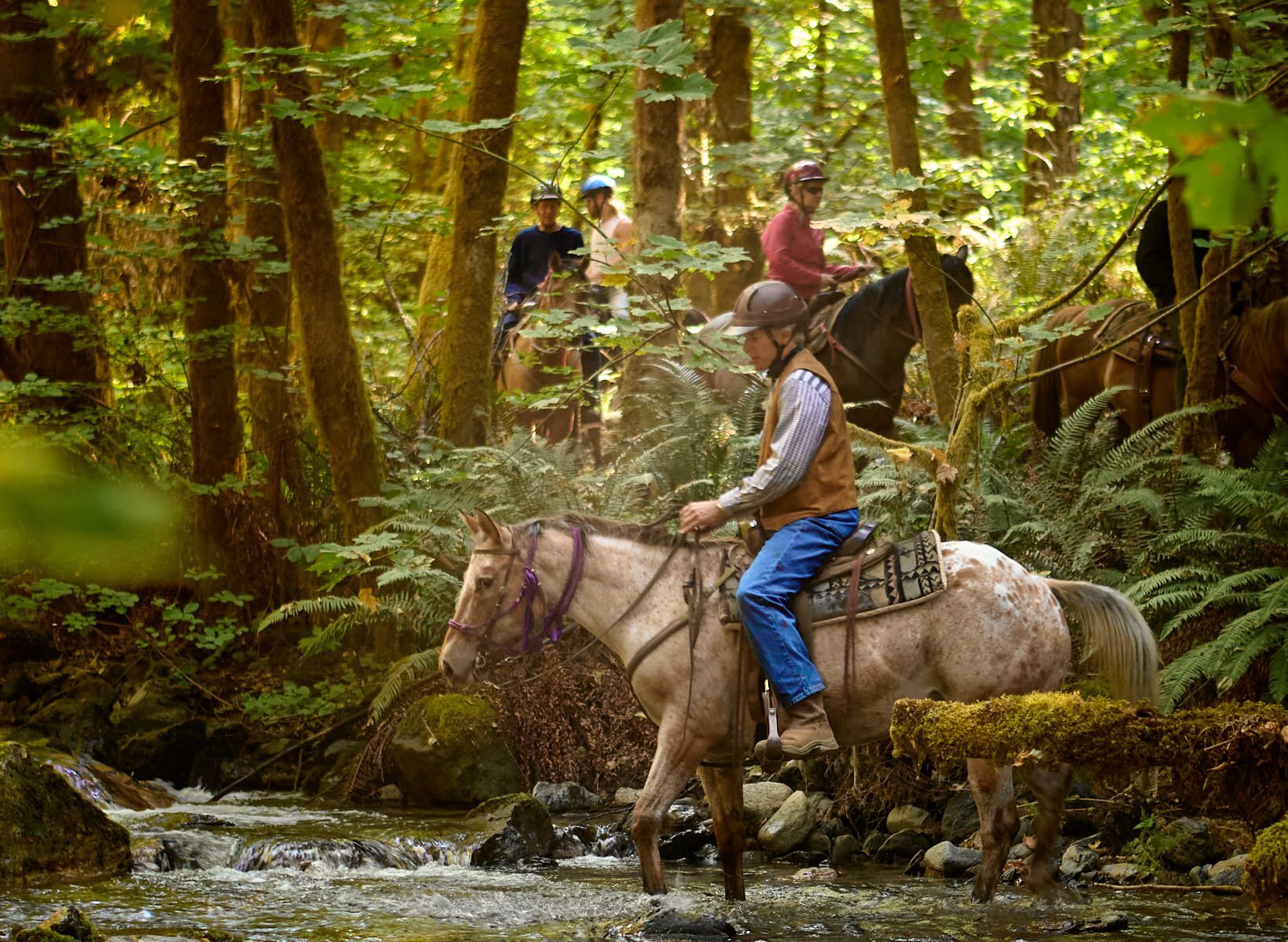
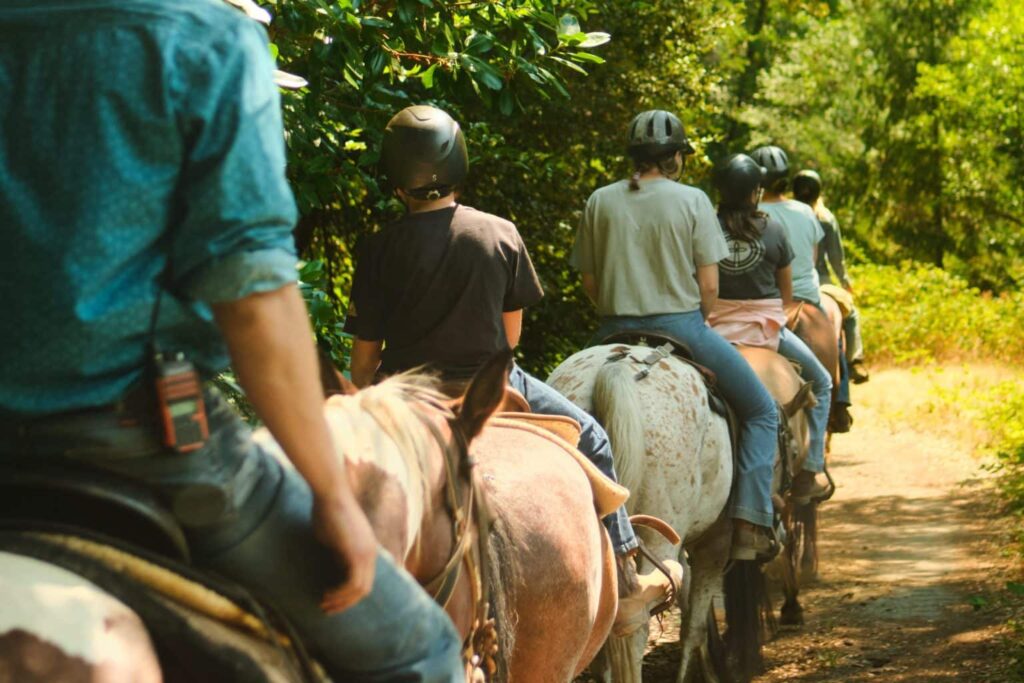
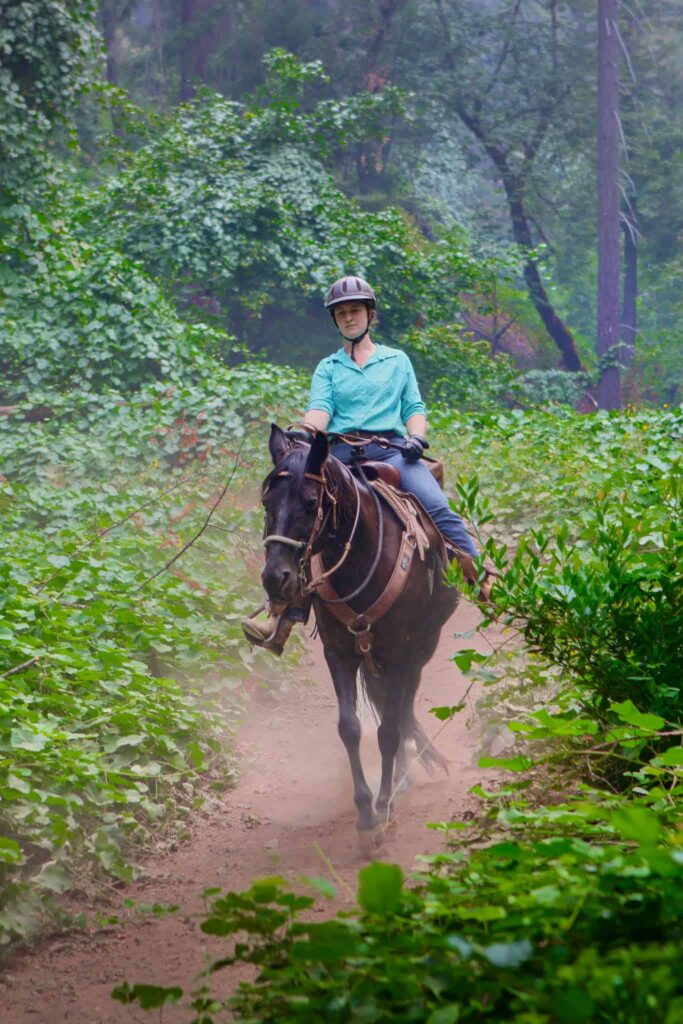
Your morning starts at the covered arena with an orientation, wranglers assessing your ability before assigning horse and trail — groups stay small, six to eight riders, with a guide ratio that keeps things personal. You climb through ancient Douglas fir stands toward high vistas over the Klamath’s river valleys, crossing creeks and century-old mining flumes as the trail shifts elevation beneath you.
By early afternoon, you’re on the water. Rafting or kayaking covers a different stretch of the Klamath each day, timed for the warm afternoon hours and scheduled after the morning’s rafting traffic has cleared — the canyon is, for a few hours, essentially yours. Wednesday’s signature run includes a hike to Ukonom Falls, past hidden swimming holes and secluded beaches most visitors to the region never find.
Evenings settle into the ranch’s original-recipe, family-style cooking — organic produce from their own gardens, home-baked bread, and the kind of hospitality that has kept families returning across generations. If you’ve brought children, the “Young Buckaroo” programme keeps them busy with animals and crafts while you wind down, already trying to decide whether tomorrow’s saddle time or paddle time was the better half of the day.
About Marble Mountain Ranch
Marble Mountain Ranch’s origin story sets it apart from almost every other dude ranch in America: rather than growing out of generations of cattle ranching, it began in 1981 when Doug Cole, a river guide since 1968, and his wife Heidi expanded their rafting business to include horseback trail rides — a sideline that turned out to be far more than a sideline. As the ranch’s horse herd grew, the Coles recaptured historic trail systems and built California’s only dude-ranch covered riding arena, cementing the “saddle and paddle” identity that now defines the operation.
The ranch operates under special use permit from the U.S. Forest Service and the California Department of Fish and Wildlife, with decades of outfitting experience underpinning every trail ride, raft trip, and fishing excursion. Groups stay deliberately small — under thirty guests at a time — with private cottages and homes offering linens, private baths, and kitchenettes, and every event personally run by a family member rather than delegated to outside contractors.
What has made Marble Mountain a standout among California guest ranches is precisely this refusal to specialize narrowly: horseback riding, whitewater rafting, sporting clays, fly fishing, and jet boat tours to the Pacific all delivered under one all-inclusive roof, by one family, with a level of personal attention that larger operations simply can’t match. For families with a genuine mix of interests — some who want to ride, others who want to paddle — it remains one of the few ranches built specifically to satisfy both.
Our Stewardship
Marble Mountain Ranch’s trail and river operations run under a special use permit from the U.S. Forest Service and additional permitting from the California Department of Fish and Wildlife. Its riding trails move directly through the Klamath National Forest, and its rafting operations are similarly regulated for their use of the Klamath River corridor.