

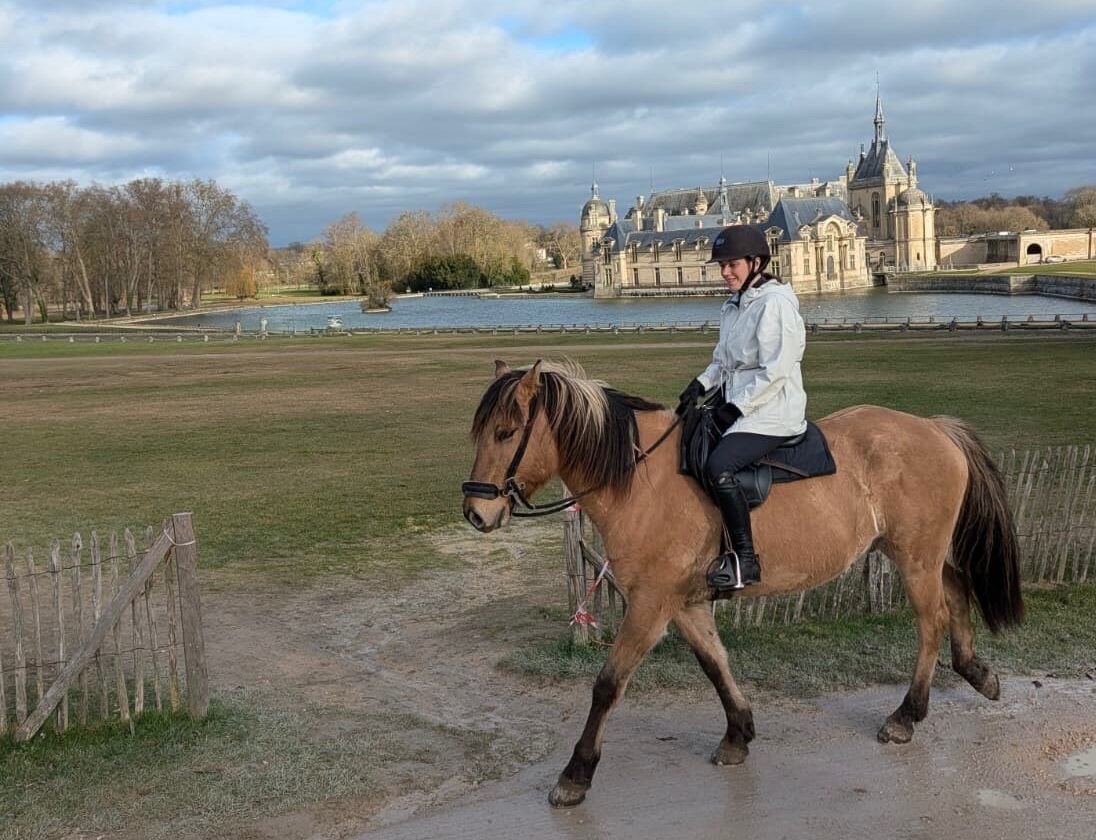
InterContinental Chantilly Château Mont Royal — Horseback Riding in Chantilly, France
Where Paris slips into pasture, and horses are heritage.
“Renowned as the capital of the horse, Chantilly offers an unforgettable way to explore its legendary landscapes — on horseback.”
There are detours, and then there are the kind of detours that make you question why you ever go anywhere else. Chantilly was mine.
I had not planned an overnight here. It presented itself — a first stop, a deliberate beginning — and something told me to take it before moving on to the rest of what had brought me to France. I am glad I listened. Charles de Gaulle Airport is just 24 kilometres from Chantilly, which means that for those who know about it, the château is not a detour from Paris at all. It is the first thing you do when you land. I came straight from the terminal, and from the moment I arrived, the airport, the flight, and the city waiting beyond the forest dissolved completely. What replaced them was silence, the distant sound of hooves on sandy tracks, and the unmistakable feeling that horses, here, are not a pastime. They are a way of life.
I had come to Chantilly for the horses. But Chantilly, as it turned out, had rather more to offer than I had planned for.
The InterContinental Chantilly Château Mont Royal is set within the Forêt de Chantilly — a protected royal forest stretching across more than 6,300 hectares — and it earns every syllable of its name. Built in the early 20th century as a private hunting pavilion commissioned for the composer Fernand Halphen, this Louis XVI-style château became a hotel in 1990 and joined the InterContinental family in 2024 after an extensive renovation. What emerged is a five-star property that feels less like a hotel than a very elegant private house to which you have been extremely lucky to receive an invitation.
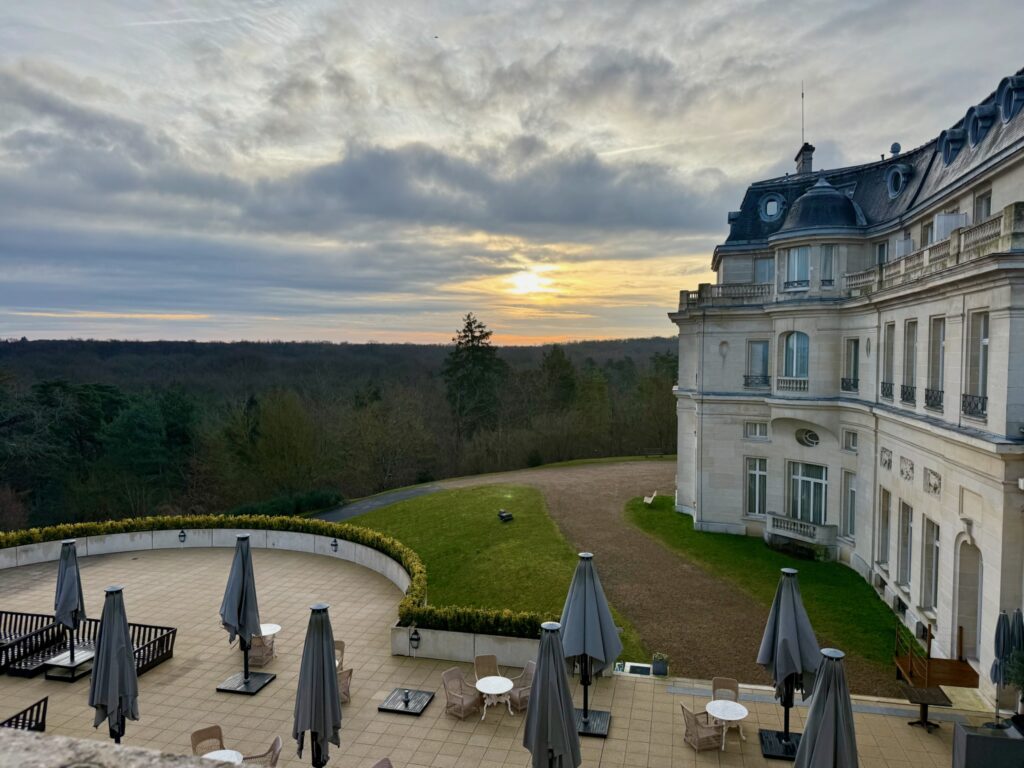
The Château
The rooms are bathed in natural forest light — all 109 of them overlook the trees, and the décor makes no attempt to compete with what is outside the window. Timeless elegance, the hotel calls it, with interiors inspired by the essentials of the region: nature, horseback riding, and Chantilly lace. That equestrian thread runs through everything quietly and confidently: horse-themed artwork on the walls, the pattern woven into the carpet beneath your feet, the kind of detail that rewards those paying close attention.
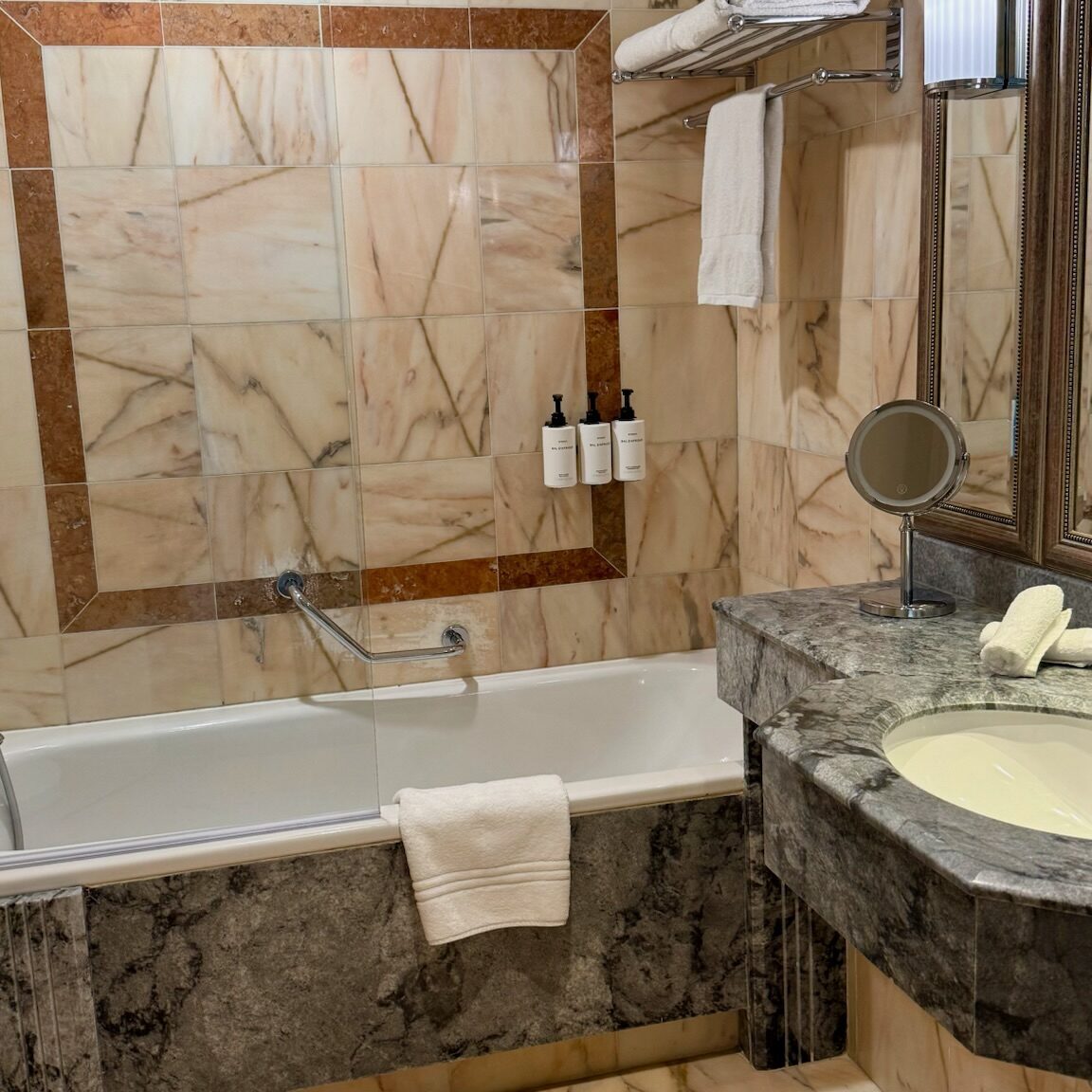
Suites range from Junior Suites to the Prince de Condé Suite, the latter offering a 180-degree panoramic terrace with views stretching toward Senlis. Each one feels like a room with something to say. The marble bathrooms are genuinely beautiful — the kind that make you draw a bath even when you had not planned to.
The staff were among the friendliest I have encountered anywhere — and I travel a great deal. There is a particular warmth here that feels entirely native to the place rather than trained into the team. The kind of warmth that makes you walk more slowly, breathe more deeply, and find yourself drifting into the secluded paths around the château grounds that seem designed specifically for deep thought. I took those walks. I took all of them.
The Spa
The InterContinental Chantilly spa uses Biologique Recherche exclusively — one of France’s most respected and rigorous skincare houses, whose methodology is closer to science than beauty counter. The space is calm in the way that only a spa built inside a forest château can be: unhurried, warm, and completely separate from the rest of the world.
I came here after the ride, which, it turns out, is exactly the right order of operations. A morning on horseback through the royal estate, the exhilaration of canters through the Forêt de Chantilly, the pleasant ache of having actually ridden — and then this.
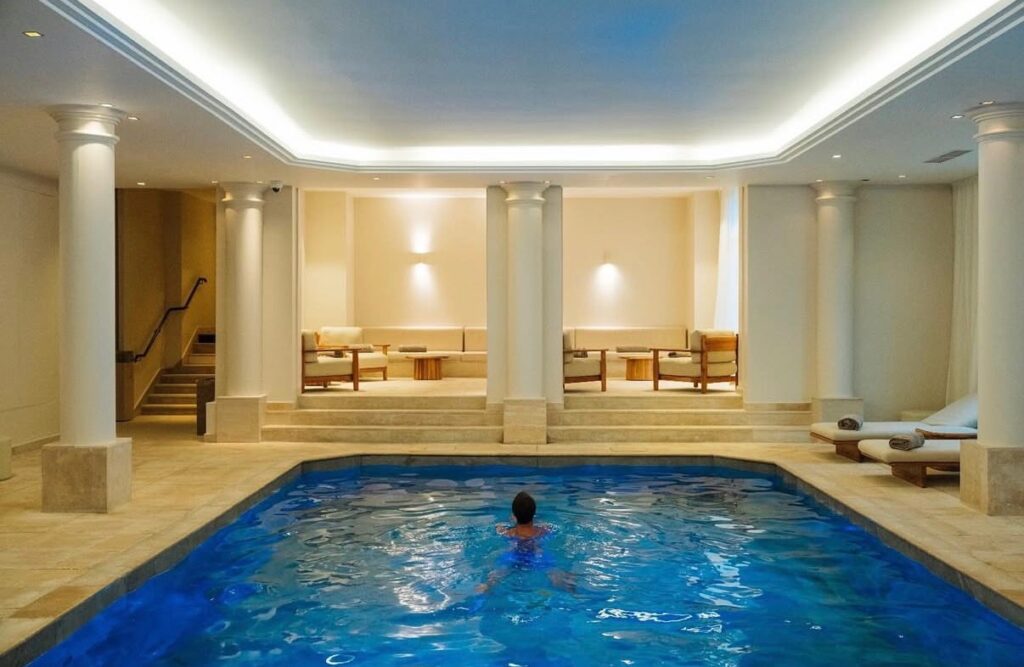
The pool first. Long, heated, quiet, with loungers along the edge and the kind of stillness that makes you stop thinking about anything at all. Then the sauna, which finished what the pool had started.
The indoor pool at the InterContinental Chantilly spa — warm, still, and exactly the right place to be after a morning on horseback.
The massage that followed was one of those treatments that finds exactly what needed finding. The Biologique Recherche products used throughout are as considered as the brand’s reputation suggests — there is a precision to them that you feel in the skin for days afterward. By the time I left the treatment room I was, in the best possible sense, entirely elsewhere.
The Biologique Recherche product library at the spa — a skincare house whose methodology is as precise as it is effective.
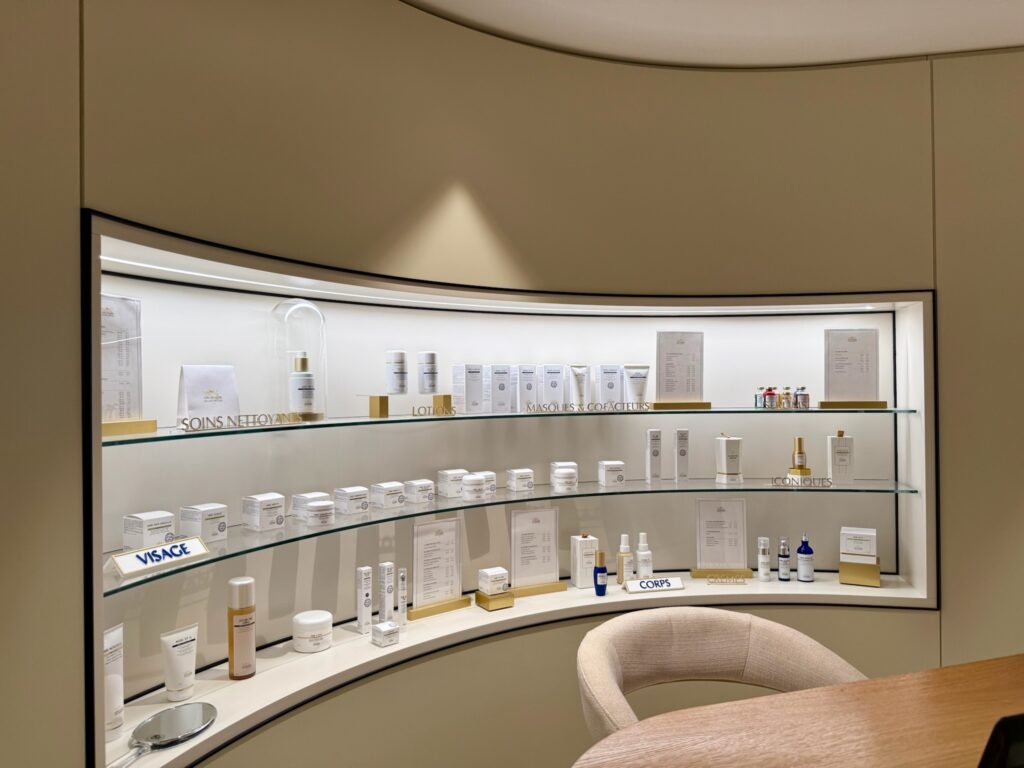
If you ride in the morning — and you should — the spa is precisely the right place to spend the afternoon. The sequence is not accidental. Chantilly, it turns out, has thought of everything.
The Art of Crème Chantilly
Before I say anything else about Chantilly — the horses, the château, the forest — I should tell you about the cream. Because Chantilly is where it was born, and to come here and not make it would have been a missed opportunity of the highest order.
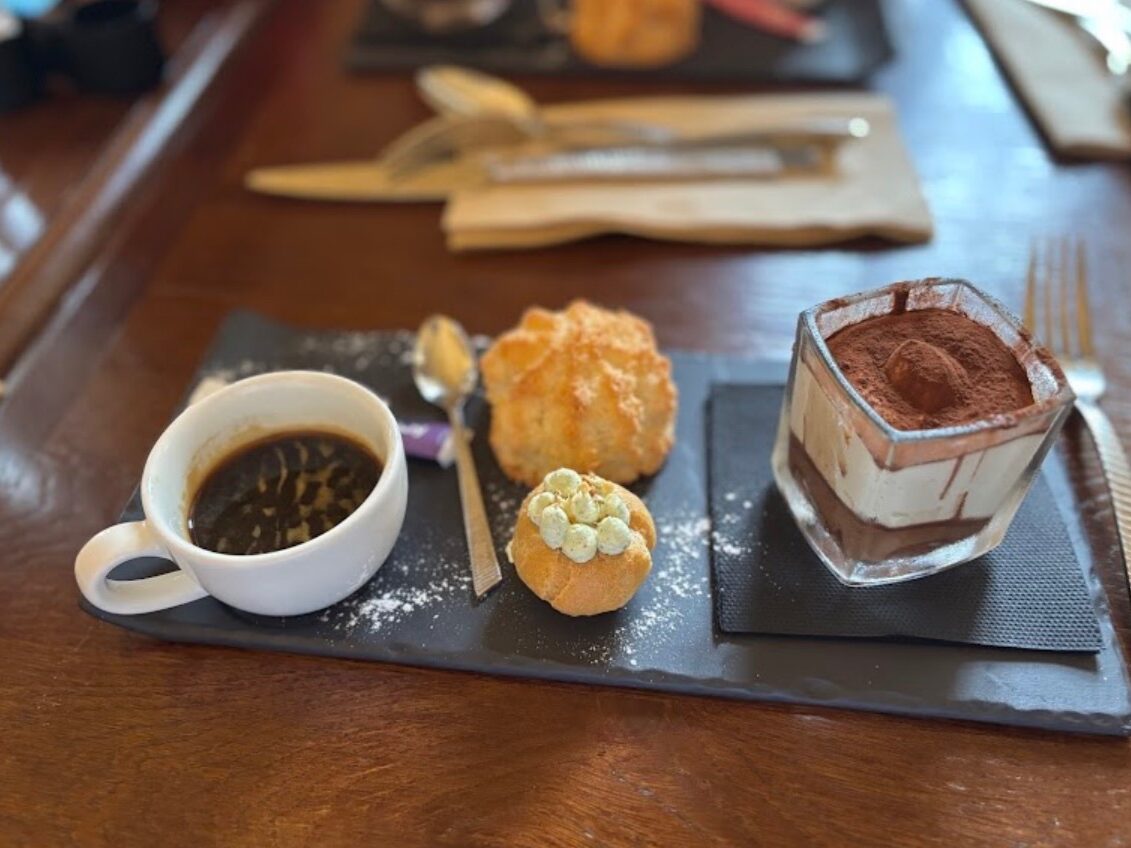
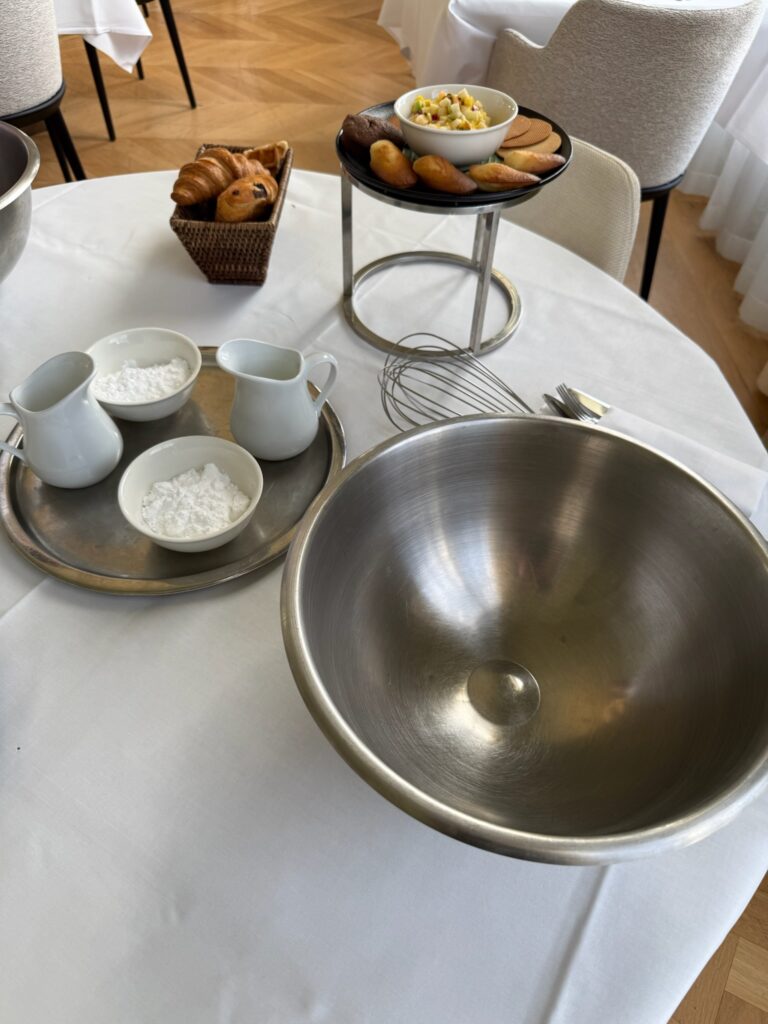
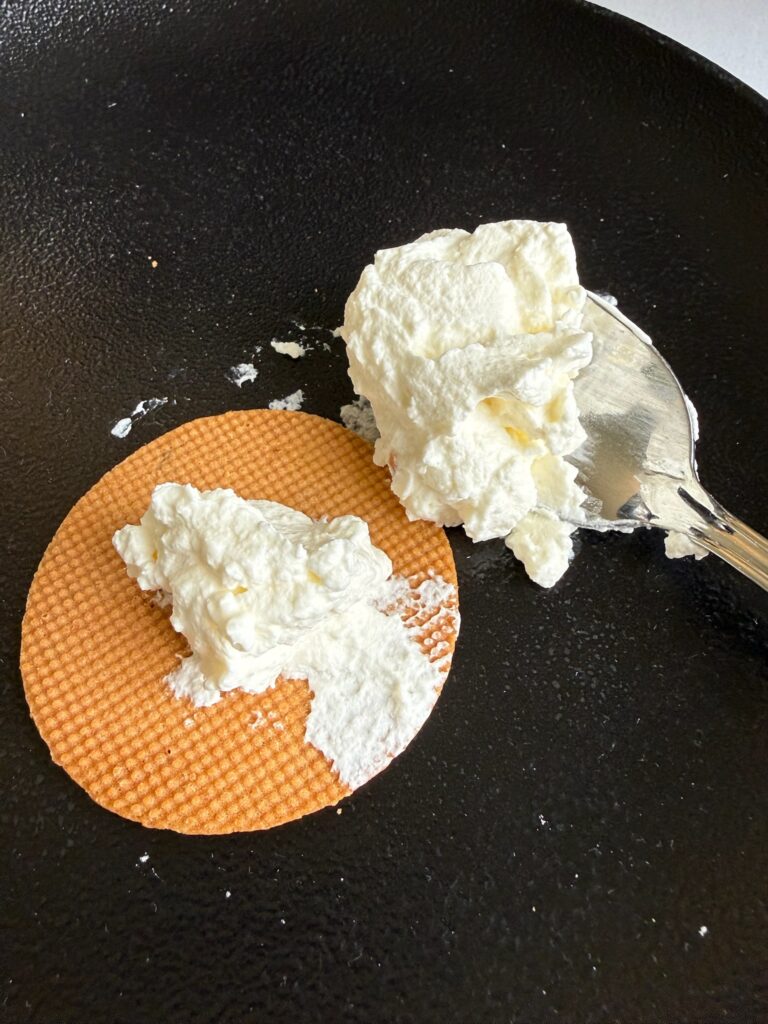
The hotel arranged a private lesson for me in their dining room, set up by the pastry team under the direction of Chef Léo Chinot. Everything was measured, prepared and laid out with the quiet precision of a kitchen that takes this seriously: cold cream, icing sugar, a touch of vanilla, a large steel bowl, and a whisk.
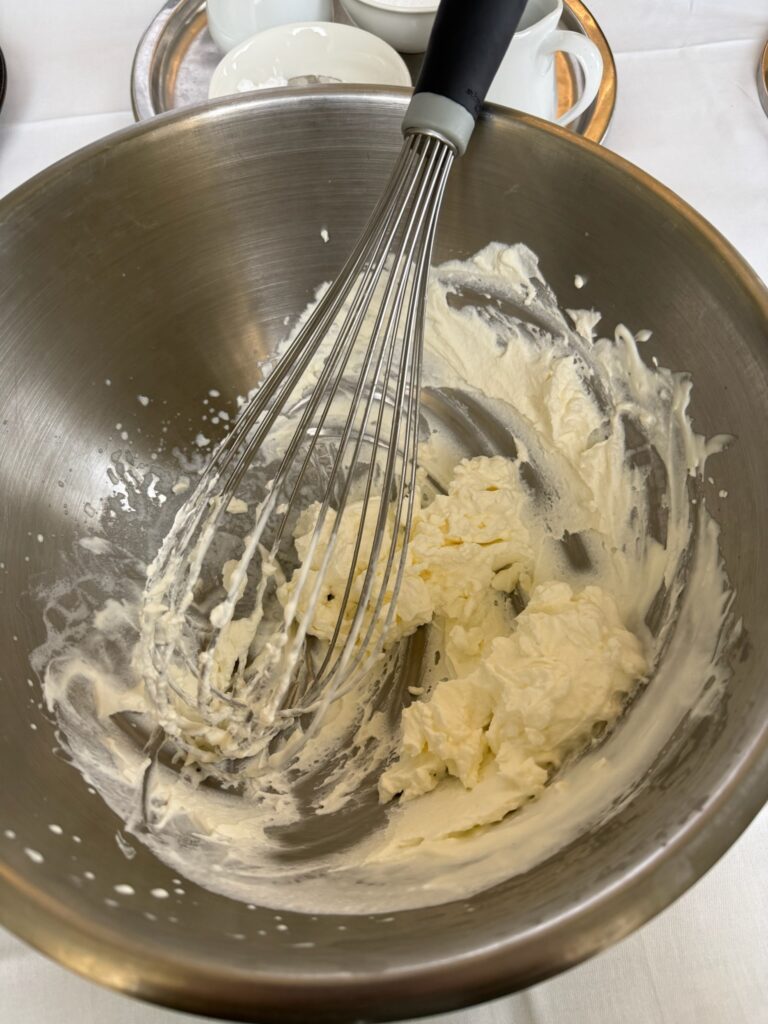
The history of crème Chantilly goes back to the 17th century and François Vatel, the legendary maître d’hôtel to the Prince de Condé, who is credited with perfecting whipped cream at the Château de Chantilly during a banquet for Louis XIV. Whether or not the full legend holds, the cream is real and Chantilly has claimed it ever since. The process is deceptively simple. The right cream, very cold. The right proportions. And then the whisking. A great deal of whisking. The kind that makes your arm question your commitment somewhere around the five-minute mark, just before something remarkable starts to happen. The liquid thickens. The whisk begins to leave soft peaks.
What emerges, eventually, is a cloud so light and fragrant it barely seems like the same ingredient you started with.
On Horseback Through the Capital of the Horse
An easy Uber from the hotel brought me into the centre of Chantilly to meet the team at Espace Équestre Henson, the equestrian centre based at the foot of the town on the banks of the Nonette river. I had done my research — mostly. What I had not read quite closely enough was that this experience begins rather differently from most equestrian day rides.
You do not simply show up and find a horse waiting. You earn the horse first.
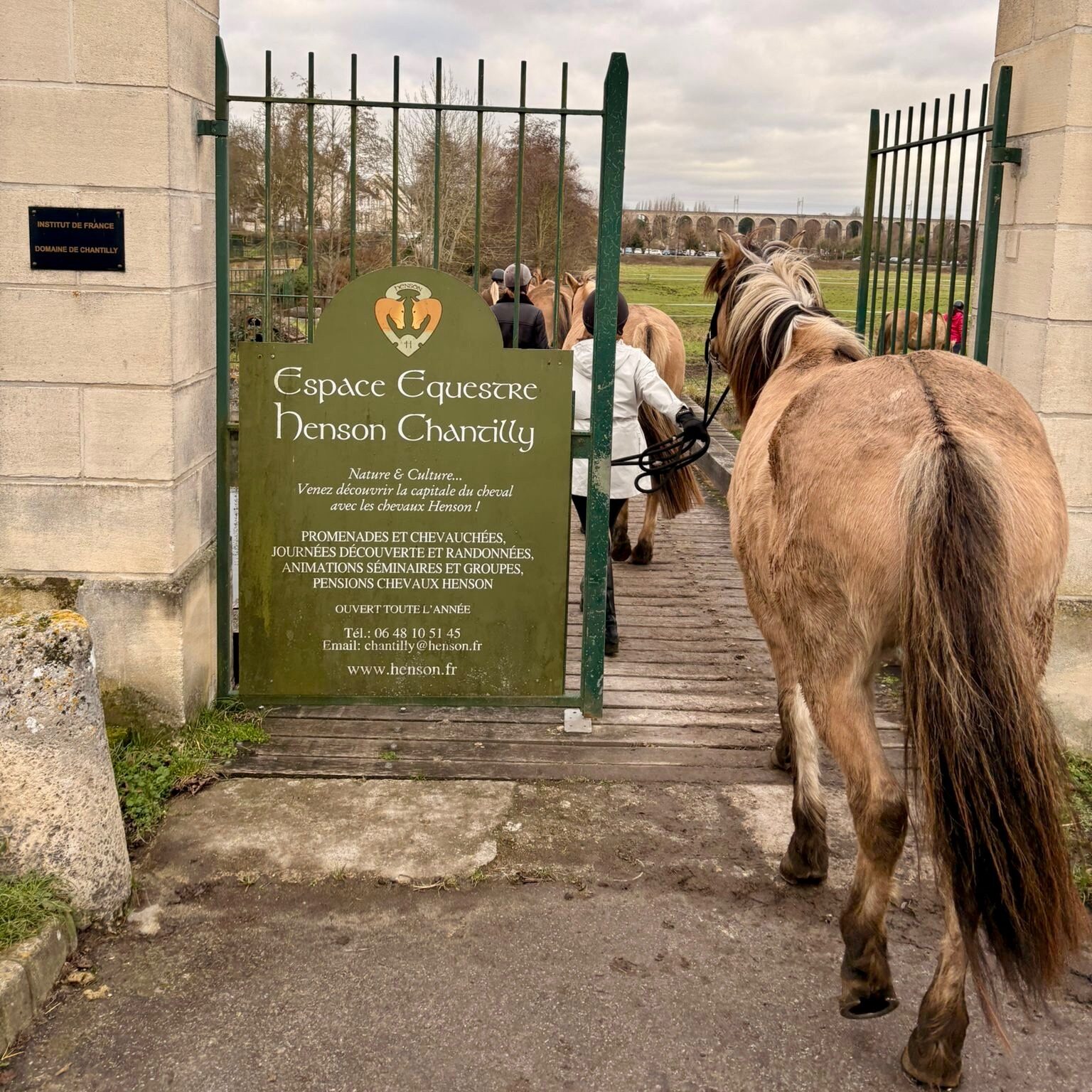
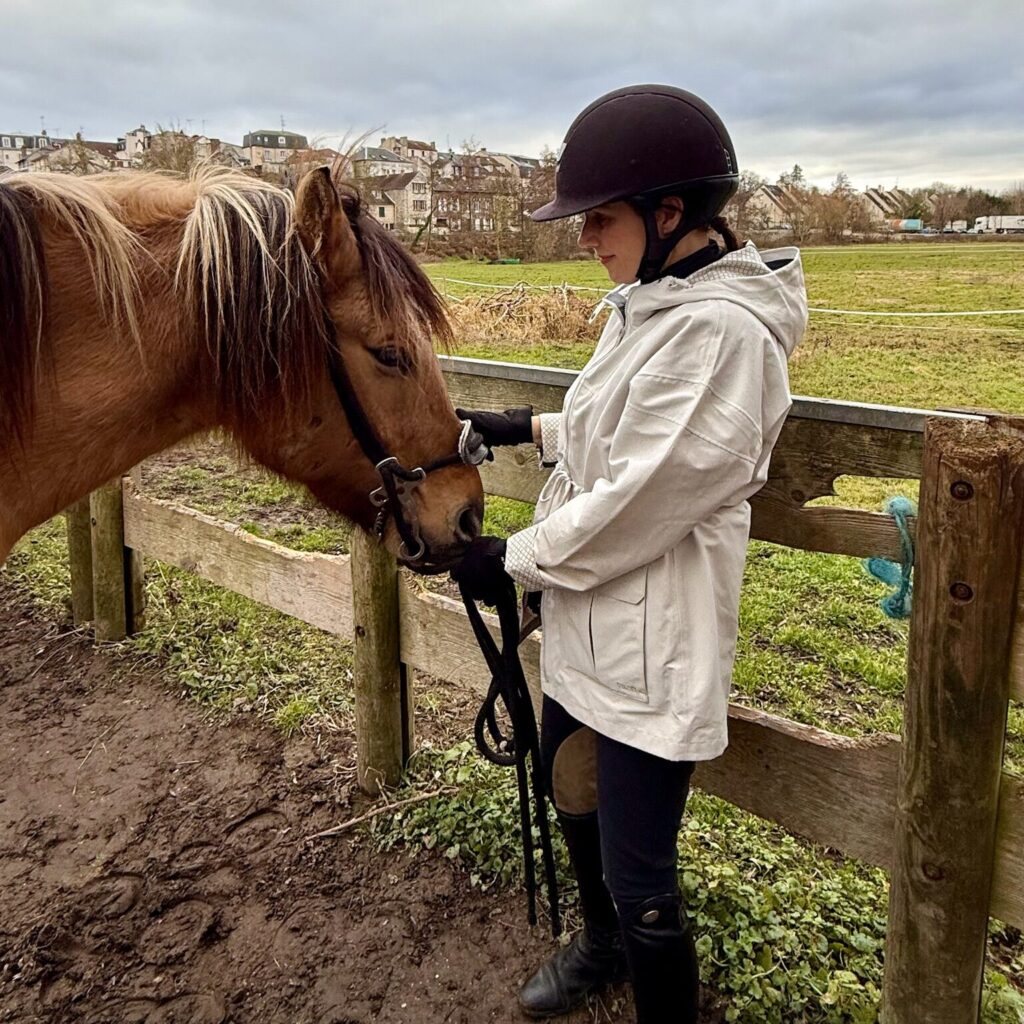
After collecting helmets and boots from the tack room — I always travel with my own, a habit I would not recommend abandoning, particularly in January — we were given our tack and walked it across the street to the paddocks. Several of them. In sequence. To meet the herd and catch our own mount for the morning.
This is not something every outfitter offers, and I understand why — it requires time, flexibility, and a willingness to let guests into the process rather than handing them a finished experience. For those of us who are horse people, it is a gift. You learn something about a horse in the moment you approach it in a field that no amount of time in an arena can replicate. You see how it moves toward you or doesn’t. You read the ears, the eyes, the energy.
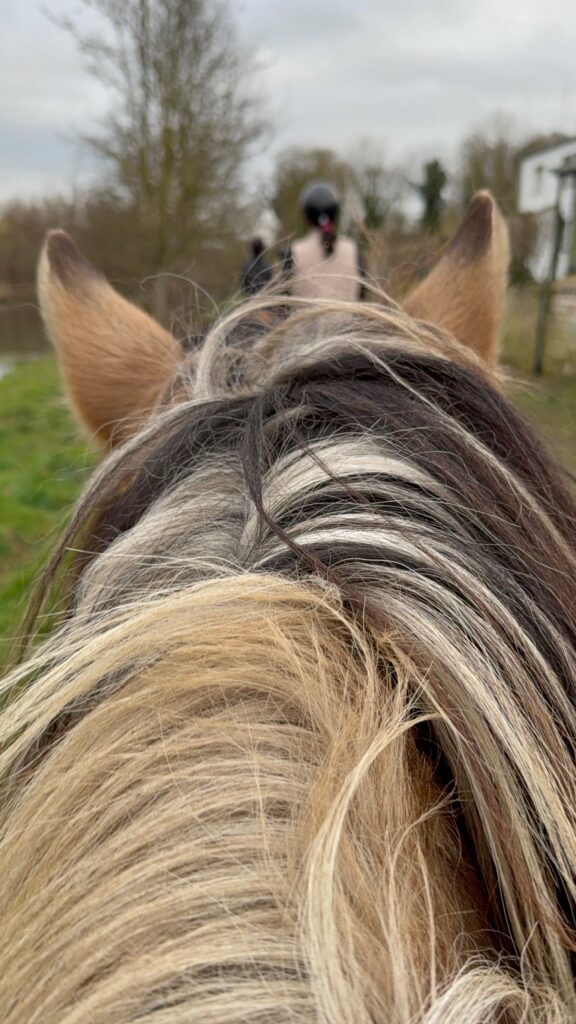
Between the ears of a Henson — the two-toned black and gold mane that stops every rider in their tracks. This is the image that starts the journey for most people who find their way to Chantilly.
There was one small footnote to this otherwise delightful discovery: the days prior had been wet. Several paddocks of wet. My Parlanti tall boots — beautiful, butter-soft, deeply cherished — did not especially appreciate the mud. They survived. I will say no more about it.
The Henson Horse — A Breed Unlike Any Other
The Henson is a breed you will not easily forget, and one that most riders outside of France have never encountered. Created in the 1970s in the Bay of the Somme by Lionel and Marc Berquin — who crossed Norwegian Fjord stallions with local French saddle mares including Anglo-Arabs and Thoroughbreds — the Henson was bred specifically to be a multi-purpose trail horse: sturdy, safe, calm, and capable of living outdoors year-round. The French government officially recognised the breed in 2003.
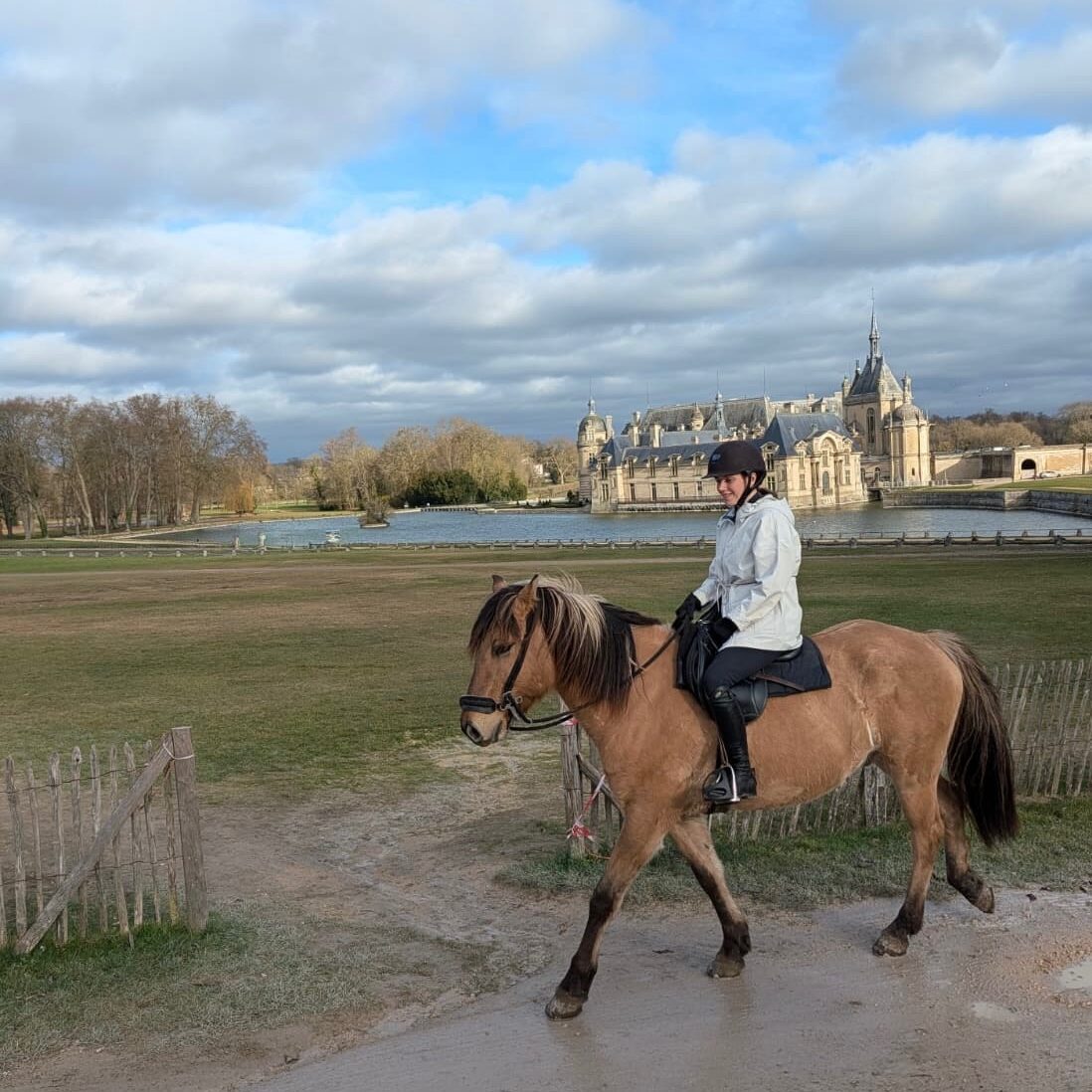
What stops you in your tracks is the coat. Exclusively dun — ranging from sandy gold to deep warm brown — with a compulsory dorsal stripe running the length of the back, and often zebra-like barring on the legs. No white markings are permitted in the breed standard, which gives the herd a visual coherence that is almost theatrical. And the mane: solid black or two-toned, black and gold, thick and wild, exactly as you see in the photographs that will make you want to book a flight before you have finished scrolling.
They are ridden exclusively in hackamores — bit-less bridles that work through pressure on the nose and chin rather than the mouth — a philosophy rooted in the Henson’s founding spirit of trust, freedom, and natural horsemanship. This, I should tell you, is worth knowing before you mention to your guide that you own horses at home. The four-year-old they assigned me once they knew I was a rider had a great deal of energy and enthusiasm for the brisk January morning, and with no bit to fall back on, the conversation between us was a rather more direct and honest one than I had entirely anticipated. Worth it. Completely. I may simply keep certain information to myself on future rides.
The Ride
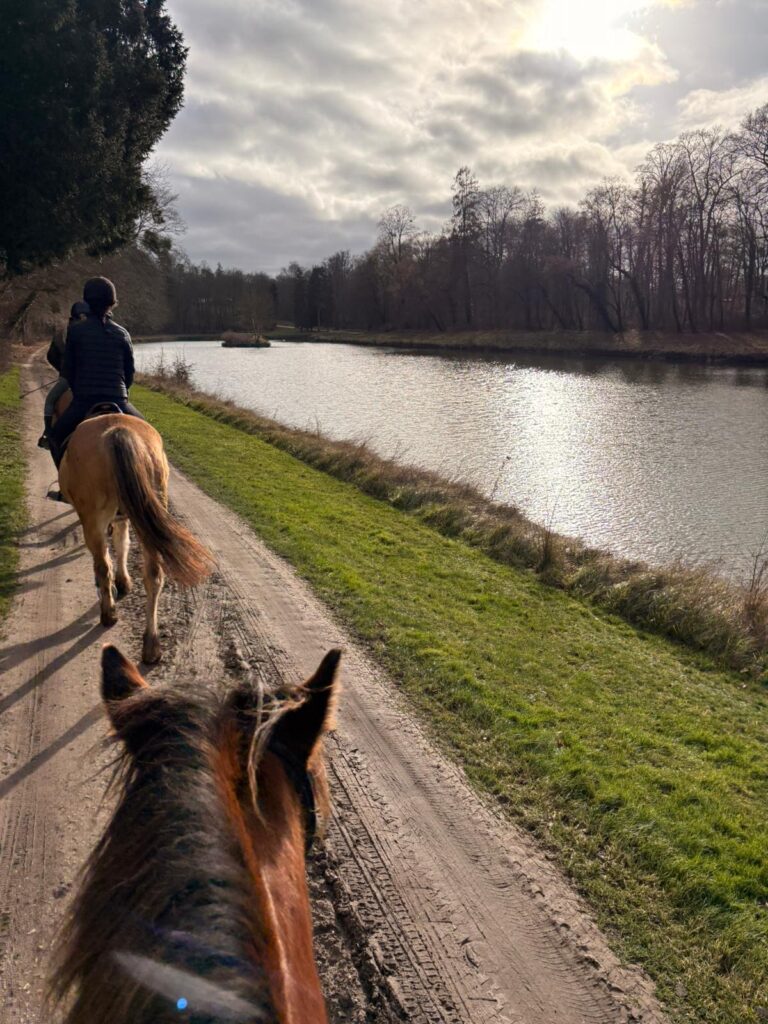
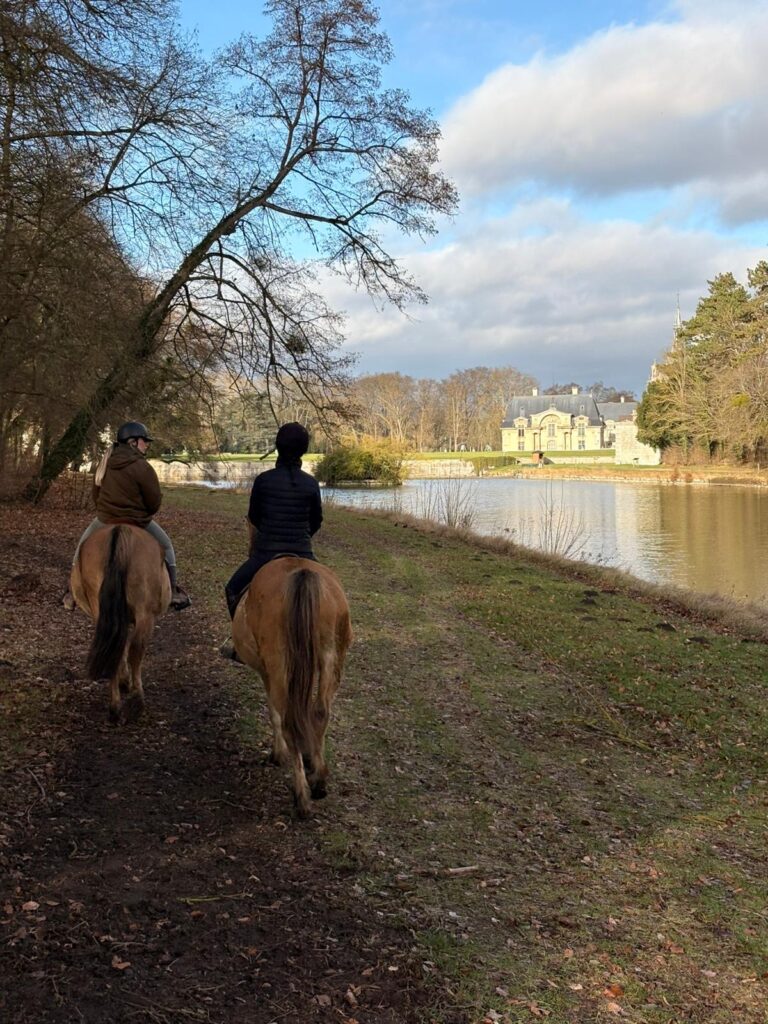
Two young French guides took a small group of us through the town, out along the waterways of the Domaine de Chantilly, past the exterior of the Grandes Écuries — the Great Stables of the Princes de Condé — alongside the Hippodrome de Chantilly, and into the Forêt de Chantilly itself. The sky that morning was all contrast — the kind of dramatic grey-and-silver that makes every stone building and golden horse look as though it has been lit by a cinematographer.
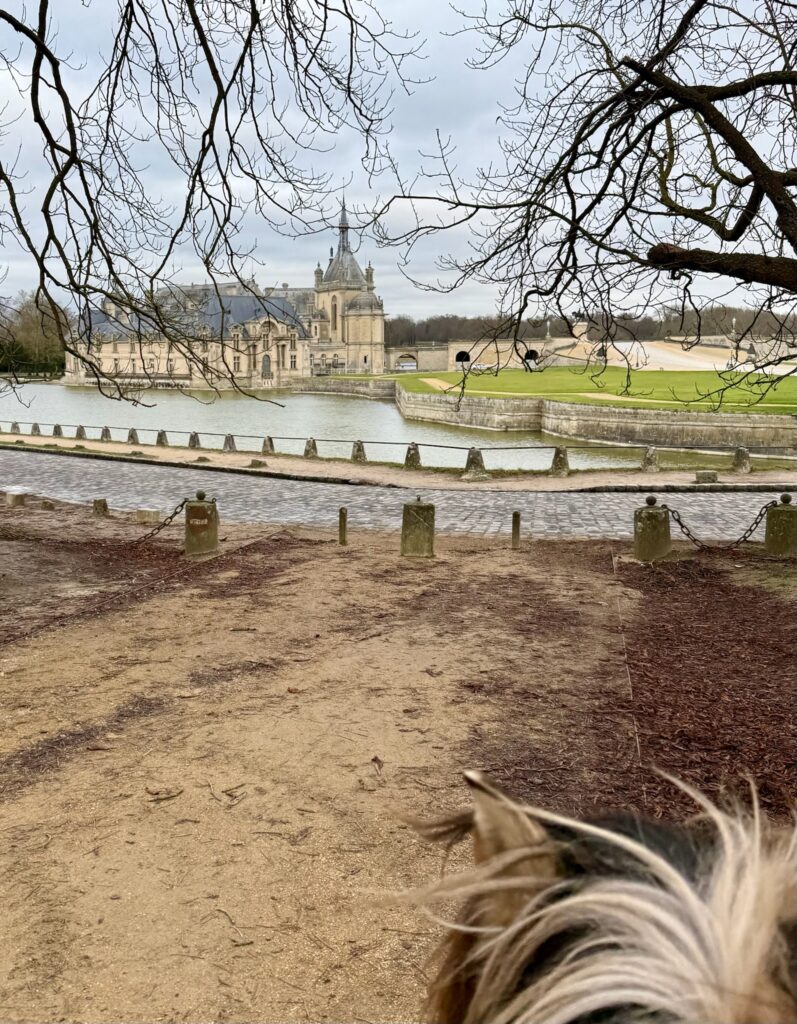
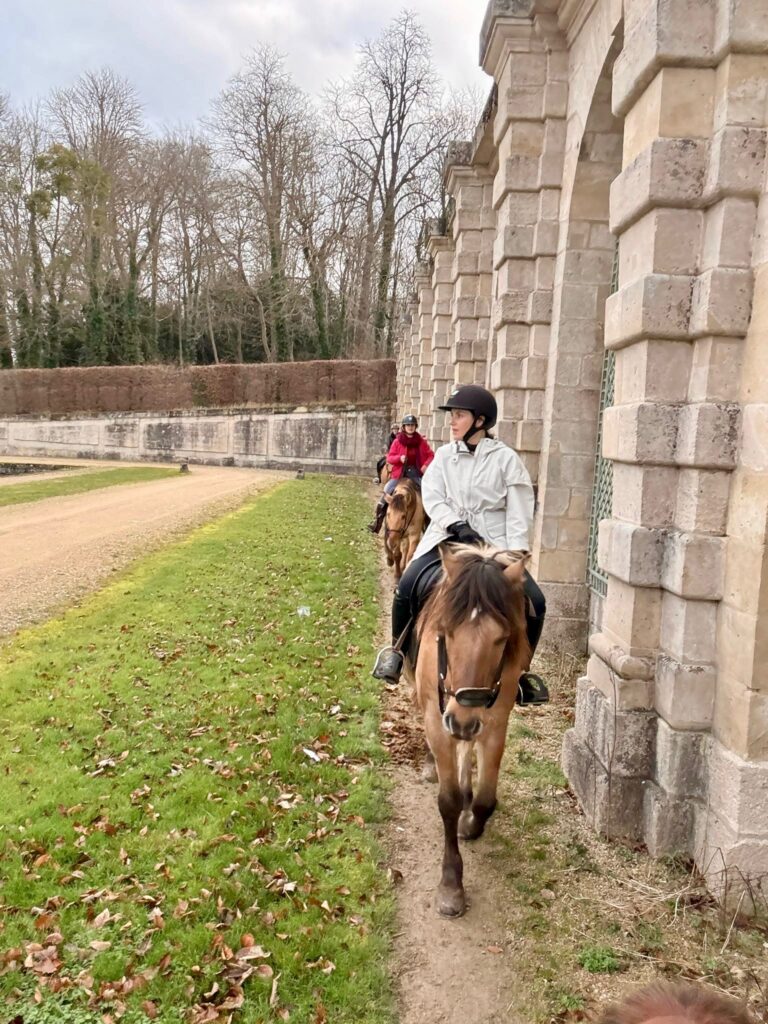
We were a small, mixed group: visitors stopping off en route through Paris, a couple of friends from nearby, and me — the one who had made a deliberate detour. We talked easily between trots, the way you do when you have just met someone on horseback and already feel you have known them slightly longer than you have. The guides were professional and attentive throughout, always aware of where everyone was, adjusting pace accordingly — even when my four-year-old had his own views on the subject.
I am always wonderstruck by the opportunity to see historic places from the back of a horse. There is no better vantage point. There never has been.
We had trots and proper canters through the forest — the kind that only happen on a horse with energy and a clear opinion about how fast life should be lived. I was not complaining. This is what I came for.
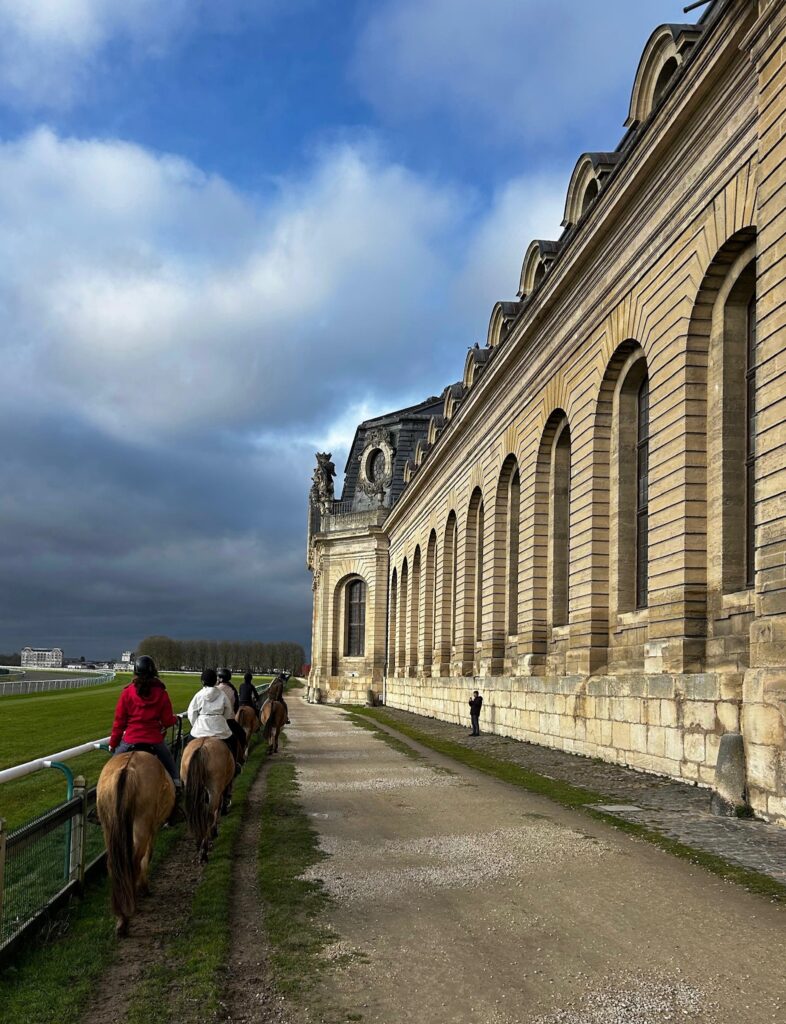
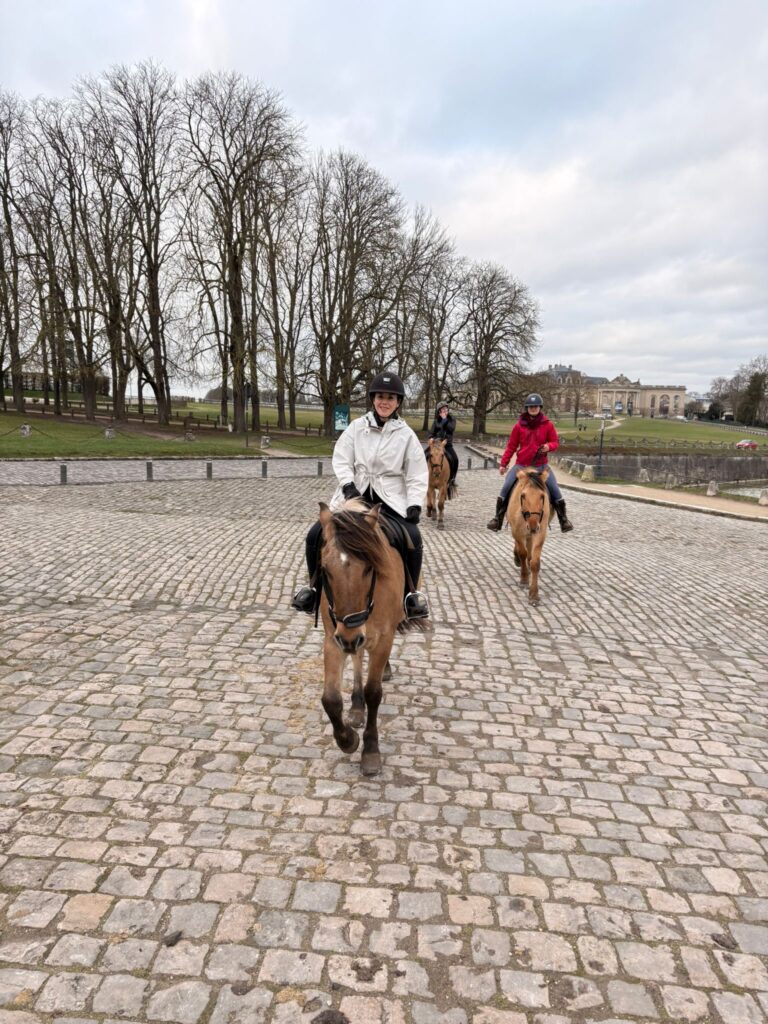
As we passed the Hippodrome de Chantilly — France’s oldest racecourse, inaugurated in 1834 and home to the Prix du Jockey Club since 1836 and the Prix de Diane since 1843 — and rode alongside the great stone arches of the Grandes Écuries, I thought, as I often do in these moments, about how different a place looks from the saddle. The same façade you might photograph from the pavement becomes something else entirely when you are moving past it on horseback. You are part of the landscape rather than a spectator of it. The feeling is one I have chased in every country I have ridden in. Chantilly delivered it completely.
Musée Vivant du Cheval — The Living Museum of the Horse
For any horse lover visiting Chantilly, the Musée Vivant du Cheval — the Living Museum of the Horse — is essential. I have been fortunate enough to visit during my years living in Paris, and it is unlike any museum I have encountered anywhere in the world.
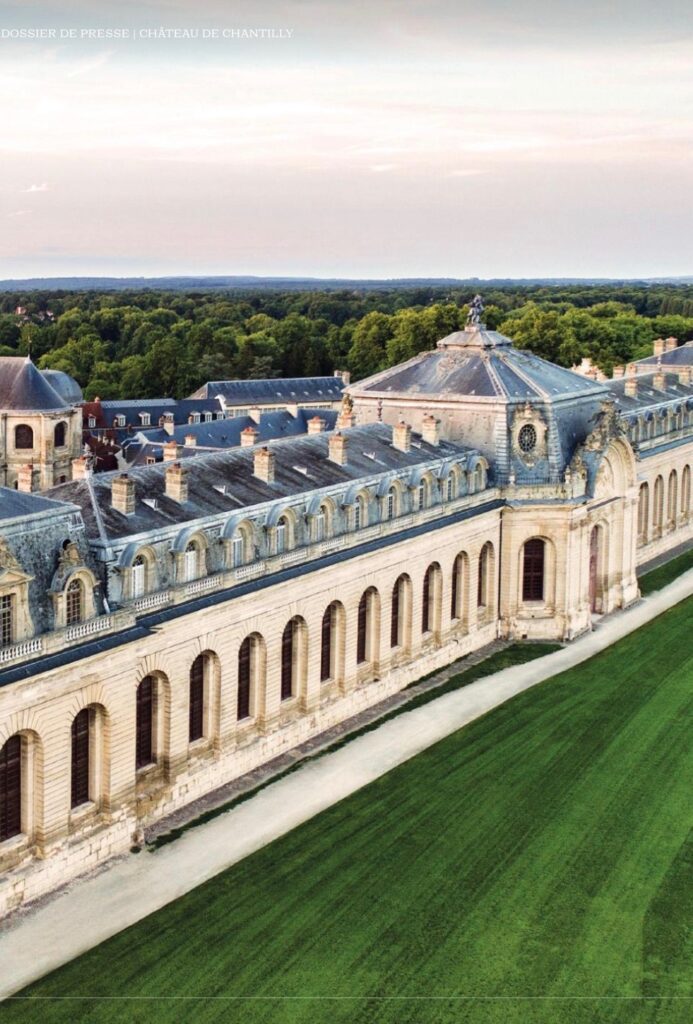
The museum is housed inside the Grandes Écuries — built between 1719 and 1735 by architect Jean Aubert for Louis-Henri de Bourbon, the 7th Prince de Condé. According to legend, the Prince believed he would be reincarnated as a horse and therefore required stables of appropriate grandeur. Whether or not one accepts the legend, the result is undeniable: the largest and most architecturally magnificent royal stables ever built in Europe, capable of housing 240 horses and 500 hunting dogs, beneath a dome 28 metres high that once received Louis XV himself as a guest.
The Grandes Écuries du Château de Chantilly — the largest royal stables ever built in Europe, constructed between 1719 and 1735. Home of the Musée Vivant du Cheval. © Château de Chantilly
Inside the Grandes Écuries — a white Iberian horse stabled in the vaulted corridor. Horses have lived here for three centuries. © Musée Vivant du Cheval
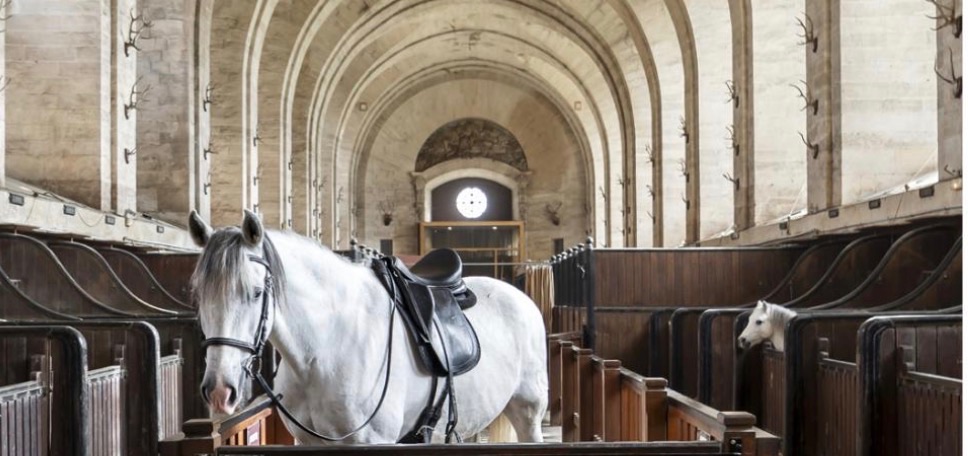
The museum was inaugurated in 1982, completely renovated in 2013 with significant funding from the Aga Khan IV, and now spans 15 thematic rooms tracing the relationship between humans and horses across civilisations — through art, equipment, equestrian tradition, and the living horses still stabled beneath the dome. Mainly Iberian breeds selected for classical dressage, they perform in equestrian shows combining haute école, music, and theatre in a setting of extraordinary beauty.
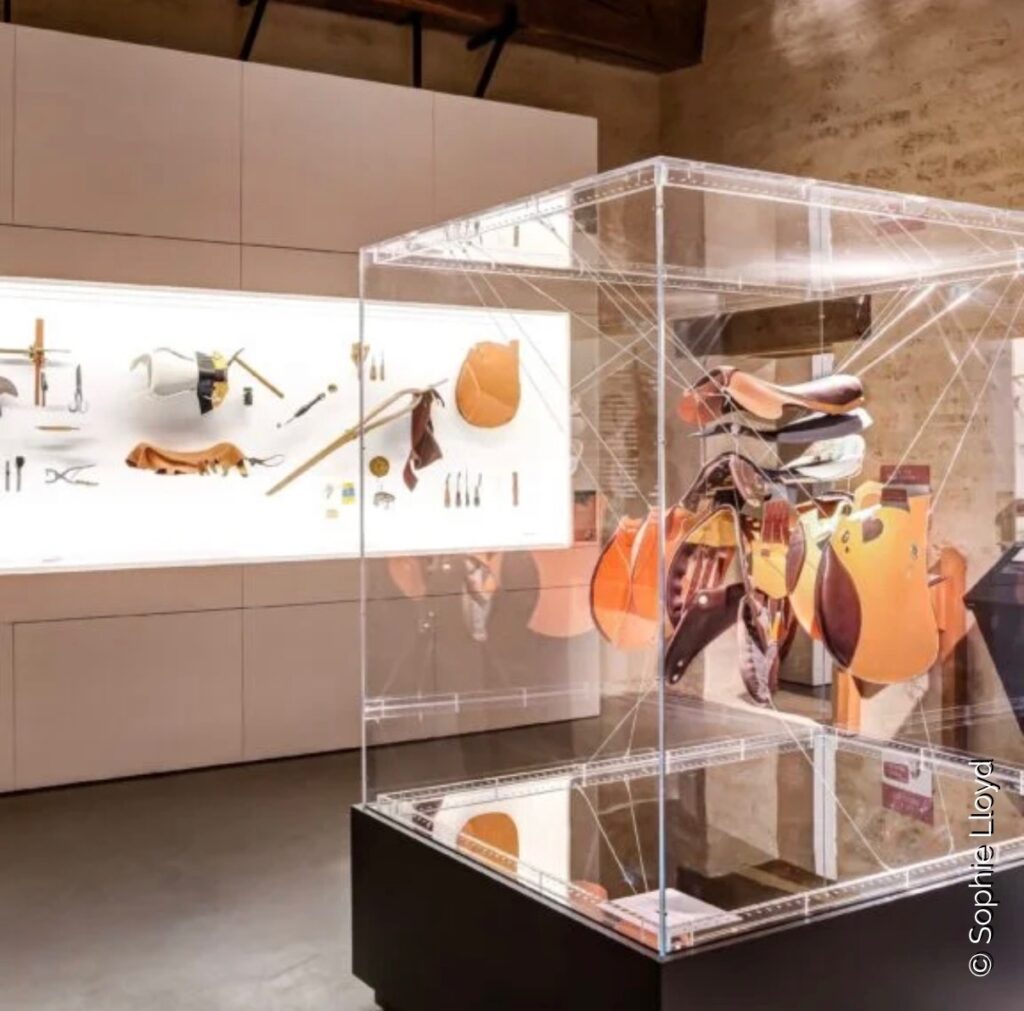
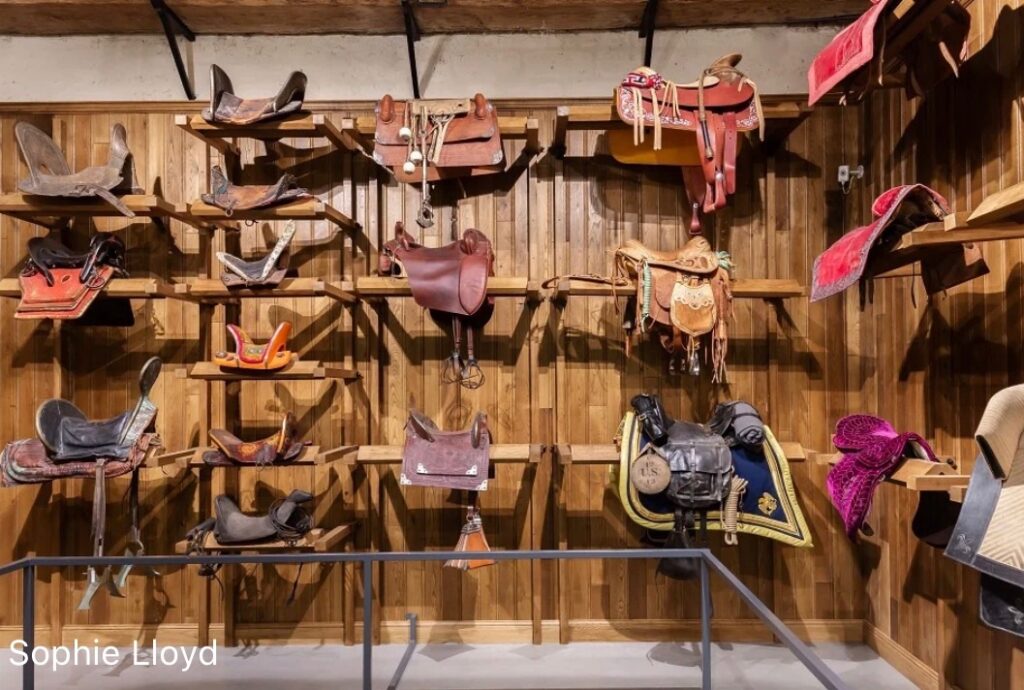
The saddlery rooms, the racing heritage of Chantilly, the breed galleries, the collection of antique carriages — plan a minimum of two hours, and do not be surprised if you stay longer. The dome alone is worth the visit.
The Musée Vivant du Cheval is open year-round. For opening hours, tickets, and equestrian show schedules, visit museevivantducheval.fr. Authorized press photography is available for editorial use — contact the Château de Chantilly press office directly.
Chantilly is the kind of place that rewards the detour. It rewards the early morning walk, the slow breakfast, and the decision to take one more path through the forest before you leave. It rewards the rider who shows up without knowing quite what to expect, and the traveller who is willing to let a four-year-old Henson horse with mud on his fetlocks teach them something about letting go of the plan.
France has given me extraordinary equestrian experiences — among them a ride through the royal gardens of Versailles that I will never forget. You can read about that here. Chantilly is its own chapter entirely: more intimate, more unexpected, and in its quiet way, just as royal.
For those building a France equestrian itinerary, both destinations belong on the list. And for those who want to stay somewhere that understands horses as deeply as it understands hospitality, the InterContinental Chantilly Château Mont Royal is, without question, the right address.
Plan Your Visit
Espace Équestre Henson — Chantilly
Location: At the foot of Chantilly town centre, on the banks of the Nonette river. The meeting point is through a gate in the car park area beside the Domaine de Chantilly boundary — look for the green Henson sign. The Chantilly Nature & Culture Discovery Ride is open to all levels including complete beginners, every day year-round by reservation. Duration approximately 2 hours including grooming and tacking.
What to expect: You will catch, groom, and tack your own horse before the ride. Helmets and boots are available to borrow. Henson horses are ridden exclusively in hackamores (bitless bridles). Wear boots you are comfortable getting muddy.
InterContinental Chantilly Château Mont Royal
Getting there: Just 24 km from Charles de Gaulle Airport — making it the ideal first or last stop on any France itinerary. Approximately 30 minutes by car from CDG. Also 40 minutes from central Paris via the A1, or by direct train from Gare du Nord to Chantilly-Gouvieux, then a short taxi or Uber to the hotel.
Rooms: 109 rooms and suites. Décor inspired by the region’s equestrian heritage, Chantilly lace, and the surrounding forest. Some rooms have balconies or forest terraces. Prince de Condé Suite offers 180° panoramic views.
Dining: La Table Gastronomique under Chef Léo Chinot (gastronomic, seasonal, rooted in local terroir). The Stradivarius Bar. Sunday brunch. Private dining experiences including crème Chantilly lessons can be arranged on request.
Spa: InterContinental Spa with Biologique Recherche. Indoor pool, jacuzzi, sauna, fitness room overlooking the forest.
Also on property: Tennis courts, golf nearby (Le Golf de Chantilly — ranked among the top 10 continental courses), 11 meeting rooms.
Musée Vivant du Cheval — The Living Museum of the Horse
Getting there: A 10-minute walk from Chantilly-Gouvieux station. A 15-minute walk or short Uber from the InterContinental hotel via the town centre. Signposted from the main car park and château entrance. Hours: Open year-round. Tuesday to Sunday. Check the website for seasonal hours and public holiday schedules. Tickets: Combined château and museum tickets available. Equestrian shows in the Grand Dome are timed separately and bookable in advance — highly recommended. Allow: Minimum 2 hours for the museum alone. Add 1 hour for an equestrian show. The Château de Chantilly and the Lenôtre gardens are on the same site and warrant a separate visit. Photography: Authorized press images available from the Château de Chantilly press office for editorial use.
Museum: museevivantducheval.fr
Château & grounds: chateaudechantilly.fr
Also in France — Equestrian Destinations:
A Royal Equestrian Experience at Versailles — two hours on horseback through the royal gardens of Versailles.
Riding the Bay of Mont St. Michel— on horseback through Normandy to the Bay of Mont Saint-Michel.
In collaboration with InterContinental Chantilly Château Mont Royal and Espace Équestre Henson.
Photography: Equestrian Destinations unless otherwise credited. Museum images © Château de Chantilly / Musée Vivant du Cheval / Sophie Lloyd.